How far is China's inbound tourism from being the world's number one?
“A foreign friend once asked me to recommend the best travel destinations in China. My answer was: You should visit China's mountains.”
At a recent inbound tourism seminar, James Liang, co-founder and chairman of the board of Ctrip Group, gave such an answer. In his view, China has the world's highest mountains - the Himalayas; and the world's most beautiful mountains are in Guilin, where there is the most unique karst landform in southern China.
Meanwhile, he is turning this “private recommendation” into actual actions for global travelers.
Recently, Ctrip Group announced a new strategic plan: In the next five years, the company will attract 200 million inbound tourists.
At the Guilin Night inbound tourism promotion event held at the same time, international movie star Jackie Chan also appeared at the event site as the “Ctrip Inbound Tourism Ambassador”. When Jackie Chan meets the landscapes of Guilin, Ctrip's determination to empower the transformation of the entire inbound tourism chain is just beginning.
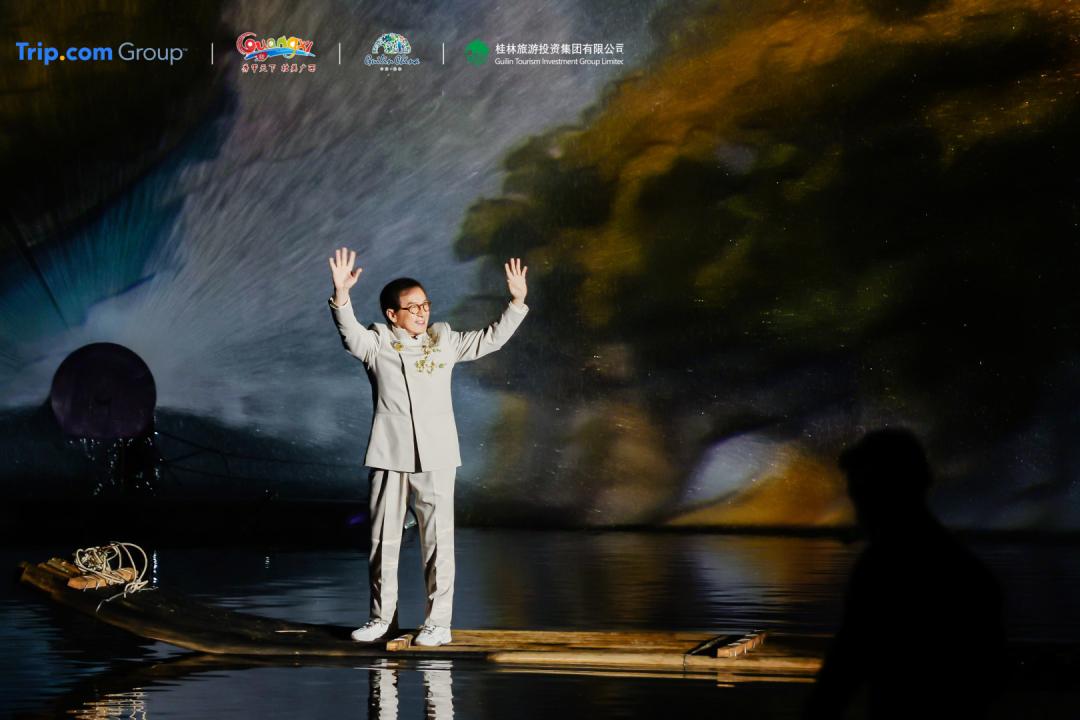
International movie star Jackie Chan becomes the “Ctrip Inbound Tourism Ambassador”
01. “China's inbound tourism should rank first in the world”
In recent years, the Chinese government has intensively introduced policies to facilitate foreigners' visits to China, which has also made “China Travel” a popular trend on global social media.
According to the data released by the National Bureau of Statistics, in 2025, the number of inbound foreign tourists (excluding those from Hong Kong, Macao and Taiwan) in China exceeded 35 million, a year-on-year increase of 30%. Among them, the number of foreigners entering China visa-free reached 30.08 million, a year-on-year increase of nearly 50%. The visa-free policy has a significant effect on boosting the tourist source. According to the data of the United Nations World Tourism Organization, from January to November 2025, China's international tourism revenue increased by nearly 40%, ranking sixth in the world.
However, when carefully analyzing the data, the number of inbound tourists in China is still lower than that in Europe and the United States. In 2025, the number of foreigners entering China exceeded 35 million. In terms of the number of people, there is still a significant gap between China and inbound tourism powerhouses such as Thailand, Japan and Spain.
James Liang also put forward an observation from the perspective of international trade: China's outbound tourism is at the same level as that of the United States, but its inbound tourism is more than 200 billion US dollars less than that of the United States, resulting in a large deficit in China's tourism service trade.

James Liang, co-founder and chairman of the board of Ctrip Group
In his opinion, there are sufficient reasons for China's inbound tourism to rank first in the world:
First, the compound resources of nature and humanities are rare in the world. The “world” in the saying “The scenery of Guilin is peerless in the world” refers to the whole world. If we combine China's profound historical heritage with its top - level natural scenery, there are few other countries or regions in the world that can match it.
Second, China has almost the world's first - class infrastructure. Tourists can switch from beautiful natural scenery to bustling urban life within a few hours. This efficiency of time - space compression can bring people an ultimate travel experience.
Third, the high cost - performance of China's tourism products is a powerful advantage for developed countries. James Liang gave an example: The average price of a five - star hotel in China is 1,000 - 2,000 RMB, while in Paris or New York, it is 1,000 - 2,000 US dollars, with a price difference of several times.
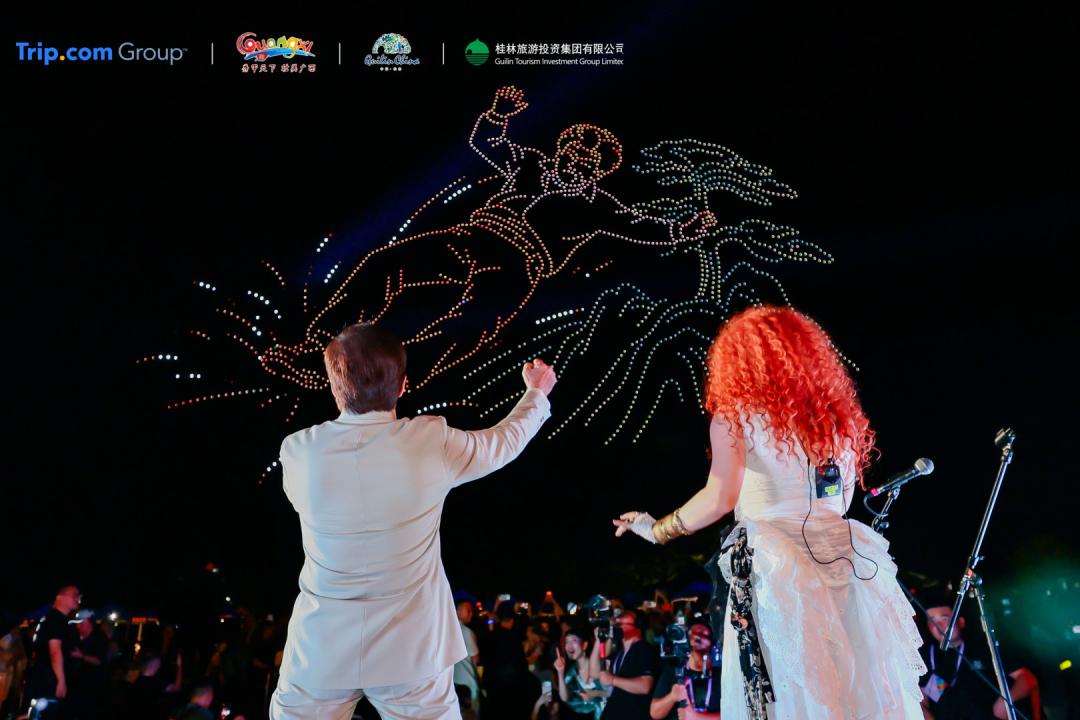
Fourth, China's advanced technology has strong display value. China has technological landscapes such as drone shows, which have formed a certain attraction. These “absolute competitiveness” also constitute the confidence for China's inbound tourism to compete with mature Western countries.
In addition, James Liang also pointed out that inbound tourism can not only directly create a large amount of foreign exchange income, reduce the tourism deficit and support the exchange rate, but also has a strong industrial multiplier effect.
Tourism consumption will drive employment and investment in related industries. At the same time, it can also stimulate overseas investment, study abroad, real estate purchase, medical aesthetics and other extended consumption. Overall, its driving effect on GDP is much higher than the output value of inbound tourism itself, and the overall contribution is expected to reach 5% - 8%.
This also means that inbound tourism is not just a profitable business, but also a key lever to promote the transformation of China's macro - economic structure.
02. A decade - long layout to improve the “five pain points”
“Ten years ago, I told my team that China's inbound tourism would be a huge opportunity in the future, but there were many bottlenecks at that time.” James Liang summarized them as five pain points: inconvenient visas, difficult payment, restricted network access, poor transportation connection and weak national - level promotion.
After ten years, these five pain points have been greatly improved under the combined efforts of policies and the industry.
As of now, China has implemented visa - free policies for more than 80 countries. It is extremely convenient to bind foreign cards to mobile payment, and the high - speed rail network has become denser. With the opening of the visa - free policy, the country's image promotion has subtly transformed into “soft power” that can change overseas perceptions.
The latest “Annual Report on the Development of China's Inbound Tourism” released by Ctrip also clearly shows the reusable solutions to meet the emerging inbound tourism demand around the world.
The report divides China's inbound tourists into six major customer groups:
“Weekend - type” South Korean tourists who pursue high cost - performance and trendy check - in places; “Social - type” Southeast Asian tourists who rely on social media recommendations; Australian tourists who have a long flight time and prefer “in - depth” travel; Middle Eastern tourists who focus on “high - end services”; “Mature - type” European tourists with strong environmental awareness who prefer high - speed rail travel; and “High - potential - type” Indonesian and Vietnamese tourists who need halal - friendly products.
However, these groups also have the common feature of “a very long booking cycle, up to one year in advance”, and the length of stay of China's inbound tourists at the destination is generally higher than the average level. After clarifying the exact user profiles, Ctrip can also accurately address the pain points of these inbound tourists.
For the “pre - travel” stage, Ctrip has carried out high - saturation overseas marketing.
Since September 2025, Ctrip has collaborated with top artists and KOLs around the world to create special routes. As of now, it has organized 17 groups of influencers and nearly a thousand KOLs to visit China, accurately covering high - net - worth customer groups.
In addition, for tourists who are about to come to China and are planning their trips, Ctrip also uses AI assistance to help them choose their favorite travel routes.
The real battlefront lies in the “during - travel” stage.
Sun Jie, CEO of Ctrip, introduced that in terms of payment and booking, the overseas version of Ctrip supports nearly 65 payment methods, 44 settlement currencies, and smart ticket machines in 23 languages cover more than 280 scenic spots.
In addition, Ctrip has also launched the “half - day tour during airport transfer” and designed “theme tours” for specific needs such as “European high - speed rail travel”. At the same time, it provides in - depth services in English, Korean, Thai and other languages, and the growth of personalized customized tours has reached 40%.
03. Industrial empowerment: Let every practitioner make money
Efforts to optimize the inbound tourism experience ultimately need to be realized by all industry players. In this context, Ctrip has specifically invested 1 billion RMB in special funds to help merchants and service personnel obtain orders from foreign customers.
This empowerment is first reflected in the construction of the underlying digital capabilities of destinations and scenic spots.
In the past, world - class scenic spots often lacked a convenient entry channel for foreign tourists.
This pain point was extremely typical at the Longji Terraced Fields in Guilin. The overlapping terraced fields attracted countless international travelers, but tourists often got stuck at the entrance of the scenic spot: there were long queues at the manual windows, there were language barriers, and payment was restricted. It took more than ten minutes to buy a ticket. A Thai tourist once wrote on social media: “The beauty of the Longji Terraced Fields deserves a full score, but the ticket - buying experience can only get a passing grade.”
After Ctrip's intervention, a “three - key” solution was implemented: self - service ticket machines supporting six languages including Chinese, English, Japanese, Korean and Thai were deployed. Overseas tourists can scan their passports and use mobile payment to get their tickets in 30 seconds; at the entrance of the scenic spot, Ctrip also set up multi - language QR codes for on - site promotion. Tourists can enter the scenic spot by scanning the codes; in addition, the official WeChat accounts of major scenic spots have embedded the ticket - buying links of Trip.com, realizing seamless connection between the WeChat ecosystem and the global booking platform.
As a result, the efficiency of tourists' ticket - buying has increased by 80%, the time has been shortened from 3 minutes to 30 seconds, and the number of inbound tourists booked through the Ctrip platform in the scenic spot has increased by 464% year - on - year.
The same change has occurred at the Reed Flute Cave in Guilin, known as the “Palace of Natural Art”.
In the past, during peak hours, inbound tourists had to queue for more than 10 minutes. There were language barriers, and international payment methods such as Apple Pay could not be used. The scenic spot had little knowledge of the composition of its tourist sources.
After Ctrip deployed several self - service ticket machines dedicated to inbound tourism, not only has the average ticket - buying time been compressed from 15 minutes to less than 30 seconds, but also about 50% of the manual ticket - selling staff has been liberated, allowing them to turn to more warm - hearted guiding services.
The key is that every transaction in the scenic spot can be converted into intuitive data. For the first time, the scenic spot can clearly see “who is buying tickets”, “where the tourists come from and what kind of products they prefer”. Targeted marketing has become more effective, and the number of inbound tourists has increased by 73% year - on - year.
For large - scale hotel groups, Ctrip has also improved their operational efficiency and cross - cultural service capabilities.
Take the Poetry and Distance Hotel Group in Guilin as an example. By participating in the “Book a room and get an eSIM” and “GO CHINA” promotion activities on Ctrip's overseas platform, the number of inbound orders in its Yangshuo store has increased by more than 150% year - on - year in two months. Chen Li, the general manager of the hotel, revealed that the proportion of online inbound orders in the hotel has jumped from less than 10% to 30%, and the tourist sources have expanded from Hong Kong and Southeast Asia to global markets such as the United States, Australia and France.
The real moat of this hotel lies in the refinement of service details. According to the feedback from more foreign guests, activities such as cormorant fishing shows and seasonal intangible cultural heritage handicrafts in the store are very impressive. At the same time, the hotel also provides 24 - hour Chinese - English bilingual butlers from the local area, who provide travel guides from the moment guests place their orders, solving the biggest information asymmetry problem for independent travelers.

Photo provided by the interviewee
The Boyin Hotel Group in Guilin interprets service upgrading from another perspective.
He Jing, the operation manager, shared a detail: An Italian guest almost went hungry because the surrounding restaurants closed at 7 or 8 p.m. This incident directly led to the hotel's “late - night canteen” system, which extended the restaurant's opening hours to 9:30 p.m.
Subsequently, all the group's stores set up 18 - hour online communication staff for foreign guests, automatically select non - smoking rooms for foreign guests, provide free laundry, drying and return services, and set up an intangible cultural heritage experience area in the store, allowing guests to make Lijiang River jigsaw paintings and wormwood sachets and take the memories of Guilin home. As of now, the inbound orders of the Boyin Hotel in Guilin have increased by 60% year - on - year, and the long - distance tourist sources from Europe, America and Russia have increased significantly.

Photo provided by the interviewee
More importantly, for a wide range of individual players in the industrial chain, Ctrip has also brought structural opportunities.
Previously, media reports said that former ocean - going sailors, taking advantage of their English skills and knowledge of Zhangjiajie, have transformed into travel planners. There are also re - employed teaching and training teachers who have accurately seized the opportunity to become Spanish tour guides and doubled their monthly income. Behind these cases is the market's strong demand for small - language talents under the dual dividends of the “visa - free policy + platform”.
While eliminating the trust barrier of overseas tourists, Ctrip is empowering merchants across the industry, enabling players in the entire industrial chain to dare to accept and be able to meet the high - demand inbound tourism needs.
04. Epilogue: International tourism is the exchange of different civilizations
Ge Lei, the secretary - general of the China Tourism Association, has a profound statement:
“In any country, the tourism industry should encourage people to meet each other. International tourism is never