Great Wall Motors' Wei Jianjun publicly "slammed" — how deceptive is the gray chain of "over-repairing minor faults"?
"I'm really scared." On May 18th, Wei Jianjun, the chairman of Great Wall Motors, said this in front of numerous media and car owners at his company's new car launch event.
What he fears is not technological backwardness or sales fluctuations, but the chaos of "over - repairing minor problems" in the industry gradually eroding consumers' trust in Chinese car brands.
On social media and complaint platforms, "over - repairing minor problems" has almost become the most concentrated pain point for car owners to complain about. A loose sensor being described as a major engine overhaul, a dusty air - conditioning filter leading to a suggestion to replace the compressor, and an aged rubber bushing resulting in a requirement to replace the suspension assembly - these absurd - sounding stories happen in reality every day.
So, how exactly is "over - repairing minor problems" carried out? Why has this problem persisted despite repeated prohibitions? And how should car owners protect their wallets? We will analyze the deep - seated reasons behind it one by one, combining real cases and data.
A 15 - yuan small part costs 1000 yuan to replace the assembly at a 4S store
Let's first look at a few real cases.
Case 1: A loose sensor, and the 4S store asks for 8000 yuan for a major engine overhaul.
The engine warning light on the dashboard came on. The car owner took the car to a 4S store for inspection. The maintenance technician told him that there was a problem with the timing chain and that the engine needed to be disassembled for a major overhaul, with a quote of 8000 yuan. The car owner felt something was wrong and took the car to another repair shop for a second check. The result was quite ridiculous: it was just a loose sensor plug, causing an abnormal signal. After just cleaning and tightening, the problem was solved with almost no cost.
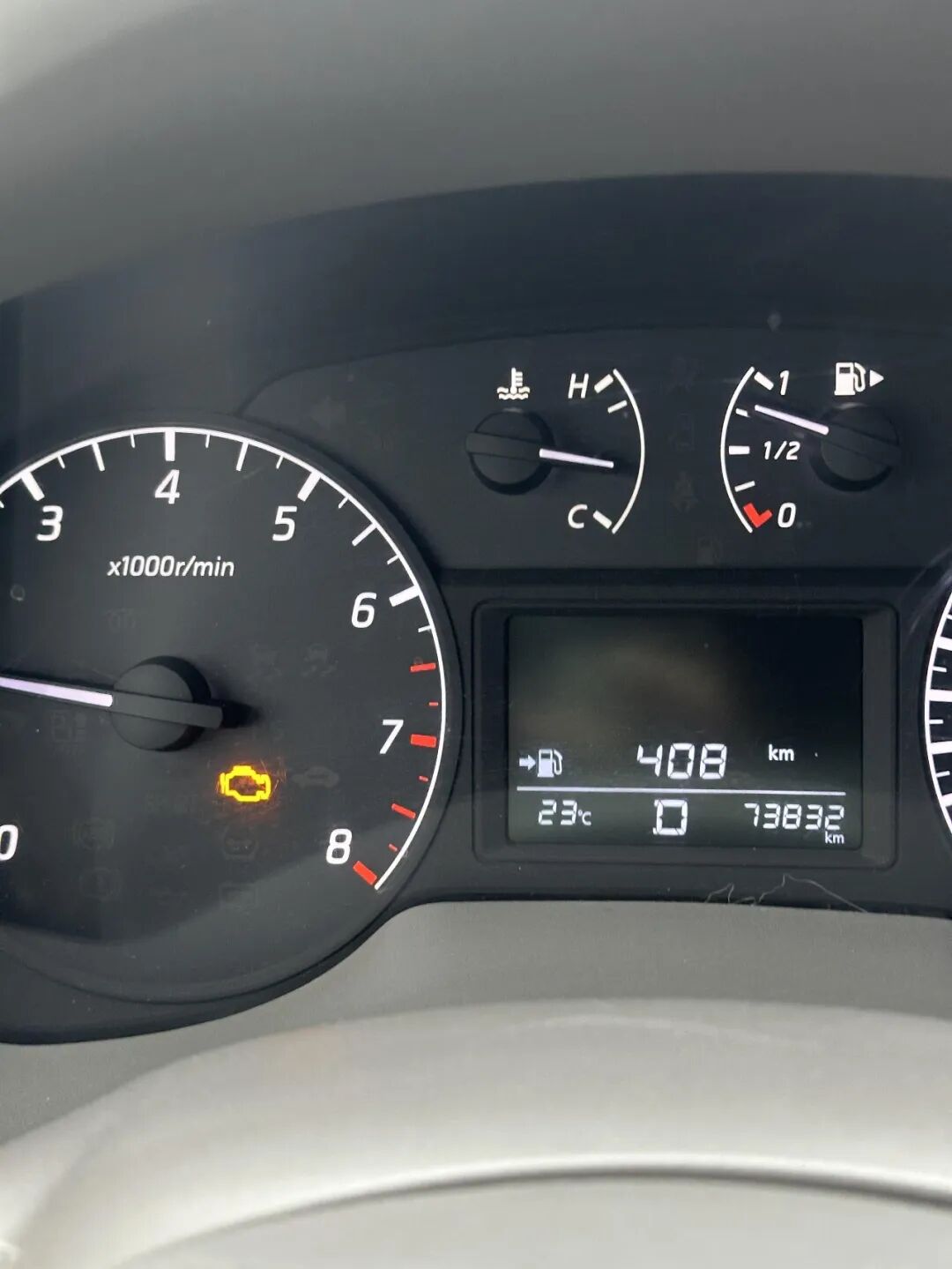
Picture/Engine warning light on Source/Internet, Screenshot from New Energy Outlook
Case 2: The air - conditioning of a new energy vehicle doesn't cool, and the 4S store quotes 6000 yuan to replace the compressor.
The air - conditioning of the new energy vehicle didn't cool. It was summer, and the inside of the car was as hot as a steamer. The car owner took the car to a 4S store. After inspection, they said the air - conditioning compressor was broken and needed to be replaced, which would cost 6000 yuan. The car owner hesitated and then consulted another repair shop specializing in new energy vehicles. The technician found that the problem was just that the air - conditioning pressure sensor was covered with dust, causing an abnormal signal. After a simple cleaning, the air - conditioning returned to normal operation.
Case 3: There is an abnormal noise in the chassis, and the 4S store suggests replacing the suspension assembly.
The car owner noticed a "creaking" noise from the chassis on bumpy roads. After inspection, the 4S store said there was a problem with the suspension assembly and suggested replacing the whole set, with a quote of several thousand yuan. The car owner went to an auto parts city and found an experienced old technician. After lifting the car, it was found that it was just an aged rubber bushing. After replacing a few bushings, the total cost of materials and labor was just over 100 yuan, and the abnormal noise disappeared.
Case 4: The turn - signal cover of the rear - view mirror was broken, and the 4S store asked to replace the whole assembly for more than 1000 yuan.
The car owner accidentally broke the turn - signal cover on the rear - view mirror and took the car to a 4S store. The staff said that there were no separate cover parts for the rear - view mirror of this model, and the only option was to replace the whole rear - view mirror assembly, with a quote of more than 1000 yuan including labor costs. The car owner searched on Taobao out of curiosity and found that the same cover only cost 15 yuan, and the merchant also provided installation tools and video tutorials. After receiving the goods, the car owner followed the video and fixed it by themselves in less than 10 minutes.
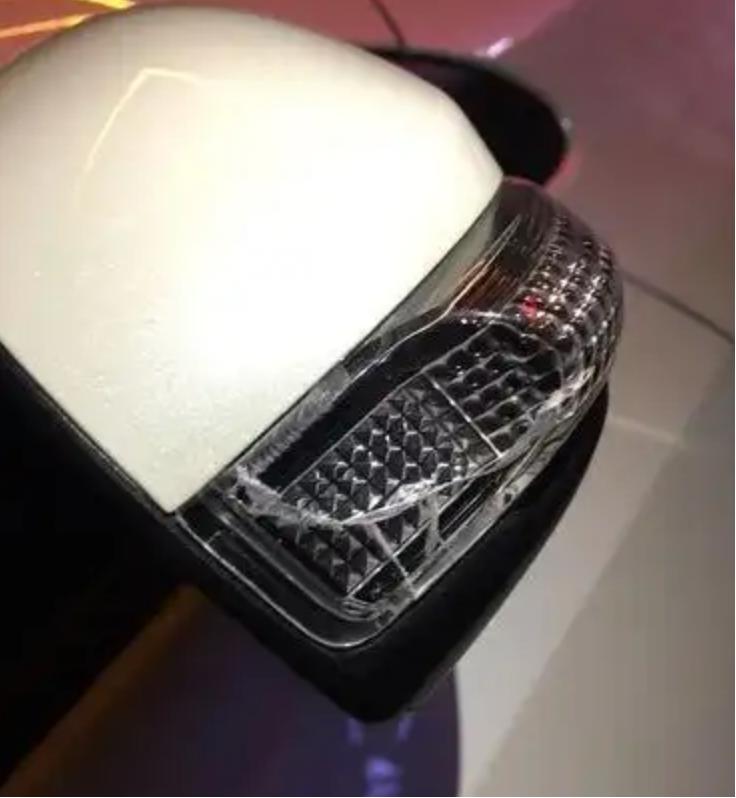
Picture/Broken rear - view mirror cover Source/Internet, Screenshot from New Energy Outlook
These four cases have one thing in common: the 4S stores all proposed a "replace the assembly" or "major overhaul" solution, while the actual fault points were all very minor problems.
Data from the Auto Quality Network shows that in 2025, a total of 227,803 valid consumer complaints were received, a year - on - year increase of 31.6%, setting a new historical high. Among them, the proportion of complaints about "over - repair" has been increasing year by year.
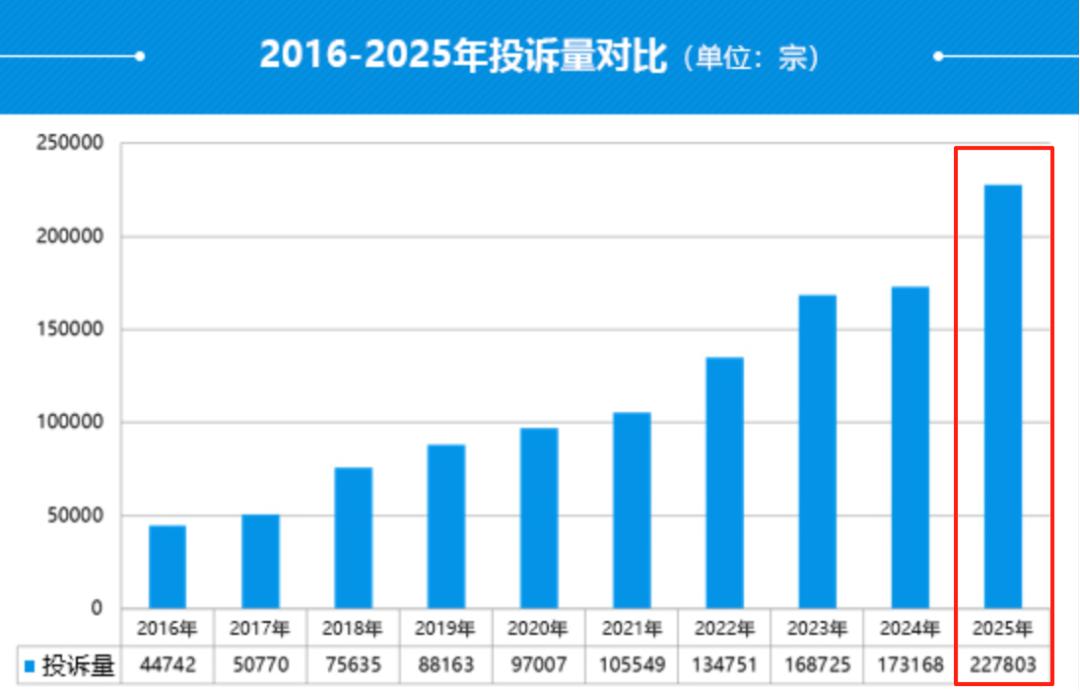
Picture/Comparison of complaint volumes from 2016 - 2025 Source/Internet, Screenshot from New Energy Outlook
Replacing the assembly at every turn - this has become the most common and hidden trick in the current automobile maintenance industry.
What does "replacing the assembly" mean? Simply put, it means replacing an entire complete part composed of multiple components. For example, the rear - view mirror assembly includes all parts such as the lens, housing, turn - signal, and motor; the suspension assembly includes a whole set of systems such as springs, shock absorbers, and swing arms.
In principle, the reasonable way of maintenance is to replace the faulty part. However, in actual operation, many 4S stores and repair shops tend to directly replace the entire assembly, even if only a small part of it is faulty.
The logic behind this is very simple: replacing the assembly is convenient and profitable. If a 10 - yuan cover is broken, replacing the assembly can cost more than 1000 yuan; if a sensor is loose, a major overhaul plan can cost 8000 yuan. The repair shops make a fortune, while the car owners spend hundreds of times more money unjustly.
What's more hidden is that most of the old parts replaced at high prices are kept by the repair shops for "reuse".
A former 4S store maintenance technician once revealed to the media that in the accident - car repair business of some leading dealer groups, nearly half of the parts are not original parts. The insurance company pays according to the standard of original parts, while the repair party replaces them with non - original parts or even unqualified products with prices several times lower, and the difference goes into their own pockets. The replaced original old parts are then sold to other unsuspecting car owners after simple refurbishment.
Analyzing the deep - seated reasons for "over - repairing minor problems"
The reason why "over - repairing minor problems" has become a chronic problem in the industry is not that a certain 4S store is "especially unscrupulous", but a whole set of interlocking interest chains driving it.
The first and most direct reason: Selling cars doesn't make money, so the after - sales service tries to make up for it.
The "2025 National Automobile Dealer Survival Status Survey Report" released by the China Automobile Dealers Association shows that in 2025, more than half of the 4S stores were in a loss - making state, with a loss ratio as high as 55.7%, an increase of 14 percentage points year - on - year. 81.9% of the dealers faced the problem of new - car price inversion, among which 51.5% had an inversion amplitude of more than 15%. The gross profit margin of new - car sales dropped to - 21.5%, and the loss amplitude of luxury brands even reached - 26.2%.
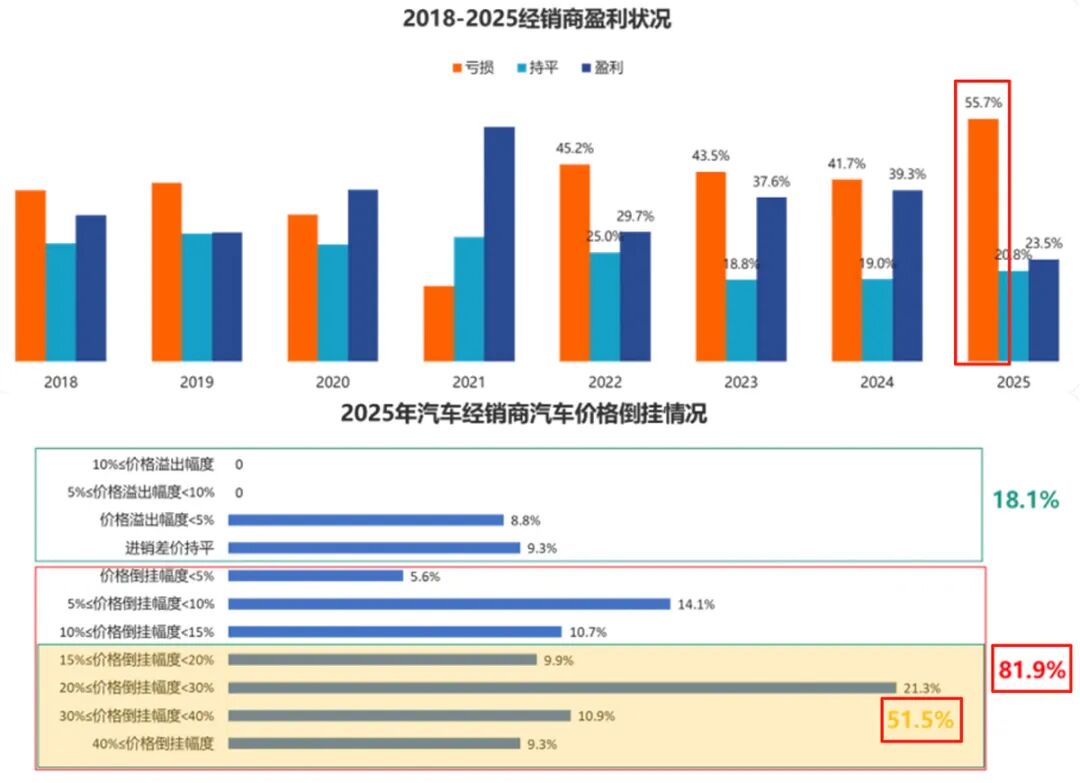
Picture/Profit and price - inversion situation of dealers in recent years Source/Internet, Screenshot from New Energy Outlook
What does this mean? On average, for every new car sold by a 4S store, it loses more than one - fifth of the car price. Taking a luxury - brand model with a selling price of 300,000 yuan as an example, the dealer may lose 60,000 to 80,000 yuan when selling it. The new - car business has become a real "losing proposition".
So, how do 4S stores survive? The answer is after - sales service. In the gross - profit structure of dealers, the gross - profit contribution of new - car sales is - 25.5%, while that of after - sales service is as high as 80.8%. In other words, selling new cars is a money - losing business, but repairing cars, doing maintenance, and replacing parts are highly profitable. Naturally, the price of this "lifesaving straw" is not cheap.
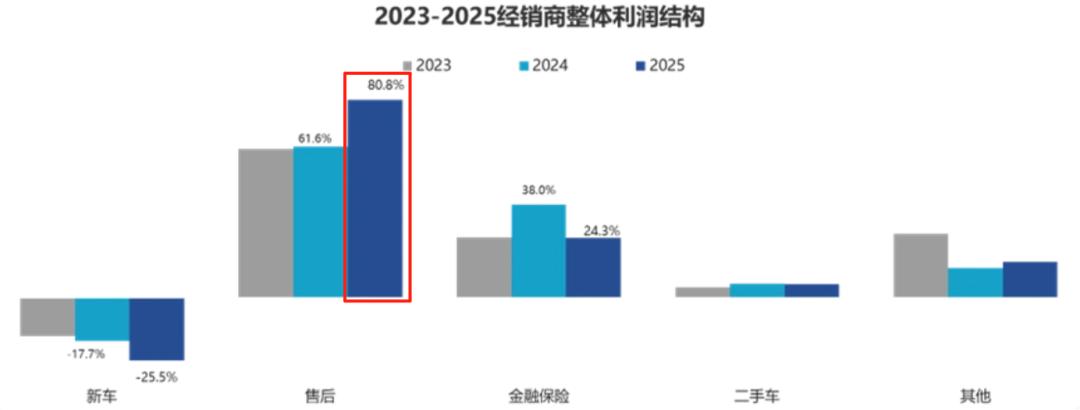
Picture/Overall profit structure of dealers from 2023 - 2025 Source/Internet, Screenshot from New Energy Outlook. The emergence of new energy vehicles has made the situation more complicated
. An electric vehicle has far fewer maintenance items than a fuel - powered vehicle. There is no need to change the engine oil, oil filter, spark plugs, and there is no need to regularly replace the transmission oil. The reduced maintenance frequency means that car owners may only visit the store once or twice a year. The "opportunity window" for after - sales to make money has become narrower, so some repair shops want to maximize profits in the "limited opportunities" and make a big profit every time.
The second reason: Information asymmetry, combined with persuasive language pressure and implicit binding.
The vast majority of ordinary car owners know nothing about the car structure and are completely at a loss when it comes to maintenance terms. There are dozens of sensors and more than a dozen control units in a modern car. When the fault code appears, ordinary people can't understand it at all. The repair shop says what is what, and car owners don't even have the confidence to question.
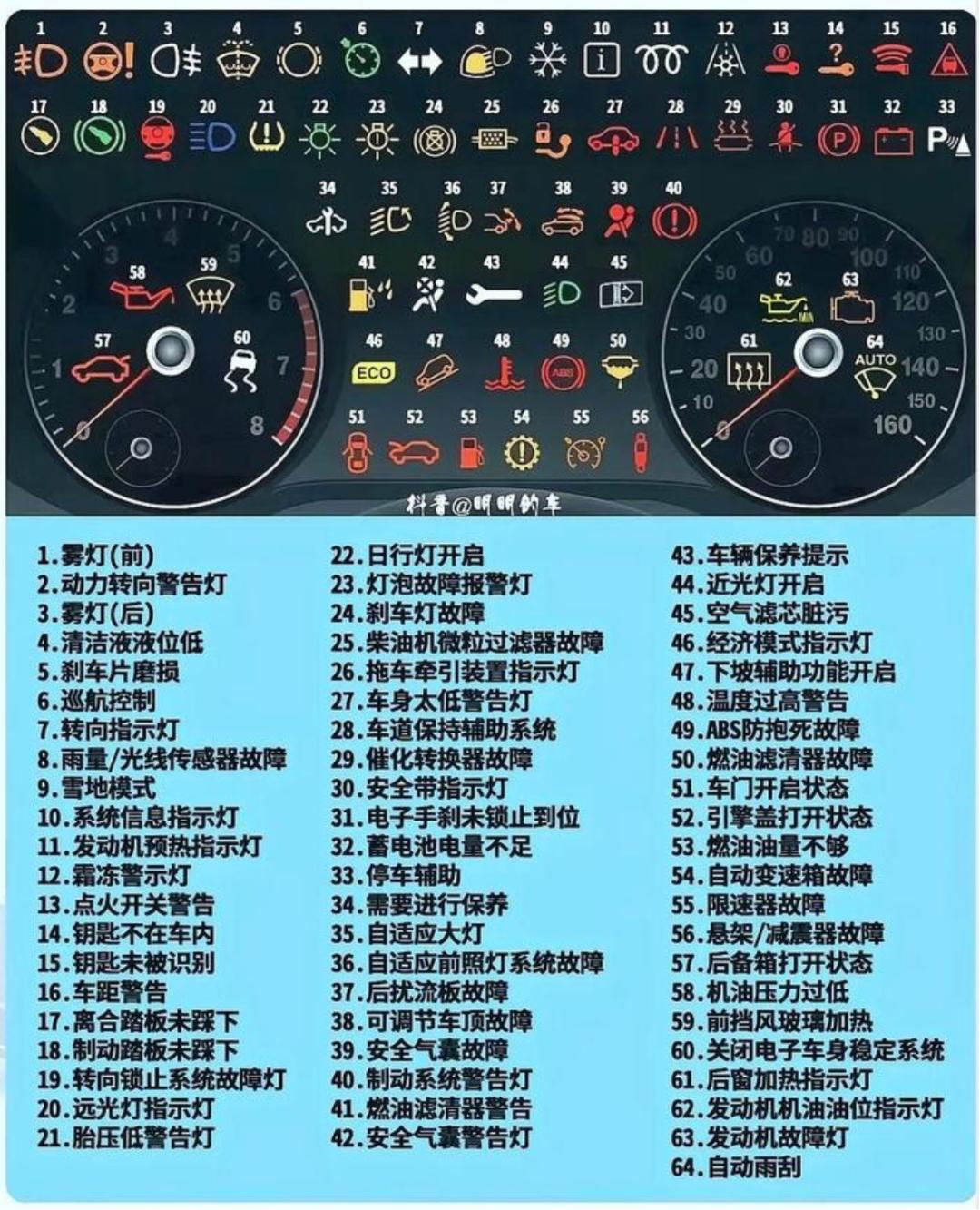
Picture/Illustration of fault codes Source/Internet, Screenshot from New Energy Outlook
The staff at 4S stores often take advantage of this and keep talking about "safety first" and "original - factory standards", forcing car owners to submit in an almost intimidating way. "What if the car suddenly stalls on the highway if this fault is not repaired?" "If you use non - original parts and an accident occurs, the insurance company won't pay." These words sound reasonable, but in fact, many are just to make car owners accept more expensive maintenance plans.
An even more effective move is the binding of warranty terms. The warranty terms of many brands clearly state that the vehicle must be maintained and repaired at authorized service outlets; otherwise, the manufacturer has the right to refuse to assume the warranty responsibility. This means that if a car owner chooses to have the car repaired outside because the 4S store's quote is too high, if there is a major problem with the battery or motor in the future, the manufacturer may not recognize it. This "implicit binding" makes car owners accept it even if they know they are being overcharged.
The third reason: The tacit interest relationship in insurance claims.
In the scenario of accident - car repair, there is often a delicate symbiotic interest relationship between insurance companies, loss adjusters, and repair institutions. The insurance company sets the loss and pays according to the standard of original parts, while the repair party uses parts with lower costs for repair, and the difference falls into the gray area. When there is a dispute over the repair plan, the insurance company often defaults or even secretly cooperates with the repair institution to raise the quote. Eventually, this bill is passed on to the increased car - insurance premiums of the next year, and all car owners pay for it together.
Losing money in selling cars and making money in after - sales service; car owners being ignorant and repair shops being good at "persuading"; insurance companies cooperating and car owners ultimately paying the bill - these three chains are interlocked, turning "over - repairing minor problems" into a gray business.
Car owners should be vigilant to avoid the "over - repair" trap
Let's look at a positive change in the industry: Tesla's open - access strategy.
Currently, Tesla freely provides all car owners and independent repair shops with a full set of maintenance manuals, circuit diagrams, diagnostic software, and parts interfaces. What does this mean? It means that you can take the official technical information to any regular third - party repair shop for car repair, and the repair quality fully meets the original - factory standards. More importantly, having maintenance and repairs done at an officially authorized third - party repair point does not affect the warranty of the whole vehicle and the three - electric system.
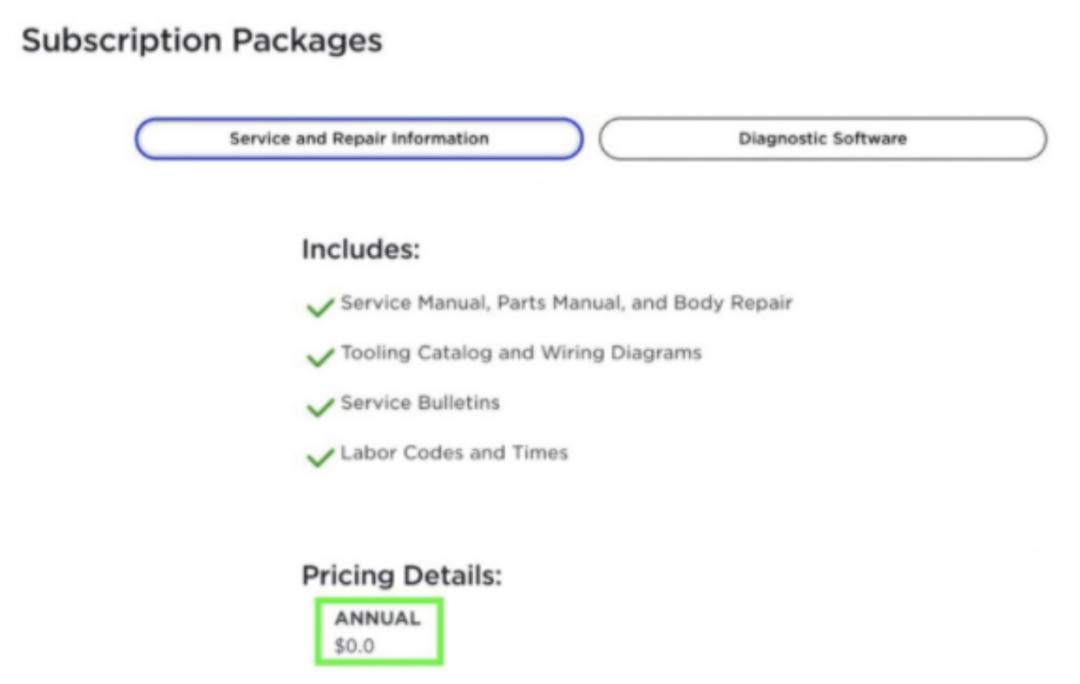
Picture/Tesla's free - access service and repair package Source/Internet, Screenshot from New Energy Outlook
This strategy was first implemented in the United States and is now gradually being opened up in China. It breaks the previous monopoly pattern of "you can only go back to the 4S store for car repair, otherwise, there is no warranty". When car owners have the right to choose, 4S stores dare not set high prices casually.
But before the industry is completely reshuffled, what can ordinary car owners do? The following five - step suggestions are hoped to help you avoid some pitfalls.
Step 1: Do your homework before going to the shop. Before choosing a shop, check the negative reviews online and focus on keywords like "the problem was fixed after going to another shop". If a shop is suspected of over - repair by multiple car owners