Spent a month building an app from scratch, the coder says: Hu Yanbin, you're making me cry
Recently, singer Hu Yanbin did something that surprised the entire internet circle.
It wasn't releasing a new song or holding a concert, but rather creating his own APP with his own hands.
This fan community product called "Yan Huo" took only a little over a month from conception to launch. The iOS version passed the review and entered the app store smoothly, and the Android version also opened for installation package download simultaneously.
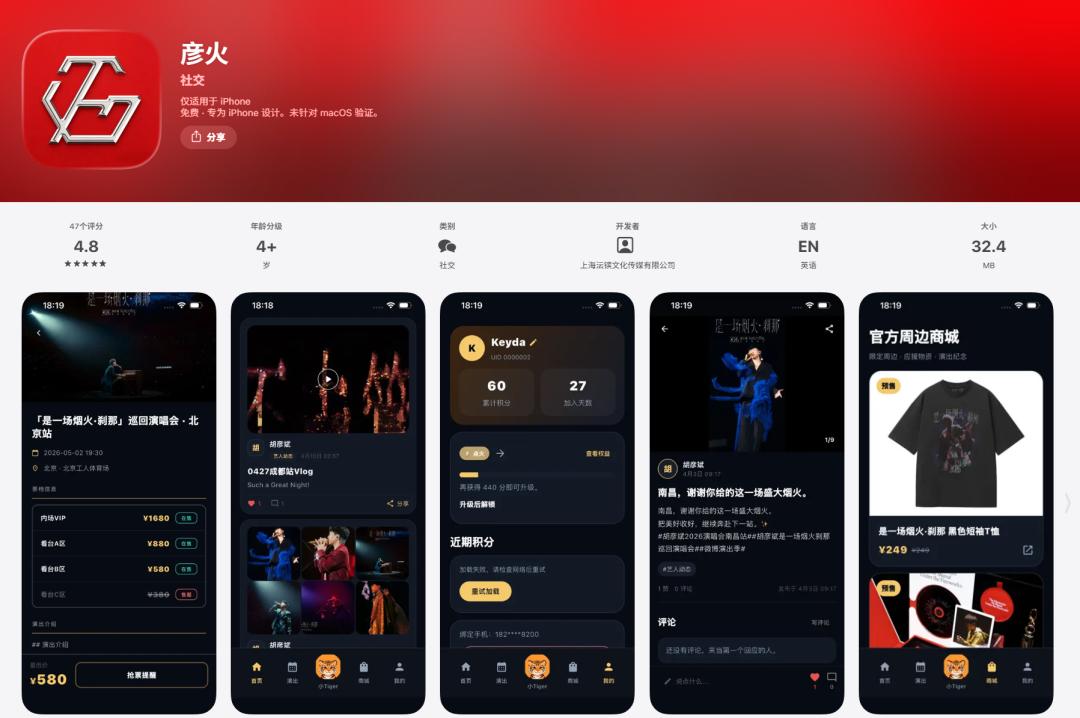
After the news spread, the comment section exploded instantly. The first reactions of many netizens were almost the same:
"When did the singer start writing code?"
"Are programmers going to be unemployed?"
"Making an APP in a month? Didn't it used to take at least half a year before?"
If we rewind the time five years ago, such a thing was really hard to imagine.
Because developing a complete community - type APP often requires a product manager to be responsible for requirement design, a UI designer for interface planning, a front - end engineer for page development, a back - end engineer for server architecture, and a testing team to debug repeatedly.
For a slightly more mature fan community project, it's normal to take half a year from project establishment to launch, and the development budget can easily reach over a hundred thousand or even several hundred thousand yuan.
What was most surprising about Hu Yanbin this time was not that he had the ability to make an APP.
It was that although he had the ability to outsource the project by spending money, he chose to do it himself.
Behind this, more and more people are realizing for the first time:
Software development in the AI era may really have changed.
I. Vibe Coding: Why are people who can't write code starting to develop software?
When Hu Yanbin developed "Yan Huo" this time, the most core tool was not a programming language, but a new concept that has recently become extremely popular globally - Vibe Coding.
It is usually translated as "Vibe Programming" in Chinese.
This concept was first proposed by Andrej Karpathy, the co - founder of OpenAI and the former head of AI at Tesla.
To put it simply: In the past, people had to adapt to code when developing software, but now, code starts to adapt to people.
In the traditional programming process, developers need to learn various languages such as Java, Python, and JavaScript, and also understand complex concepts such as databases, servers, and interface calls.
The biggest change in Vibe Coding is that you only need to state your requirements, and leave the rest to AI. For example:
"Help me design a fan check - in system", "Add a tour map function", "Create a message interaction community". AI can automatically generate the corresponding code.
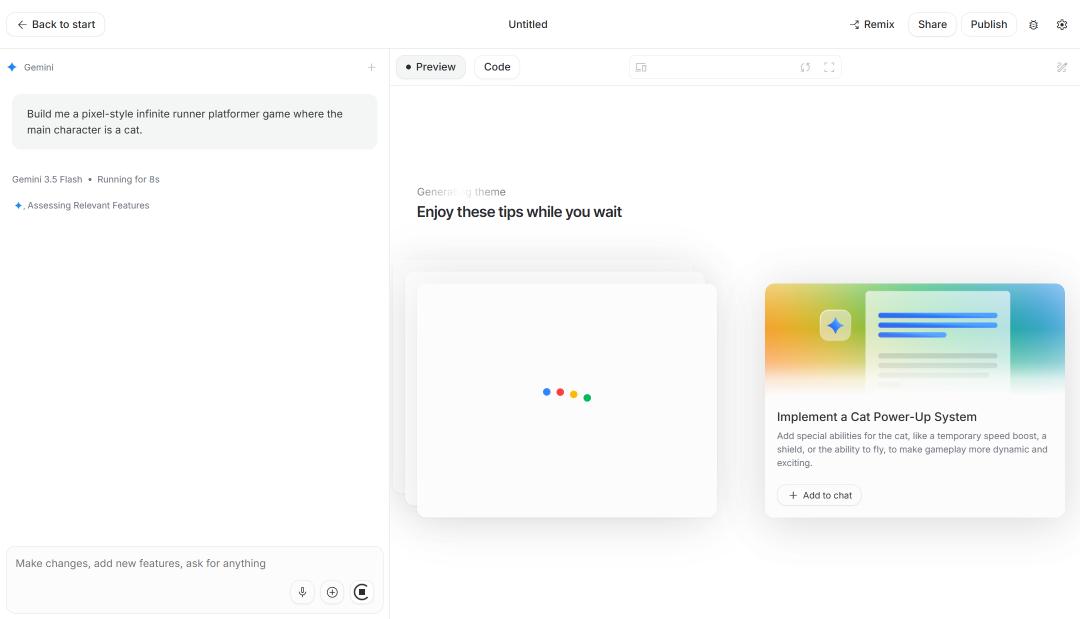
If there is a runtime error, developers don't need to check line by line.
Just copy the error message to AI, and it will automatically analyze the problem and provide a repair plan.
The technical threshold that used to require professional engineers to master for several years is now being continuously compressed by AI.
Many developers joke that in the past, people wrote code for computers. Now, people write requirements for AI.
Although it sounds like a joke, reality is moving in this direction.
II. What's truly remarkable about Hu Yanbin is never about learning programming
However, if we simply understand this event as "Hu Yanbin learned programming", we are actually missing the point.
Because the most noteworthy aspect of this event is not the code, but the requirements.
Many people overlook one thing: Although AI can write code, it doesn't understand fan culture.
It knows how to build a forum, but doesn't know what fans most want to talk about; it can generate pages, but doesn't know what features are most likely to make fans feel a sense of belonging. And these are exactly what Hu Yanbin is most good at.
After all, he has been deeply involved in the music industry for more than twenty years. Since his debut, he knows better than any product manager what his fans need.
Why create a tour map? Because fans like to record the concerts they've attended; why create an exclusive message board? Because fans hope to have a more private interaction space; why add a fan growth system? Because a sense of community belonging is an important part of fan culture.
These requirement designs seem simple. In fact, they are all the result of long - term industry experience accumulation.
Many programmers have strong development capabilities, but may not truly understand the emotional connection between singers and fans. Similarly, many excellent product managers can design standardized community products. But they may not know the real behavior habits of a mature fan group.
In other words: Code can be replaced by AI, but industry understanding is hard to be replaced.
This is why Hu Yanbin was able to create a truly valuable product in a short time.
III. What AI is eliminating is not programmers, but technical thresholds
The reason why the Hu Yanbin incident has sparked a huge discussion is that it essentially touches on the anxiety of many people.
Especially the programmer community.
Because in the past few decades, software development has always been a high - threshold profession: learning languages, learning frameworks, learning algorithms, learning databases. These knowledge areas have formed an important barrier for programmers.
And the emergence of AI is constantly lowering these thresholds.
But there is a very easily misunderstood problem here:
What AI lowers is the programming threshold, not the threshold for creating value.
Take a simple example: Ten years ago, making a short video required a professional photography team. Today, a mobile phone can complete the shooting. The result is not that all photographers are unemployed. Instead, after the threshold for content creation has decreased, people start to compete in creativity and content.
Programming follows the same logic: In the future, more and more people will be able to develop software. But the truly valuable people are still those who know what users need. Technology will become more and more popular, but insight will become increasingly scarce.
From this perspective, AI hasn't taken away programmers' jobs.
It just gradually shifts the value focus of programmers from "writing code" to "solving problems".
In the future, the most competitive developers may not be those who can write code the fastest.
But those who understand the industry best.
IV. The greatest opportunity for ordinary people lies precisely in their own professions
In fact, the biggest inspiration from Hu Yanbin's case for ordinary people is not "everyone should learn programming".
Instead, it is: Don't easily deny the professional abilities you've accumulated in the past.
In the past, when many people talked about AI, their first reaction was anxiety. They were worried about being replaced, about losing their jobs, and about not being competitive in the future. So some people started blindly changing careers; some people signed up for coding classes crazily; some people even prepared to quit their jobs and start over.
But Hu Yanbin's case precisely shows that what's truly important may not be learning a brand - new skill, but turning AI into an amplifier of your own abilities. Teachers can use AI to create courses, lawyers can use AI to assist in case retrieval, doctors can use AI to organize materials, salespeople can use AI to analyze customer needs, and designers can use AI to quickly generate plans.
According to Tianyancha data, in recent years, the number of domestic artificial - intelligence - related enterprises registering has been continuously increasing. The activity in areas such as AI application development and intelligent software services has significantly improved. More and more individual developers and small - and - medium - sized teams are starting to explore innovative product forms with the help of AI tools. Every industry is being reshaped by AI.
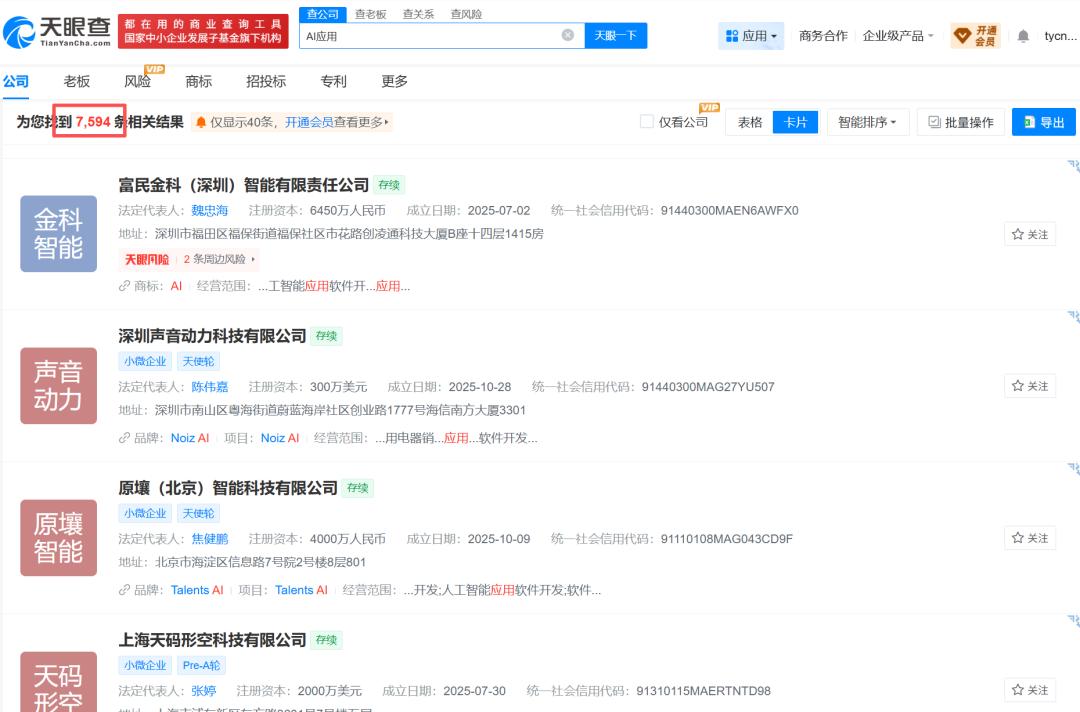
But the people who truly create value are still those with industry experience.
Because AI can only provide capabilities, and it is still people who decide how to use these capabilities.
V. What's truly scarce in the AI era is not technology, but cognition
Looking back at Hu Yanbin's APP development, many people see that a singer made an APP in a month.
But what's more worthy of attention is that a person who has been deeply involved in the music industry for more than twenty years has productized his industry experience with the help of AI.
In the past, many creative ideas couldn't be implemented because of the high development cost.
Now, AI is significantly reducing the cost of trial and error.
One person, one computer, and one idea have the opportunity to create a product that used to require an entire team to complete. This may be the most important meaning of AI.
It doesn't make everyone become a programmer, but gives everyone the productivity that only professional teams used to have. In the future, what really sets people apart may no longer be whether they can write code.
But who understands users better and who understands the industry better.
Who knows better how to use AI to transform their experience into products and value.
For ordinary people, instead of being anxious about what AI will take away, it's better to think about whether the experience they've accumulated in the past ten or twenty years can be re - amplified with the help of AI.
Because in the AI era, what's most valuable has never been the tool, but the person who can use the tool.