Some are showing off their technological prowess, some are downsizing their workforce, while tech giants like Tencent, 37 Interactive Entertainment, and NetEase are making strategic moves: Is AI "disrupting" the gaming industry?
As June arrives, the overall trend of the gaming industry this year has become apparent. Meanwhile, from May 21st to 25th, the 22nd China (Shenzhen) International Cultural Industry Expo kicked off at the Shenzhen International Convention and Exhibition Center.
At this expo, companies such as Tencent, NetEase, 37 Interactive Entertainment, and Tencent Games made appearances. The content and information presented by each company may represent the trends for the second half of the year. What's the specific situation? The DataEye Research Institute summarized and analyzed the trends for the second half of the year based on what was seen at the expo and relevant information.
Analysis 1: The major theme is AI! But it's not limited to games and comic dramas
The core theme of this expo is the application of AI technology. A large number of practical AI application results were on display at the expo site, including those from game companies such as Tencent, NetEase, and 37 Interactive Entertainment.
Tencent's booth centered around "games + technology". It demonstrated the intelligent AI teammates in "Peacekeeper Elite" and the AI system for the elf ecosystem in "Roco Kingdom: World", showing how large - model capabilities can optimize the human - machine interaction logic and enhance the overall player experience.
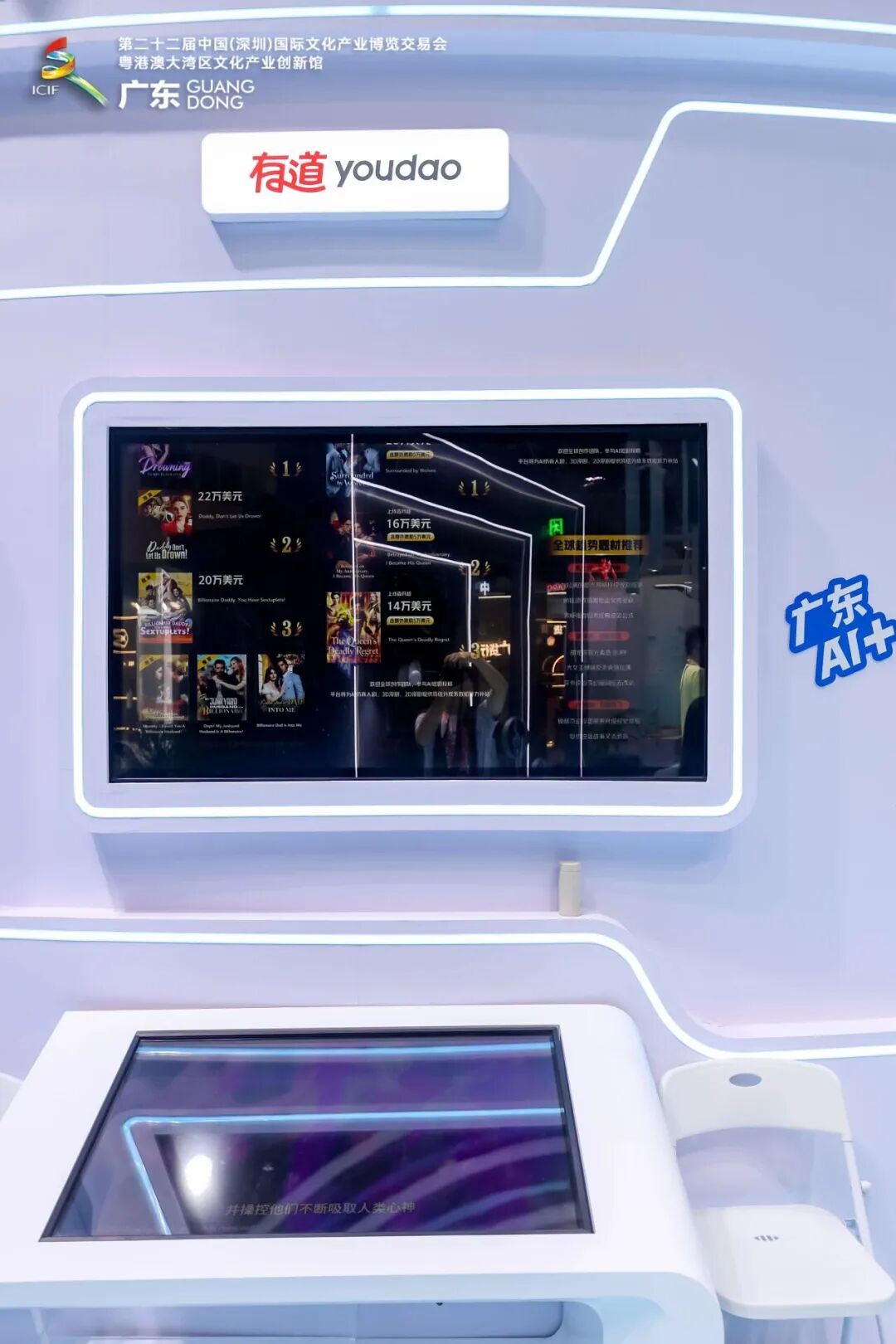
NetEase appeared in the cultural and creative exhibition hall and presented the relevant results of its AI web - drama overseas platform.
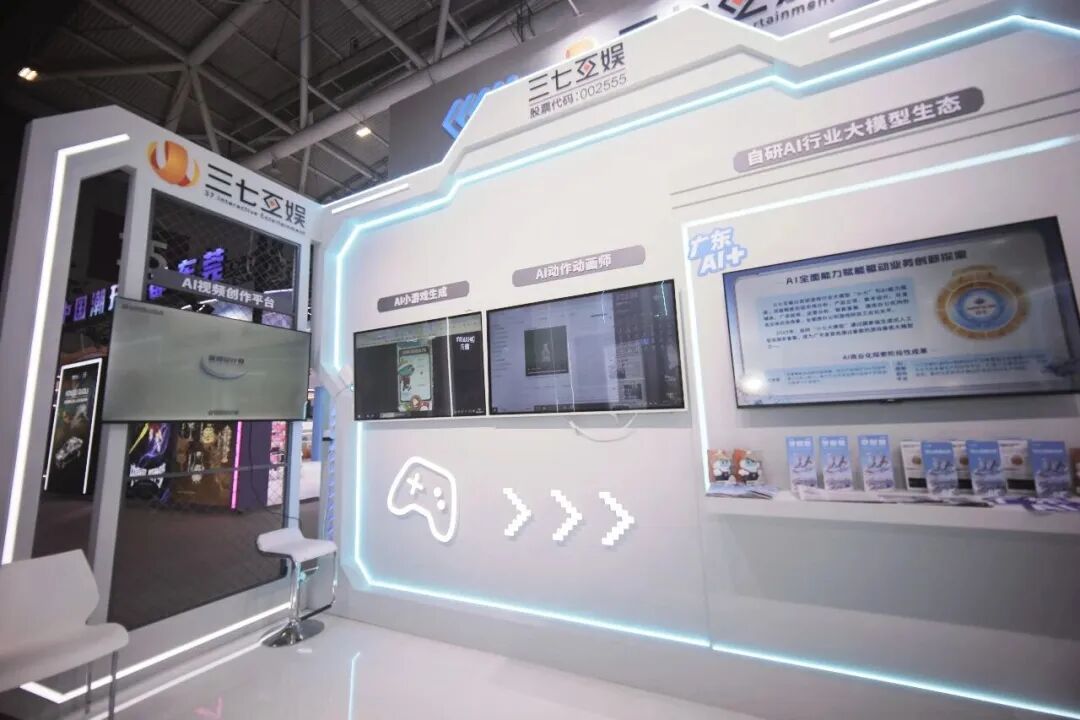
At 37 Interactive Entertainment's booth, the AI mini - game generation platform, AI action animator, and AI video creation platform were the core display points. The AI mini - game generation platform doesn't require programming skills. It can quickly generate playable H5 mini - games based on text descriptions, achieving an extremely fast transformation from ideas to products. When users upload the first frame of a 2D character and input instructions, the AI action animator can automatically generate a series of consecutive action frames, greatly improving the efficiency of game character production. The AI video creation platform, centered around "automated creation + professional collaboration", can upgrade the ability from quick video production to mass production of professional content.
Overall, leading game companies have gradually formed a complete operating concept in the AI field. On the one hand, they use the convenience of AI to create materials and simplify the game production process. On the other hand, they establish their own large AI models to catch up with the industry trend.
It can be said that leading domestic game companies have completed the strategic transformation of AI technology from early single - point experiments and partial trials to research and development, creation, operation, dissemination, and going global. AI is no longer just an auxiliary tool but a productive force that runs through the entire process of the game industry, becoming a key means for companies to reduce costs, increase efficiency, and achieve innovation.
Analysis 2: AI comic dramas are a double - edged sword: they snatch game users on one hand, and games can also gain users with their help on the other
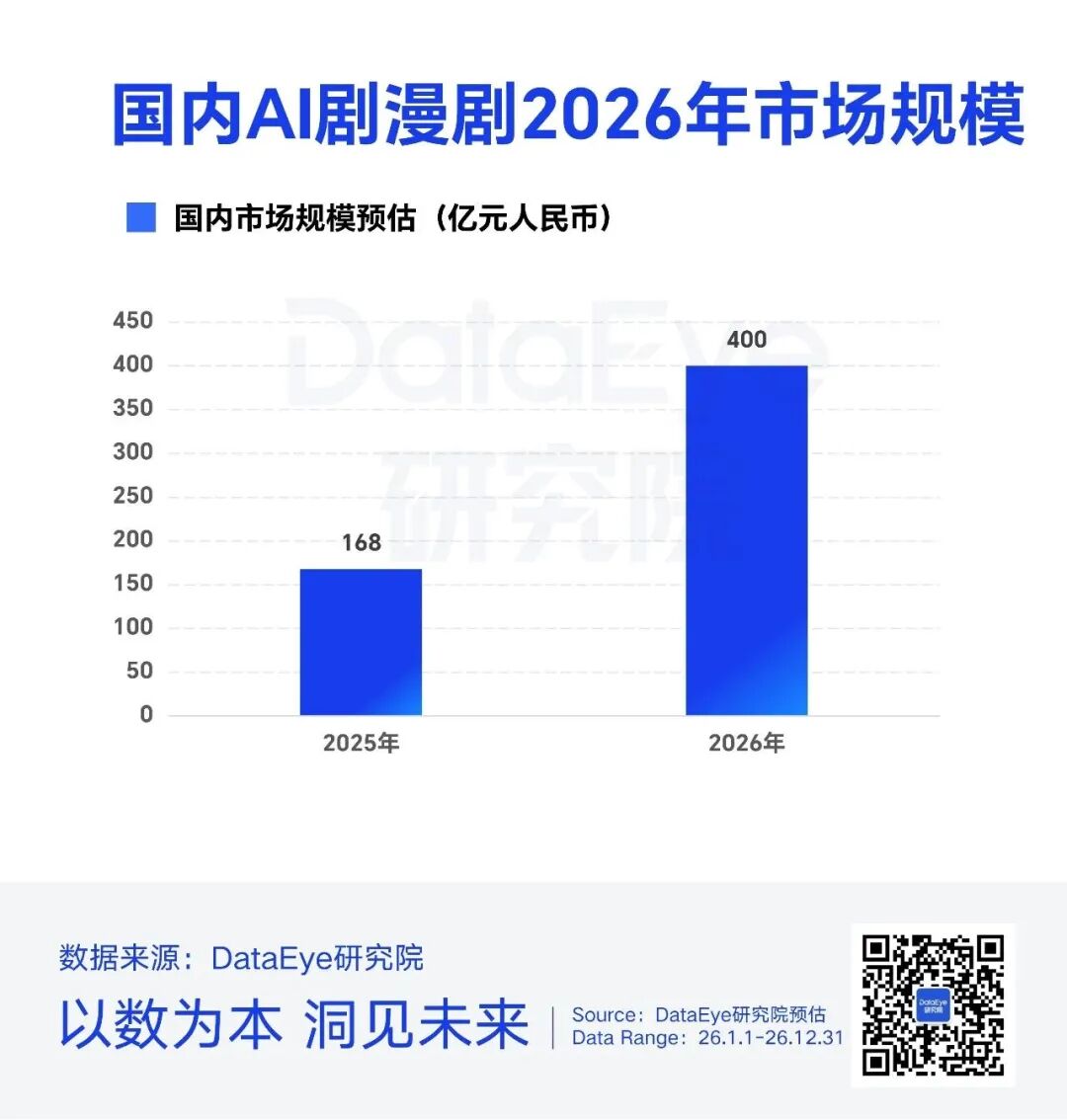
Based on the current advertising expenditure of AI comic dramas, the DataEye Research Institute estimates that the domestic market size of AI comic dramas will reach 40 billion yuan in 2026, a 138% increase compared to 2025. In addition, companies such as 37 Interactive Entertainment and NetEase are offering high salaries to compete for relevant talents. ByteDance, IGG, and Zhangwan are competing for overseas comic drama talents and offering a maximum annual salary of one million yuan.
Leading domestic game companies are crossing the border to enter the comic drama business. Companies such as 37 Interactive Entertainment and NetEase are recruiting core talents in IP adaptation, scriptwriting, and AI content production with large amounts of money. The continuous influx of talents and resources will further improve the quality and quantity of AI comic drama content, intensifying the effect of diverting users from the game industry.
In this context, the double - edged sword effect of AI comic dramas is more prominent.
On the negative impact side, comic dramas offer a fragmented, lightweight, and highly exciting entertainment experience, occupying a large amount of users' leisure time. Compared with game products that require in - depth experience and more time, low - cost and fast - paced AI comic dramas strongly divert light and casual mobile game users, especially squeezing the survival space of small and medium - sized game products, leading to an increase in customer acquisition costs and greater difficulty in user retention in the industry.
On the positive empowerment side, game companies turn competition into empowerment and use AI comic dramas to efficiently acquire users. They can quickly adapt game plots, characters, and worldviews into comic drama content through AI tools and spread it widely on short - video and streaming media platforms to achieve IP exposure across different circles.
Overall, the game and integration between AI comic dramas and the game industry will coexist in the long term, which is the core trend of the cross - track development of the game industry in the second half of the year.
Analysis 3: Under the impact of AI, game companies may make money while laying off employees
Currently, AIGC technology has deeply penetrated into core scenarios such as game material production, art production, content creation, multi - language going global, and operation and promotion.
The DataEye Research Institute has found that the proportion of AIGC creative material applications has been continuously increasing. In Q4 2025, the proportion of AI materials in NetEase's intelligent selection and promotion exceeded 80%.
At the Shenzhen Cultural Industry Expo, leading game companies also disclosed the core results of AI implementation:
37 Interactive Entertainment: It has self - developed the "Xiaoqi" large model, with AI art assets accounting for over 80% and a multi - language translation accuracy of 95%. Tencent Games: The penetration rate of material generation exceeds 85%, and the production cycle is shortened by 70%. NetEase: Empowered by AIGC in "Egg Party", the revenue of UGC maps increased by 40% month - on - month.
Undoubtedly, the emergence of AI has significantly reduced the material production and R & D costs of game companies. However, companies have found that since AI can do more, laying off redundant employees can further reduce corporate consumption.
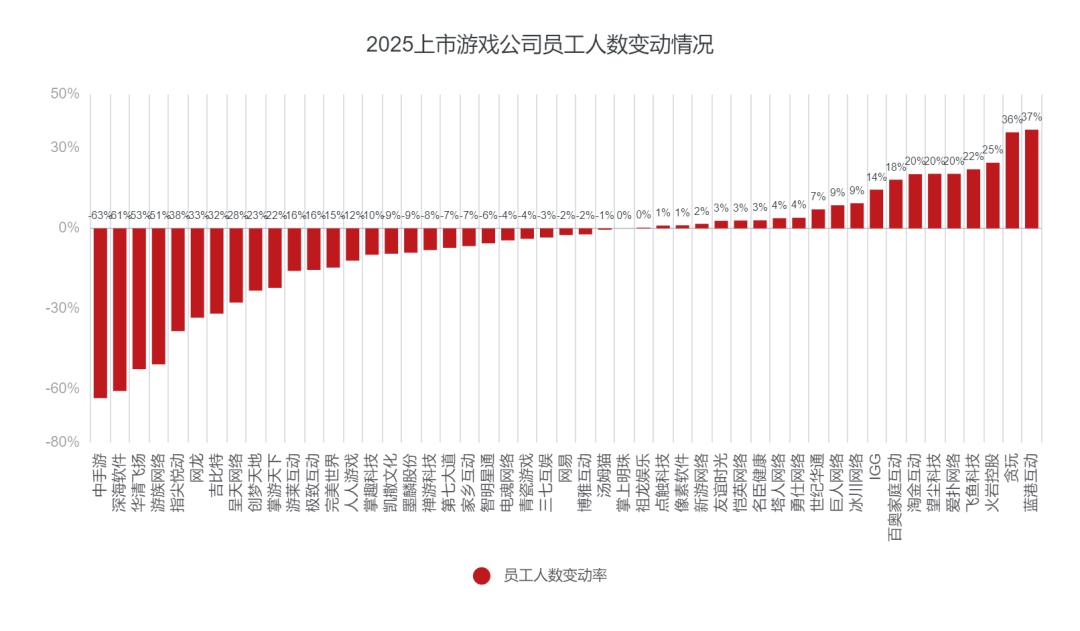
According to data from Game New Knowledge, among 49 listed companies mainly engaged in the game business, a total of 3,688 employees were laid off last year, accounting for about 5.15% of the number at the beginning of the year. Among the 49 companies, 27 had a decrease in the number of employees, accounting for about 55% of the total. The company with the largest lay - off rate reached a reduction of about 30%, and some companies significantly reduced their staff by 50% or even 60% (the company at the far left in the chart).
Overall, the game industry has completely bid farewell to the extensive development model of relying on a large amount of human resources and has officially entered a new development stage of AI - enhanced efficiency and revenue, and structural staff reduction. "Making money while laying off employees" will become a normal development feature of the game industry in the second half of 2026.
Analysis 4: Emerging game positions may be the new trend
According to relevant news reports, a brand - new position is emerging: AI Game Director, or AI game planner. Currently, the average annual salary of this position in North America is much higher than that of traditional game directors, and some large companies have already set up corresponding positions internally.
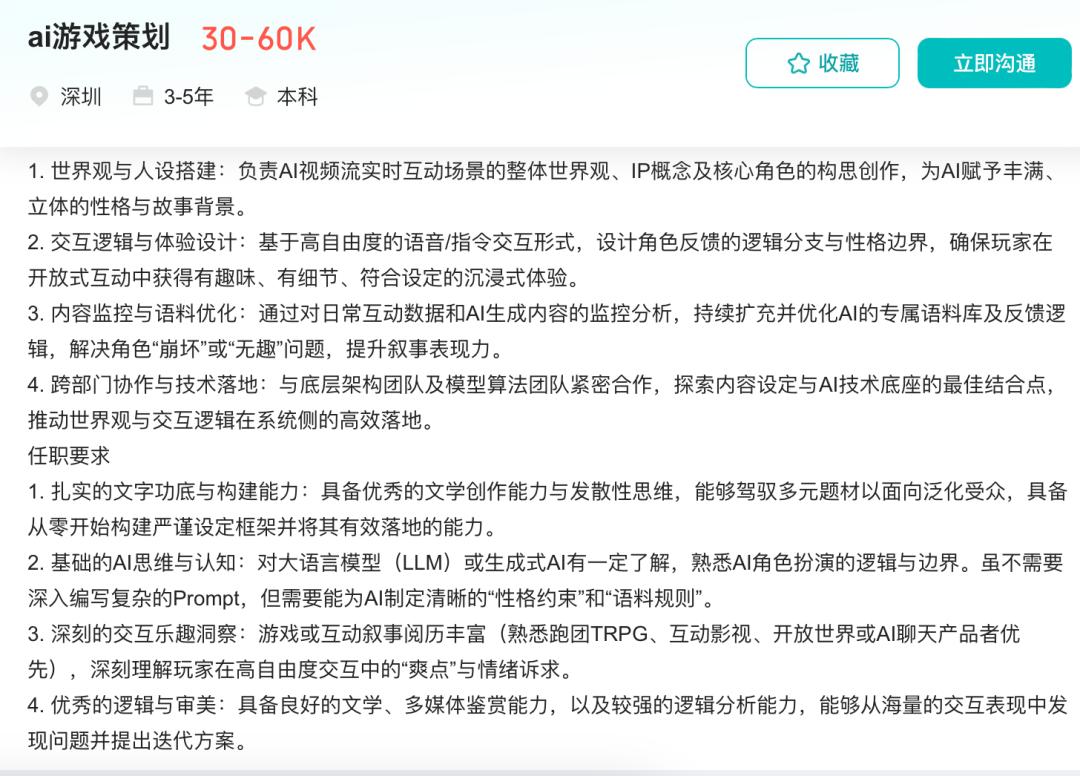
Specifically, this position requires compound - talented individuals. They need to understand game design, know the capabilities and boundaries of AI models, and be able to coordinate more than a dozen AI tools to work together. The most core ability is to judge which output from AI is high - quality content.
The reason is that with the progress of AI capabilities, planners have more time to focus on experience thinking and design. In the past, more energy was spent on the production side.
Actually, for players, it doesn't matter whether the underlying design logic comes from AI. The key is whether the content, art, and logic presented in the game can attract players. This logic has been mentioned in the development of the game industry for decades, but the focus of the game industry has been more on the R & D side and the revenue side.
This is caused by the company's personnel structure and revenue pressure. Now, the R & D side has been more liberated. What used to take a week to produce in program coding can now be produced by AI in a day or even less time. This allows companies to focus more on the design logic.
Based on this, AI game planners will become a new focus for game companies. Although currently only a few companies have set up relevant positions, it may become a highly sought - after position for game companies in the future.
Summary and judgment
Based on the dynamics and implementation results of major leading game companies and the data from the DataEye Research Institute, AI technology has become the core of the development of the domestic game industry in 2026, subverting the traditional system of the game industry. Combining the above four core analyses, the overall development trend of the game industry in the second half of 2026 is summarized as follows:
From an industrial perspective, the game industry may complete the AI industrial upgrade. The past development model of the game industry that relied on a large amount of human resources has completely ended. AI technology is no longer just a single auxiliary tool but a core productive force that runs through the entire process of game R & D. At the same time, the user diversion caused by the rapid expansion of the comic drama track will reshape the market competition pattern of the game industry, accelerate the industry reshuffle, and force small and medium - sized manufacturers to transform and upgrade.
From the perspective of corporate development, AI - enhanced efficiency and revenue and structural optimization have become the core normal for corporate operations. "Cost reduction, quality improvement, innovation, and cross - circle development" have become the core development keywords for leading game companies. On the one hand, leading manufacturers such as Tencent, NetEase, and 37 Interactive Entertainment have established mature self - developed large AI models and intelligent production systems. The penetration rate of core links such as AI material creation, art production, and content generation has increased significantly, greatly shortening the production cycle and reducing labor and production costs. On the other hand, the industry shows the normal feature of "making money while optimizing the personnel structure". AI replaces basic repetitive production positions, promoting companies to carry out structural lay - offs and staff reduction, and eliminating inefficient labor productivity.
From the perspective of the industry's future trend, the deep integration of AI will become the long - term development theme of the industry. Track integration, position innovation, and refined innovation will become the core development directions in the future. In the short term, the game and integration between AI comic dramas and the game industry, the industry structure optimization under AI - enabled cost reduction and efficiency improvement, and the competition for new - type talents will continue to run through the development of the industry in the second half of 2026. In the long term, industry competition will completely shift from "human resources and production capacity competition" to "AI technology application and content innovation" core competition. New - type compound positions represented by AI game planners will gradually develop from niche emerging positions to core necessary positions in the industry, becoming a key component of a company's core competitiveness.
Overall, the second half of 2026 is a critical period for the intelligent transformation of the game industry. AI brings not only technological innovation but also a comprehensive reshaping of the industrial model, business logic, talent system, and competition pattern.
This article is from the WeChat official account "DataEye" (ID: DataEye), written by Yj and published by 36Kr with authorization.