Both Surge 160%! After Their Mobile Phone Businesses Collapsed, Nokia and BlackBerry Are Raking in Quiet Money With AI
In the first half of this year, in the face of the strong demand for AI, the storage giants have reaped huge profits, and the stock prices of Samsung and SK Hynix have soared to new highs. Recently, AI concept stocks have all witnessed a strong upward trend.
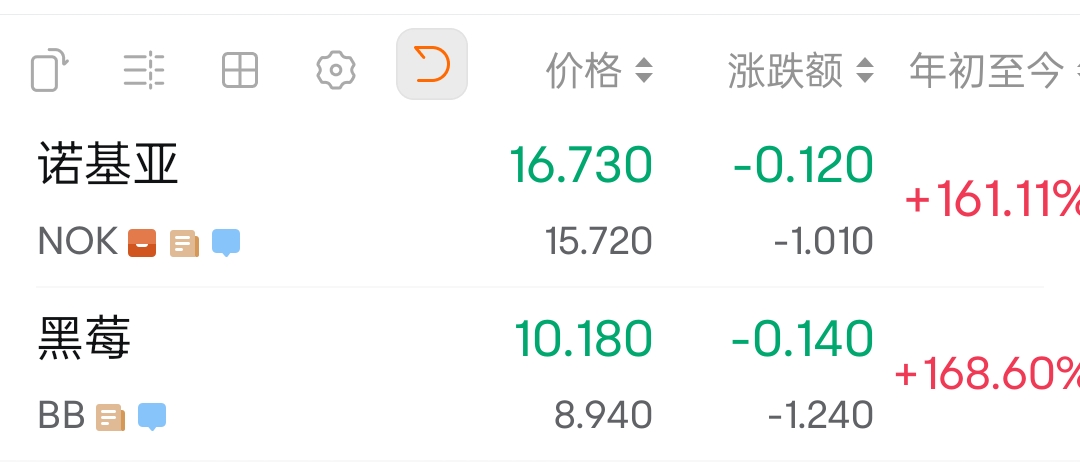
Among this large group of enterprises, we see two familiar names: Nokia and BlackBerry. In 2026, the stock prices of Nokia and BlackBerry skyrocketed, with their gains since the beginning of the year exceeding 160%.
(Image source: Lei Technology)
What surprises many people is that these two former mobile phone brands have successfully completed their transformation in the AI era and become providers of AI infrastructure. Their ability to stage a comeback is ultimately because they have carved out a niche in the segmented fields of AI and reaped the dividends of the rapid development of AI.
Nokia and BlackBerry Aren't Dead; They're Quietly Making Big Money with AI
Even today, many people's impression of Nokia may still be stuck in its days as the dominant player in the mobile phone industry. After failing to transform in the era of touchscreen smartphones, Nokia faded out of the mobile phone circle. Nowadays, the only things that can occasionally catch people's attention are the HMD mobile phones with Nokia brand authorization and Nokia's own feature - phone business.
However, in fact, Nokia has always had more than just the mobile phone business. It is also an important telecommunications equipment provider, and many base stations around the world were built by Nokia. Nokia's ability to share a piece of the pie in this wave of AI has a lot to do with its own telecommunications business.
Not long ago at the Taipei Computer Association (TCA) Show, Jensen Huang, the founder of NVIDIA, made an appearance and gave a speech. When he said, "Marvell will be the next trillion - dollar company," Marvell's stock price immediately soared. As the leader of the world's first 5 - trillion - dollar enterprise and a leading figure in the AI industry, Jensen Huang has become the god of wealth in the AI circle. A single word from him can cause a company's stock price to skyrocket.
Regarding the future development direction of AI infrastructure, Jensen Huang pointed out a key point - connection. The basic logic is as follows: Chips and storage build servers, servers form clusters, and data centers and AI factories need to be connected. How to solve the connection problem? Jensen Huang's answer is to use copper cables wherever possible and optical devices only when necessary. Copper cables are low - cost but have limitations. Once AI data transmission exceeds the critical point, optical communication is required.
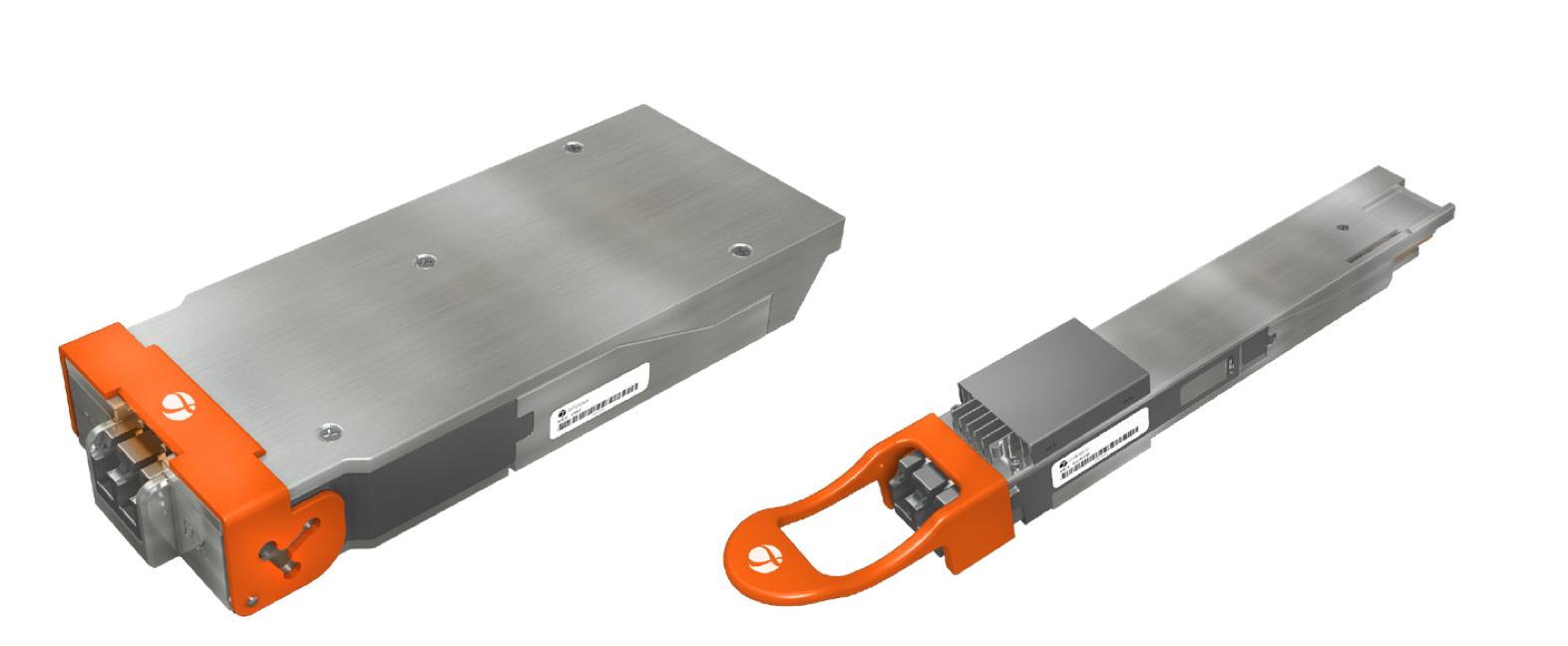
Coincidentally, Nokia has an advantage in the field of optical communication. In 2024, Nokia spent $2.3 billion to acquire the American company Infinera. Infinera is an optical fiber equipment provider and has a complete industrial chain from chip design, material production to wafer manufacturing and packaging testing. The photonic integrated chips made by Infinera integrate lasers, optical amplifiers, modulators, and detectors into a small - sized device. At the same time, the ICE8 solution announced by Infinera can achieve a single - wavelength capacity of 2.4T, and its power consumption is 70% lower than the industry average.
(Image source: Infinera)
Nokia's acquisition of Infinera aims to improve the long - distance transmission ability of optical communication. This precisely hits the pain point of the distributed deployment of AI infrastructure. For example, to connect data centers in different cities, high - speed and stable optical communication is needed to solve the connection problem. As soon as Nokia completed the acquisition, it received a large number of AI orders, with customers including OpenAI and CoreWeave. In Q1 of this year, Nokia received another order worth 1 billion euros, and the optical network immediately became Nokia's second - largest business.
In October 2025, NVIDIA invested $1 billion in Nokia, endorsing Nokia's status as a provider of computing power infrastructure. After reaching a cooperation with NVIDIA, Nokia obtained an entry ticket to the in - depth AI industrial chain. For example, Nokia can introduce NVIDIA's GPUs into its base stations, enabling the communication network to have native AI capabilities.
In fact, the entire optical communication industrial chain has more segmented levels. For example, Marvell, mentioned by Jensen Huang, and Broadcom, which control the underlying chips, provide the computing power base for optical communication; enterprises such as Coherent and Lumentum mainly produce optical modules for photoelectric conversion. Nokia's role is different. It is mainly responsible for providing large - capacity, long - distance optical network transmission, which is equivalent to providing cross - city and cross - country highways for AI data centers.
At this point, we can understand that the sharp rise in Nokia's stock price in a short period is fundamentally because it has firmly secured its position in the field of optical communication. The technology and resources it possesses are exactly what the current and future expansion of AI infrastructure urgently needs.
Nokia's ability to reap the AI dividends is inseparable from its foundation in the telecommunications field and its strategic vision of early layout. BlackBerry's successful transformation is related to its "legacy" from the feature - phone era.
Like Nokia, BlackBerry was eliminated in the era of touchscreen smartphones. In the feature - phone era, BlackBerry was able to gain a foothold in the high - end market mainly because of its highly secure operating system. After the mobile phone business completely failed, BlackBerry shifted its business focus to basic software.
QNX, the micro - kernel real - time operating system under BlackBerry, has achieved great success in the fields of automotive and physical AI. In cars, different from the in - vehicle entertainment system, QNX is a more underlying system, which is responsible for the control and response of key functions such as brake assistance and autonomous driving, featuring extremely high stability and extremely low latency. Therefore, the underlying systems of NVIDIA and Qualcomm chips in smart cars are all QNX. Currently, more than 200 million cars around the world are equipped with QNX, and most electric vehicle enterprises also use QNX.
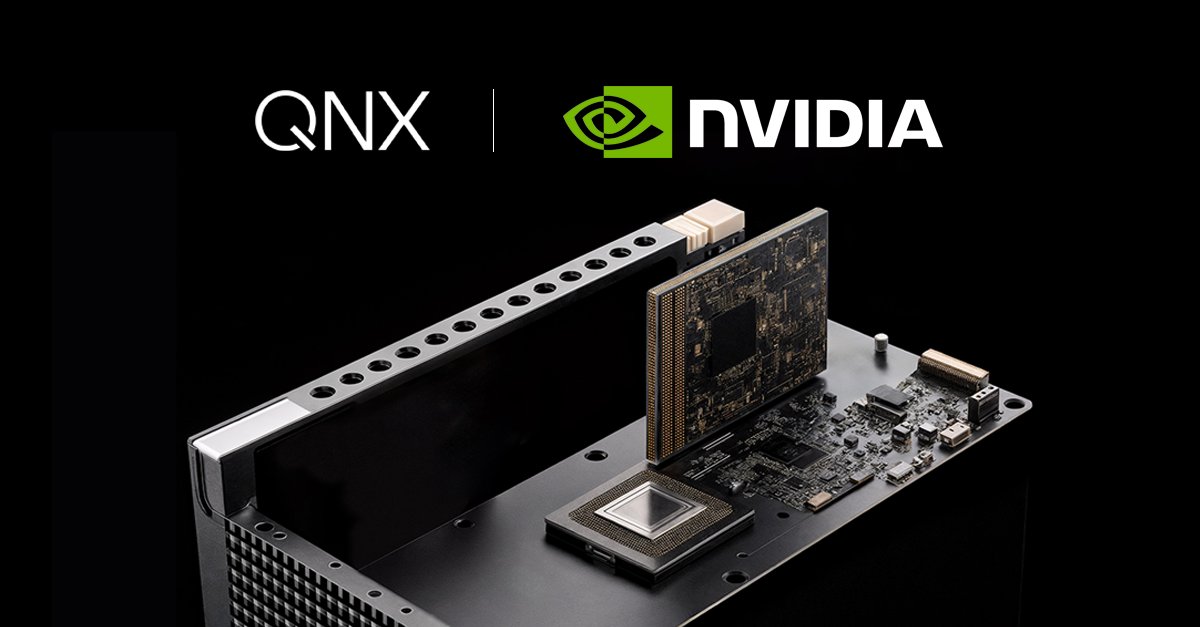
Meanwhile, QNX also plays a key role in the field of embodied intelligence. For embodied intelligent devices such as robots and robotic arms, during actual operation, the AI chips deployed in them are responsible for reasoning and decision - making, but an additional safety net is needed to ensure safety. In this regard, NVIDIA chose QNX. In April this year, BlackBerry officially reached a cooperation with NVIDIA, and QNX was integrated into NVIDIA's IGX Thor chip and applied in fields such as robotics, medical care, and industrial automation.
(Image source: QNX)
Currently, the deployment of physical AI is still in a relatively early stage. With the large - scale implementation of embodied intelligence in the future, QNX and BlackBerry's entire security system business still have greater development space. The sharp rise in BlackBerry's stock price itself reflects the expectations of a large number of investors for its future growth.
HTC and LG Also Want to Transform into AI, but Haven't Gotten the Big Rewards Yet
Like Nokia and BlackBerry, HTC and LG are also once - popular mobile phone brands. However, these two brands were at least popular in the Android camp for a while.
After losing out in the smartphone market, HTC bet all its chips on the VR business. HTC VIVE was indeed a pioneer in this field, and with its cooperation with Valve, it was once the absolute king in the PC VR field. However, soon, due to factors such as high product prices and the lack of differentiated ecological content, HTC lost in the competition with brands like Meta. In 2025, HTC sold its VIVE business to Google.
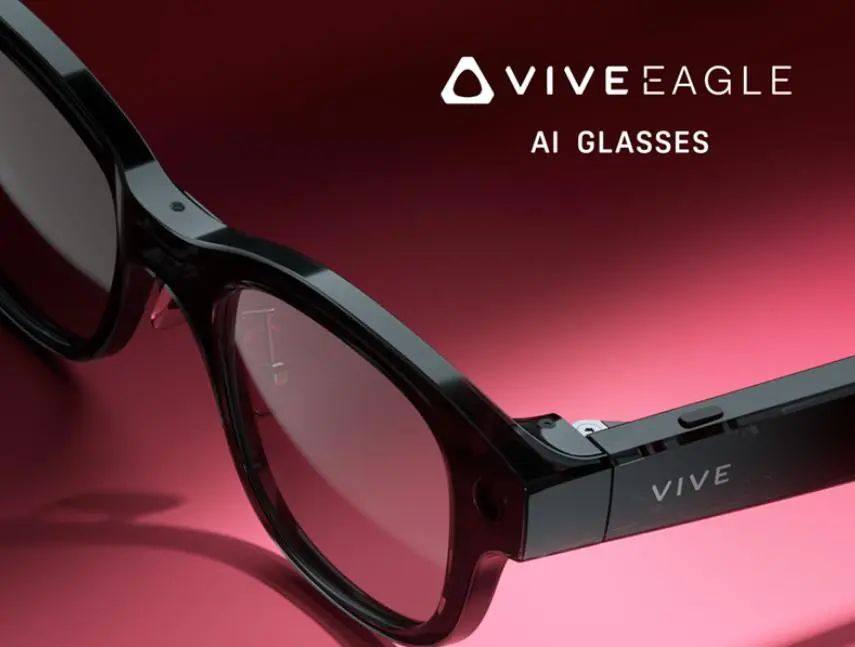
In the wave of AI, HTC is also trying to complete its AI transformation. Many years ago, HTC tried to launch an AI - enabled mobile phone, but it was more of a gimmick than a real success and didn't make much of a splash. Last year, HTC launched the AI glasses VIVE Eagle, which is connected to Gemini and GPT. However, HTC has not formed a technological or product advantage in the field of AI glasses. The products of brands such as Alibaba, ROKID, and Huawei are obviously more appealing.
(Image source: HTC)
Frankly speaking, at present, HTC's AI transformation seems like a desperate attempt without really finding a breakthrough. In contrast, LG's AI transformation is a bit more successful. All along, LG has a very rich business portfolio, so even if it abandons the mobile phone business, it won't be severely damaged. LG's breakthrough points in the AI transformation are mainly in fields such as home appliances and server cooling.
In terms of home appliances, at this year's CES and MWC, LG proposed the concept of "zero labor". According to LG's vision, the AI system and robots jointly manage the household, freeing people from housework. In the specific implementation path, home robots cooperate with smart home appliances. For example, a robot can take ingredients from the refrigerator and put them into the oven for baking, and can also perform specific service tasks in the home space. The CLOiD household robot demonstrated by LG is equipped with a robotic arm, which can not only take milk from the refrigerator and put bread into the oven but also directly fold and stack clothes after the washing and drying are finished.
In addition, LG is also making efforts in a relatively inconspicuous field - it is vigorously developing heating, ventilation, and air - conditioning (HVAC). Currently, with the sharp increase in global computing power centers, the demand for cooling systems has also increased significantly. HVAC has become an indispensable heat - dissipation guarantee facility for data centers, semiconductor factories, etc. LG Electronics' Q1 financial report shows that the revenue of the ecological solutions department where HVAC is located in that quarter was 2.82 trillion won, almost doubling compared with the previous quarter but slightly declining year - on - year.
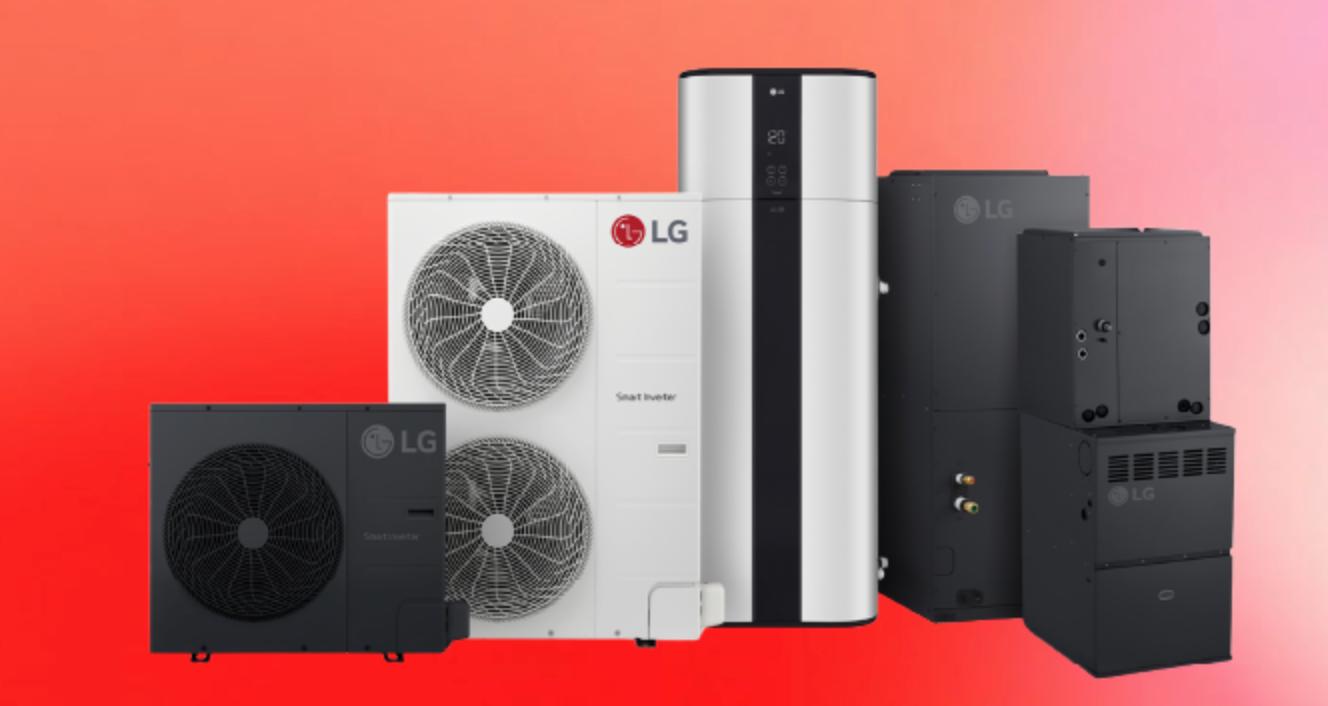
(Image source: LG)
Objectively speaking, LG's HVAC business can indeed play a role in the field of AI cooling. However, the competition in this field is also very fierce. Nowadays, the power density of AI data centers is extremely high, and traditional cooling equipment can hardly solve the heat - dissipation problem at once.
Currently, the popular new cooling technology in this field is liquid cooling, where the coolant is directly introduced into the server or even contacts the chips. Therefore, LG's cooling business can get a small share of the benefits from the rapid development of AI but cannot penetrate into the most core part, so it hasn't reaped big rewards like Nokia and BlackBerry.
Conclusion
Overall, the different fates of former mobile phone giants in the AI era reflect an objective business law: In a new wave of technological innovation, whether an enterprise can reap the core dividends depends on whether it has irreplaceable underlying barriers, rather than simply chasing concept trends.
The comeback of Nokia and BlackBerry lies in the fact that they have applied their previously accumulated optical network communication and system security technologies to the infrastructure links urgently needed for AI computing power interconnection and embodied intelligence, successfully occupying the core position in the industrial chain and making a sure - win business.
In contrast, HTC's struggle in terminal hardware and LG's fierce competition in the periphery of the cooling business show that if an enterprise cannot address the most core pain points in the industry to build a technological moat, it is difficult to obtain unexpected market returns through the extension of marginal businesses.