He used AI to sell his property and earned an extra 610,000 yuan
On June 4th, according to a report by The New York Times on May 29th, Stuart A. Thompson, a technology journalist for the newspaper, recently conducted an experiment staking the family's largest asset: without hiring any real - estate agents and relying almost entirely on a chatbot, he sold his family's house in upstate New York.
The house was finally sold for slightly over $600,000 (approximately RMB 4.1 million), higher than the $520,000 (approximately RMB 3.52 million) that Thompson paid to buy it four years ago.
Considering the premium above the asking price and the approximately $36,000 (approximately RMB 240,000) in commissions saved, he estimated that he made over $90,000 (approximately RMB 610,000) more from this house sale compared to using an agent.
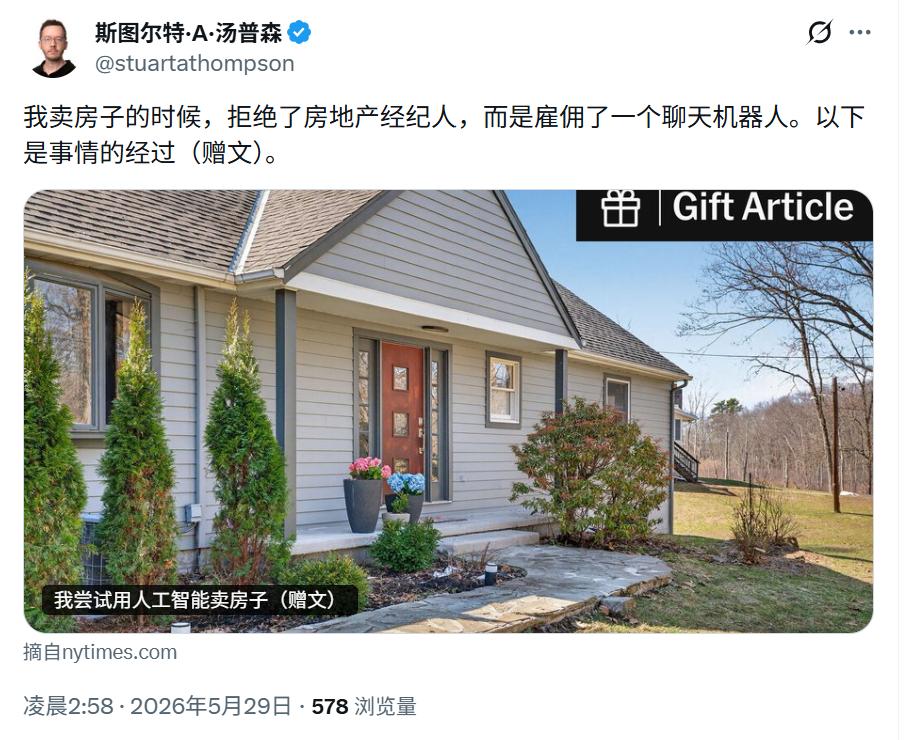
▲ Thompson posted a tweet sharing his experience of selling a house using an AI chatbot (Source: X)
Thompson did some calculations. If he followed the conventional process for this house, he would have to pay approximately 3% commission to both his own agent and the buyer's agent, totaling over $30,000 (approximately RMB 200,000).
The main tools he used this time were a Google Gemini chatbot that costs $7.99 per month (approximately RMB 54) and the browser of the AI search company Perplexity.
What surprised him even more was that the property listings, emails, and negotiation scripts written by the AI were so professional that even his peers couldn't tell. A buyer's agent repeatedly confirmed on the phone and insisted that he himself was a senior real - estate agent.
01 Several agents thought this house would be sold at a loss, but he used AI to handle listing, copywriting, and pricing
Four years ago, Thompson and his wife bought this three - bedroom, two - bathroom single - story house in the Hudson Valley for approximately $520,000 (approximately RMB 3.52 million). The house is located on more than an acre of wetland. In March this year, as their second child was about to be born, they decided to move to a new house.
At first, they planned to hire an agent like 91% of home sellers. Based on a rough estimate on the real - estate platform Zillow, the house could probably be sold for $550,000 (approximately RMB 3.72 million).
But the feedback from several agents made Thompson suspicious. The algorithm model of one agency estimated a price lower than what he paid to buy the house. Another agent, while touring the kitchen, bluntly said that this house "would probably be sold at a loss." Meanwhile, hiring an agent was not cheap, as the bilateral commission alone would exceed $30,000.
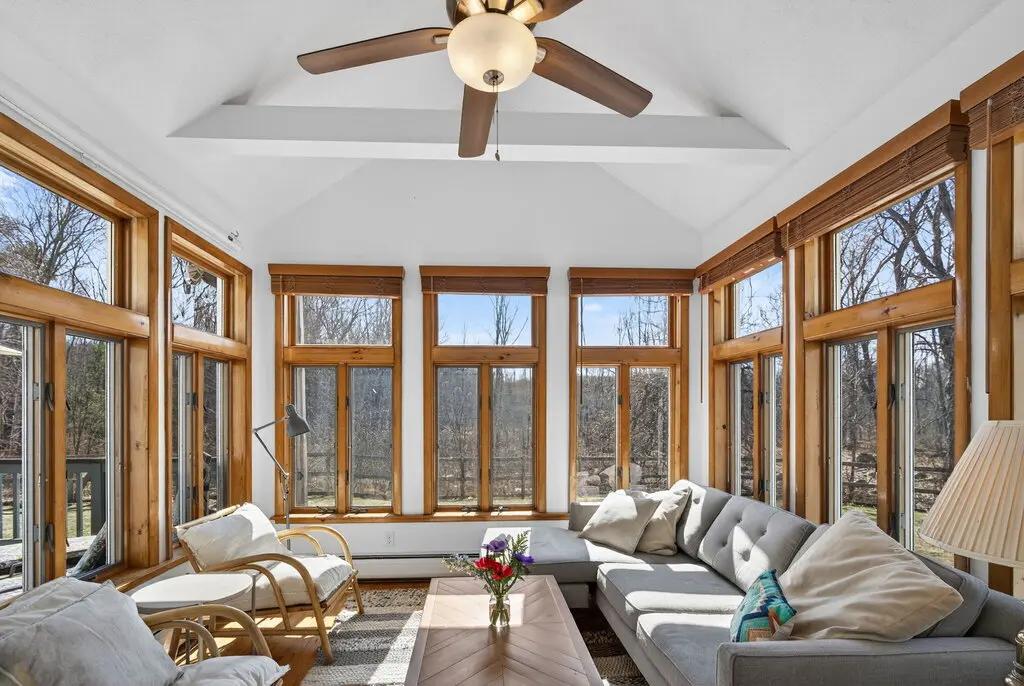
▲ Interior view of the house Thompson sold (Source: The New York Times)
Out of curiosity, Thompson gave the basic information of the house to the chatbot and asked it to write a property description. The AI quickly generated a copy, describing the house as an ideal residence with "excellent lighting" and "perfect for bird lovers."
After reading it, he made up his mind to replace the agent with AI. In the following three weeks, he asked Gemini hundreds of questions: from recommending local photographers and staging the house, to how to arrange the photo gallery to be most appealing (outdoor scenes first, kitchen in the middle, and floor plans at the end), and to explaining terms like "seller concession" and "automated valuation model." The AI almost answered every question.
For the listing process, he used the online listing service Homecoin to list the house for $200 (approximately RMB 1,350). On March 19th, the listing went live on Zillow. Mixed among the listings represented by agents, it showed no signs of amateurism.
The AI wasn't entirely reliable. Although Thompson didn't plan to hire an agent, he still had to pay up to 3% commission to the buyer's agent in the final transaction. When he complained to the chatbot about this cost, the AI suggested writing "commission is 0" in the listing.
This practice actually violated an industry settlement agreement in 2024 and could have led to a fine. Fortunately, Homecoin had warned him about this as a common mistake, so he didn't follow the suggestion.
02 AI acted as a consultant for selling the house, supervised negotiations, and saved $80,000 in commissions
After the listing went live, viewing appointments quickly flooded into his email. There were nearly 20 appointments over the weekend. Thompson even entrusted the communication with agents to the AI: he copied every message sent by the other party to the chatbot and then forwarded the AI's response back to the other party as it was. He also requested that all communication be via email or text and not by phone. The Zillow backend showed that the listing quickly accumulated 1,100 views and 91 favorites.
Negotiation was the most daunting part for Thompson, and the AI helped a great deal. When he planned to tell a potential buyer who was about to make an offer that "I'm not playing tricks and I'm not using your offer to drive down the price," the chatbot, which usually just agreed with him, rarely poured cold water on him and warned him not to say that — in negotiations, once someone emphasizes that they're "not playing tricks," the other party will immediately assume they are, making them seem like an inexperienced amateur. Even though the house was rejected 14 times during the viewing process, the AI still judged it as a healthy sign for the listing.
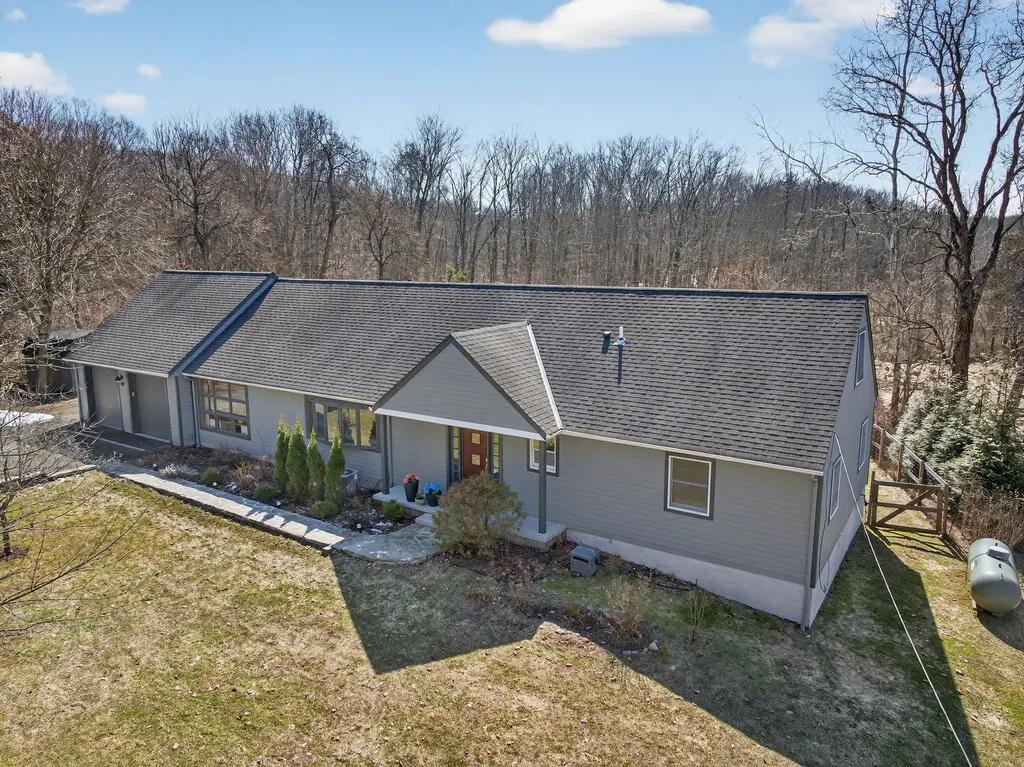
▲ Exterior view of the house Thompson sold (Source: The New York Times)
By 5 p.m. on Monday, Thompson received three offers, all above the asking price. All the buyers waived the home inspection and appraisal, and they had good loan qualifications. After uploading the three offers to the AI, its conclusion was the same as the couple's: choose the offer with the highest certainty, even if the price was slightly lower than the highest offer.
While discussing the counter - offer plan with the AI, Thompson came up with an idea: let the buyer pay 2% commission to their own agent instead of him. This alone saved him over $12,000 (approximately RMB 80,000), and the buyer almost immediately agreed. The house was finally sold for slightly over $600,000. For the transfer process, he hired a human lawyer and paid a small fee.
03 The selling price proved that AI didn't let him down, but the real - estate agent business has been pushed to a crossroads
After the transaction was completed, Thompson asked Richard Vizzini, a local real - estate agent with ten years of experience, for his opinion. The agent judged that the house "was probably worth over $600,000" and even guessed that it could sell for over $650,000 (approximately RMB 4.4 million), which was completely opposite to the previous agents' prediction of "selling at a loss".
Thompson then did another calculation: selling the house for approximately $605,000 without paying any commission was equivalent to a transaction of approximately $643,000 (approximately RMB 4.35 million) with normal commission paid. He thus concluded that even if an agent could sell the house at a higher price, the only one who would really make a profit was the agent.
Dan Weisman, a spokesperson for the National Association of Realtors in the United States, emphasized that there are many variables such as price and closing date in a purchase contract, and there is still a great need for "human oversight" at present.
Melissa and Michael Quinn, the couple who bought the house, have had a long - standing relationship with their agent for nearly ten years in buying and selling houses and don't regret paying for an agent for this transaction. But when asked if they would use AI to sell a house in the future, they both answered affirmatively without hesitation. Melissa said it "could save thousands of dollars."
04 Conclusion: What AI sold this time was not just a house, but the experience that agents rely on to charge fees
When Thompson reviewed the process, he found that what the chatbot provided was no longer just facts learned from Wikipedia and training materials, but something close to "judgment," that is, a set of strategies and postures for dealing with high - risk situations, which in the past could only be accumulated through talent or many years of work.
The significance of using AI to sell a house lies in that it has extended the capabilities of generative AI from writing copy and looking up terms to making decisions for people. The moat of real - estate agent - like professions has long been built on information asymmetry and intuitive experience, which are exactly the two foundations that AI is eroding first.
Thompson admitted that after relying heavily on AI, he even struggled to write a simple thank - you email. He thought he was amplifying his own abilities, but in fact, he was being gradually replaced. And if he had followed the AI's wrong suggestion of writing "commission is 0," he would have almost crossed the red line of violating regulations and facing a fine.
This means that in the short term, a more realistic scenario is not that AI will replace professionals, but that professionals will step back to the position of "providing a safety net" and take responsibility that AI cannot.
This article is from the WeChat official account “Zhidongxi” (ID: zhidxcom), written by Chen Jia, and is published by 36Kr with authorization.