For the private space industry, there is no need to blindly chase the aggressive development pace of SpaceX.
A few years ago, Tesla led the rapid development of electric vehicles. Now, SpaceX has sparked a frenzy in commercial spaceflight.
Just recently, SpaceX submitted a prospectus to the SEC. Its financing target is between $75 billion and $80 billion, and its valuation ranges from $1.75 trillion to $2 trillion. This figure basically secures it the largest IPO in human history. Along with SpaceX reaching its peak, almost all space stocks are also on the rise. As an analyst said, "This is not just about one company. Just as Tesla defined electric vehicles, the space sector is also experiencing a breakthrough moment, opening up a brand - new track."
Naturally, this also includes China's highly anticipated commercial space companies. During the collective sprint of companies like LandSpace towards listing, if SpaceX can support such a high valuation, the capital market's imagination for them will be further unleashed.
However, the halo of the giant also looms over them. Questions like "Who will be the next SpaceX?", "How to compete with Elon Musk and SpaceX?", and "When can we make money like Starlink?" reflect the market's new round of scrutiny of commercial space companies. But simply benchmarking against SpaceX may not be the story for China's commercial space industry.
The hotter the market, the more valuable the companies
Before SpaceX entered the listing process, the title of the "strongest commercial space company on Earth" had already given it a non - negligible valuation. However, when the prospectus was released, the minimum valuation of $1.75 trillion still surprised the outside world.
We have to admire Musk. He incorporated xAI into the main body and told a new space story driven by both spaceflight and AI. Driven by the global AI technology wave, a huge space computing power network has more commercial imagination than satellite Internet. In the prospectus, Musk even set an astronomical figure for this huge "pie": SpaceX estimates that the quantifiable TAM scale of the company reaches $28.5 trillion, while the annual GDP of the United States in 2025 is about $30.8 trillion.
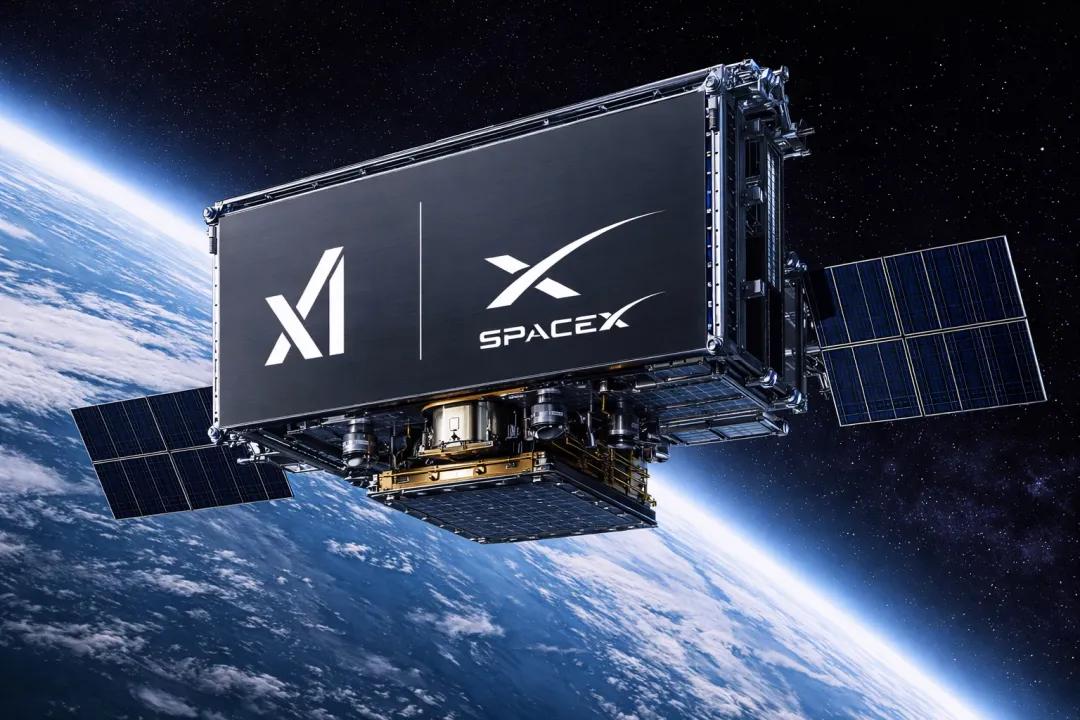
The listing of this industry giant has directly raised the valuation ceiling of the entire track. The enthusiasm of capital has inevitably spread to China, raising the valuation center of similar enterprises, especially the leading private rocket companies that have already launched listing plans in China.
"Before the Spring Festival, the valuation of iSpace in the primary market was just over 10 billion yuan. After the Spring Festival, it rose to 16 billion yuan. Even so, the shares were still in short supply," said an investor in the commercial space track who is directly involved in the mid - to - late - stage financing of several private rocket companies. It is reported that the total valuation of the five companies, LandSpace, Tianbing Technology, CAS Space, iSpace, and Galaxy Power, exceeds 100 billion yuan.
In addition, GalaxySpace, the leader in satellite Internet, has a valuation of 32 billion yuan. Undoubtedly, if SpaceX's new story impresses the capital market and the valuation exceeds expectations, the value of companies like LandSpace will rise further, which is like a timely rain for them.
Against the background that the industry is still in the stage of "burning money for the future", on one hand, there are continuous and widespread losses, and on the other hand, the cost input is soaring.
By sorting out the list of ongoing projects of leading enterprises, it can be found that heavy - asset investment has become the industry standard. For example, Tianbing Technology has built an intelligent manufacturing base with an annual production capacity of 50 rockets in Zhangjiagang and the first satellite testing and launching technology workshop in China in Jiuquan; iSpace has laid out a super factory with an annual production capacity of 20 liquid rockets in Chengdu and a production line with an annual production capacity of 100 engines in Mianyang; Deep Blue Aerospace has built a liquid engine test base in Jigang; LandSpace has laid out manufacturing bases in Jiaxing and Wuxi.
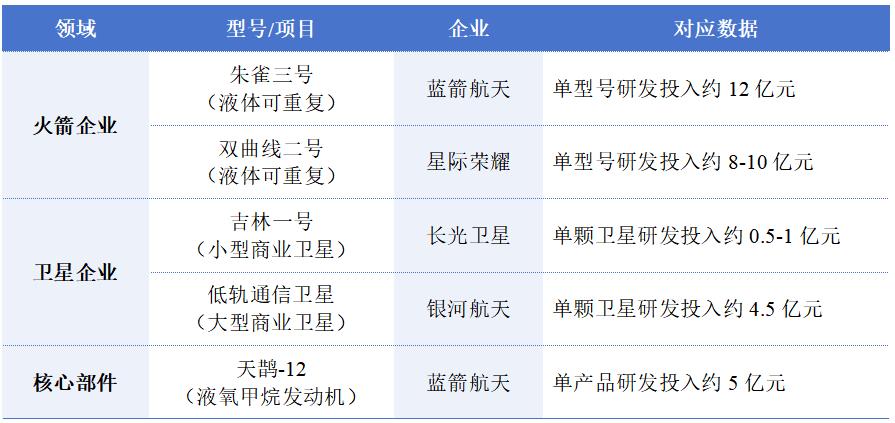
The popularity of the commercial space track has allowed leading enterprises to raise a lot of money in the primary market. However, even so, they still seem to be in a tight spot when facing heavy - asset investment. This is why the policy has been relaxed to pave the way for enterprises to go public. The listing of SpaceX, which raises the valuations of other companies, will enhance their ability to raise more funds.
However, the current fanatical market sentiment is more driven by policy dividends, space stories, and the super - giant SpaceX, rather than technological breakthroughs. This also means a crisis for China's commercial space industry.
The tuyere may not wait for us to bridge the time gap
As SpaceX is about to complete the largest IPO in history and undergo a new transformation, the current financial figures it has achieved and its expectations for future scale also show us the gap.
From 2023 to 2025, SpaceX's total revenue increased from $10.387 billion to $18.674 billion, with an annual compound growth rate of 34.08%. Among them, the Starlink business, as the foundation, contributed $11.387 billion in revenue in 2025, truly a cash - cow. In contrast, the total revenue of eight Chinese space unicorns (the five private rocket companies plus GalaxySpace, Guoxing Yuhang, and Micro - Nano Star) is roughly estimated to be less than $400 million, less than 2% of SpaceX's.
Behind the numerical gap are huge cost differentials and technological chasms, which stem from the insufficient supply of market - oriented funds and the serious lack of independent development capabilities, and are also closely related to the different dominant forces. However, many people may have ignored that this gap also comes from time.
In 2015, when the policy allowed private capital to enter the space sector, the development of China's commercial space industry officially started. So far, it has been at most 10 years. Musk founded SpaceX in 2002, and it took 13 years from its establishment to the first successful recovery of the first stage of the Falcon 9 in 2015. To date, SpaceX has worked on space projects for 24 years before entering a period of rich returns.
Moreover, the initial choice of technological route has magnified the time gap. In the past few years when the capital market was hot, many companies chose to launch solid - fuel rockets first to prove that they "could fly". Even now, there are still a large number of solid - fuel rockets being launched. For example, the "Ceres - 2" that failed on January 17th is a medium - sized solid - fuel launch vehicle belonging to Galaxy Power. Even LandSpace, which was the first to firmly choose and successfully verify the liquid oxygen methane technological route, didn't start focusing on the research and development of liquid rockets until 2018, three years after its establishment.
It's not that solid - fuel rockets are inferior to liquid - fuel rockets, but solid - fuel rockets that cannot achieve extreme cost reduction through recycling cannot tell a story of achieving a commercial closed - loop.
The lack of sufficient time has forced the outside world to postpone its expectations for private rocket companies to achieve breakthroughs in reusable technology. There is still a long way to go to open up the commercialization path through cost reduction and expand the imagination of commercial spaceflight. This is not only because the verification of reusable technology for domestic commercial rockets has just begun, but more importantly, in the commercial spaceflight industry chain, rocket companies are only providers of launch capabilities and do not participate in the revenue distribution of the downstream satellite Internet.
Therefore, at this time, over - heated capital may not be entirely a good thing for the development of China's private rocket and satellite companies. The enthusiasm of capital is short - term, while the technological breakthrough and cost reduction may be long - term. Currently, the valuation of the domestic commercial space capital market has deviated from the industrial fundamentals, and a bubble has emerged. Once the capital enthusiasm fades, the high valuations of leading enterprises are likely to collapse rapidly.
After all, high valuations are accompanied by high losses.
Waiting for the maturity of the domestic supply chain
A Chinese commercial space industry practitioner said, "One of SpaceX's strong points is its cost - control ability. Before it, the space industry never thought that rockets could be manufactured and launched in this way."
In the traditional space industry in the past, the general concept was to use the best materials, select the top - level core components, and produce in the most delicate and high - class factory workshops. However, Musk reduced the infrastructure for rocket production to a level of simplicity and roughness that the industry had previously unimaginable. He quickly manufactured rocket and engine prototypes for testing, blowing them up, and then testing again until finally creating something that could be used at a low cost.
From imitation to surpassing, SpaceX has built its own supply chain and developed its own core components, such as the Merlin engine and Starlink satellites. It has successfully reduced its dependence on external supplies and further compressed costs, which also supports its strong money - making ability. The extreme cost control of the entire industry chain is exactly what China's private rocket and satellite enterprises lack, which also restricts the development of the commercial space industry.
For example, according to Morgan Stanley's estimate, the manufacturing cost of a "Starlink" satellite is about $1 million per unit, which is equivalent to about 7.2 million yuan in RMB. Huang Chaofeng, the deputy dean of the National Strategy Research Institute of Shanghai Jiao Tong University, and others pointed out in an article in December 2025 that the manufacturing cost of a single communication satellite in China is about 20 million yuan.
Behind the cost gap is the backwardness of supply - chain construction. For China's private rocket and satellite enterprises, it may still take a long time to make the leap from getting rid of dependence on imports and achieving domestic substitution at a lower cost, to relying on external purchases and then achieving self - research.
Taking engines as an example, most rocket companies established after 2020 choose to purchase engines from suppliers, which is the fastest way to build a rocket. Currently, the best engine in the supply chain is the Longyun engine of Jiuzhou Yunjian, with a thrust of about 80 tons, while the single - unit thrust of SpaceX's Raptor 3 is as high as 280 tons. In terms of the stainless steel for rocket bodies, overseas suppliers also have higher consistency and yield rates. A senior executive of a rocket company said that the stainless steel they are currently using lags behind SpaceX by three years.
There is an inevitable gap between us and SpaceX in the supply chain. However, precisely because of this, the accelerated maturity of the domestic supply chain hides a more imaginative story.
In the engine track, Jiuzhou Yunjian has received orders for more than 100 engines. It is reported that its new - round valuation has reached 10 billion yuan. An investor said that the explosion of the commercial space industry may give rise to a "CATL in the space field". The leading supplier of 3D printing equipment is BLT, and its equipment was used to manufacture key components of the C919 airliner. Last year, its net profit was 210 million yuan, a year - on - year increase of 100.99%.
Regarding rocket bodies, companies like LandSpace and Tianbing are in control of the design and manufacturing of rocket bodies. There are domestic suppliers that can directly produce rocket casings on a contract basis, and even some manufacturers in other fields have shown interest in rocket casings.
With the joint promotion of policy and capital in the commercial space industry, it is obvious that the pace of building the domestic supply chain has accelerated. The strong manufacturing strength of China enables private rocket and satellite companies to achieve domestic substitution as soon as possible. Of course, the transition from "buying with money" to "making by oneself" will undoubtedly bring greater challenges to them.
From the start of the commercial era to the cooling of the market, and from the periphery of public attention back to the center, the development of China's commercial space industry has opened a new chapter. However, we should also be vigilant that the current high - prosperity of the industry may be a temporary illusion created by external dividends. If so, this technological race not only requires us to outperform ourselves but also to outrun time.