ByteDance is using Arm CPUs, Jensen Huang: So sad we didn't buy Arm
According to a report by Xin Dongxi on June 3rd, Arm CEO Rene Haas delivered a keynote speech during Computex 2026 yesterday, announcing that ByteDance and Oracle have adopted Arm's self-developed data center CPU chip, Arm AGI.
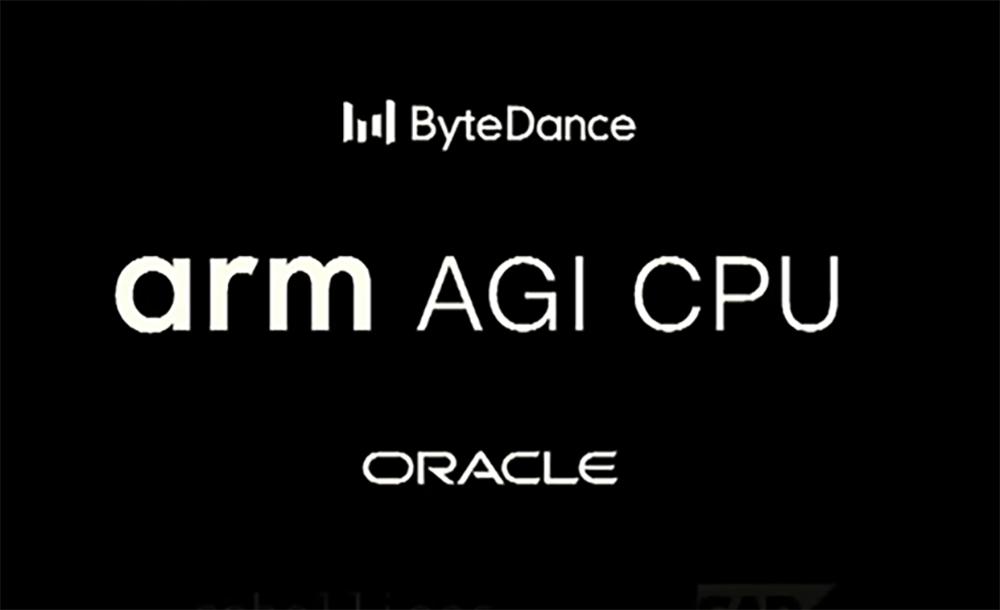
Last month, Arm doubled its demand forecast for the Arm AGI CPU, expecting it to reach $2 billion (approximately RMB 13.5 billion) in fiscal years 2027 and 2028. It also anticipates that the product will generate an annual revenue of $15 billion (approximately RMB 101.6 billion) in about five years.
During an interview with foreign media yesterday, Rene Haas said that "it's almost impossible" for the US to prevent the export of AI CPUs to China because AI CPUs are widely used, making it difficult to determine which CPUs are specifically for AI. It's hard to set specific performance thresholds and memory bandwidth limits like those for AI chips.
On Monday, NVIDIA released the RTX Spark superchip and Vera data center CPU based on the Arm architecture. Arm's stock price soared that night, and by the close on Tuesday, it had risen by 16%. So far this year, Arm's stock price has accumulated a 263% increase.
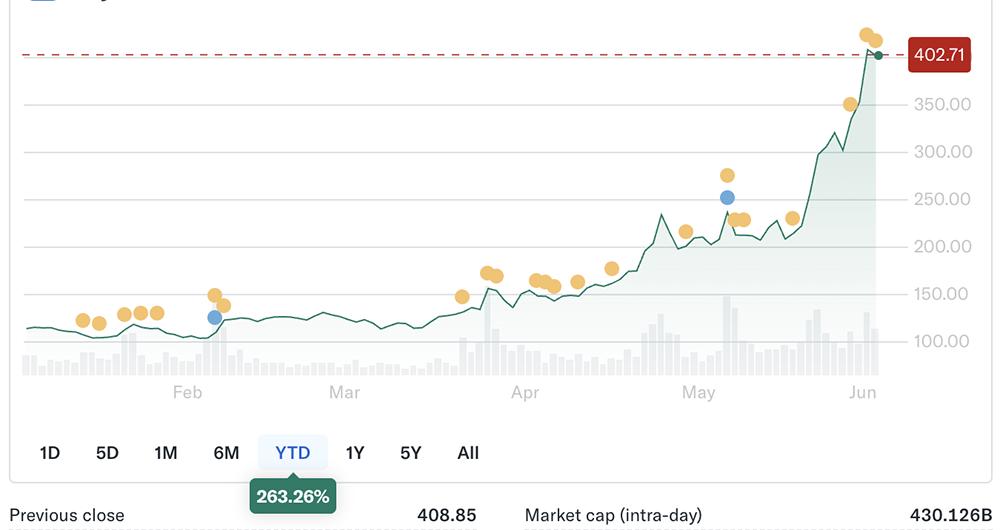
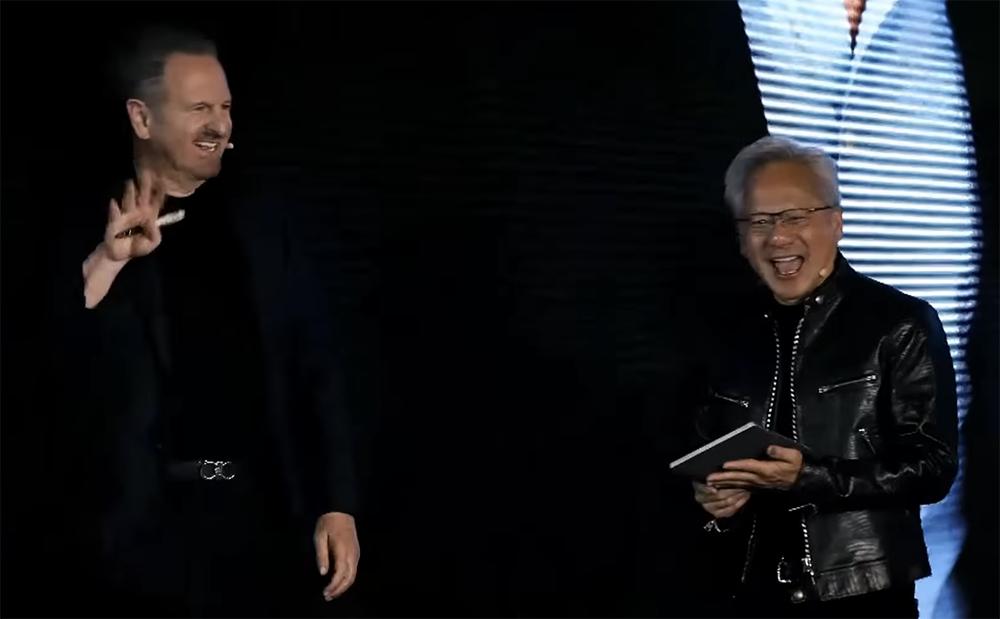
Jensen Huang, the founder and CEO of NVIDIA, also dropped in on Rene Haas' speech on Tuesday. As soon as he took the stage, he joked, "Look at his stock price. Every time I launch a product, his stock price goes up, but nothing happens to mine."
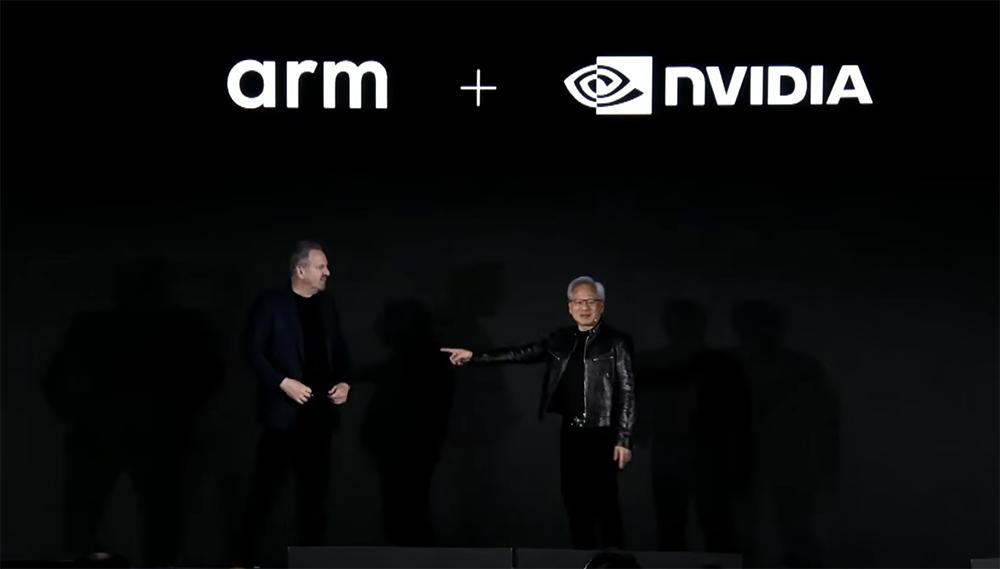
Rene Haas cleverly replied, "You used to be a shareholder, and then you sold your shares."
Jensen Huang immediately picked up the joke, "Yes, yes. Oh, I needed cash."
The two seem to be old acquaintances. They chatted warmly for 15 minutes, often improvising skits, tossing and catching jokes, which made the whole audience burst into laughter. They themselves also often laughed with big grins.
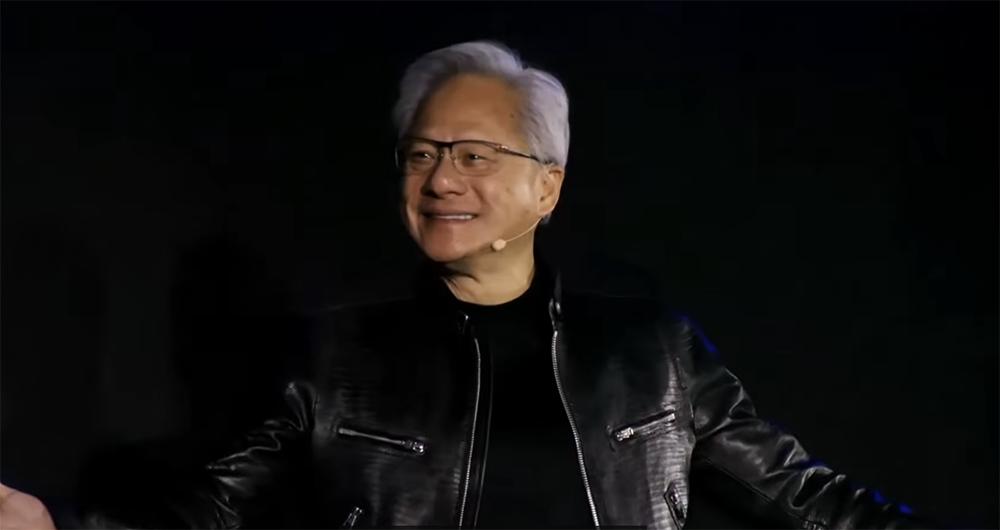
This is really the most lively tech talk I've seen recently.
For example, after Jensen Huang praised Arm CPUs a lot, he summarized, "The keyword is 'Arm is perfect'."
Rene Haas responded, "Another keyword is 'Thank you'."
Jensen Huang immediately spoke Chinese, "Where, where. Don't be so polite."
Then Rene Haas complained, "Now this competition is unfair." (Meaning it's unfair for Jensen Huang to speak Chinese.)
Then Jensen Huang kindly added, "You're welcome."
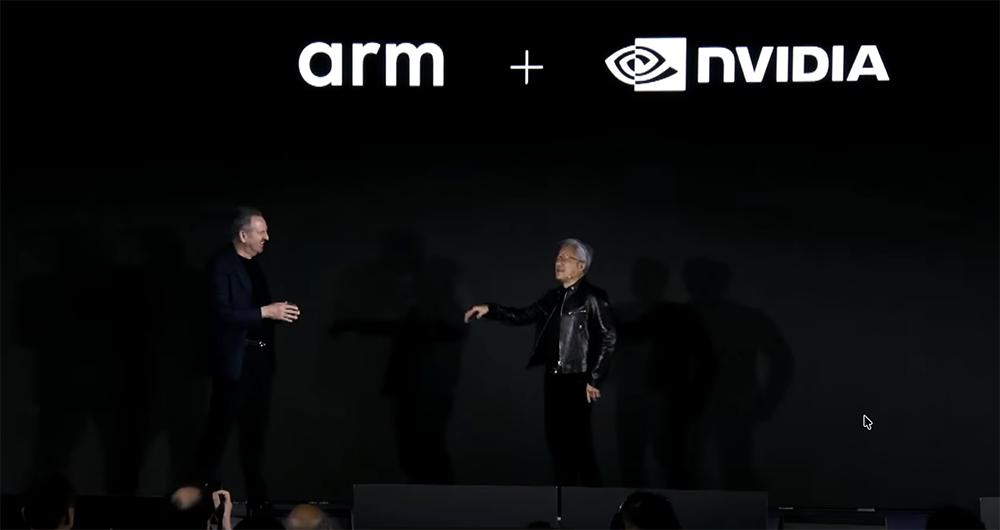
Jensen Huang also joked that "one of Arm's greatest advantages is not having to worry about the supply chain." The supply chain of IP is electrons, and you can have as many electrons as you want.
"So I love its business model," Jensen Huang began to reminisce. "You know, I've tried. I once tried to become like Arm. I used to work with Rene, and then we tried to cooperate again. But it's okay. I'm still sad."
Rene Haas said, "If the two companies merged, we would become the largest company in the world."
"I like that," Jensen Huang laughed. "That's really a good idea."
It seems that both of them are full of regrets that NVIDIA failed to acquire Arm.
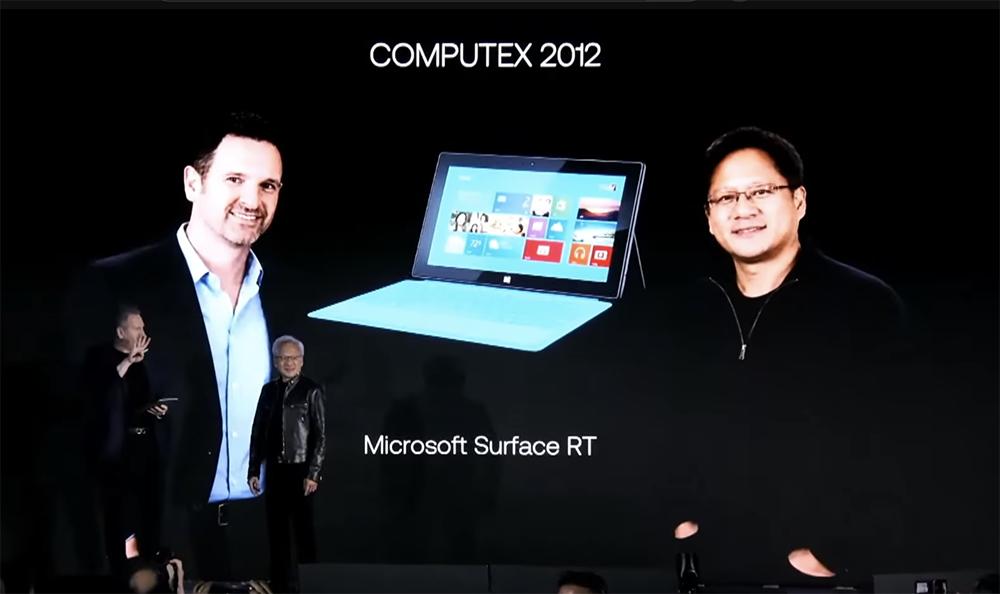
Finally, in the gift - giving session, Rene Haas played a "nostalgia card" and gave Jensen Huang a Microsoft Surface RT laptop equipped with the NVIDIA Tegra 3 chip. He also imitated Jensen Huang and signed his own name.
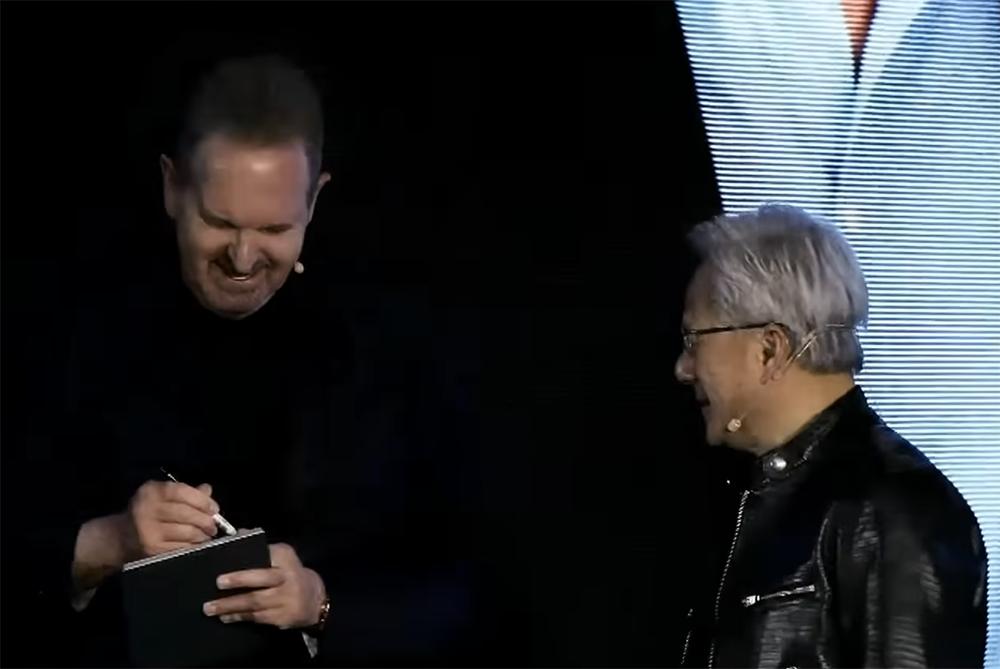
The NVIDIA Tegra 3 is the world's first Arm - based mobile quad - core processor launched by NVIDIA a few years ago.
Jensen Huang pointed at the photo on the big screen and boasted, "What happened when we were young? I have to say, I think I look younger. Do you agree? I think I've taken good care of myself."
Rene Haas laughed so hard that his image was blurred.
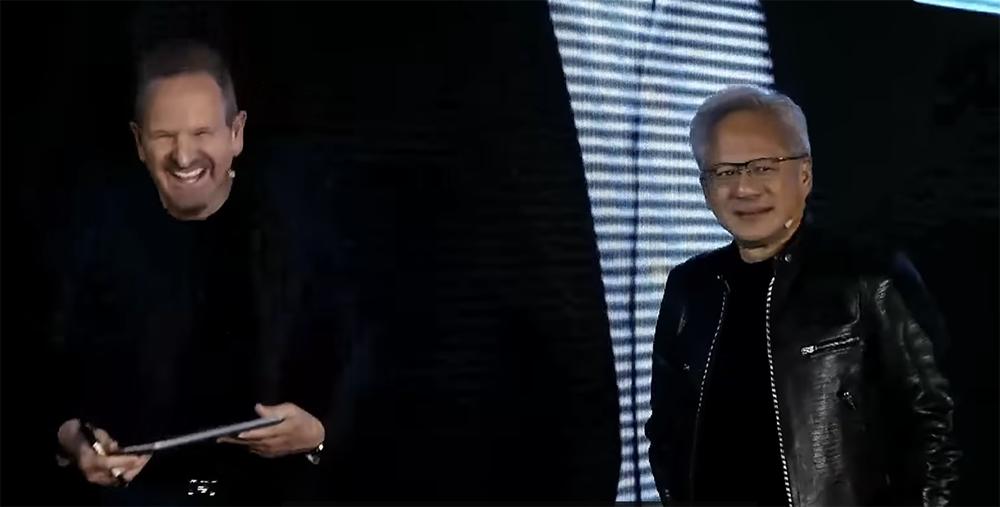
Then Jensen Huang snatched the gift and said in a rising tone, "Is this for me? If I sign it and give it back to you, it'll be a treasure."
Rene Haas said, "No, after you sign it and give it back to me, there are contracts and invoices. We can't do that. We know that game."
Returning to the serious industry topic, in this speech, Rene Haas asked Jensen Huang several key questions:
1. Why develop RTX Spark?
2. How to balance local agents and cloud - based agents?
3. Can agents really work independently without relying on the underlying operating system?
4. What does Jensen Huang think are the limiting factors for growth in the next few years?
Jensen Huang also painted a rosy picture for the market development: Currently, the computer industry is limited by the number of people using computers. With agents that can use computers autonomously, instead of billions of people using computers, there will be tens of billions, and perhaps even more agents, robots, and autonomous vehicles using computers.
So the question is, how large can the scale of computer products be?
"I feel that by now, the outcome is already determined. The scale of this multi - trillion - dollar industry may be ten times larger, and we're on the way," Jensen Huang said.
Rene Haas also shared Arm's latest progress and future plans in the fields of agent PCs and data center CPUs.
He incidentally mentioned that he chatted with Mark Liu, the chairman and president of TSMC, and Chang Hsiao - Chiang, the senior vice - president and COO of TSMC, this week. They said they've never seen the semiconductor industry cycle be so prosperous for four consecutive years.
01. Jensen Huang's Class: How to Design an Agent PC?
Jensen Huang answered the key questions raised by Rene Haas one by one. These views are very valuable for the development of AI PCs and chip design ideas in the future.
1. Why develop the RTX Spark product?
PCs and operating systems have been around for 40 years. Manual programming will be replaced by agent applications, and these agents will use the tools in PCs. So how should we reconstruct the architecture, change the operating system, and reinvent the computer in the future?
NVIDIA realized that the agent system needs an excellent CPU, which is why it adopted Arm.
The RTX Spark superchip is equipped with a 20 - core CPU, has excellent single - thread performance, and the memory needs to store many parameters.
So, NVIDIA created a new data format called NVFP4 to compress large - scale languages, build as many models as possible, and integrate very intelligent AI into the system memory.
NVIDIA also hopes to combine CUDA for accelerated computing and CUDA Tile, and integrate tensor core processing into a single processor.
2. How to balance local - running agents and cloud - running agents?
These Arm PCs will become agents that run autonomously all the time.
Today, if you leave your laptop at home or in a hotel, you can't use it.
But in the future, you just need to pick up your phone and talk to the PC remotely to command the agent to work.
Jensen Huang said, "The essence of a personal computing device is that you can do anything with it without wasting time."
If you need to use some cloud APIs, just call them. Do everything that can be done locally on the computer.
3. Is the operating system important for running agents? If an agent is regarded as an operating system, can it really work independently and rely less on the underlying operating system?
The importance of the operating system has not diminished at all. In fact, it may be even more important than before.
This is also the controversial point often mentioned when AI appears - "Software is dead." Jensen Huang thinks there's nothing more absurd than this.
People may only know 10% - 20% of the functions of many tools.
But now, you can tell the agent what you want.
The agent knows very well how to use these tools because it has read the Skills file. Essentially, Skills is reading the user manual of the tool, so it can now use the MCP or CLI connected to this tool to unlock all these tools and meet your needs.
These tools will be more valuable than ever. They run on the operating system, so we need the Windows system, and we'll need these APIs and tools for a long time.
4. What are the limiting factors for growth in the next few years?
"We've seen limitations in almost every aspect," Jensen Huang said. NVIDIA made plans in advance and did a good job in supply - chain planning. It has nearly doubled its growth year - on - year this year and will achieve very rapid growth next year. The supply chain can support NVIDIA's growth.
But the demand is actually higher.
Jensen Huang said that the new computing application model really needs a new architecture. A major breakthrough now is that agents can produce practical AI, which is why everyone's growth is so incredible.
When AI becomes practical, the generated tokens can bring profits. When token generation is profitable, everyone wants to generate trillions of tokens.
Now AI is not just a chatbot that can answer questions. It can think, use tools, read, continue to think, plan, and try. The number of tokens that need to be generated has increased significantly. The profitability of tokens is driving the demand for computing power, creating a multiplier effect.
02. Arm PC Chips: Apple, Google, and Qualcomm All Speak Highly of Them, and Arm Cooperates Closely with NVIDIA and MediaTek
In the PC field, companies like Google, Apple, NVIDIA, and Qualcomm have all developed PC chips based on the Arm architecture. Arm has been cooperating with companies like Apple, Google, and Microsoft for decades.
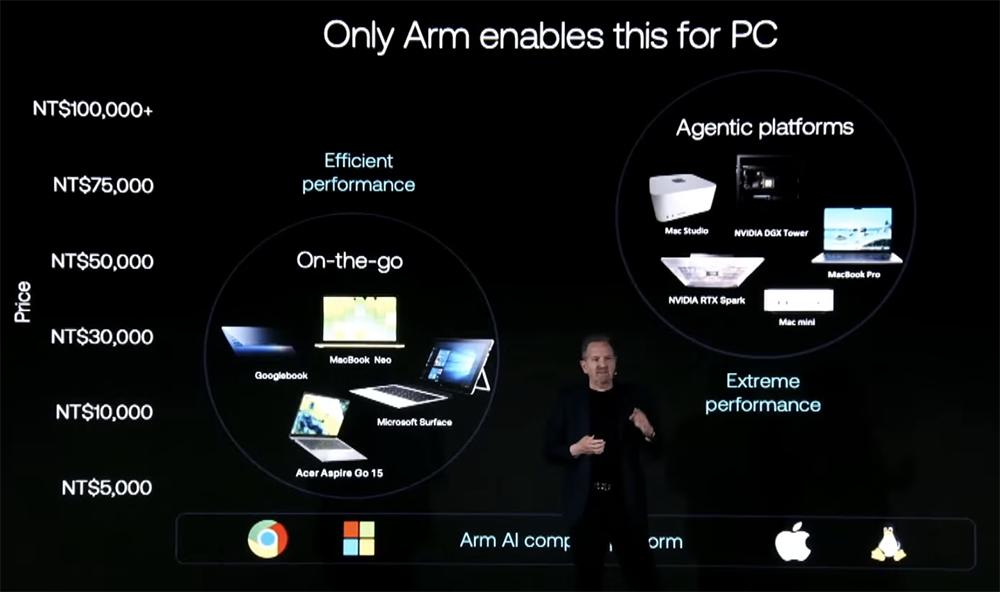
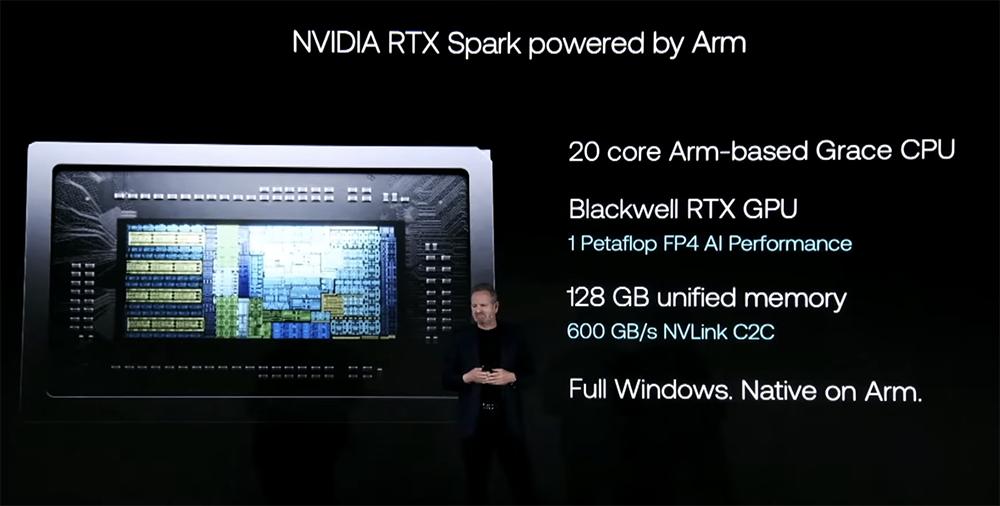
Rene Haas said that Arm is honored to cooperate with NVIDIA in developing the RTX Spark superchip based on the Arm architecture. The customized Grace CPU of this chip has 20 cores, and each core is based on the Arm architecture.
"I believe this is the laptop with the most CPU cores on the market currently," Rene Haas said. When you pair it with the Blackwell GPU, the FP4 AI computing power of this chip reaches 1 PFLOPS, and it has a unified memory capacity of 128GB and fully natively supports the Windows system on the Arm platform.
Arm's role in this is to cooperate closely with NVIDIA and MediaTek using Arm's computing subsystem strategy.
The computing subsystem combines all the components (CPU, GPU, system IP, memory controller) needed to build a customized SoC to build a complete end - solution system.
Arm completed this work in cooperation with MediaTek, and MediaTek can provide a complete solution.
Rene Haas also showed the Arm CSS roadmap for agent PCs. The next generation will optimize the customized CPU cores specifically designed for PCs.