Are the advertisements in the World Cup all created by AI?
The development of AI technology is changing traditional marketing approaches and concepts.
Some time ago, Mission officially announced that it became the official sponsor of the Argentine national team in China and launched a new advertising video featuring Lionel Messi, Rodrigo De Paul, etc. Notably, the player images in the video were not shot on-site but entirely created by generative AI.
In case you haven't seen it, we're inserting the advertising video here:
Generally, there's an "iron rule" in sports marketing: for every $1 spent on sponsorship rights, at least $2 or more should be spent on activation.
These activation budgets are usually divided into two parts. The major part is for channel procurement and distribution, and the other part is tightly tied to "production and execution" of content. The activation of superstar rights, along with the travel expenses, schedule coordination, and communication costs brought by on-site shooting, often become the most uncontrollable variables.
The entry of generative AI has opened up a new path in this chain.
American writer Raymond Carver, when talking about novel writing, mentioned that he had a quote from Anton Chekhov on his wall: "Suddenly, they saw everything clearly." Carver believed that behind this act of seeing clearly lies a lot of in - between states before, during, and after, which means there's room for filling and imagination.
So, as generative AI becomes more and more common in sports marketing, what exactly are we seeing clearly?
Technological dividends: What does AI bring?
In the past, for regional sponsors like Mission, shooting the Argentine team according to traditional methods would face many logistical challenges and problems. Coordinating players' schedules and their cooperation levels, etc., constituted high implicit costs at the production level.
The intervention of generative AI has, to some extent, eliminated this physical barrier.
With the authorization of the IP owner, the brand can produce advertisements with the real images of star players through generative AI. According to the Sports Industry Ecosystem, the Argentine Football Association showed a positive attitude when negotiating relevant AI content with Mission.
After all, from the perspective of the IP owner, it not only saves the players from the pre - game travel fatigue but also enables cooperation with the sponsor to produce content. This is undoubtedly a win - win situation in terms of business efficiency.
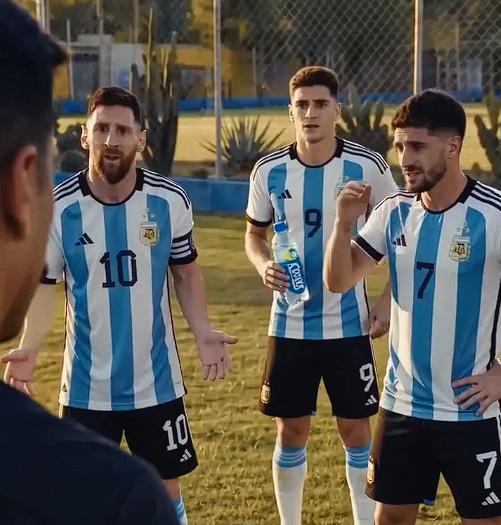
Regarding this change, Zhao Yang, the China - region head of sports technology company WSC Sports, told the Sports Industry Ecosystem: "The most direct value of AI is to save manpower and material resources. As an official sponsor, with the authorization of the IP, it's a natural improvement in efficiency."
Behind the efficiency improvement is a chain reaction in the sports marketing process. Although the current AI - based advertising production still requires time and manpower for adjustment and optimization, it has significantly reduced traditional labor and travel costs.
In an ideal state, the budget "saved" from the production end can be reinvested in the major activation areas, such as channel distribution, media purchasing, and subsequent promotion. This allows the brand to gain more cost - effective exposure during the World Cup period when every bit of advertising space is precious.
Moreover, marketing often depends on speed. Vicky Wang, the general manager of Fast Company Chinese version, pointed out to the Sports Industry Ecosystem that "sports events have the complex characteristics of multiple markets and multiple teams. Large - scale event marketing inevitably comes with extremely high multi - channel distribution requirements." During the World Cup period when hot topics fade quickly, those who can use the high - frequency iteration ability of AI to more nimbly push customized content to different channels and users will often see a huge difference in data conversion.
Another psychological support for brands to take risks is the low sensitivity of ordinary audiences to the authenticity of images. "Advertising itself is a fast - moving consumer product. For ordinary consumers, it's hard to tell the difference. I don't think the presence or absence of a person will have much impact," said Zhao Yang.
To some extent, as long as Messi's face appears on the screen, the brand has achieved its goal of exposure.
In addition to execution and promotion, AI has also directly impacted the traditional sponsorship rights system.
Normally, traditional sponsorship contracts stipulate rights such as the number of on - site shootings and the duration of star players. However, in the era of generative AI, the rights to generate such digital portraits are theoretically "unlimited," which will inevitably force changes in the contract terms.
When brands can infinitely increase the frequency of using star players' portraits through AI technology, "AI portrait generation and secondary creation rights" will also become a key point in future sponsorship contract negotiations.
In Zhao Yang's view, this "unlimited" situation will not devalue top - level IPs but will instead bring positive premium: "Brands or IP owners will also realize that brands can create more content around them. Therefore, IP owners are likely to increase the existing copyright fees or sponsorship fees by a certain amount, requiring brands to pay more to obtain the right to produce such digital content."
However, we can also easily infer that the other side of the coin will emerge: as the scope of digital copyright expands, the inflation of online content is inevitable. At this time, exclusive physical resources will, due to their non - replicable scarcity, be pushed to high prices.
"If AI authorization can replace more on - site shootings of stars, then the real physical resources for on - site experiences will become more expensive," said Vicky Wang.
Real - world bottlenecks: What doesn't AI bring?
Although the concept of AI is ubiquitous in the sports world and technology is evolving rapidly, a reality in the industry is that there aren't a large number of top - level sports advertisements made with generative AI in the market.
An important reason is that there hasn't been a truly popular or particularly successful AI advertising case in the industry.
"Everyone is still in the early application stage and is being cautious and waiting and seeing because it seems that no one has reaped huge dividends or achieved a high ROI after using this technology," said Vicky Wang.
Behind this wait - and - see attitude are real - world risk - control considerations. Advertising is a communication vehicle for enterprises to speak to the outside world, and the release of each frame is highly serious.
Some time ago, a strange image of distorted human limbs appeared in an AI - generated advertisement of NetEase Cloud Music, which immediately attracted public criticism:
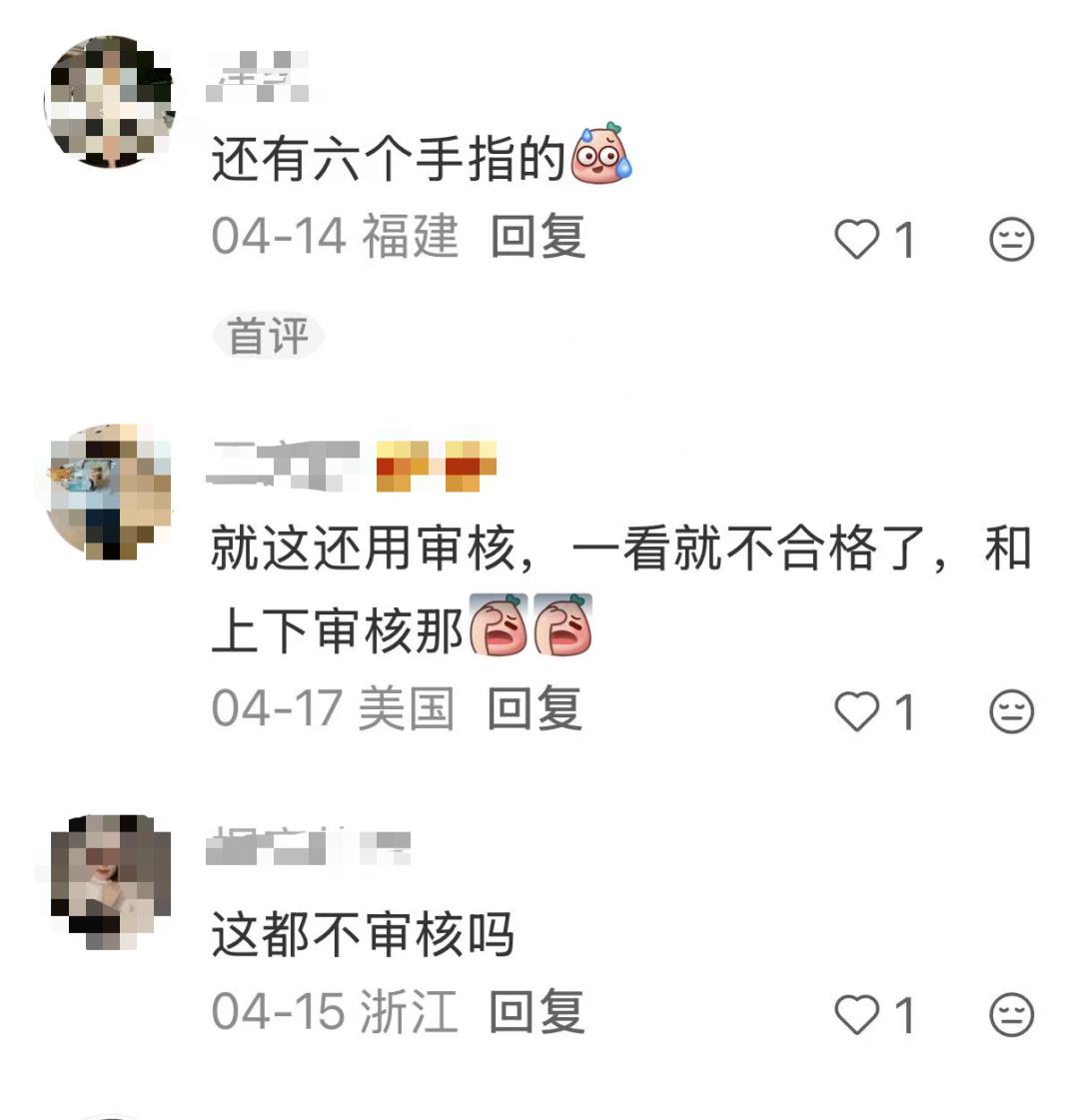
In the strict commercial sports context, the margin for error is even smaller. For example, the sponsor logo on the jersey cannot be deformed, and there cannot be any game images or content without copyright.
The flaws in the consistency of general large - scale models make many big brands reluctant to take risks with their brand reputations.
Since the risks still exist, why do brands still want to test the waters at this stage?
During the communication, Zhao Yang shared an interesting phenomenon: in actual cooperation, even though machine - editing and generation technologies can process videos smoothly and naturally, clients sometimes put forward counter - intuitive special requirements. "They hope to deliberately show some unique capabilities of AI in the pictures, and even add some cool elements with a slight sense of technological discontinuity that are obviously machine - generated."
In this regard, generative AI serves, to some extent, as a public - relations tool for brands to show their "innovative spirit."
Or rather, in this era of extremely scarce attention, "using AI" has become a marketing gimmick that surpasses the content itself.
What does AI take away?
Everything has two sides. What technology brings, it often takes away something as well.
The famous French theorist Paul Virilio once left a famous quote: "When you invent a ship, you also invent shipwrecks; when you invent an airplane, you also invent air crashes... Every technology carries its own negative aspects, which are invented simultaneously with technological progress."
When AI makes all visual images easily accessible, it is inevitably eroding the sense of value and shock originally built by "reality."
We can see two distinct sports marketing cases.
In the World Cup advertisement launched by Lego some time ago, Kylian Mbappé, Vinícius Júnior, Cristiano Ronaldo, and Lionel Messi were placed in the same scene. Although the audience knows it relies on post - production synthesis, because they actually participated in on - site shooting, the wonderful sense of collision conveyed by their "physical presence" still triggered a lot of discussions on social media.

Image source: LEGO
Similarly, there is the short film "Streetball Legends" released by Adidas.
The film features a group of stars, including active players like Lionel Messi, Jude Bellingham, and Lamine Yamal, as well as legendary players like Zinedine Zidane, David Beckham, and Alessandro Del Piero, and entertainment stars like Timothée Chalamet and Bad Bunny.
This short film also uses AI, but the function of AI is strictly limited to an auxiliary position - "rejuvenating" old stars and paying tribute to some classic images or scenes.
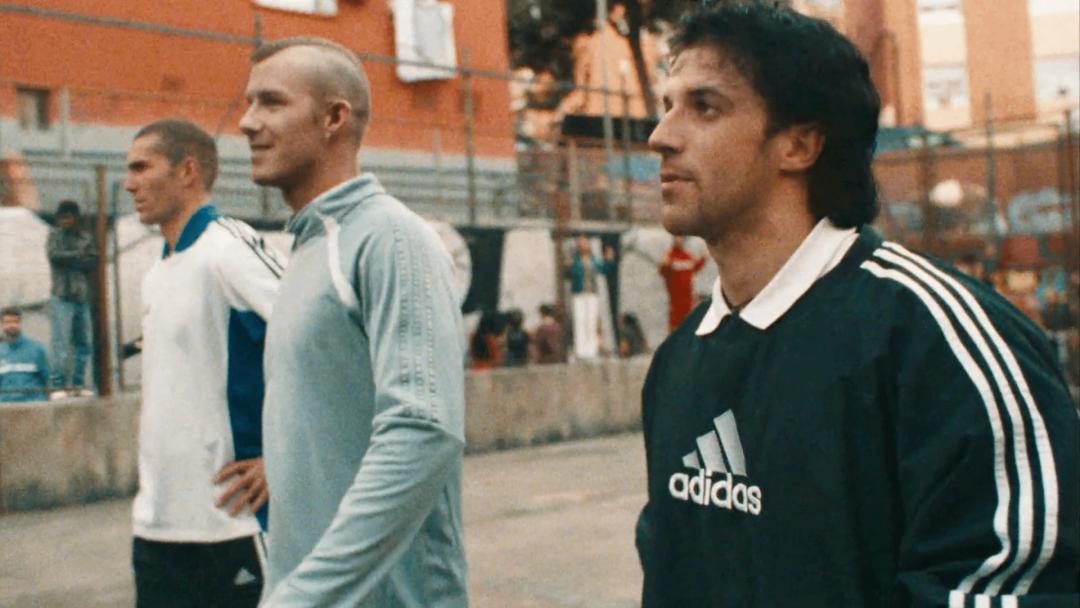
Image source: adidas
Often, the weight of a brand advertisement doesn't only come from the creativity itself but also from the sense of surprise triggered by scenarios like "Can this be done?" and "Is he also involved?" Presumably, Lego and Adidas understand that this kind of heart - touching impact is precisely the most charming aspect of brand premium in sports marketing.
And this is exactly what generative AI is most likely to dilute.
A sports AI expert told the Sports Industry Ecosystem: "All advertising content can be divided into techniques and principles. The former refers to channels and promotion, and the addition of AI has enriched and even subverted the 'techniques'; the latter is the special and heartfelt part of sports marketing, which is the core value of sports. Currently, AI cannot enhance the 'principles' of sports advertisements."
Especially for top - level events like the Olympics and the World Cup, the goal of brands is often not immediate conversion but to build long - term brand potential, awaken the collective memory and emotional resonance of the public. Currently, generative AI can do little in this regard.
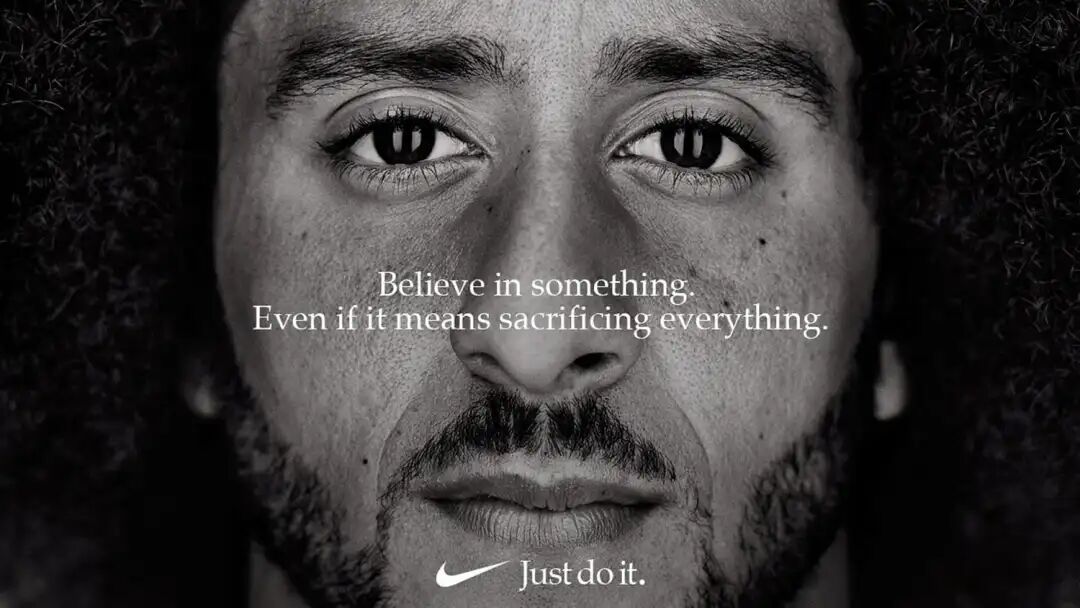
The reason why Nike's past advertisements were so impressive is largely due to their unique and heartfelt core values.
Looking back, the dignity and weight of those milestone - level top - level sports advertisements come precisely from the respect for reality. In the long run, the hidden deprivation of sports marketing by generative AI may be the erosion of this "weight" and sense of value.
In the field of sports marketing, once brands and the industry collectively accept the idea of "good enough" and use generative AI as a cold tool for simply exploiting portraits, reducing costs, and viral spread, it will lead to an aesthetic downgrade across the entire industry.
In the face of the rolling wheels of the AI era, this insistence on "reality" may seem weak and even out of place. However, we must remember that sports is, after all, the last sacred place in human society that highly relies on physical competition, visible reality, and emotional resonance.
At the crossroads where technology can easily create perfect illusions, the reality with flaws, clumsiness, and that requires real money and great effort is all the more worthy of being cherished by the entire sports marketing industry.
This article is from the WeChat official account "Sports Industry Ecosystem", author: ECO Keti. Republished by 36Kr with authorization.