Has Airbnb, which has been in the homestay business for 18 years, started selling hotel rooms?

The "Evolution" of Airbnb
In San Francisco in May, there is a collective frenzy of technology. All kinds of new AI upstarts in Silicon Valley are busy cheering for the evolution of machines, turning press conferences into technological carnivals, as if the next step for humanity is to be taken over by algorithms in everything.
In the same city, Brian Chesky, co-founder and CEO of Airbnb, stepped onto the stage of Airbnb's 2026 Summer Press Conference at its San Francisco headquarters. Facing the global media filling the central hall on the first floor and Airbnb employees gathered around the railings on each floor of the office building, he started with what he was most excited about in the past year, not how Airbnb uses AI to evolve, but -
A photographer in Paris who specializes in shooting families and couples earned $145,000 last year through Airbnb Experiences; a third-generation Italian pasta heir earned over $180,000 from 90-minute handmade pasta classes charged at $70 per session; a local travel experience expert in London had an income exceeding $200,000.
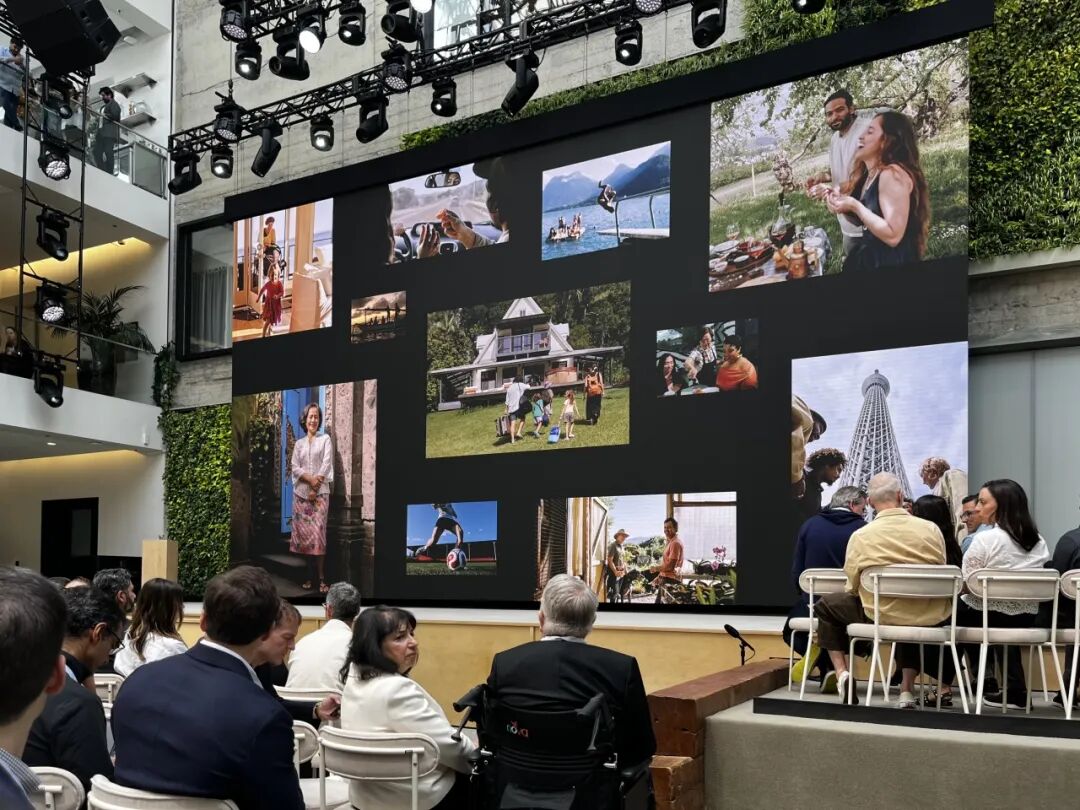
The scene of Airbnb's 2026 Summer Press Conference
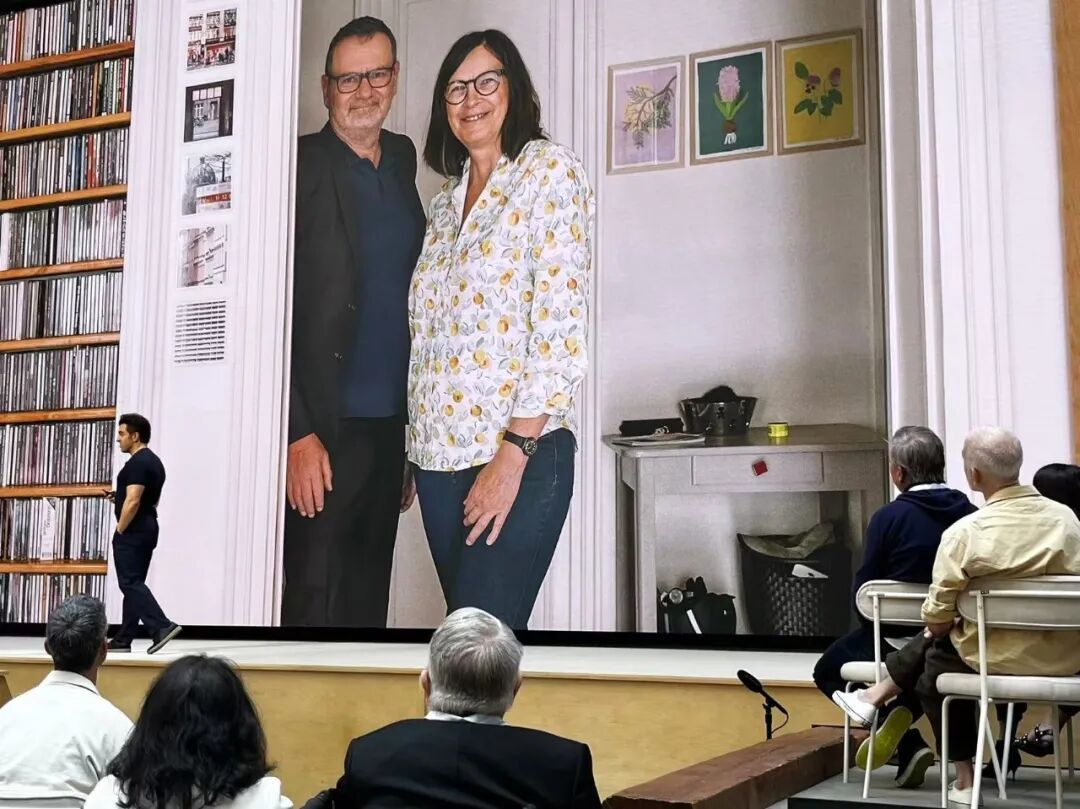
The scene of Airbnb's 2026 Summer Press Conference
In May last year, Airbnb expanded its business from "accommodation" to "experiences" and "services". More than 22,000 experience projects were launched globally for the first time, covering more than 650 cities around the world. The services launched have also started to bring additional income to hosts around the world.
In a city where everyone is betting on technology, this company is still betting on people.
To understand what Airbnb has been doing this year, we first need to clarify two key concepts - what exactly are "experiences" and "services".
An experience is a local expert taking you to do something - visiting landmarks, having an authentic meal, taking a handicraft class, or watching a game; a service is hiring someone to do something for you - a chef who cooks at your place, a photographer for on-site shooting, a masseuse, or a personal trainer. On the surface, an experience is about content and a service is about logistics, but at the core, they are the same thing: organizing travel around people and "connections between people". An experience is finding a real person to introduce you to their city, and a service is making you feel like a local in this city.
From the perspective of hosts and experts, the "ways to make money" that Airbnb has opened up for hosts are no longer just renting out a room.
According to the data released by Brian, more than 5.5 million hosts and experts are currently active on the platform every day around the world. Among them, 87% of the hosts/experts only operate 1 - 2 listings or experience projects, 25% of the hosts are retirees, 7% are nurses and medical practitioners, and 6% are retailers - which means most of the people supporting this business are not large property management companies, but ordinary people from all walks of life who make extra money through sharing and their skills.
A significant expansion based on last year's services and experiences is Airbnb's major move this year - "Services" have become more comprehensive.
From private car pick - up at the airport (covering more than 160 cities globally), to luggage storage (in 175 cities with more than 15,000 storage points), to having fresh groceries pre - stocked in the fridge (in cooperation with Instacart, with a $10 discount for orders over $50), to car rental for self - driving (to be launched in 50 US cities next month) - services have filled the logistical support for the entire travel process.
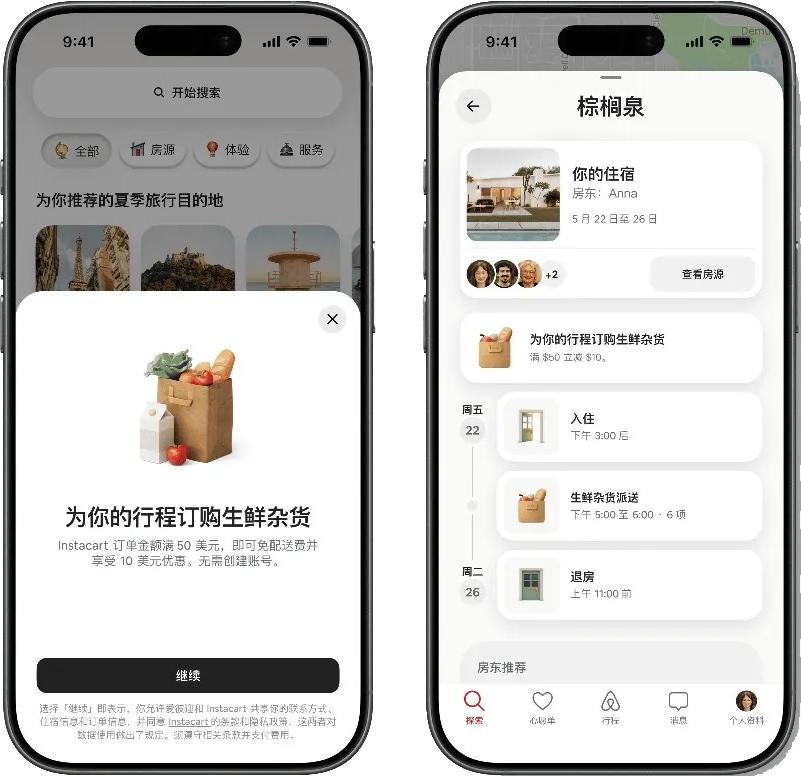
Ordering fresh groceries on Airbnb
These seemingly functional "services" are understood differently by Airbnb - Nathan Blecharczyk, co - founder and Chief Strategy Officer of Airbnb, made a very insightful point: When you land at a strange airport and get stuck in a long taxi queue, you will never feel like a "local", but only feel at a loss. But if someone comes to pick you up in advance, there is food already in the fridge, and you don't have to wander around awkwardly with your luggage, your mindset will be completely different - you will feel like "I really am a person living here".
And the most interesting move is here - You can now book boutique hotels on Airbnb.
Airbnb, which has been in the homestay business for 18 years, is starting to sell hotels? But you'll soon find that this move is very "Airbnb" - not "having everything", but highly selective: Only independent hotels and boutique hotels are selected, deliberately avoiding chain brands like Marriott and Hilton, and offering price - matching guarantees and up to 15% travel fund cashback. The core logic is not to become an OTA selling a shelf of products, but to re - define "what is a good hotel" with the standards of a homestay. A good hotel is not about how grand the lobby is, but whether the hotel owner manages an impressive check - in experience like a homestay host. Airbnb's first - quarter financial performance data shows that among users who have booked hotels on Airbnb, about 55% have also subsequently booked listings on the Airbnb platform.
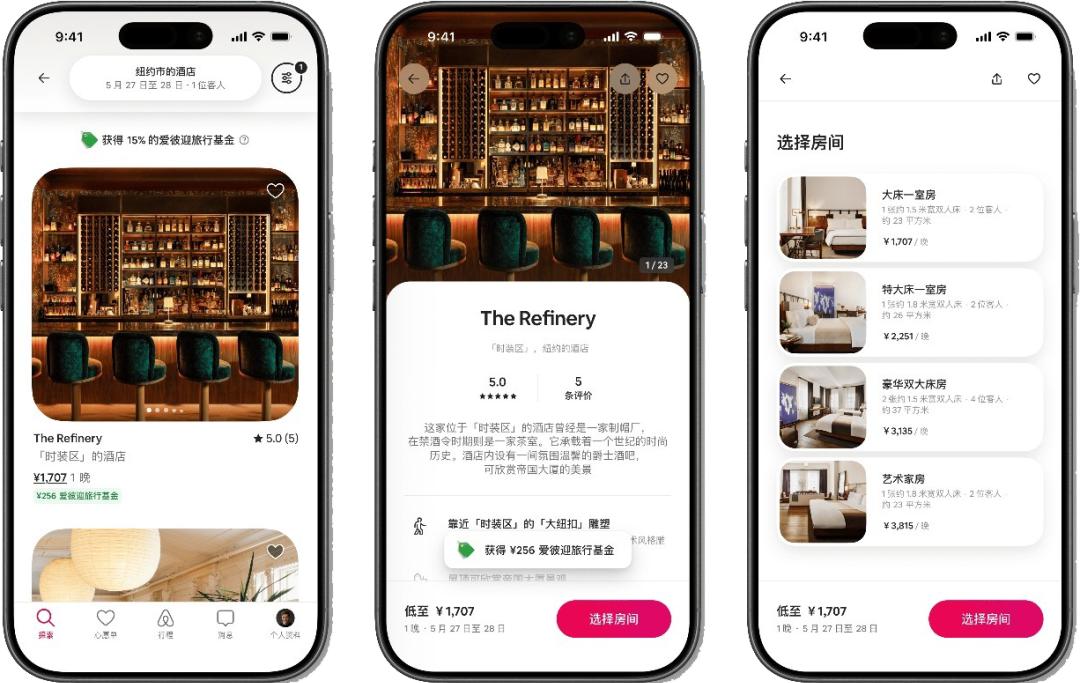
Booking boutique hotels on Airbnb
Another strategic move worth noting is in sports events. Airbnb has signed a three - year global cooperation agreement with FIFA, and with its existing ten - year cooperation with the Olympics, sports has become a long - term strategic pillar for it. Leveraging major sports IPs, it has activated hosts on the supply side and attracted incremental users on the demand side. Driven by the World Cup, the booking volume of Chinese travelers in the host cities of the event has skyrocketed by 200%.

FIFA posters posted at Airbnb's San Francisco headquarters
In contrast, the involvement of AI focuses more on improving the user experience - AI selects highlights from reviews and makes intelligent comparisons to help users with choice phobia make decisions, while AI customer service aims at efficiency issues. 40% of user problems can be solved without the intervention of human customer service.
In a nutshell, Airbnb is transforming itself from a "single - product" to a "multi - entry ecosystem". The following is a group interview (edited) with Nathan Blecharczyk by TIDE and several media outlets.
Q: What is the core reason for Airbnb to continuously introduce boutique hotels and independent hotels? What are the essential differences between users' needs for hotels and homestays? And what is the thing you least want to change?
Nathan Blecharczyk: Even our most loyal users sometimes still choose to stay in hotels. When we introduce hotels, we don't want to be a platform that "offers all hotels". Actually, we are carefully selecting a group of hotels that we believe can provide high - quality experiences in various price ranges. They are not necessarily all luxury hotels. What really matters is that in each price range, we hope to find the most worthwhile, memorable, and meaningful hotels of the same type.
If you ask what the core we least want to lose is, it is: No matter how the product form expands, we always hope that users can have a truly meaningful travel experience, making you feel more like a "local" or "one of us", rather than just a "tourist" or an "outsider".
This is also the biggest differentiating value between Airbnb and traditional OTA platforms. Traditional OTAs focus more on price, conversion efficiency, and how to complete each transaction as quickly as possible. Price is important, and we also offer competitive prices. At the same time, we hope to guide users to a way that can truly improve the overall travel experience and help them gain a more local perspective.
Q: Will you further introduce larger international chain brands like Marriott and InterContinental besides boutique hotels?
Nathan Blecharczyk: Currently, we have no plans to introduce large international chain hotel brands like Marriott or Hilton. This is a deliberate decision. We will focus on independent hotels and boutique hotels because these hotels can provide more unique and differentiated experiences. We prefer to support independent hotel owners and operators who have greater flexibility and can truly invest resources to create unique experiences without being restricted by the rules of large brands.
Many other OTA platforms focus more on how to get users to complete bookings as quickly as possible. The whole logic revolves around price and rapid conversion. They don't really tell users what the actual experience of a hotel is like. They just hope to facilitate orders as soon as possible. So, when you see our product display on the big screen today, we are actually trying to present "what it's really like to stay in this hotel". At the same time, we also hope that these independent hotel operators and owners can feel that the investment they make to create unique experiences is truly understood and recognized by users.
Q: For Airbnb, is the sponsorship cooperation for large - scale sports events like the FIFA World Cup a short - term opportunity for traffic and business growth, or has it become a core part of the long - term strategy?
Nathan Blecharczyk: I think it is a long - term strategic pillar. That's why our cooperation is not limited to FIFA and football events. We also cooperate with the Olympics and have reached a ten - year cooperation agreement. In the future, we will continue to look for more cooperation opportunities in the sports field. Sports itself is a force that can connect people, which is highly consistent with Airbnb's core concept.
In terms of long - term impact, taking the 2026 FIFA World Cup™ as an example, in the past six months, there have been 100,000 new Airbnb listings in the host cities alone. Because hosts and experts realize that this is a good opportunity to earn extra income. We believe that many of these listings will remain on the platform after the event. We have observed the same phenomenon during the Olympics in Milan and Paris.
On the other hand, we have also seen a large number of new users using Airbnb for the first time. Currently, about one - sixth of the users who book World Cup - related orders are first - time bookers. Considering that our company is quite mature, this proportion is quite significant for us.
Q: What new trends are currently observed in the travel preferences of young Chinese travelers? And how is Airbnb adjusting and optimizing its products and services to better meet their needs?
Nathan Blecharczyk: Generation Z often attaches great importance to the "experience" when traveling. They usually travel with clear purposes and interests. For example, the FIFA World Cup is a very typical example. In the first few months of this year, we saw a 200% increase in the booking volume of Chinese travelers in the host cities of the event. But this trend is not limited to football. The same goes for concerts. For instance, many Korean artists are very popular in China. Recently, we collaborated with the rising Korean boy group CORTIS to replicate the creative concept of their new hit single "REDRED", creating three interactive scenarios: "Airbnb - exclusive" experiences, exclusive accommodation, and pop - up experiences, turning the enthusiasm of fans into a tangible experience.

The "CORTIS Inspiration Base" pop - up space launched by Airbnb
We have noticed that more and more young Chinese travelers are willing to embark on a journey for the sake of "experiencing culture". When these young users choose long - distance travel, such as going to the United States to watch a football game, they usually don't stay in a single destination but extend their journey into a more complete and rich one. For example, they may first go to Los Angeles to watch a game and then visit other cities like Las Vegas. Currently, the average length of stay for this type of travel is about 9 days. Therefore, we believe this is a very important development opportunity and is becoming one of the important driving forces for the growth of Airbnb's business in China.
Q: Regarding the recently launched AI - selected review highlights function, how does Airbnb specifically use AI to quantify and define "high - quality experience" or "service quality"? And how does Airbnb use user reviews to train the AI model?
Nathan Blecharczyk: First of all, we believe that the core value of AI is to help users have a better travel experience. I think an excellent way to measure quality is to understand users' expectations. Because different people value different things when traveling. Some people care most about price; some people pay more attention to the design and decoration style of the house; others attach great importance to the surrounding community atmosphere and the overall experience of the neighborhood. So, for us, what really matters is to understand what users really want and accurately present the unique highlights and even the possible deficiencies of a listing. This is very important - because Airbnb is essentially about "matching".
As Brian mentioned, we have currently accumulated over 1 billion reviews from guests, hosts, and experts, which is actually an extremely valuable source of information. The reviews come from guests who have actually stayed in the listing, so they contain a lot of real information and feedback. AI can extract and summarize this vast amount of information, making it easier for users to digest and quickly see the overall picture of the listing from scattered reviews.
In essence, this is how AI helps us make more accurate matches and better