Overnight, Chinese restaurants are all revamping into "omakase" dining.
Can all Chinese cuisine be recreated in the front-of-the-counter style?
The trend of front-of-the-counter dining is gaining more and more momentum.
The front-of-the-counter model originated in Japanese cuisine. Its characteristic is to move the kitchen to the front, where chefs cook on-site at the operating table in front of customers. Since last year, sub - categories of Japanese cuisine such as sushi, sukiyaki, ramen, and tempura, combined with the front-of-the-counter model, have expanded rapidly, opening many new stores in the core business districts of Beijing, Shanghai, Guangzhou, and Shenzhen.
Subsequently, the front-of-the-counter model went beyond the boundaries of Japanese cuisine and quickly swept through various sub - fields of Chinese cuisine.
Fast food and snacks were the first to innovate with the front-of-the-counter model. As mentioned by Neican Jun in the article "Queuing for 3 hours! Another performance - style catering is booming", Brick Oven Rice King and Ganshiji and other fast - food and snack chain brands have launched front-of-the-counter stores. The front-of-the-counter stores publicly present the whole process of ingredient processing and cooking, giving a sense of refinement to affordable fast food.
Nowadays, even sub - sectors such as barbecue, hot pot, and local cuisine have entered the front-of-the-counter track. It can be said that "everything can be served in the front-of-the-counter style".
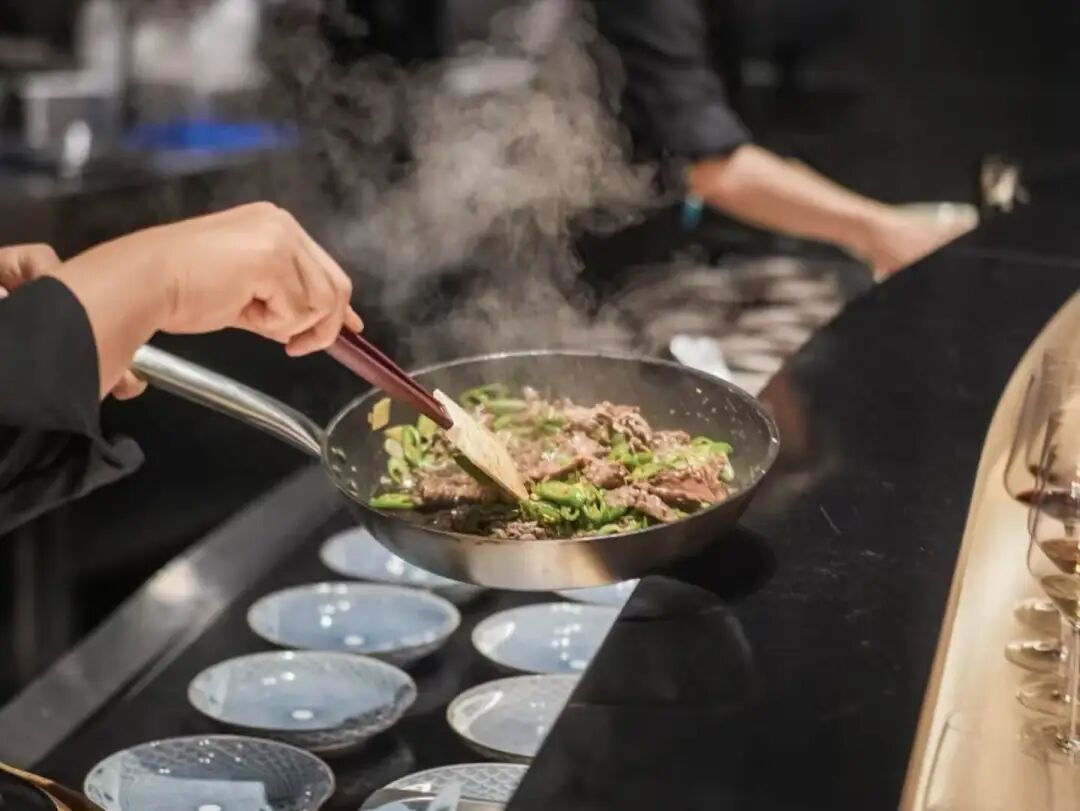
For example, Xushanhe·Fuling Grand Hotel, a popular Sichuan restaurant in Shanghai, with an average per - capita consumption of over 100 yuan, has netizens saying that they have to queue every time they come. Bashufeng·Authentic Sichuan Cuisine, an established Sichuan cuisine brand in Shenzhen, has added a front-of-the-counter model, creating a front-of-the-counter experience for Sichuan cuisine. The store displays all four core Sichuan cuisine techniques of boiling, steaming, frying, and roasting in the front. Consumers can watch the chefs' cooking process throughout once they are seated.
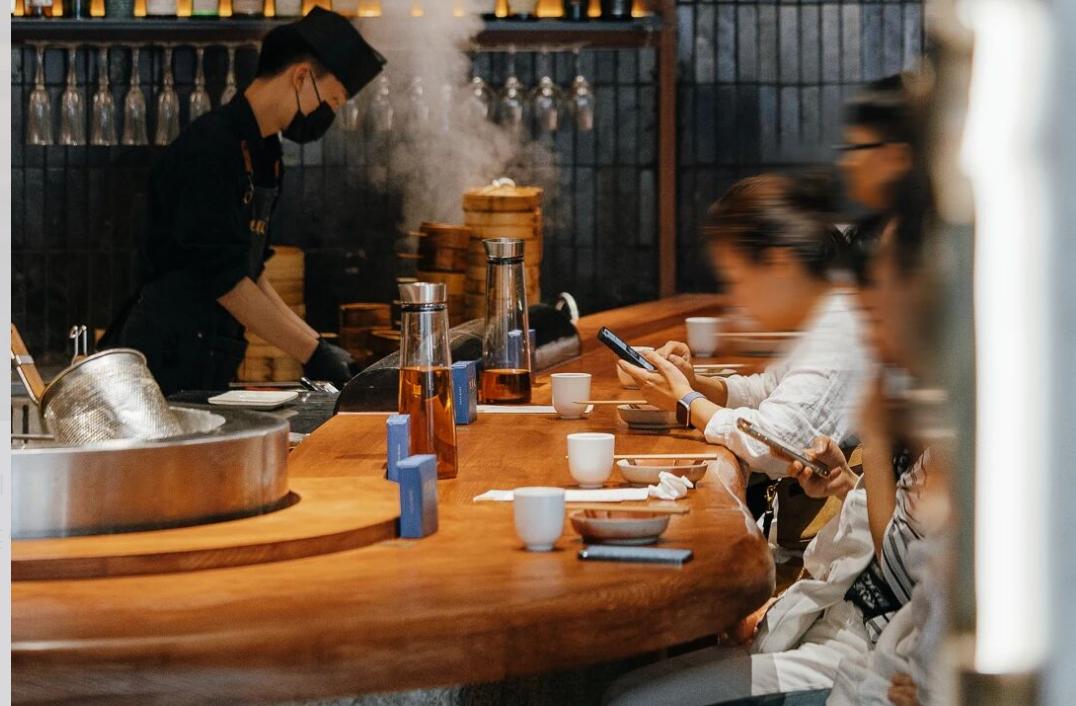
Hunan cuisine has also introduced the front-of-the-counter model. For example, Banqian Youma features Hunan - style front-of-the-counter dining, with classic Hunan flavors such as braised soft - shell turtle and stir - fried yellow beef on the menu.
Another example is that the Guomao Yintai store of Xinjingxi·Beijing Hot Pot has implemented the front-of-the-counter model. Customers sit around the bar to dine, enjoying the refined service of being served by a dedicated person and watching special performances such as opera shows and fancy bartending. Chuange Fish Dumplings has innovated the "Dumpling Omakase" front-of-the-counter model, where dumplings are made and cooked on - site at the open bar. Customers can watch the chefs rolling the dough, stuffing the dumplings, and pinching the folds up close. Jiang Bunai Front - of - the - Counter Barbecue features "freshly - cut wagyu beef + on - site grilling performance". The chef cuts the meat, grills it with flames, and seasons it in front of the customers at the bar, creating a strong visual impact...
It seems that as long as a restaurant adopts the front-of-the-counter model, its popularity will increase, and it may even become a "queuing king" in the local area.
The "Impossible Triangle" of Front - of - the - Counter Chinese Cuisine
The essence of catering competition lies in cost, efficiency, and experience. Most mature catering models can find a balance among the three to achieve sustainable profitability.
The front-of-the-counter model is an amplifier of experience. The on - site wok aroma, knife skills, cooking narrative, and instant interaction create a strong sense of ritual for consumers.
Especially when consumers are paying more and more attention to food safety, having the courage to present the production process in front of customers is a sign of confidence. Only when the ingredients are really good and the quality is up to standard can they withstand close scrutiny.
This upgrade in experience has a natural customer - attracting effect. Gan Le, the inheritor of the intangible cultural heritage of Ganshiji Chengdu Vermicelli with Pig Intestines, once told Neican Jun that after adding the front-of-the-counter model, the average daily passing traffic in front of the new store is about 20,000 people, and 60% of passers - by will stop and pay attention. The store entry rate has increased by 30% - 40% compared with the original store model.
However, behind the ultimate experience lies the unavoidable high - cost pressure, which is also the reason why Chinese front - of - the - counter dining is difficult to scale up. Yao Zhe, the founder of Hezhonghe, said that front - of - the - counter stores have higher equipment requirements, and there are additional requirements for employees' cooking skills and service. The ingredients also need to be fresh enough. All these factors add up to make the fixed cost much higher than that of ordinary stores.
Some specific implementation cases also illustrate this point. Xue Guowei, the founder of Brick Oven Rice King, revealed that it costs about 700,000 yuan to transform a Brick Oven Rice King store into a front - of - the - counter model (excluding rent), which is almost equivalent to opening a new store from scratch, or even more.
The reason why Japanese Omakase can succeed in the front - of - the - counter model is that the procedures for sashimi and sushi are relatively simple. A head chef can complete the whole process from ingredient preparation to presentation alone, and the actions are elegant and suitable for viewing. However, the underlying logic of Chinese cooking is high - temperature, multiple procedures, and teamwork. A single dish may require multiple steps such as stir - frying, steaming, stewing, and frying. It is difficult to accommodate too many kitchen equipment in the front - of - the - counter space.
However, some catering industry insiders believe that in the front - of - the - counter model, chefs can directly serve the cooked food to consumers. In this way, "putting all the service and production routes in one framework" can save some labor costs for the restaurant.
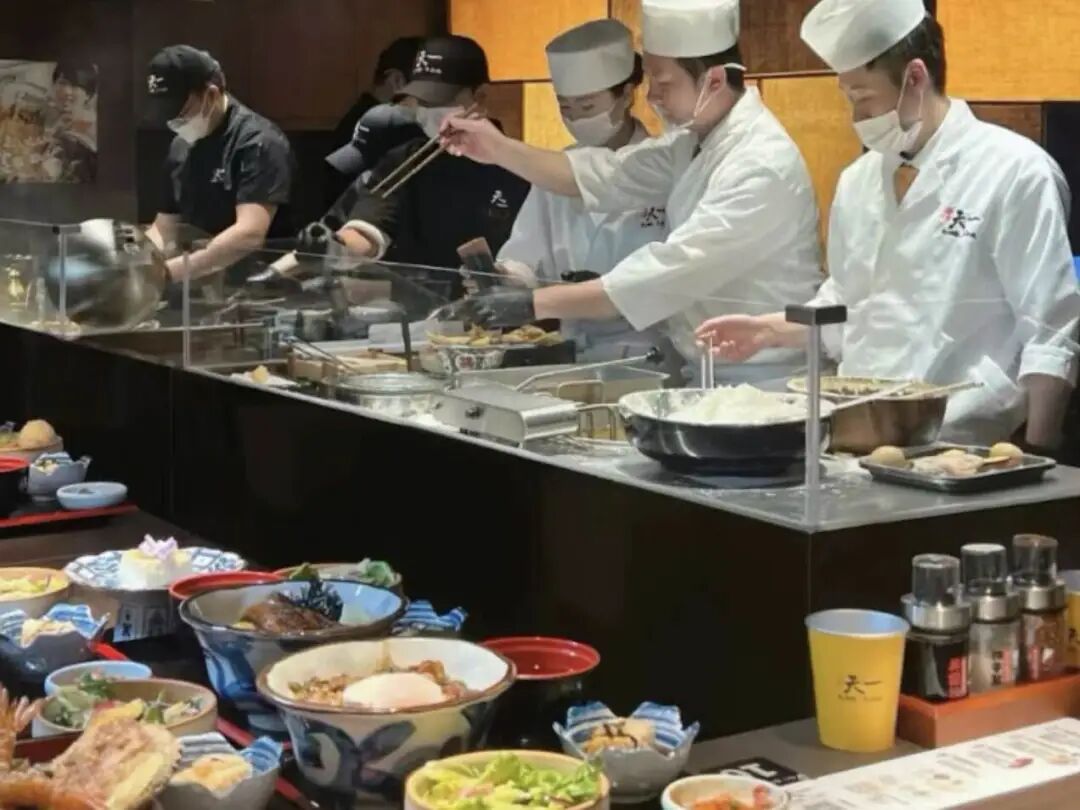
The impact of the front - of - the - counter model on efficiency varies significantly among different catering formats.
For fast food and snacks, it is an efficiency accelerator. According to the brand, after Brick Oven Rice King was transformed into the front - of - the - counter model, the table - turnover rate increased by 1 - 2 rounds compared with before the upgrade, and the turnover increased simultaneously. After Ganshiji Chengdu Vermicelli with Pig Intestines adopted the front - of - the - counter model, the table - turnover rate stabilized at 12 - 15 rounds.
For Chinese stir - fried dishes, the challenges are relatively greater. These types of stores involve high - temperature stir - frying, a large amount of pre - preparation, and complex procedures. Moving the operations to the front requires reorganizing the process chain; otherwise, the efficiency will be slowed down during peak hours.
Overall, Chinese front - of - the - counter dining voluntarily sacrifices some efficiency and refuses to seek profit by reducing ingredient and labor costs. This determines that this model highly depends on the high traffic and high per - capita consumption in core business districts, relying on sufficient customer flow to spread the fixed costs. Once the store is located in an area with insufficient traffic and the traffic declines, and the table - turnover rate fails to meet the standard, the entire business model may become unbalanced.
This "impossible triangle" seems to predestine that Chinese front - of - the - counter dining is difficult to scale up quickly and is more suitable for creating "slow - paced" experience - type restaurants.
From Bistro to Mountain - Style Dining, and then to the Front - of - the - Counter Model
Looking at the catering trends in recent years, from Bistro, mountain - style dining to the currently popular Chinese front - of - the - counter dining, although the categories and scenarios of these trends seem different, their underlying logics are highly similar. In essence, they are all catering models with a sense of refinement.
>> They all make once - luxurious experiences accessible to the general public, which is an "upgrade in consumption downgrade".
In the past few years, the catering market has generally entered a stage of rational regression. High - end luxury consumption has cooled down, and mass - market and affordable consumption has become more competitive. The popularity of Bistro and Chinese front - of - the - counter dining is to make the sense of ritual and refinement of high - end catering accessible to the general public, providing ordinary consumers with a premium experience at a higher cost - performance ratio.
Bistro applies the relaxation and ritual of French cuisine from Michelin restaurants to restaurants with an average per - capita consumption of over 100 yuan. Chinese front - of - the - counter dining applies the ritual of Japanese Omakase from restaurants with an average per - capita consumption of thousands of yuan to Chinese cuisine scenarios with an average per - capita consumption ranging from dozens to hundreds of yuan.
>> They use cultural narratives to provide consumers with a unique sense of experience to counteract the homogenization of catering.
Bistro combines French concepts with Chinese cooking. Mountain - style dining combines Chinese landscape aesthetics with local ingredients, emphasizing "direct sourcing from the origin, handmade utensils, and seasonal ingredients", creating a sense of scarcity through origin - tracing narratives. Chinese front - of - the - counter dining combines Japanese front - of - the - counter rituals with Chinese cooking techniques.
They actually create a "familiar sense of strangeness". They have the ritual of foreign cultures, appearing high - end, but in essence, they are still local flavors.
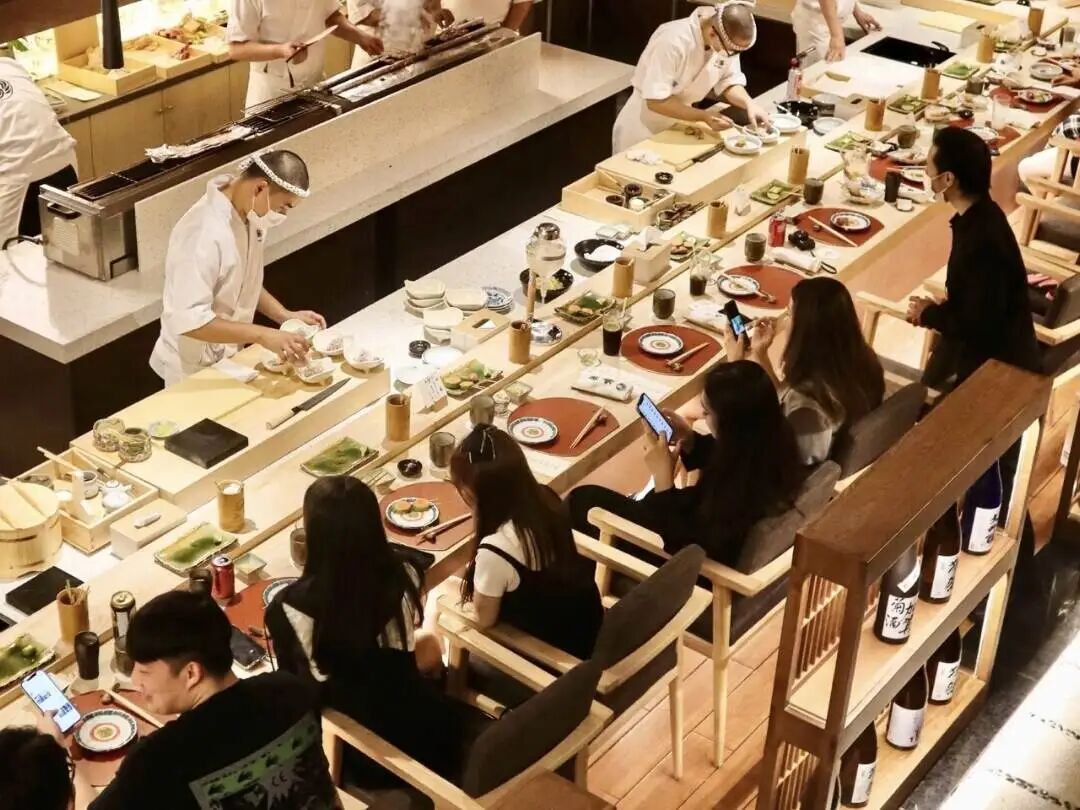
>> They create a "refined sense of earthly charm", making consumers willing to spread this lifestyle on social platforms.
The earthly charm of traditional Chinese cuisine is noisy, greasy, and worldly. However, these models are actually creating "refined earthly charm". The earthly charm of mountain - style dining comes from handmade ceramic tableware and lush green plants, creating a relaxed and leisurely atmosphere. Chinese front - of - the - counter dining is more straightforward, with stoves, iron plates, and skillful knife skills creating an immediate sense of atmosphere. They beautify and filter the earthly charm, turning it into a "landscape" that consumers can safely consume.
In the era of catering dominated by social media such as Xiaohongshu and Douyin, people no longer just eat to satisfy their hunger; they are more consuming emotional value and identity labels. Especially young consumers in first - and second - tier cities need to convey their life attitude of "knowing how to live, having good taste, and being relaxed" through dining scenarios and consumption choices. Chinese front - of - the - counter dining and other refined catering models happen to provide excellent social materials and emotional outlets.
However, this is also its Achilles' heel.
When the market's preference for a certain style declines and the trendy dining experiences become "commonplace", they will be quickly replaced by the next model that "looks more relaxed, more natural, and more ritualistic".
How long can Chinese front - of - the - counter dining stay popular?
The popularity of Chinese front - of - the - counter dining is essentially a temporary trend under the influence of cost - performance consumption and aesthetic iteration. It meets the emotional needs of contemporary consumers with its ultimate immersive experience and refined earthly charm.
However, we must clearly recognize that the product is the core, and profitability is the fundamental. The "impossible triangle" of Chinese front - of - the - counter dining predestines that it cannot be a universal model suitable for all categories and scenarios, and the traffic dividend will eventually disappear quickly.
As a large number of brands follow the trend and enter the market, and homogeneous stores are quickly replicated, the competition within the model intensifies, the differentiation of experience weakens, and consumers' sense of freshness will quickly fade. It can be predicted that stores that rely solely on the scene and model to gain popularity will eventually be eliminated by the market. Only those players who truly focus on product development, optimize the model, and deeply cultivate the experience can survive.
This article is from the WeChat official account "Catering Business Owners' Neican", author: Neican Jun. Republished by 36Kr with permission.