Offering a bribe of 30,000 yuan will lead to criminal liability, and a large number of medical representatives are disappearing from hospitals.
Different positions in the hospital - department directors, attending physicians, and pharmacy staff - although they are all in a precisely structured system where everyone is self - disciplined, people have different personalities and diverse preferences. To understand them, you need to find the right key.
Some people love alcohol, some like milk tea, some prefer bird's nest, and some are addicted to fishing... Some people are used to giving subtle hints, while others often put their needs straightforwardly on the table.
After dealing with them for a long time, Lin Ze got to know everyone's temper and preferences. Of course, this is the experience he accumulated after more than a decade in the pharmaceutical industry, through a lot of careful observation and exploration.
"Could you help us get the department to use more of our products?"
The department director A, who loves to use official jargon, didn't give a definite answer. Lin Ze visited him several more times, bringing different things each time. He tried milk tea, both cold and hot, in various flavors; then came nourishing tonics like stewed soup and bird's nest; later, he brought office snacks. Like an experiment with controlled variables, after a series of trials, he found that Director A's expression and tone changed subtly when faced with nourishing tonics.
"It worked!" He keenly caught this change and continued to make further breakthroughs.
Lin Ze is engaged in the promotion of imported human albumin in a southern city. As a pharmaceutical representative, doctors are his "customers". The core of his work is to persuade them to use more of the products he promotes, influence prescriptions, and meet sales targets.
Catering to daily preferences is just one of the means to maintain relationships. More importantly, it depends on drug rebates and lecture fees. Over the years, this sales strategy based on the understanding of human nature has almost always worked, and it has long been an open secret in the industry.
But recently, Lin Ze found that this hidden rule is facing unprecedented challenges.
On May 1st, the "Interpretation (II) on Several Issues Concerning the Application of Law in Handling Criminal Cases of Embezzlement and Bribery" (hereinafter referred to as the "Interpretation" or the "May 1st New Rule") jointly issued by the Supreme People's Court and the Supreme People's Procuratorate came into effect. The "gold - carrying sales" in the pharmaceutical industry are facing unprecedented criminal risks. Immediately afterwards, seven departments jointly issued the "Measures for the Management of Pharmaceutical Representatives", further tightening the compliance net.
These two heavy blows fell one after another, and almost overnight, the entire industry fell silent.
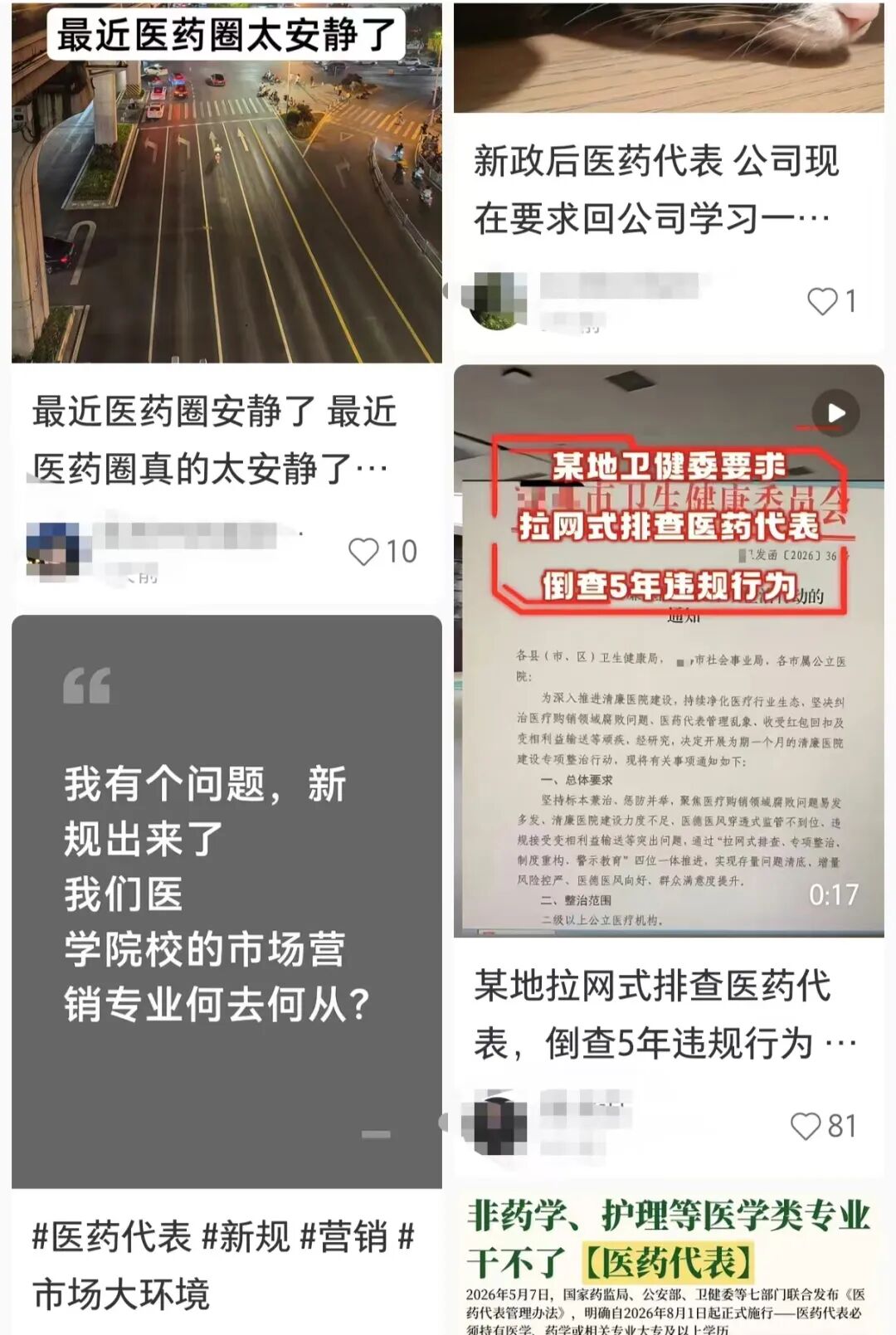
Screenshot from Xiaohongshu
Before the May Day holiday was over, there was an upsurge within the company where Lin Ze worked. Vague news spread from the regional level: "It is said that some places have started arresting people."
The company's response instructions were issued layer by layer in the most covert way. Regional leaders called area managers one by one on WeChat voice, and area managers then notified each representative in the same way: delete all sensitive and non - sensitive chat records with customers and dissolve work groups that may pose risks.
An unprecedented feeling gripped Lin Ze: it seemed that a storm was coming.
01 Silent but Turbulent Underneath
Lin Ze still went to the hospital every day as usual. Different from the past, in order to eliminate traces, the company no longer required him to punch in on the APP.
Previously, he had to punch in at least three times a day, and the location had to be accurate to the hospital. After punching in, he also had to send the screenshot to the WeChat group. Now, the punching - in is cancelled, but the pressure remains. "You still have to go to the hospital. If you don't, doctors may use other brands." He didn't dare to stop.
In the area where out - patient prescriptions are issued, there are many people and it's easy to be noticed. There is a sign on the clinic door saying "Pharmaceutical representatives are not allowed to enter". Those colleagues who peek around with laptops on their backs are refused entry. But for those like Lin Ze who promote surgical products, the main battlefield is in the inpatient department, and doctors are more lenient and usually don't drive them away.
According to the "Interpretation" that came into effect on May 1st, the long - existing "gold - carrying sales" behavior in the pharmaceutical industry will face severe criminal penalties. The starting point for conviction and sentencing of bribery and acceptance of bribes by non - state functionaries has been reduced from 60,000 yuan to 30,000 yuan.
That is to say, if a pharmaceutical representative gives a cumulative rebate of more than 30,000 yuan, it constitutes the crime of bribery. Implicit benefits such as shopping cards, tourism, academic sponsorship, and air tickets are also included in the amount of bribes received. The cumulative calculation is made for multiple payments to multiple people, and illegal acts can be investigated retroactively for 5 years.
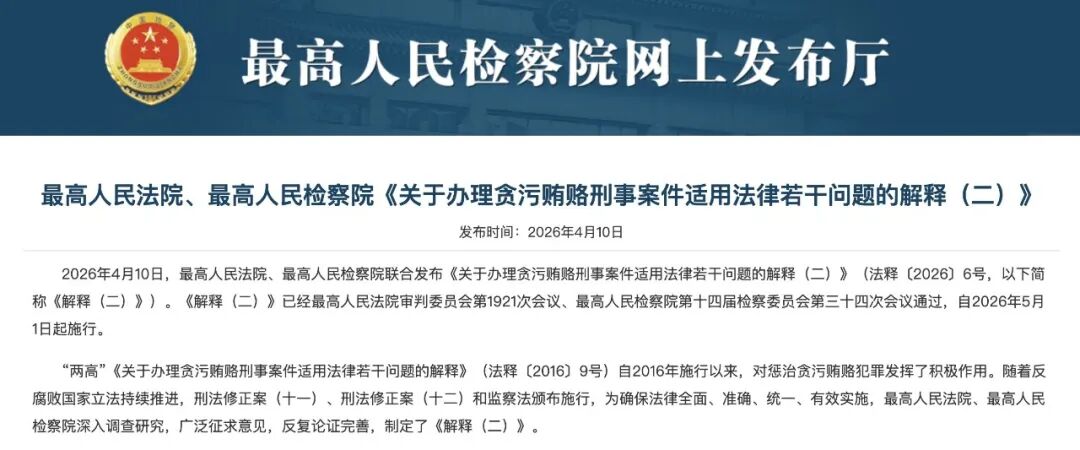
Screenshot of the original text of the "Interpretation"
Since April, many places such as Shanghai, Jiangsu, Shandong, Guangdong, and Yunnan have successively deployed special inspections in the medical field to further promote the anti - corruption rectification work in the medical industry. Under the high - pressure policy, the number of pharmaceutical representatives in hospitals has visibly decreased.
Yao Ping has been promoting imported medical devices in top - tier hospitals in the Yangtze River Delta for three years. She found that after May 1st, more than half of her familiar colleagues disappeared.
She tentatively asked on WeChat: "Did you go to the hospital today?" Most of the replies were "No". A junior sister who works as an academic manager, who used to accompany salespeople to visit doctors, now basically stays in the company and doesn't dare to go out.
Shen Xing, who works in management at a pharmaceutical company in Chongqing, said that most of the salespeople in his team used to visit hospitals intensively at the beginning and end of each month. He told Phoenix.com's "Storm Eye" that currently, many practitioners and cooperative peers around him are in a wait - and - see state. All hospital visit work in the company's regional area has been suspended, and most enterprises have slowed down their business pace and tightened their market operations. "Safety is always the first principle."
Phoenix.com's "Storm Eye" noticed that on social platforms, some people were required by their companies to be "silent" and stay at home temporarily; some still need to appear around the hospital on time to complete location, take photos, and punch in. However, after this process, they start to slack off. After punching in, they hide aside, spend enough time on the public seats for patients, or find a coffee shop to rest, and then punch out to get off work. Some people simply use AI to fabricate a work log to deal with the inquiries from their superiors.
All kinds of true and false news are spreading in the circle:
"There are plain - clothes policemen in the hospital."
"The hospital has installed an AI facial recognition system that can identify regular visitors..."
"Who would go to the hospital every day if they are normal patients?"
Several photos allegedly showing pharmaceutical representatives being taken away were repeatedly circulated in various groups... The air was filled with a tense atmosphere.
The consumables that Yao Ping promotes need to be fully implanted into patients' bodies, which means she has to provide long - term postoperative follow - up and after - sales service. Therefore, she has to continue to enter the hospital, but she doesn't dare to visit new customers at all. "No one knows how strict the policy implementation will be and what the judgment basis is," she said. "If I'm misunderstood, it will be very troublesome to explain."
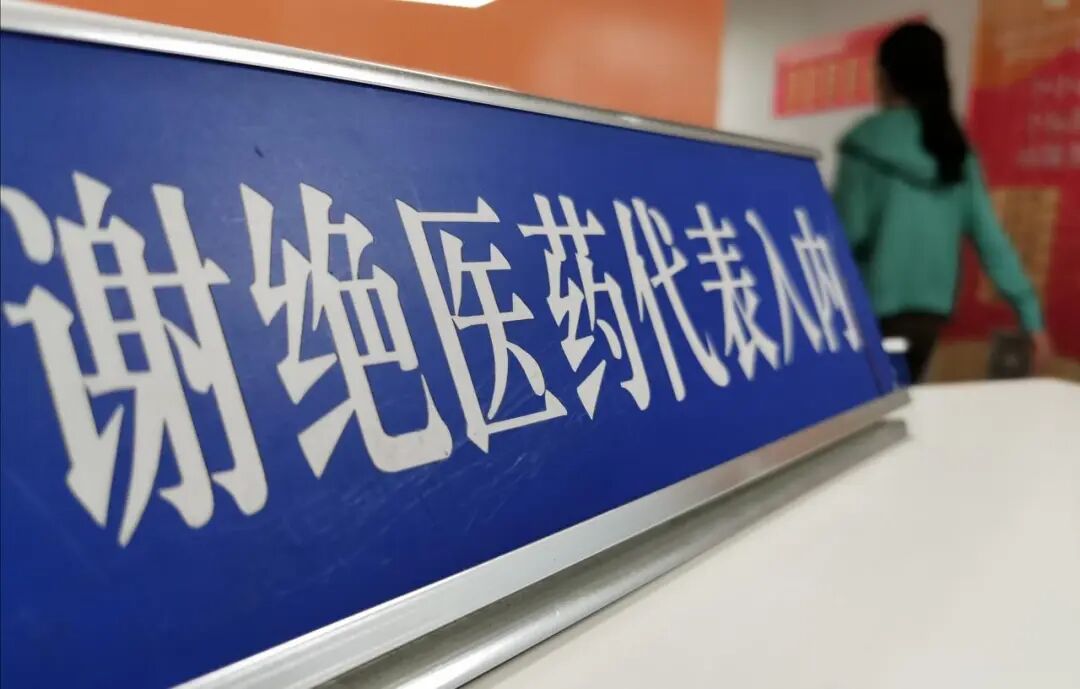
Hospitals refuse pharmaceutical representatives to enter. The picture is from the Internet
She once thought she could take a vacation after May, but unexpectedly, her boss held two or three meetings within a week, emphasizing that they still had to keep working. "Since our peers dare not go to the hospital, this is a good opportunity for us to overtake. Show your faces more in front of customers." the boss said.
"We definitely won't do gold - carrying sales in the future. Tell your customers the same." To stabilize the morale of the troops, the boss conveyed a new strategy at the meeting: "In the end, both we and our customers need a process of adaptation and learning. Everyone needs to make money, but we can't risk our lives for it."
The boss's decision made Yao Ping feel relieved. When she conveyed the company's decision to doctors, most doctors expressed understanding and support. "In fact, they also think that gold - carrying sales should not exist in the first place."
Of course, there are exceptions. A bold doctor directly said: "If you don't give rebates, don't do business." Yao Ping told Phoenix.com's "Storm Eye" that the deal didn't go through in the end, and the boss directly said, "Then wait until he changes his mind and then cooperate."
However, Lin Ze saw that apart from superficially erasing all risk traces, everything seemed to remain the same. The company still bombarded the group with sales targets and inventory information early in the morning.
The doctor didn't show much restraint either. When he visited the doctor after work in the evening, the doctor directly sent him a message: "Help me order a take - out." The meals for two people cost one or two hundred yuan. "And today, a customer asked me to order Starbucks and McDonald's breakfast for ten people tomorrow. It's no different from before." he said.
Lin Ze also glimpsed an internal document from a third - party association on a department's desktop. The lecture fee standards on it were the same as before: 1,000 yuan for attending physicians, 2,000 yuan for associate directors, and 3,000 yuan for directors... "The customer told me, 'If they ask, just say that the third - party association didn't follow the national requirements'." he relayed to Phoenix.com's "Storm Eye".
According to regulations, doctors must report their participation in academic activities sponsored by enterprises. Lin Ze said bluntly: "I'm sure that 80% of doctors don't report, because if they do, these meetings simply can't be held."
Of course, some colleagues tried to communicate with customers, hinting that the lecture fees might be adjusted down according to regulations in the future. Lin Ze heard that the customer reacted strongly and retorted excitedly: "If all surgeons do this, everyone will starve!"
02 "Prescribe the products of those who offer benefits"
Lin Ze admitted that all kinds of bribery practices have long penetrated every link of the industry.
Although the imported human albumin he is responsible for is a centralized procurement product, in the fierce competition among many enterprises, to meet the sales targets, he has to touch the gray area.
Getting into the hospital is the first hurdle. To become the exclusive supplier of the hospital, enterprises first need to get through the hospital director, because the hospital director holds the right of drug access. To pass this hurdle, enterprises need to provide financial support in the name of "sponsoring academic annual meetings".

A pharmaceutical representative will be convicted if the bribery amount reaches 30,000 yuan. The picture is from the Internet
After getting into the hospital, enterprises also need to win over the pharmacy department. The pharmacy department holds the right to report the quantity - reporting a higher procurement volume for centralized procurement means more stable sales in the future.
But when a hospital stocks more than two types of human albumin at the same time, Lin Ze's battlefield expands to the entire inpatient department. He needs to shuttle between key departments such as the emergency department, intensive care unit, and hepatobiliary surgery, and persuade the directors, attending physicians, and chief residents who hold the prescription right to use more of his company's products.
Even if the quantity reporting is successful, for example, getting a share of 5,000 bottles, the pressure still follows. When the drug usage surges, it may trigger the medical insurance quota warning, and the pharmacy department will temporarily "lock" it in the system, and clinical doctors can no longer prescribe this drug.
Lin Ze has to maintain good relationships, get the news as soon as the warning appears, and find a way to solve the problem. He anxiously stares at the drug inventory every day. Once the consumption speed is too slow, he immediately goes to the clinical department to ask the reason, and the other side will then put forward various demands.
But what annoys him most is that sometimes the pharmacy department deliberately sets obstacles. "They just find a reason, such as 'the product has been used too much recently', and then lock the product." This forces pharmaceutical representatives to "come and communicate".
"Doctors have great say in drug selection." Lin Ze told Phoenix.com's "Storm Eye" frankly. "Whoever comes to him and gives him benefits, he will prescribe whose products."
Many times, prescriptions flow outside the hospital. The price outside the hospital is much higher than inside. A bottle of human albumin can be nearly 300 yuan more expensive. The pharmacy will count how many bottles each doctor prescribes every month and then give a considerable rebate to the doctor.
"Regardless of patients' needs and drug efficacy, just looking at the rebate amount, how can doctors still use our products?" Lin Ze calculated: for each bottle of albumin prescribed by a doctor, they can get at least 80 yuan in rebates in the hospital; outside the hospital, it doubles. A postoperative patient may need 10 bottles at a time, and the doctor can get 1,600 yuan on the spot. "In a day, some doctors may earn more from this than an ordinary migrant worker earns in a month."
In this situation, doctors' decisions directly affect the product sales volume and also directly determine whether pharmaceutical representatives can meet the company's performance targets.

Doctors refuse industry bribes. The picture is from the Internet
Lin Ze's monthly sales target is as high as several million yuan, and the cumulative target for a quarter is nearly ten million. Only by achieving the specified proportion can he get a bonus. In more than a year, he has only received sales bonuses for two quarters. What's more tiring is that even if he meets the target this quarter, the target for the next quarter will increase by 10% to 15%.
Yao Ping is also exhausted by the targets. To make customers remember her among many choices, after introducing the product advantages, she will directly say, "How much money you can get for successfully recommending a patient."
But in this blatant rebate competition, the distributor she