After two years of entrepreneurship, it has achieved a revenue of 27 billion: This robotics company has made a fortune.
200 employees, two years of establishment, 34,000 orders, IPO - Is Humanoid a genius or a fraud?
The British humanoid robot company Humanoid has been quite impressive recently. According to foreign media reports, the company is considering an IPO in the United States between 2029 and 2030.
Its CEO, Artem Sokolov, revealed that the company's cumulative pre - order has reached 34,000 units, and it is expected to complete the delivery within three years. Calculated at about $120,000 per unit, the corresponding order volume is about $4 billion (about 27 billion yuan). If calculated according to its planned annual delivery rhythm, the annual revenue may exceed $2 billion (13 billion yuan).
This figure is quite astonishing.
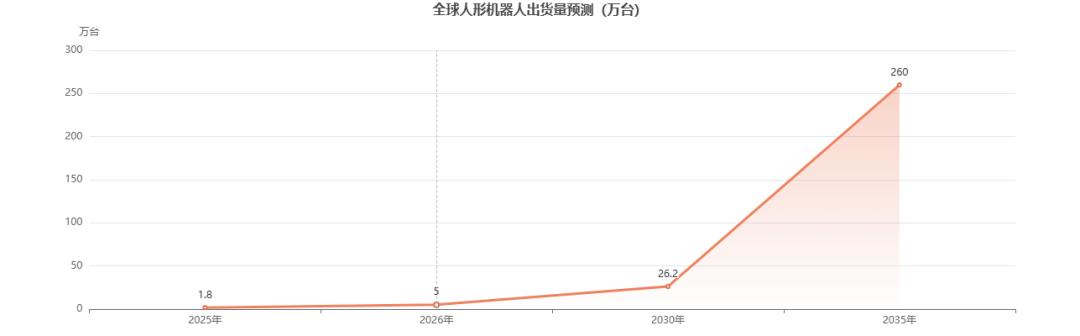
According to the calculations of Morgan Stanley and several industry institutions, the global shipment of humanoid robots in 2025 is about 18,000 units.
In other words, the "pre - order volume" of Humanoid alone is already close to twice the global annual actual shipment. Even more exaggerated is that this company was established in May 2024, and it has only been two years until now.
According to public information, Humanoid currently has about 200 employees, and its members come from leading technology and robot companies such as Apple, Tesla, Google, Boston Dynamics, Sanctuary AI, and NVIDIA.
Among them, there are also members with a Chinese robot background.
Public information on LinkedIn and other platforms shows that the Chief Product Officer, Sotirios, is a doctor of automation and robotics from Tsinghua University. After graduation, he joined Ubtech and served as the director of the robot product department.
A company that has just turned two years old is claiming 34,000 orders. Is it really profitable, or is it just a big pie for investors?
Humanoid Hits the Money Spot
In the past few years, the biggest problem in the humanoid robot industry has been that "robots can walk, but they can't make money." Many robot companies have long been stuck in showroom performances, dancing and somersaulting, demo videos, and laboratory verifications.
But the real challenge is who is willing to pay continuously. Humanoid didn't start with "household robots" but targeted industrial scenarios. This is its most crucial aspect because the money in industrial scenarios is real.
Taking the manufacturing industries in Europe and the United States as an example, the annual cost of a manufacturing worker in Germany is about $60,000 - $80,000, and that of an automobile factory worker in the United States is about $70,000 - $100,000. If night shifts, insurance, training, work - related injuries, and staff turnover are taken into account, the long - term cost is even higher. The price of a Humanoid robot is about $120,000.
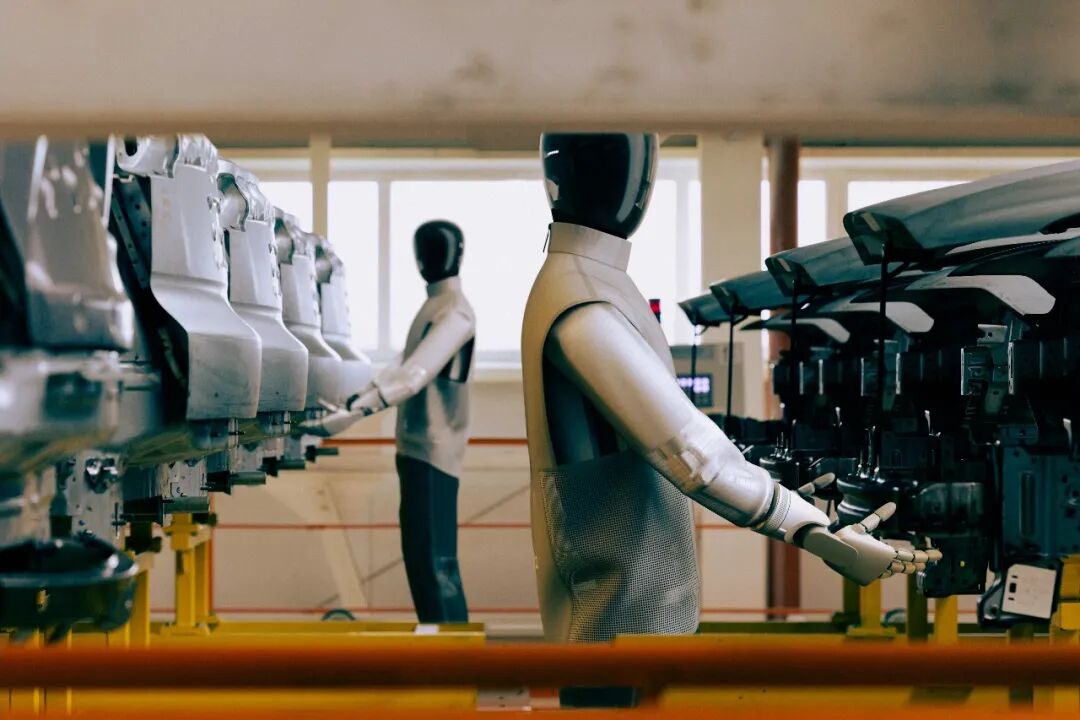
The bipedal version of HMND 01 achieved stable walking 48 hours after assembly.
If the robot can work stably for 3 - 5 years and support 24 - hour shifts, it is very likely to be cheaper than a human. This means that industrial robots are approaching the "real ROI" for the first time.

The wheeled version of HMND 01 performs handling tasks in industrial scenarios.
This is why its first partners are not consumer companies but Bosch, Siemens, Ford, and Schaeffler. These companies won't pay for "show - off skills." They only care about one thing: whether it can reduce costs.
Selling Hardware Isn't Sexy, Renting Is
Many people think that robot companies make money by "selling hardware," but the real big business model is likely to be "continuous renting."
Humanoid adopts the RaaS (Robot as a Service) model. Instead of selling the robots in one - go, it charges by the month, by working hours, or by production capacity.
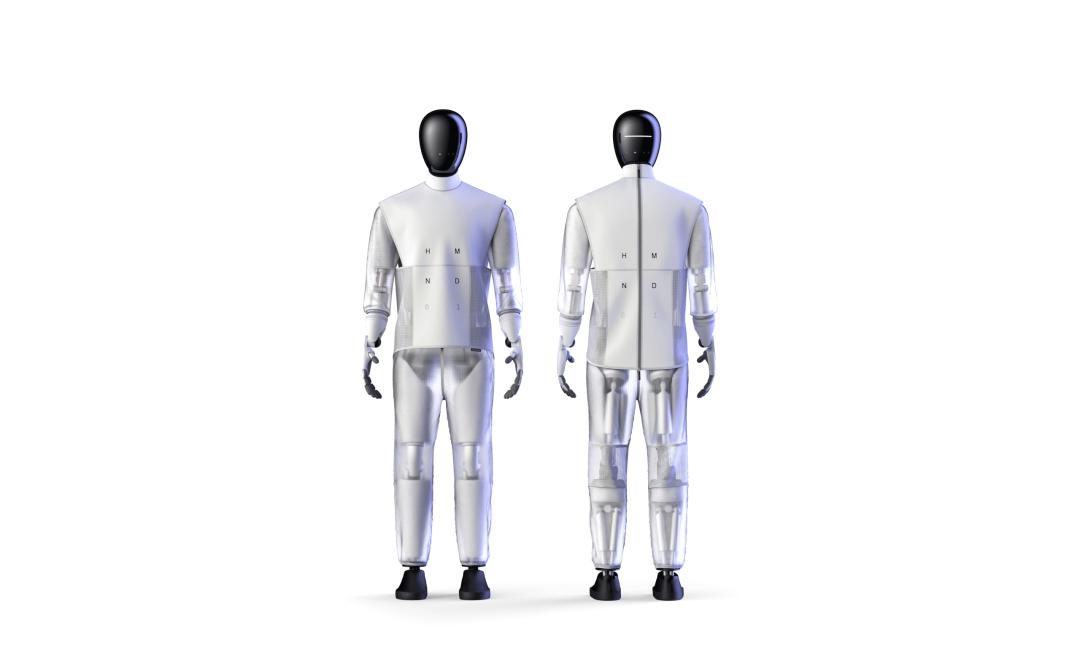
The wheeled version of HMND 01 is 220 cm tall and can carry a load of 15 kg.
For example, if a robot is sold for $120,000 and the customer pays a service fee of $3,000 - $5,000 per month for a 5 - year usage period, the lifetime revenue of a single robot may reach $180,000 - $300,000.
With 34,000 robots, it means that the potential cumulative future revenue may not only be the $4 billion in hardware revenue but also more than $8 - $10 billion in long - term service revenue. This is what really excites the capital market.
Because selling equipment in one - go isn't attractive, continuous subscription fees are. What people are betting on isn't "robot sales" but whether there will be a "robot - version AWS" in the future.
Why So Fast from Establishment to Release in 16 Months?
Another point that has attracted industry attention is Humanoid's development speed.
In September 2025, the company released the wheeled version of HMND 01. It only took 16 months from the company's establishment to the product release. As for the bipedal robot, according to its public statement, it only took 48 hours from assembly to stable walking.
Why is it so fast? The core lies in "simulation first."
The biggest problem with traditional robot companies is that real - world training is too expensive because the hardware may be damaged if it falls, and the efficiency of real - machine training is extremely low, and data collection is very slow.
Humanoid makes extensive use of NVIDIA's Isaac Sim simulation platform. The logic is a bit like "training the robot to be an expert in a game first and then putting it into the real world."
According to public information, Humanoid has generated about 52.5 million seconds of simulation data. It even claims that two days of simulation training is equivalent to about 19 months in the real world. This means that the robot industry may be shifting from "competing in mechanical R & D" to "competing in AI training efficiency."
If this path is viable, the development speed of robots will accelerate exponentially like that of large models.
This is why capital has started to chase "AI robots" again because people suddenly realize that robots may finally have the "software iteration speed."
How Many of the 34,000 Orders Are Real?
Of course, the question arises. Are the 34,000 orders real? The answer may be "there is some exaggeration, but not all are false."
Because there are many types of "orders" in the robot industry: intention orders, pre - purchase agreements, POC tests, LOIs, small - scale pilots, and real purchase contracts.
Many companies include POCs, pilots, and cooperation intentions in the "orders."
So 34,000 orders may not equal 34,000 real paid orders. But even if only 20% are fulfilled, it's still 6,800 units. This number is still significant because there are actually very few humanoid robot companies that have achieved large - scale delivery globally at present.
The $7.5 Trillion Track: Why Is Capital Betting?
This market is really huge.
Morgan Stanley predicts that the demand for humanoid robots in China will be about 262,000 units in 2030, about 2.6 million units in 2035, and the global market size may reach $7.5 trillion in 2050.
Why is there a sudden explosion? Because humans have lacked a "general - purpose labor machine" for the past few decades. Industrial robots are powerful but can only perform fixed actions.
For the first time, humanoid robots are trying to enter "unstructured environments." Simply put, in the past, robots could only work on fixed assembly lines. Now they are starting to try tasks such as handling, sorting, inspection, loading and unloading, factory logistics, warehousing, and may even enter shopping malls, hospitals, and households in the future.
If this direction succeeds, it will affect not just one industry but the global labor market.
Risk: Running Out of Money Before Reaching the Finish Line
The real danger for Humanoid is not that "it can't make robots" but that it may run out of money before reaching the finish line.
Because the humanoid robot industry is extremely capital - intensive. Comparing with its peers: Figure AI is valued at about $30 billion, Apptronik has raised about $1 billion in cumulative financing, Unitree Technology is gearing up for an IPO, and Ubtech has been listed on the Hong Kong Stock Exchange.
And the publicly - known financing scale of Humanoid is not large.
As of May 2026, Humanoid has only disclosed a $50 million seed round funded by the founder, and no other institutional financing has been announced. However, sources such as Reuters and PitchBook show that the cumulative financing in the seed round + Pre - A round has exceeded $250 million, with the introduction of Middle Eastern sovereign funds and European and American industrial capital.
It is now like "entering a heavy - industry battlefield with light weapons." So it must quickly prove that the robots can really work stably in the long term, factories are really willing to pay continuously, mass production can really take off, and the cost per unit can really decrease. Otherwise, the 34,000 orders may end up being just a capital story.
From Show - off Skills to ROI: The Inflection Point Has Arrived
What's most worthy of attention about Humanoid is not just the 34,000 orders but that it represents a new trend: the robot industry is truly entering the "ROI era" from "show - off skills."
Whoever can really help factories save money, replace real labor, and push robots from the "showroom" to the "production line" is the one who may make real big money.
And this may be the real big inflection point for the humanoid robot industry.
This article does not constitute any investment advice.
This article is from the WeChat official account “Pencil News” (ID: pencilnews), author: Aiyu. It is published by 36Kr with authorization.