"90% of franchisees are losing money": How long can the "dream of opening 10,000 stores" of the popular alcohol pouring shops last?
Since 2025, there has been a boom in "self-service liquor stores" in China. New-generation self-service liquor store brands represented by Tang Sanliang and Bama Xia have entered the market with the models of "freshly dispensed and sold on the spot" and "charged by the tael". In just over a year, they have expanded from the streets of Chengdu to many cities across the country and have successively received capital support. Liquor enterprises have also taken action. Companies such as Gujinggong, Kouzijiao, and Yingjiagongjiu have all stepped in to make arrangements.
A bulk liquor business that was once regarded as "low - end" and "marginal" seems to be being redefined. However, under this wave of enthusiasm, the real survival status of franchisees and the sustainability of the business model still need to be calmly examined.
1 Current Situation of Self - service Liquor Stores: From the Market to the New Favorite in Business Districts
Self - service liquor stores are not essentially new things. As early as the 1990s, bulk liquor chain brands represented by Bailaoquan and Anning Shaojiu had spread across the country. At its peak, Bailaoquan had nearly 20,000 stores, and Anning Shaojiu, founded in 1994, had also opened stores in more than 20 provinces and municipalities across the country. However, traditional bulk liquor stores have long remained at the level of market corners and community stores. Their customer base is mainly middle - aged and elderly men, and their products are limited to Baijiu and Huangjiu, belonging to the marginal business form of liquor consumption.
In 2023, Tang Sanliang opened its first store in Chengdu, marking a new stage for self - service liquor stores. After that, brands such as Bama Xia have successively emerged. Through comprehensive upgrades in branding, youthfulness, and digitization, they have moved bulk liquor stores from "market corners" to the core of business districts and communities. In the Chengdu market, more than a dozen brands and hundreds of self - service liquor store outlets have emerged in just over a year.
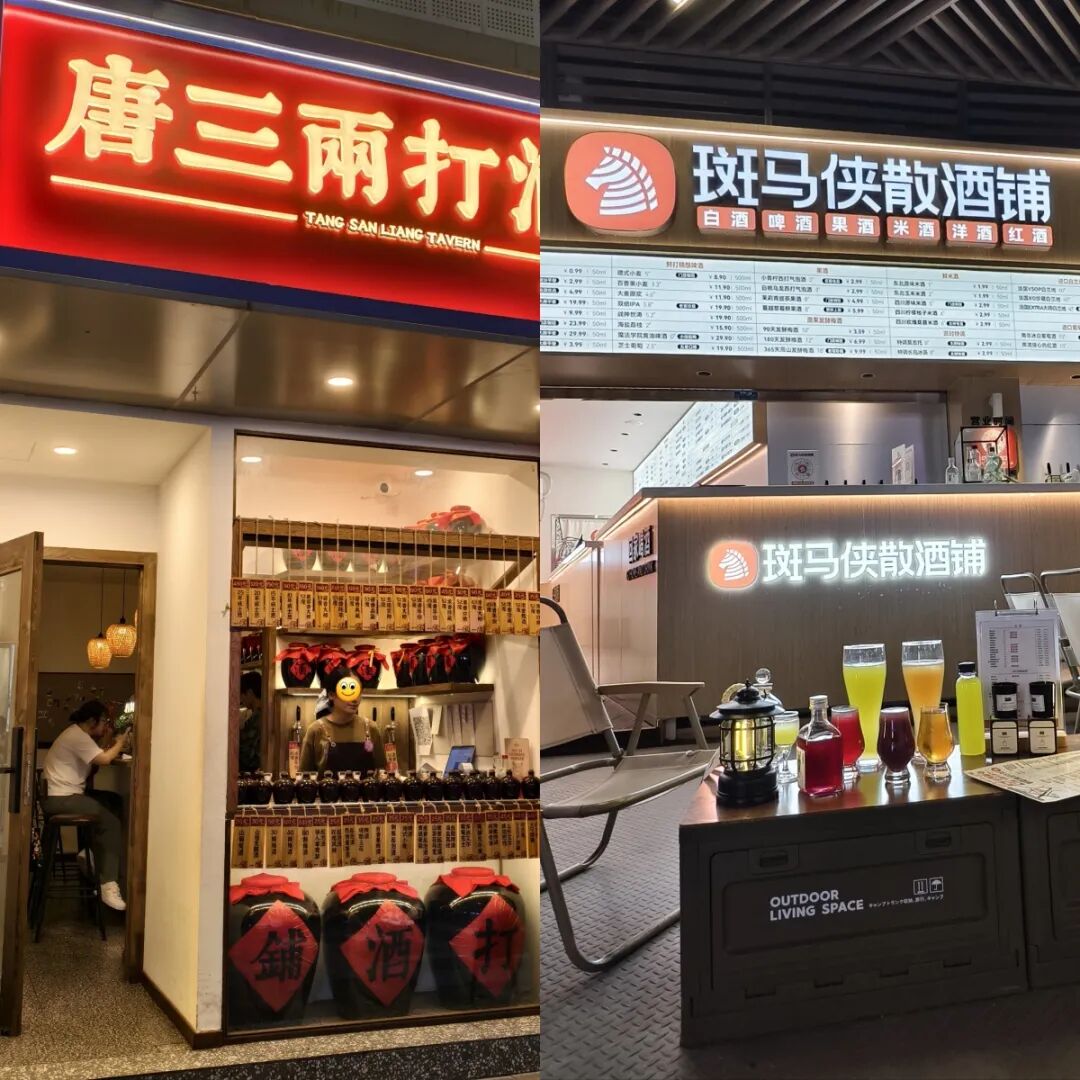
Data from Zhaimen Canying shows that the current store sizes of Tang Sanliang and Bama Xia are very similar. As of now, Tang Sanliang has more than 60 stores across the country, with nearly half in Sichuan; Bama Xia has nearly 70 stores across the country, and more than 50% of its stores are in Sichuan and Chongqing. It is worth noting that both brands have the goal of having 10,000 stores.
In addition, major Anhui liquor companies are also accelerating their layout. In the second half of 2025, "Gujing Self - service Liquor Store" under Gujinggong was launched in Bozhou, offering freshly dispensed and sold liquor; "Kouzi Liquor Workshop" under Kouzijiao focuses on freshly dispensed and sold pure - grain bulk liquor, targeting daily drinking and family gathering scenarios; Yingjiagongjiu started its layout earlier and established a bulk liquor division long ago.
From a capital perspective, Bama Xia and Tang Sanliang almost simultaneously received investments from Challenger Venture Capital founded by Tang Binsen, the founder of Yuanqi Forest, indicating that Tang Binsen has high expectations for this track. The concentrated influx of famous liquor enterprises, capital, and cross - border talents shows that self - service liquor stores are no longer just a channel supplement. They are not satisfied with small - scale operations but have greater expectations.
2 Three Major Innovations of Self - service Liquor Stores
Compared with traditional bulk liquor stores and craft beer pubs, new - type self - service liquor stores represented by Tang Sanliang and Bama Xia have achieved upgrades in multiple dimensions and indeed have innovative aspects in the model.
First, the change in the customer base. Almost all major self - service liquor store brands target young people aged 20 - 35. For some brands, more than 80% of their users are in this age range, and the proportion of women is nearly half. User data from Tang Sanliang shows that the male - to - female ratio is about 53% and 47%, and users aged 18 - 30 account for the highest proportion. This new - type self - service liquor store breaks the stereotype of bulk liquor being for "old men" and includes two major groups, young people and women, in the target customer base.
Second, the enrichment of products. Traditional bulk liquor stores usually have only a dozen SKUs, while new - type self - service liquor stores often have more than 50 categories. The price of Baijiu ranges from 1.5 yuan per 50 ml to 24 yuan per 50 ml, and the price of craft beer ranges from 18 yuan per 100 ml to 45 yuan per 100 ml. Taking Bama Xia as an example, it brings together more than 50 products in all categories, including Baijiu, beer, fruit wine, plum wine, wine, and whiskey. These brands introduce the thinking of the tea - drinking industry and attach great importance to the research and development of new products. The stores cover all categories such as Baijiu, craft beer, fruit wine, Huangjiu, and foreign liquor, making the audience of self - service liquor stores much wider than that of traditional stores with a single category.
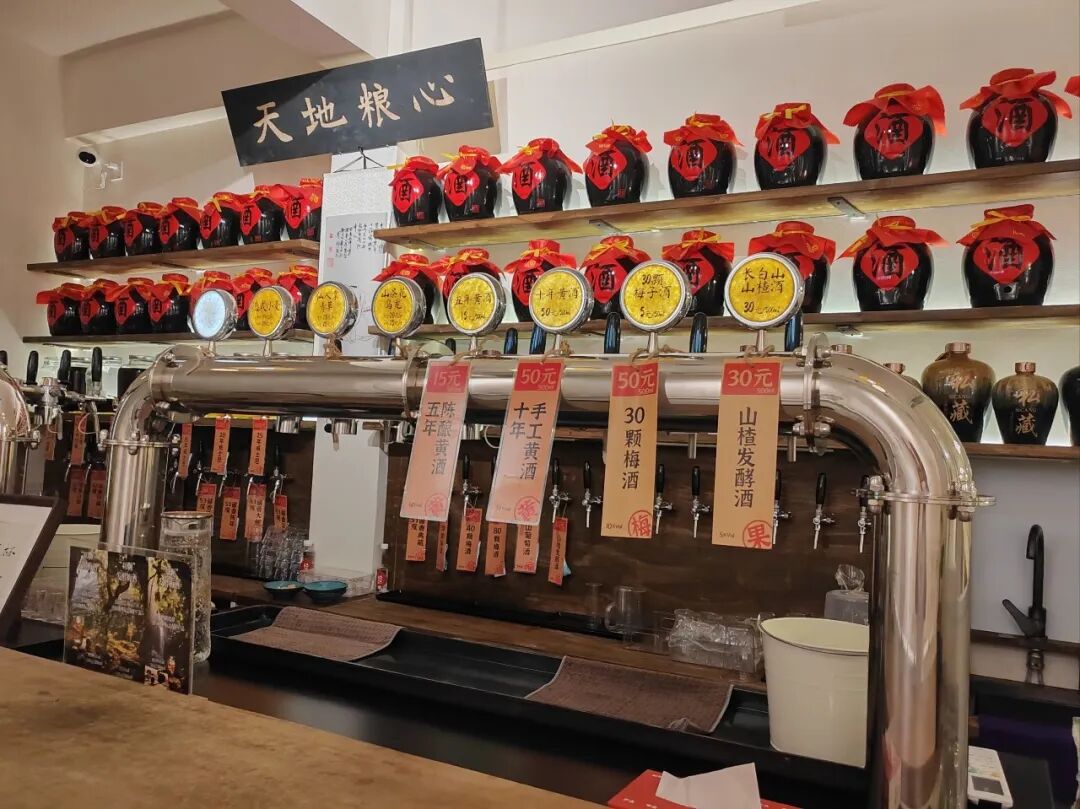
Third, the reshaping of the scenario. Self - service liquor stores have both retail and light - social functions. Consumers can either buy and leave immediately or consume in the store; there are both free tastings and membership community operations to enhance repurchase stickiness. Store data from a certain brand shows that more than 90% of consumers take the liquor away in packages or have it delivered by take - out, which is completely different from the consumption scenario of traditional pubs.
However, the model of self - service liquor stores currently has great uncertainties. It's hard to say whether it can even be truly successful, let alone be replicated on a large scale.
3 Main Problems of Self - service Liquor Stores
Self - service liquor stores have received great attention in the past one or two years, but some problems have emerged as they develop.
(1) The store profit model has not been verified
First, there is an issue with the health of the profit model. Currently, the gross profit margin of single products of major self - service liquor store brands is between 50% and 60%. After deducting various costs such as labor, rent, and operation management, the net profit space is extremely limited. The "highest monthly sales of 200,000 yuan per store" publicly mentioned by some brands is a special case and does not represent the general situation.
Second, the average customer spend is low, and there is great pressure for repurchase. The average customer spend at major self - service liquor store outlets is 30 - 50 yuan. The model of "sold by the tael" reduces the consumption threshold, but it also means that the absolute gross profit amount per order is limited. To support the continuous operation of a community store, a very high customer flow density and repurchase frequency are required, which is not easy in a market where the consumption habit of bulk liquor is still being cultivated.
Third, the consumption scenario is limited. According to on - the - spot observations by Canbaodian, the consumption time of self - service liquor stores is mainly concentrated in the evening, and the business during the day can be described as "quiet". This is very different from milk tea shops.
In addition, there are challenges in product quality control and food safety. Bulk liquor sales are different from bottled liquor. There are health and safety risks in the transportation, storage, and dispensing processes, and this problem is particularly prominent in the standardized management of franchise stores.
(2) There are hidden concerns in the industry ecosystem
First, there are doubts about the market growth space. In many interviews and reports, the bulk liquor market is often described as a "100 - billion - yuan track". However, in fact, bulk liquor as a whole is still a niche category, and the market scale of this track is relatively limited. The share contributed by new - style self - service liquor stores is even more extremely limited. It is extremely difficult to support a brand with 10,000 stores.
Second, the low entry threshold leads to serious homogenization. The core equipment of self - service liquor stores is the liquor dispenser and the liquor tank. The supply chain mostly relies on OEM production from base liquor factories. The products are essentially the highly homogeneous category of "bulk liquor". In the Chengdu market, more than a dozen brands and hundreds of stores have emerged in just over a year, but the decoration styles, product compositions, and pricing strategies of each store are similar, and it is difficult for consumers to perceive brand differences. This homogenization can easily lead to price wars, further eroding store profits.
Third, there are risks in policies and industry supervision. The supervision standards for bulk liquor sales are higher than those of general retail formats, involving multiple links such as production licenses, measurement specifications, and health control. With the rapid expansion of the number of self - service liquor store outlets, once a food safety incident occurs, it is very likely to trigger an industry - wide trust crisis. In addition, the restrictive policies on the sales of bulk Baijiu in some regions may also affect the expansion of self - service liquor stores.
4 Do Franchisees Make Money?
Some self - service liquor store brands often use attractive slogans such as "daily average revenue of 5,000 - 6,000 yuan", "open a store in 10 days with a 7 - square - meter space", and "operate with a cost of 40,000 yuan by 1 - 2 people" in their investment promotion and publicity to attract entrepreneurs. However, the actual operating conditions of stores and franchisees may not be ideal.
A recruitment staff member of a self - service liquor store brand introduced that the cost of opening a franchise store is about 200,000 yuan, the gross profit margin of single products is 50% - 65%, and the expected pay - back period is 8 to 12 months. According to a report by Tech Planet, a franchisee of a certain chain self - service liquor store brand said frankly: "I spent 200,000 yuan to open a small store with 3 employees in a county - level city. With a monthly turnover of 40,000 yuan, I only get 5,000 yuan in the end. It will take at least 3 years to pay back the cost."
The franchisee pointed out that the actual gross profit margin must be lower than 50%, and the brand's after - sales service and policies are poor, with no support and promotion policies. Due to the lack of brand awareness and limited support from the headquarters, store customer acquisition highly depends on natural customer flow and word - of - mouth communication in the surrounding community, which is particularly difficult in the county - level market. A liquor industry practitioner said that currently, 90% of franchisees of self - service liquor stores are losing money. It is already good if the monthly sales of a current bulk liquor store can reach 30,000 yuan during the off - peak period.
On a certain complaint platform, there have been many complaints against bulk liquor franchise brands, involving issues such as false advertising, inconsistent liquor products, mismatched operation fees and services, and no way to return or exchange goods. This reflects that there are obvious shortcomings in the industry's overall protection of franchisee rights and the construction of after - sales service systems.
5 Is it a Fad or a Bubble?
From a positive perspective, the rise of self - service liquor stores has real - world support. On the one hand, the consumption of bulk liquor is showing a trend of youthfulness; on the other hand, the instant retail of liquor is in a period of rapid growth. The model of "buy and leave immediately + home delivery by take - out" of self - service liquor stores is quite consistent with the channel logic of instant retail.
However, this new - type trendy fad also has great risks. In the past few years, business forms such as craft beer pubs, community pubs, and unmanned retail liquor cabinets have all experienced similar periods of explosion, but most of them have faded into obscurity after the capital tide receded. Self - service liquor stores are still in the stage of "wild growth". Once the consumer enthusiasm fades or the capital cools down, a large number of stores lacking core competitiveness will face elimination.
In addition, the entry of famous liquor enterprises is a "double - edged sword". The entry of regional leaders such as Gujinggong, Kouzijiao, and Yingjiagongjiu has increased the potential of self - service liquor stores and raised industry attention. However, these enterprises have their own base liquor production capacity and brand endorsements, and have natural advantages in cost structure and consumer trust. In contrast, new - generation brands such as Tang Sanliang and Bama Xia rely on third - party OEM supply, and their product differentiation is insufficient. Once famous liquor enterprises large - scale direct - operated self - service liquor stores, their market will be directly squeezed.
Analysts from Canbaodian believe that the core revenue source of self - service liquor store brands is to output the supply chain (liquor supply) to franchisees and collect franchise fees, rather than the profits of the stores themselves. The long - term sustainability of this model depends on whether franchisees can truly make a profit. If the stores ultimately do not make money, the franchise expansion will be unsustainable and will eventually backfire on the brand itself.
Overall, Tang Sanliang, Bama Xia and others want to transform the ancient bulk liquor business with the approach of new - style tea - drinking. Their innovation in the model is worthy of recognition. However, a good story and a good business are two different concepts. In the final analysis, the biggest uncertainty in the self - service liquor store industry currently is that the store model has not been fully verified, and the logic of large - scale replication is questionable. Whether it can support a scale of 10,000 stores and a "100 - billion - yuan" market is highly uncertain. - The so - called "leading brands" currently only have about a hundred stores, which is a huge gap from the goal of 10,000 stores.
In the current situation where famous liquor enterprises are getting involved and capital is fueling the fire, self - service liquor stores need not only speed and scale but also patience.
References:
[1] 90% of franchisees are losing money. Are young people not interested in the trendy self - service liquor stores invested by Tang Binsen? Tech Planet, 2026 - 05 - 26.
[2] Major Anhui liquor companies are gathering in self - service liquor stores. Why has bulk liquor become a must - fight territory? Jiuxun, 2026 - 03 - 05.
[3] Series of reports on the semi - annual report: The rapid expansion of bulk liquor stores. Cover News, 2025 - 08 - 18.
[4] Tang Sanliang completed an angel - round financing of nearly 10 million yuan, a new collision between the community and extreme cost - effectiveness. 36Kr, 2025 - 03 - 14.
This article is from the WeChat public account "Canbaodian", author: Canbaodian Editorial Department, published by 36Kr with authorization.