Ye Guofu made a floating profit of 870 million yuan from stock trading.
One is a high - profile chain supermarket, and the other is an AI unicorn making silent bets. Ye Guofu and Miniso have completed two very different investments, which met head - on on the profit statement in the first quarter of 2026.
On May 26, Miniso released its financial report for the first quarter of 2026: revenue reached 5.688 billion yuan, a year - on - year increase of 28.5%. There was suddenly a dazzling gain on the profit statement during the period, causing the profit to soar by nearly 200% year - on - year to 1.2481 billion yuan. This money came from an early investment in the AI industry by the company, recording an unrealized, mark - to - market gain of 874.6 million yuan.
In fact, Miniso's adjusted net profit was 633 million yuan, a year - on - year increase of 8.1%. In other words, the most eye - catching part of the profit statement did not come from Miniso and TOP TOY stores, but from the re - evaluation of the valuation of a company after its listing.
This company is MiniMax.
It's a contrast that a company regarded as an upgraded version of a 10 - yuan store invested in a large - model company early on. What's even more contrasting is that, almost on the same profit statement, Miniso is still digesting another completely different investment: Yonghui Supermarket.
In the first quarter of fiscal year 2026, Miniso's large - scale acquisition of Yonghui Supermarket contributed an investment income of about 77.5 million yuan, but the loan interest for the quarter related to the Yonghui acquisition was 23 million yuan. In the whole year of 2025, Miniso shared Yonghui's loss of 812.7 million yuan.
Even more dramatically, based on historical valuations, it's highly likely that Miniso entered when MiniMax's valuation was only 5 - 1 billion US dollars from 2022 to early 2023. Ye Guofu bet on AI first without making a sound, and only made a high - profile bet on Yonghui Supermarket a year later.
MiniMax's latest market value is about HK$266.6 billion (230.7 billion yuan), and Yonghui Supermarket's market value is 34 billion yuan.
Ununderstood Bets
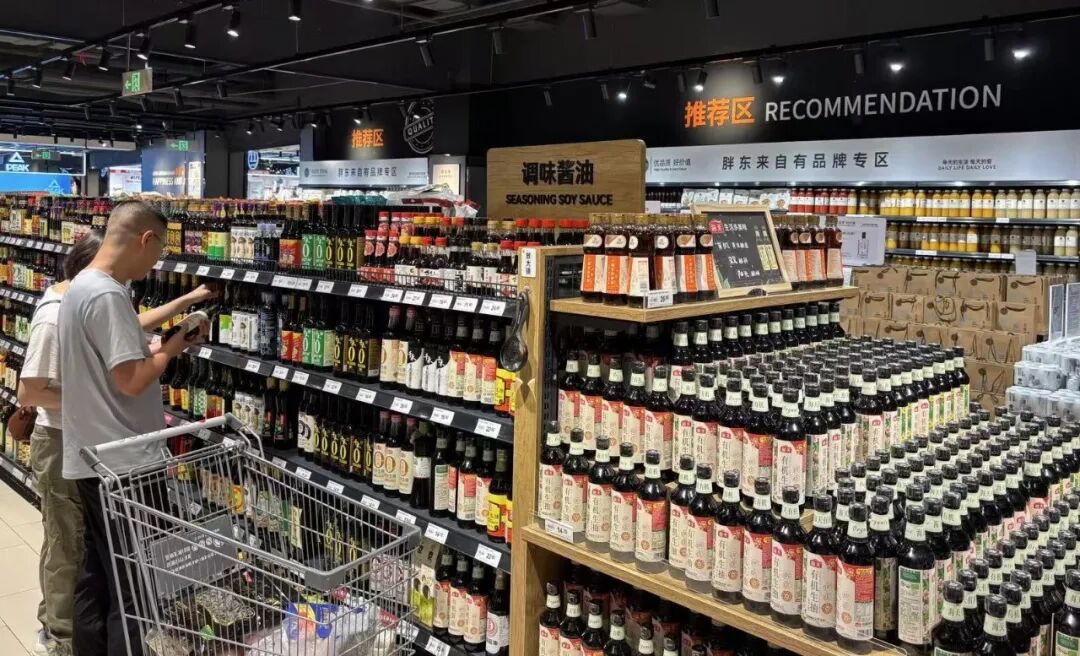
Going back to September 2024, Miniso announced that it would acquire 29.4% of Yonghui Supermarket's equity for 6.27 billion yuan, becoming Yonghui's largest shareholder overnight and setting the largest single - transaction acquisition in the domestic physical retail field that year.
Ye Guofu only took three months for the whole decision - making process. Facing the doubts, he said, "It's right that everyone doesn't understand. If they did, I wouldn't have a chance."
What he understood was Fat Donglai, that regional supermarket in Henan with almost perfect customer flow, sales, and reputation. Ye Guofu hoped to expand the Fat Donglai model through Yonghui as a national channel carrier; at the same time, let Miniso's supply - chain capabilities penetrate into Yonghui in reverse. He defined this deal as "a once - in - 20 - year structural opportunity in China's retail industry" and believed that the two would achieve synergy in channel upgrading and supply chain.
In March 2025, Ye Guofu became the leader of Yonghui Supermarket's reform leading group and got personally involved, which was jokingly called the de - facto CEO of Yonghui by the industry.
Then came the gap with reality.
Yonghui lost 1.465 billion yuan in the whole year of 2024; the situation worsened further in 2025. The annual revenue was 53.508 billion yuan, a year - on - year decrease of 20.82%; the net profit attributable to the parent company's loss widened to 2.55 billion yuan. Calculated by the equity method, Miniso recognized an investment loss of over 800 million yuan in Yonghui.
In 2025, Miniso's group - wide net profit was 1.209 billion yuan, a year - on - year decline of 54.12% compared with 2.635 billion yuan in the previous year. Yonghui was the biggest single drag.
Another hidden cost is on the balance sheet. At the end of 2024, Miniso's asset - liability ratio was 42.85%. At the end of 2025, the asset - liability ratio was 62.56%, a year - on - year increase of 19.71 percentage points; the interest - bearing asset - liability ratio was 30.36%, a year - on - year increase of 23.67 percentage points; the financial expenses further squeezed the profit margin.
At the annual report performance meeting at the end of March 2026, when asked about the Yonghui plan, Ye Guofu brought the topic back to the main business: "My most concerned core business has always been Miniso... Please rest assured that I spend more than 90% of my energy on Miniso."
That was the first time he tried to move Yonghui out of the spotlight after putting it there.
Undisclosed Early Investment
MiniMax was established in November 2021.
Its founder, Yan Junjie, was previously the vice - president and the deputy dean of the research institute of SenseTime. When he chose to start an independent business in 2021, the first batch of supporters were Yunqi Capital, IDG, Hillhouse Capital Ventures, and Mihoyo as angel investors. At that time, GPT had not yet detonated the world, and the mainstream of domestic AI was still developing proprietary models for specific scenarios. However, when Yan Junjie met with investors, he put forward two non - consensus judgments: AI will reach the general public; large models are the only way to general artificial intelligence.
Later, Sequoia China, Tencent, Alibaba, Xiaohongshu, Xiaomi, Kingsoft, and Richard Li's Pacific Century Group successively entered the game. MiniMax completed a total of 7 rounds of financing, with a cumulative financing of over 1.5 billion US dollars. After the last round of financing in August 2025, the valuation exceeded 4.2 billion US dollars.
Which round Miniso participated in has not been publicly disclosed. Based on historical valuations, the valuation in the round led by Alibaba with a 600 - million - US - dollar investment in March 2024 was 2.5 billion US dollars; the valuation in the last round in August 2025 was 4.2 billion US dollars; recently, MiniMax's market value is about HK$250 - 260 billion (about 32 - 33.5 billion US dollars).
Earning a floating profit of 874 million yuan from this AI company in a single quarter, Miniso must have invested before March 2024 - most likely from 2022 to early 2023 when MiniMax's valuation was still in the range of 500 million - 1 billion US dollars.
This means that Ye Guofu bet on AI more than a year earlier than he bet on Yonghui. He bet on AI first and then on the supermarket.
On January 9, 2026, MiniMax was listed on the main board of the Hong Kong Stock Exchange, with the issue price set at the upper limit of the range, HK$165. The public offering part was over - subscribed by 1,837 times, and the international offering was subscribed 37 times. It was one of the most popular IPOs in the Hong Kong stock market in recent years.
After the IPO, founder Yan Junjie held a total of 24.26% of the shares through the entities he controlled. Among the external shareholders, Alibaba held 12.37% as the largest external shareholder, Mihoyo 5.24%, Sequoia 3.45%, IDG 2.53%, Tencent 2.34%, Richard Li 1.17%, and Hillhouse 1.11%.
It took MiniMax less than four years from its establishment to the completion of the IPO. After the listing, its share price soared significantly compared with the issue price, and the latest market value is over HK$266 billion.
The Real Contrast
If the story stopped here, it would just be a lucky financial investment. In fact, it's more than that. Ye Guofu said something else at the performance meeting for the fourth quarter of 2025 at the end of March 2026.
At that time, a UBS analyst asked persistently: Could you reveal the name of the invested AI company? Ye Guofu answered almost without hesitation: "We were quite lucky. We invested in an AI company called MiniMax. MiniMax has been applied very well in our company, and I also hope to continue to cooperate with MiniMax. When we invested, its valuation was still very low, and now the return seems good."
This statement was hardly digested seriously by the market at that time, but in the context of the performance meeting for the first quarter of 2026, its meaning changed. At that conference call, Ye Guofu spent a long time talking about how AI is reshaping Miniso's internal operations, using AI for trend prediction and product - selection decisions on the product side, using AI for content generation and customer segmentation on the marketing side, having an intelligent passenger - flow system to manage the passenger flow by time period on the store side, and using AI to predict product demand in the future to improve the repurchase rate.
Ye Guofu defined AI as an amplifier - amplifying Miniso's existing supply - chain advantages, product - development speed, and operational precision. Ye Guofu didn't name which AI company supported these internal systems at the latest performance meeting. But combined with his previous statement that MiniMax "has been applied well in the company" last quarter, we can at least confirm that the investment in MiniMax is not just a financial investment on the books. It has already been involved in Miniso's exploration of AI tools.
Looking at the two investments together, the contrast is not just about money going in and out.
For the Yonghui investment, 6.27 billion yuan was really invested. Ye Guofu personally took charge of the reform and repeatedly told the market about the supply - chain synergy and channel synergy. After a year and a half, the financial losses have really landed on the statement.
Yonghui is not completely without signs of reversal. In the first quarter of 2026, it contributed 77.5 million yuan of equity - method income to Miniso. However, for a supermarket company with an annual revenue still exceeding 50 billion yuan and undergoing large - scale adjustments, a one - quarter profit repair is not enough to prove that the model has worked. Yonghui needs to prove not whether it can stop the bleeding temporarily, but whether it can improve in terms of passenger flow, customer order, gross profit margin, and supply - chain efficiency in the long run.
For the MiniMax investment, the investment amount has not been publicly disclosed, and its name was only mentioned after the analyst's persistent question. It has never been mentioned in the strategic section, but it has penetrated deeply into the product, marketing, and operation links.
The synergy that has been repeatedly told about has not achieved satisfactory results; the AI investment that rarely entered the narrative center before has instead been realized on the profit statement first.
In the first quarter of 2026, Miniso's revenue from its main brand in the Chinese mainland was 3.23 billion yuan, a year - on - year increase of 29.6%, the highest growth rate in the past 9 quarters; TOP TOY's revenue was 510 million yuan, a year - on - year increase of 51.4%; its self - owned IP YOYO's sales exceeded 100 million yuan within 6 months of its launch and made it to the Met Gala; the 2.0 - version large - store model in the US market has compressed the pay - back period of a single store to less than one year.
At the performance meeting on the 26th, Ye Guofu spent half of the time talking about the narrative he really wants the market to remember - how Miniso is transforming from a channel company to an IP operation platform.
As an investor, MiniMax proves Ye Guofu's non - consensus vision, and Yonghui tests his management ability. The former can rely on the re - evaluation of the capital market, while the latter can only be answered little by little through shelves, losses, passenger flow, and repurchase. For Miniso, the 870 - million - yuan floating profit has been written into the profit statement; but what really determines whether the market will re - understand Ye Guofu may still be this long - term battle with Yonghui.
This article is from the WeChat official account “Yongliu Business”, author: Li Wei, published by 36Kr with authorization.