A doctor from Shenzhen rang the bell with his wife, with a value of 15 billion.
A Harvard doctor stepped onto the IPO bell - ringing stage.
Tiantian IPO of the investment community learned that today (May 27), Yunyinggu Technology Co., Ltd. (hereinafter referred to as: Yunyinggu) officially listed on the Hong Kong Stock Exchange. In this IPO, Yunyinggu's issue price was HK$20.81 per share, and it once rose by more than 75%, with a market value of over HK$15 billion.
Back in 2012, Dr. Gu Jing from Harvard returned to China to start a business and finally chose to establish Yunyinggu in Nanshan, Shenzhen. Since then, he and his wife, Zhan Jing, spent a full 14 years paving a way for Chinese hard - tech enterprises to break through - from a small seed in Yuehai Street to a towering tree with a place in the global display driver chip market.
In this way, the Shenzhen IPO army welcomed a new face again.
A Harvard doctor at the helm, a billion - dollar IPO was born in Shenzhen
This is a journey of breakthrough for a returnee doctor.
Gu Jing, the founder of Yunyinggu, graduated from Tsinghua University with a bachelor's and master's degree. Then he went to the United States for further studies and obtained a doctorate in Engineering and Applied Sciences from Harvard University. During his doctoral studies, Gu Jing led a team to develop the "super - resolution signal recognition technology", and the achievement once shocked the American academic community.
Around 2011, the global smartphone market witnessed explosive growth, opening a new era of touch and display. As the "heart" of the screen, the display driver chip still needed to make a breakthrough in the Chinese semiconductor industry chain. With a strong sense of mission of "localizing display driver chips", Gu Jing resolutely returned to China in 2012 and founded Yunyinggu Technology in Nanshan District, Shenzhen.
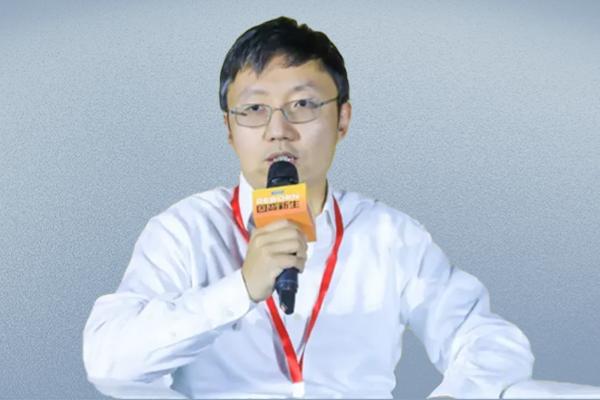
(Gu Jing)
This is a difficult breakthrough for domestic substitution. At the beginning of the business, the industry pattern was extremely solidified: overseas manufacturers firmly controlled the global AMOLED driver chip market, and domestic mobile phone manufacturers and panel manufacturers were cautious about domestic chip enterprises. The triple problems of technical barriers, customer certification, and capital pressure weighed on the shoulders of the startup team.
They calmed down and focused on technology. Gu Jing led a core team of more than a dozen people to immerse themselves in research and development and gradually broke through the technical bottlenecks. Especially in 2017, the company officially launched the research and development of AMOLED display driver chips. One year later, it not only launched the first silicon - based Micro - OLED display backplane but also successfully achieved mass production and delivery of AMOLED driver chips - which directly broke the long - term monopoly pattern of this field by overseas enterprises.
The more crucial turning point was in 2021. Yunyinggu achieved mass supply to the largest AMOLED panel manufacturer in the Chinese mainland and became the first domestic AMOLED display driver chip design enterprise to supply mainstream consumer electronics brands.
Looking back at Yunyinggu's early entrepreneurial story, Zhan Jing, Gu Jing's wife, was also indispensable. Zhan Jing majored in journalism and joined the company at the beginning of Gu Jing's entrepreneurship in 2012. She is responsible for administrative and human resources management and serves as a non - executive director and the person - in - charge of human resources. Gu Jing focuses on hardcore technology, and Zhan Jing controls the rear - end management and talent strategy. The couple's cooperation laid the foundation for Yunyinggu's early stable development.
Now, Yunyinggu has grown into the leader of domestic display driver chips. According to the prospectus, calculated by sales volume in 2024, Yunyinggu is not only the fifth - largest supplier in the global smartphone AMOLED display driver chip market but also the largest supplier in this field in the Chinese mainland (with a domestic market share of 12.4%). In the Micro - OLED field for future VR/AR devices, Yunyinggu occupies 40.7% of the global market share, ranking second.
However, the listing path was rather bumpy. In 2023, Yunyinggu tried to list on the Science and Technology Innovation Board of the A - share market. Only four months later, it regretfully withdrew its application. After failing in the A - share market, Yunyinggu planned to be acquired by A - share listed company Huiding Technology, but this merger case was aborted in March 2025.
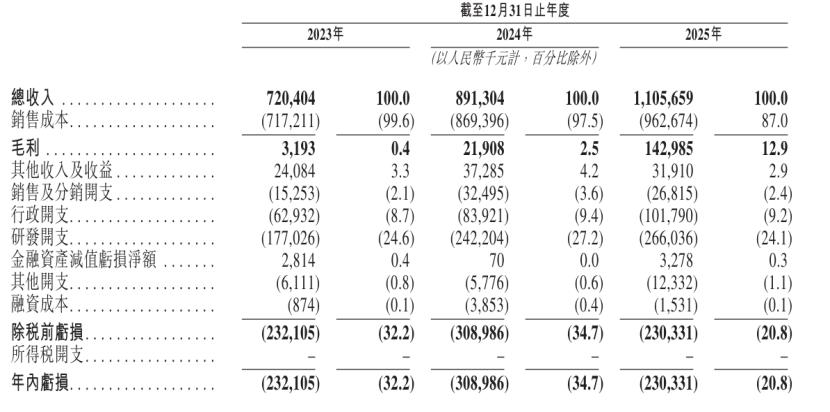
According to the prospectus, Yunyinggu's revenues in 2023, 2024, and 2025 were 720 million yuan, 891 million yuan, and 1.1 billion yuan respectively; the gross profits were 3.19 million yuan, 21.91 million yuan, and 143 million yuan respectively. In addition, the annual losses from 2023 to 2025 were 232 million yuan, 309 million yuan, and 230 million yuan respectively.
Fourteen years have passed in a hurry. Yunyinggu has grown from a startup to a benchmark for domestic display driver chips. Today, the couple stood on the bell - ringing stage together.
Investment stories of Qiming and Sequoia emerged
Before the IPO, a long list of investors gathered behind Yunyinggu.
In 2012 when the company was just established, chip investment was still a niche area. However, with its top - notch academic background and corresponding scarce resources, Yunyinggu received millions of dollars in angel - round financing from institutions such as Vertex Ventures in the second year of its establishment and officially launched product research and development. The investment community learned that Xia Zhijin, the managing partner of Vertex Ventures, was Gu Jing's college roommate, so he knew early on that Gu Jing was back from abroad to start a business.
Xia Zhijin still remembers, "At that time, both entrepreneurship and investment in the domestic chip industry were not active. The number of investors willing to invest in domestic chip companies could probably be counted on one hand. The industry as a whole faced challenges such as high manufacturing costs, insufficient technological innovation capabilities, and great difficulties in commercialization. Yunyinggu has a patented technology for differential sub - pixel rendering, which is not a simple domestic substitution and has the core ability to compete differently with international manufacturers. This is the key basis for Vertex Ventures to make an investment."
As the business advanced, industrial giants began to enter the scene. In 2015, BOE, a leading panel manufacturer, made a strategic investment, which not only brought in funds but also opened up the industrial chain resources of downstream panel manufacturers and laid the customer foundation.
Public information shows that from 2017 to 2018, Yunyinggu received three rounds of financing in a row. The investors included Shanghai Qiguang Investment, SMIC Juyuan Investment, Wanchuang Times, Northern Light Venture Capital, Hongtai Fund, Bongsheng Capital, Qingyue Technology, Gaotong Venture Capital, Xiaomi Technology, Shanghai Songsong Investment, Hangzhou Kunwei Investment, etc.
The Series C financing came in 2019, and the investors included Qiming Venture Partners, Northern Light Venture Capital, AVIC International, etc. Zhou Zhifeng, the managing partner of Qiming Venture Partners, recalled that it took Qiming Venture Partners less than half a year from research and judgment to finalizing the investment intention. At that time, the domestic semiconductor industry was in a period of rapid growth, and the Chinese mobile phone industry had taken a leading position globally. Tracing back along the downstream terminal demand, the display chip track had a strong industrial logic and growth space, and Yunyinggu was focusing on the main business of display driver chips at that time, which was highly in line with its investment logic.
In Zhou Zhifeng's view, Gu Jing himself is born with business courage and vision. "He is calm and reserved in his actions, has a low - key leadership aura, and has extremely strong self - learning and iterative growth abilities, and has high prestige in the team. Facing various internal and external problems of the enterprise, he handles things in a well - measured way. He can not only carefully coordinate and control details but also make decisive and strong - willed decisions to break the deadlock and often makes accurate judgments at key turning points in the industry."
There is also a detail - when Qiming Venture Partners made the investment, there were still some early historical issues in the company that had not been fully sorted out. However, Gu Jing was very determined and insisted on completely resolving all problems without leaving any hidden dangers before allowing the investors to complete the investment without any concerns. "We particularly respect his magnanimity, integrity, and straightforwardness in handling affairs."
Subsequently, Yunyinggu welcomed shareholders such as Hubble Investment, Xiaomi Industrial Investment, Sequoia China, CICC Capital, Dongxi Capital, Wofu Venture Capital, AVIC International, SDIC Venture Capital, Shenzhen High - tech Investment Group, Shenzhen Smart City Industrial Investment, Zhengyue Investment, Haitong New Energy, Shenzhen Jafa Venture Capital, Yueke Xintai Equity Investment Fund, Yuecai Fund, CMBC International, Yuanhe Houwang, Ceyuan Ventures, etc.
In August 2024, Yunyinggu completed the Pre - IPO++ round of financing, and its post - investment valuation soared to 8.202 billion yuan. The investors included CICC Capital, SMIC Juyuan, Guangdong Semiconductor Fund, etc., and it officially entered the unicorn club.
As of the IPO, Qiming Venture Partners held a total of 7.39% of the shares, becoming the largest institutional external shareholder of Yunyinggu; Sequoia China followed closely with a 6.33% shareholding. The founding family (Gu Jing and Zhan Jing) held a total of 23.44% of the shares and was the actual controller of the company.
A scene in Shenzhen
Of course, the rise of Yunyinggu cannot be separated from the fertile soil of Nanshan, Shenzhen.
When Gu Jing returned to China with the dream of "localizing display driver chips", he did not choose Beijing or Shanghai but set the company's headquarters in Yuehai Street, Nanshan District, Shenzhen. This street with a total area of only more than 20 square kilometers is known as the core engine of the "Chinese Silicon Valley" and is adjacent to upstream and downstream leading enterprises such as BOE, Huawei , and Xiaomi. Talent, technology, and information flow efficiently here.
Nanshan District has always been the core area of technological innovation in Shenzhen. It gathers the entire industrial chain resources of semiconductors, display panels, and consumer electronics, forming a complete ecological chain of "R & D - manufacturing - packaging and testing - terminal application". There are many universities and research institutes in the district, and high - end chip design talents gather here, which solves the core talent gap of semiconductor enterprises. According to the 2025 work report of the Nanshan District Government, the R & D investment of the whole society in Nanshan accounts for 7.66% of GDP, nearly three times the national average, and has ranked first among the top 100 districts in the country for seven consecutive years.
For a chip design company that needs top - notch talents and close industrial chain cooperation, this place provides unparalleled "physical proximity".
In addition, policy dividends are also increasing. Over the years, Nanshan District has introduced special support policies for hard - tech fields such as semiconductors and integrated circuits, covering the entire chain of R & D subsidies, tax incentives, talent rewards, and venue support. Therefore, Nanshan has formed a globally rare "high - density innovation cluster": within 185 square kilometers, there are more than 6,000 high - tech enterprises, 394 national specialized and sophisticated "little giants", and 103 listed companies, with more than 860 invention patents per 10,000 people, and the innovation density is among the top in the world.
One super - giant after another has emerged here.
As we have witnessed recently - Jiangbo Long, which started in Nanshan, Shenzhen, saw its market value soar from the level of 30 billion yuan to 230 billion yuan in one year, and the net worth of the Cai siblings, the actual controllers, increased significantly. They are known as the "most powerful siblings on the Growth Enterprise Market".
There is also Bawell Storage, whose latest market value has exceeded 150 billion yuan. Also born and raised in Nanshan, Shenzhen, Bawell Storage has been deeply involved in storage for more than a decade with an integrated R & D and packaging and testing model, targeting the high - growth track of AI edge - side storage. Its performance exploded in 2026, becoming the core force for domestic storage substitution.
Quietly, new tech upstarts are emerging in batches in Nanshan and even in Shenzhen.
This scene is also a microcosm of Shenzhen's innovation ecosystem - there is no shortage of dreams here, and there is even less a lack of soil for dreams to come true. So far, Shenzhen is not just a geographical term but a synonym for innovation and entrepreneurship. As the latest set of data shows: In 2025, the permanent population of Shenzhen increased by 259,000, ranking first in the country in terms of population growth.
The flow of people has a profound impact.
This article is from the WeChat official account "Investment Community", author: Yang Jiyun, published by 36Kr with authorization.