Was OpenAI on the verge of collapse? The president personally recounted: I resigned on the day Altman was ousted.
[Introduction] A video call, three rejected inquiries, and a petition that filled up Google Docs... People thought it was a power struggle. For the first time, Brockman comprehensively recounted the 72 hours when Altman was removed in a podcast, revealing another side of the story: how the governance structure of a company that believes it's creating AGI collapsed and then was rebuilt.
Those 72 hours almost killed OpenAI.
On April 22, 2026, Greg Brockman, co-founder and president of OpenAI, was a guest on the podcast The Knowledge Project. In the more than one - hour interview, he comprehensively recounted that crisis for the first time.
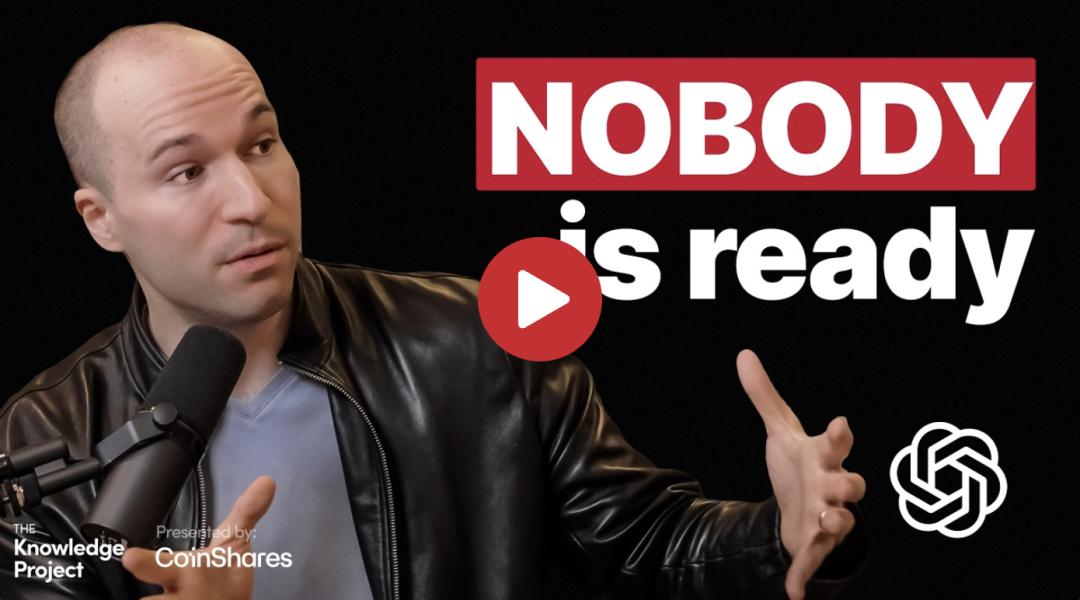
Brockman comprehensively recounted the 72 hours that determined OpenAI's fate for the first time in the podcast.
Brockman's memory starts with a text message.
On November 17, 2023, Brockman, who was at home, received a text message: Can you have a video call?
He entered the meeting, and all the board members were there, except for Sam Altman.
The other side told him that the board had decided to remove Altman; Brockman himself was also removed from the board but would stay in the company. Brockman asked if they could give a reason. After repeated inquiries, the other side still said there was none.
After hanging up the phone, Brockman said three words to his wife: Must resign. That day, he left.
In a company valued at $90 billion, one of the top - level executives was told to leave without even getting a reason.
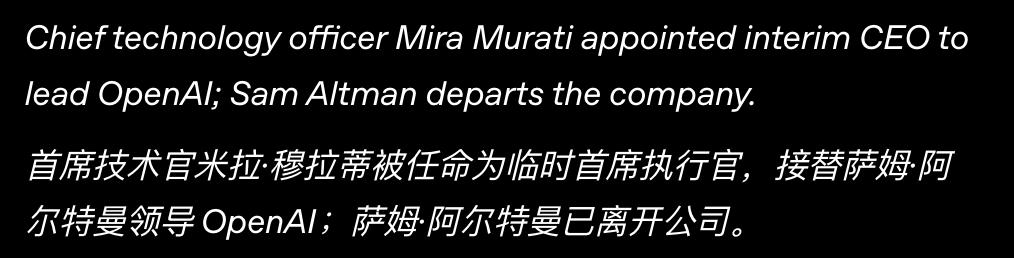
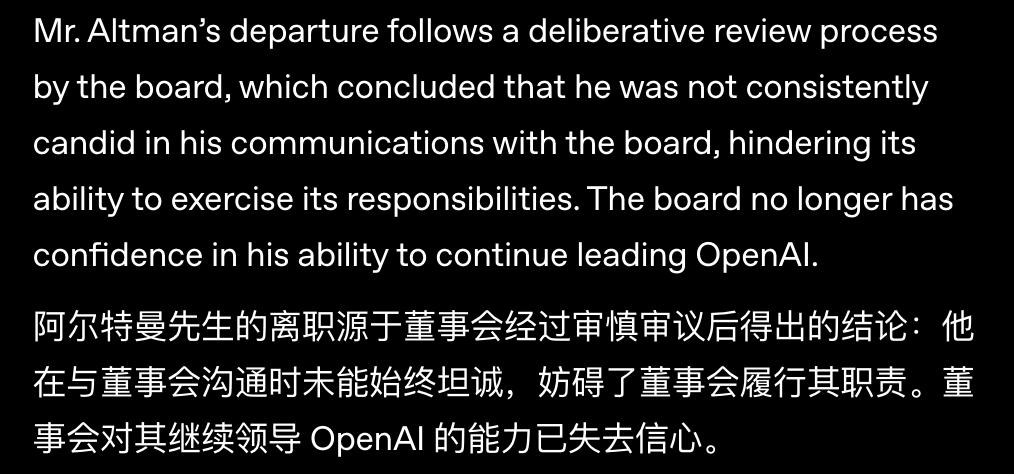
On November 17, 2023, OpenAI officially announced Altman's departure as CEO, and CTO Mira Murati was appointed as the interim CEO. The board said that Altman "failed to be always honest in communication" and had lost confidence in his leadership ability. https://openai.com/index/openai-announces-leadership-transition/
This incident directly exposed the fragility of OpenAI's underlying structure. When a group of people truly believe they are creating AGI, there are no small matters in the company: even who makes decisions and who takes credit become matters of life and death.
That weekend, employees' petitions filled up Google Docs
Let's rewind to that Friday.
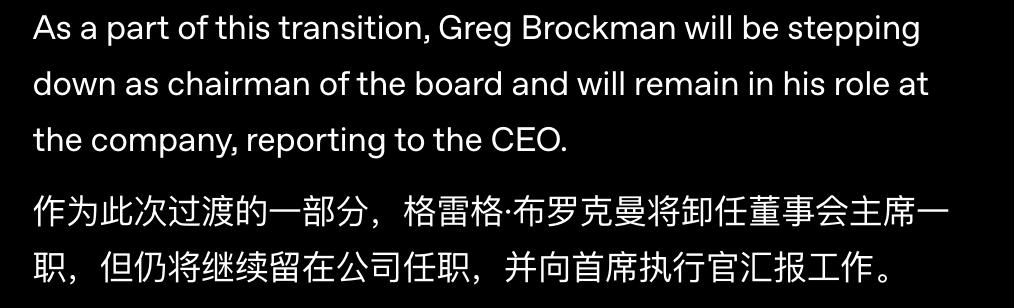
According to public records, OpenAI officially announced that Altman had left the position of CEO and exited the board. On the same day, Brockman stepped down as chairman but retained his position as president.
Brockman said in his oral account that when he was told that Altman would be removed and he himself was removed from the board, and he couldn't get any other information after repeated inquiries, he wasn't angry, but just felt that this thing was wrong.
In his view, the problem lies not in a single person, but in the structure itself.
On the day he resigned, Brockman began to receive a large number of messages with generally the same content:
I don't know what you and Altman are going to do next, but I'll follow you.
This surprised him. Several core colleagues also resigned that day.
Brockman, Altman, and their five closest collaborators got together to outline what the future new company would look like.
According to Brockman's recollection, when the incident just happened, his judgment was that the probability of taking the company back was only about 10%. The turning point came on Sunday night.
After the board decided to replace Mira (Murati)'s interim CEO position with Emmett Shear (former CEO of Twitch), the company went crazy. The employees didn't leave and all flocked to the office. People who were originally going to fly home for Thanksgiving also collectively cancelled their tickets, and the office was crowded with people.
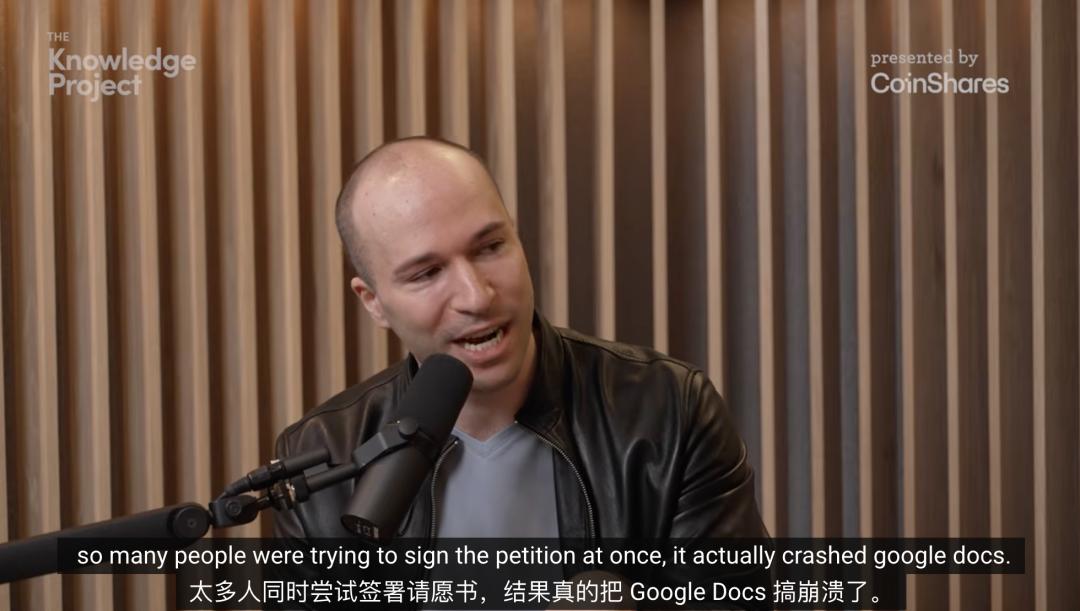
Brockman described such a detail: too many people were signing the petition at the same time, which crashed Google Docs.
Brockman recalled that the initial candidates for OpenAI's founding team were him, Ilya Sutskever, Dario Amodei, and Chris Olah; Amodei and Olah later became co - founders of Anthropic, and Ilya founded Safe Superintelligence.
More importantly, there was Ilya's support.
Brockman said he slept for about 45 minutes. When he woke up and checked Twitter, he saw that Ilya had posted and signed the petition, expressing his hope that the company would reunite.
At this moment, he really felt relieved and was full of gratitude.
Throughout the weekend, offers from all competitors were flying everywhere. But according to Brockman, no one at OpenAI accepted an offer from a competitor that weekend.
What happened next can be seen in public records: OpenAI officially announced Altman's return as CEO and Brockman's return as president.
In March 2024, OpenAI announced the completion of the review, and the board said that the two would continue to lead the company, and Altman would return to the board.
The storm subsided. But the relationship between Brockman and Ilya didn't recover along with the announcement.
According to Brockman, the two were extremely close partners. Ilya even served as his best man, and they had gone through the toughest times together. But during that 72 - hour crisis, Ilya stood on the side of the board. Even so, he later signed the petition and publicly expressed his hope that the company would reunite.
After the crisis, the two spent a long time talking about all the things that had been pent - up and never said. After going through this process, Brockman felt that the relationship between the two had reached a "good position". At least for himself, he had some kind of closure for what had happened.
But this doesn't mean that everything has returned to the starting point.
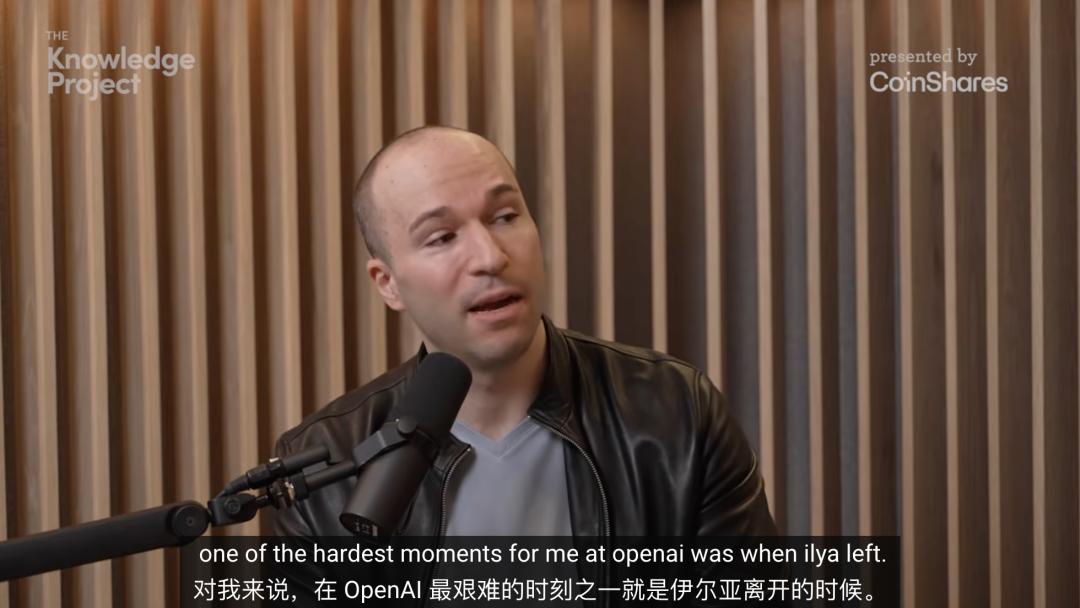
Brockman admitted that the most difficult moment in OpenAI's history was not that dismissal call, but when Ilya left. That was the only time he felt that he "didn't want to do it anymore".
He needed some time to remember why he was doing this and why it was important enough to endure this pain.
The team - building activity without offers in 2015 determined how OpenAI would develop in the next decade
To understand this crisis, we need to go back to the time when OpenAI wasn't OpenAI yet.
In May 2015, Brockman left Stripe. He said that the problems Stripe was trying to solve were important, but they weren't the problem he had been thinking about since childhood. He wanted to find a mission to devote his life to, and AI was at the top of the list.
Patrick, co - founder and CEO of Stripe, asked him to talk to Altman, probably hoping that Altman would persuade him to stay. As a result, Altman saw that his mind was made up after a few minutes of conversation. Instead, he said that he was also thinking about doing something related to AI, and the two could keep in touch.
Later, Altman organized a dinner in July 2015. The topic was: Is it too late to build a laboratory bringing together top - notch researchers now? Is it still possible?
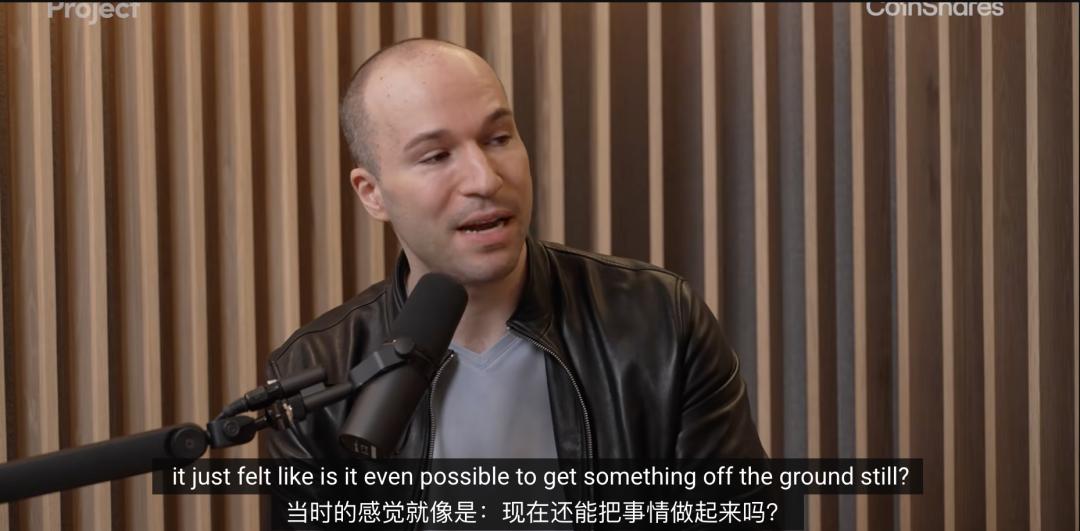
Brockman said that that night, everyone listed a bunch of reasons why "this is difficult", but no one could say why it was "impossible". That night, he and Altman determined their idea: We must do this.
But these were just ideas. What really united this group of people into a team was the team - building activity in Napa.
According to Brockman's recollection, there were no formal offers, no one had joined, and there was no organizational structure at that time. There was only an idea, a vision, and a mission. He even made T - shirts himself. It was at that team - building activity with nothing that the technical route OpenAI would take in the past decade took shape:
First, solve reinforcement learning; second, solve unsupervised learning; third, gradually learn more complex things.
The for - profit structure forced by the computing - power account
One of OpenAI's most controversial turns was changing from a non - profit to a for - profit structure. In this recount, Brockman also gave the reason and the time point for this decision.
He said that in 2017, the team began to seriously think about how to truly achieve the mission, how to create an AGI, and what it would look like.
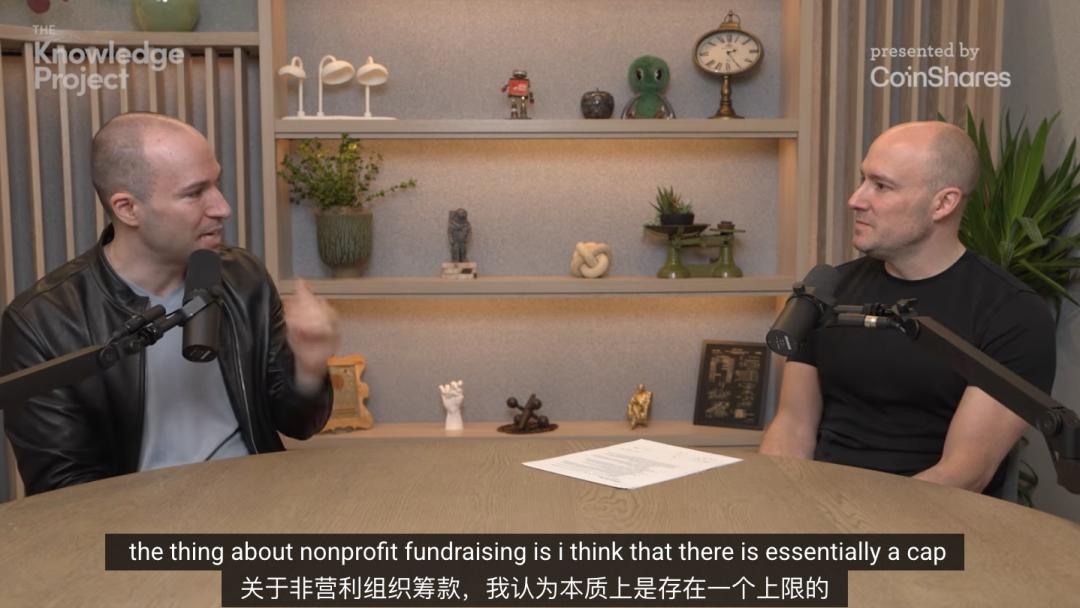
So they started calculating the computing - power account. As they calculated, they realized that this would require an extremely large computer. In Brockman's view, non - profit fundraising essentially has a ceiling.
According to Brockman's description, Musk, Altman, Ilya, and he reached an agreement at that time: The only way forward for OpenAI, the only path to achieve the mission, was to establish a for - profit entity in some form.




OpenAI was established as a non - profit organization in 2015 and created a for - profit subsidiary in 2019.
When OpenAI officially explained the reason for creating OpenAI LP at that time, it clearly mentioned that billions of dollars would be needed in the future for large - scale cloud computing power, talent, and AI supercomputers.
After the structural update on October 28, 2025, the non - profit entity is OpenAI Foundation, and the for - profit entity is OpenAI Group PBC.
From the initial non - profit organization to the creation of a for - profit subsidiary, it was an active choice made by the OpenAI founding team, including Musk, after calculating the computing - power account.
In this choice, the priority of the mission is higher than the structure itself. The design of "capped - profit" is to make the structure serve the mission, rather than the other way around.
It should be noted that this narrative of "mission first" comes from Brockman's own recount. There are not no objections from the outside world to OpenAI's shift from non - profit to for - profit.
Musk sued OpenAI, Altman, and Brockman in 2024, accusing them of deviating from the founding commitments and enriching themselves. In May 2026, the jury dismissed the case on the grounds of exceeding the statute of limitations, but did not make a substantial ruling on the accusations themselves. Musk has said he will appeal.
During the trial, a large amount of internal materials, including Brockman's private diary, were made public. It's probably difficult to have a single answer about the motivation.
A machine for building models
In the interview, Brockman also talked about what OpenAI is betting on in the next decade.
His first judgment is about "AI building AI".
He said that we have now entered a stage