Du Xiaoman's growth dilemma: Without an entry point, it can only confront regulatory authorities head-on.
When the industry regulatory environment tightened and many peers chose to exit, Du Xiaoman stood out with a high - profile approach.
In April, Du Xiaoman spent over a hundred million yuan to exclusively sponsor the S - level variety show "Sisters Who Make Waves 2026", attempting to succeed Mengniu's Jin Dian and seize the spotlight of Mango TV's first phenomenon - level variety show this year.
The problem is that, just like this controversial show, Du Xiaoman has also faced quite a stir in public opinion. After all, the poor reputation of online lending platforms cannot be reversed by having a few celebrities endorse them.
In addition, Du Xiaoman has been trying to present itself as a "fintech company". At this month's Baidu AI Developer Conference, it publicly launched the payment solution "ClawPay" for AI Skill developers, officially entering the next - generation payment battlefield.
ClawPay supports mainstream payment methods such as WeChat Pay, Alipay, and Du Xiaoman Pay, and integrates order management, billing engines, and payment components. It can be seen that compared with leading in technology and seizing the market, Du Xiaoman still desires external traffic and business entry points more.
After all, for an internet finance company like Du Xiaoman with inherent disadvantages, the final battle is just around the corner. Compared with the risks that a high - profile approach may bring, what Du Xiaoman fears more is probably complete and silent obscurity.
01
Customer Acquisition Cost
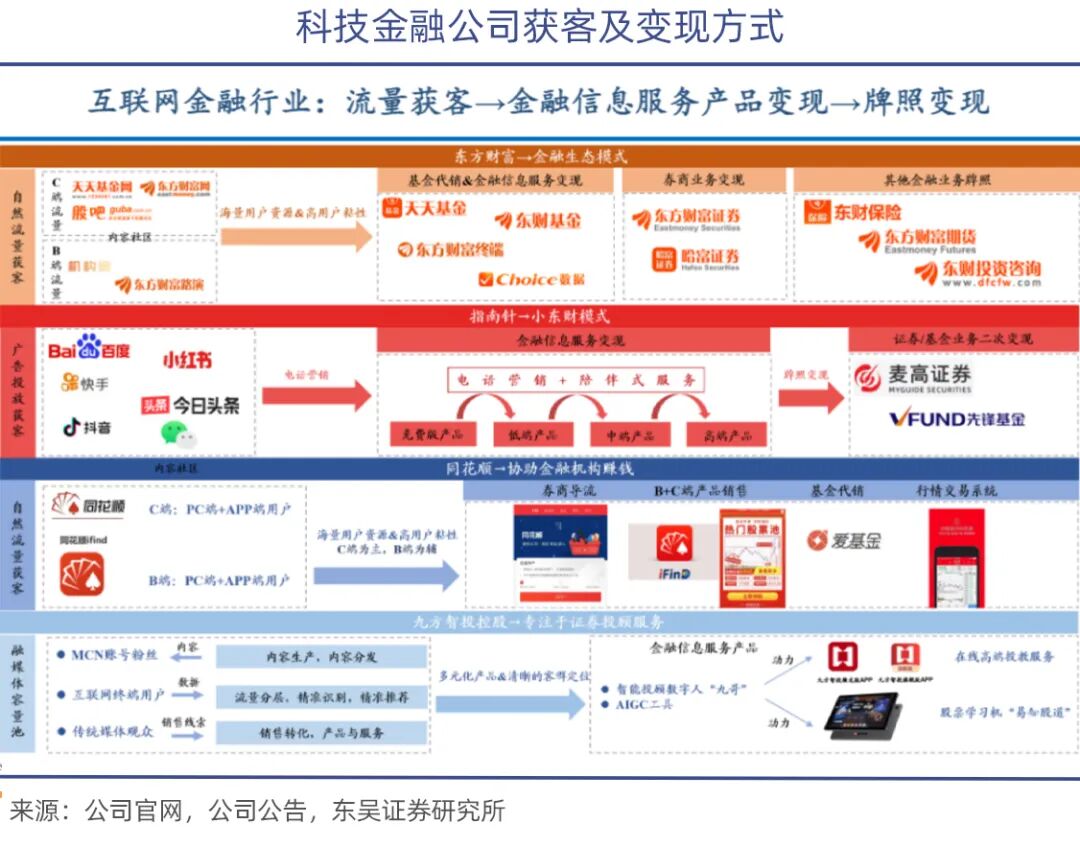
Looking at the domestic internet finance track, Ant Credit Pay and Huabei rely on e - commerce platforms, while JD Baitiao and Meituan Monthly Payment are rooted in local life. The financial services of these leading players can reach potential customers through consumption scenarios, with low customer acquisition costs, strong user stickiness, and comprehensive risk - control data.
Du Xiaoman's problem is quite obvious: Limited by Baidu's business ecosystem and lacking natural consumption scenarios, it has failed to build a complete ecological closed - loop of "consumption - payment - credit".
The lack of scenarios means that Du Xiaoman cannot "incidentally" embed credit services when users are shopping or paying like Ant and Meituan. It has to take a longer and less efficient path - spending money to buy traffic.
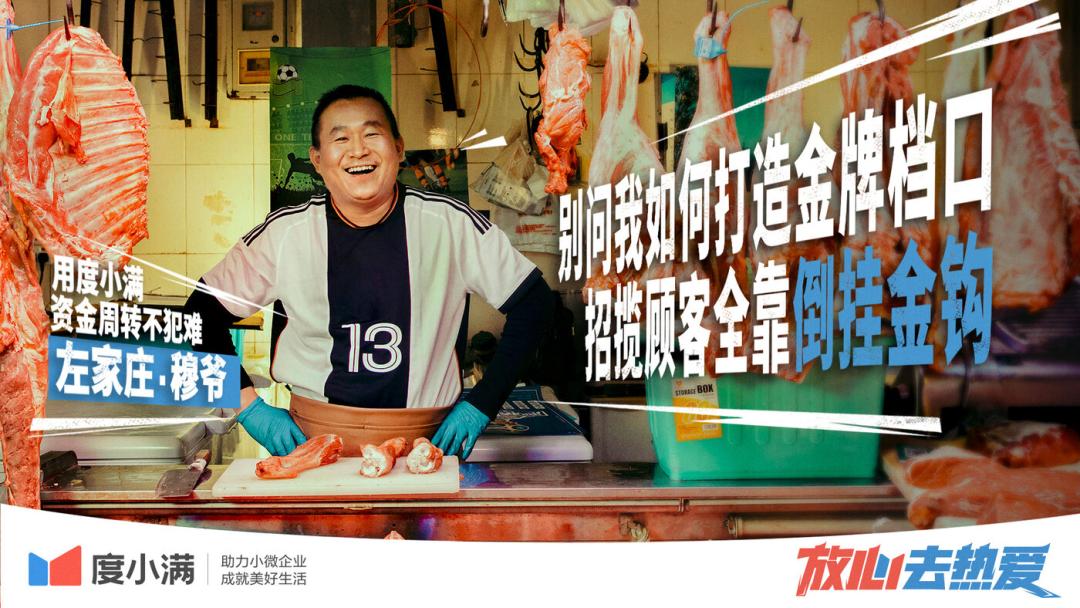
Currently, Du Xiaoman has placed a large number of advertisements on various channels. However, at every step of the long business chain from users seeing the advertisement to clicking, downloading the app, registering, submitting information, and finally getting approved for a credit limit, a significant proportion of users may be lost.
Without the support of transaction scenarios, many users leave immediately after borrowing, making it difficult to form a repurchase closed - loop. This further forces Du Xiaoman to purchase external traffic, leading to a continuous increase in customer acquisition costs.
Industry insiders revealed that in 2020, the per - capita customer acquisition cost (for those who passed credit approval and received loans) on short - video information flow platforms was about 1,300 yuan. By mid - 2024, this figure had risen to 2,100 yuan, and the customer acquisition cost of some internet finance institutions once approached 3,000 yuan per person.
For Du Xiaoman, which lacks scenario support, "a pure credit platform without scenarios has a customer acquisition cost 5 to 10 times that of players within the ecosystem."
Therefore, Du Xiaoman is almost the most advertising - loving internet finance company. According to App Growing data, from March to September 2024, Du Xiaoman's internet advertising investment reached about 160 million yuan, burning 900,000 yuan per day on average.
This year, in addition to sponsoring "Sisters Who Make Waves 2026" (i.e., "Sisters Who Make Waves Season 7"), Du Xiaoman has also intensively inserted advertisements into many variety shows such as "The Cat in the Box 2" and popular TV dramas such as "The Litchis of Chang'an" and "Joy of Life", trying to expand brand awareness by binding with top - tier entertainment IPs and high - profile guests.
This act of burning money and increasing publicity against the trend clearly goes against the main theme of internet finance regulation.
The "Administrative Measures for the Online Marketing of Financial Products", which will be implemented in September this year, has drawn a red line for the common marketing and business development methods in the online lending industry. Whether it is the "matryoshka - style" multi - level distribution, invisible API diversion, or the "instant arrival" rhetoric in short - videos, they are all within the scope of rectification.
It's hard to say how much business value external traffic can bring to online lending platforms under this regulatory situation. However, for Du Xiaoman, which is extremely short of native business entry points, it can't find a second way other than external advertising.
It seems that Du Xiaoman chose to take a chance before the window closes because it felt the chill. For example, it sponsored "Sisters Who Make Waves 2026" because its core audience is women over 30, which highly overlaps with Du Xiaoman's target customer group of "over 84 million female small and micro business operators".
This is a risky move - either tear open a new growth gap with the help of the traffic dividend, or after the full implementation of the new regulatory rules and the acceleration of industry clearance, even the qualification to buy traffic with money will be scarce.
However, any cross - circle marketing cannot change the underlying logic of the company's business operation. As long as Du Xiaoman's situation doesn't change fundamentally, high - profile marketing is still necessary, and the customer acquisition cost will continue to rise.
02
Not a Cash Cow
Du Xiaoman rarely discloses its financial data to the public. We can only get a glimpse from the "Prospectus for the Private Placement of the First - Phase Full - Voyage Asset - Backed Notes for 2025" submitted by its core entity, "Chongqing Du Xiaoman Small Loan Co., Ltd."
As of the end of 2024, Du Xiaoman's total assets decreased from 19.482 billion yuan at the end of 2023 to 16.527 billion yuan, a shrinkage of nearly 3 billion yuan, a decline of 16.17%.
However, during the same period, the company's operating income increased by 24.70% year - on - year to 2.257 billion yuan, and its net profit soared from 212 million yuan to 859 million yuan, a year - on - year increase of 306.10%, earning more than 2.35 million yuan per day. The return on net assets reached a record high of 11.08%.
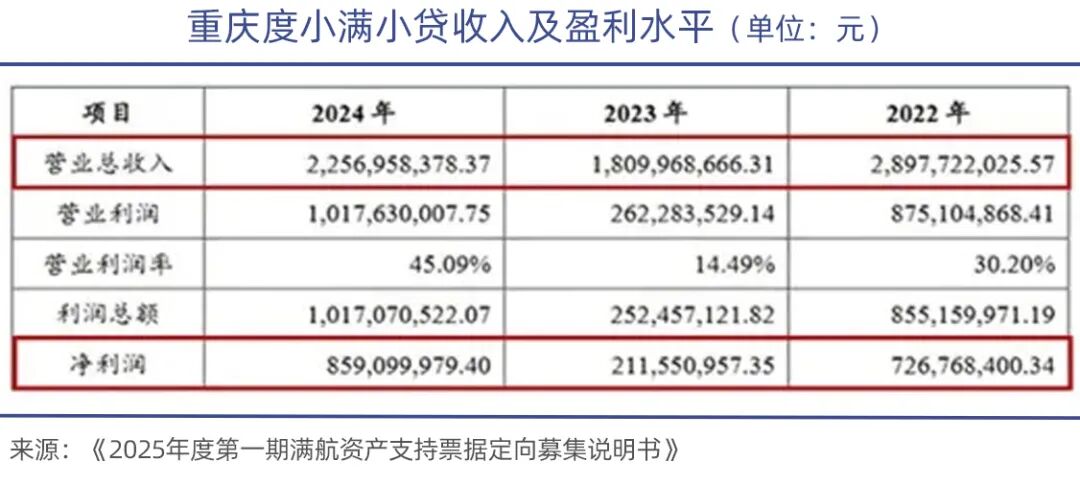
All along, online lending has been a business of making money from interest rate spreads, and the most important thing is the base of the interest rate spread (business volume). When there is an obvious contradiction between the shrinking asset scale and the soaring profit, where does Du Xiaoman's huge profit come from?
Du Xiaoman stated in the prospectus that the significant increase in net profit was mainly due to more investment income and technical service income generated that year, a decrease in provision for bad debts, and little change in business and management fees. In other words, this is not an improvement in the quality of the credit business, but more like a one - time financial adjustment.
The profit growth brought about by reducing provision for bad debts and increasing investment income is hard to sustain. Moreover, 2024 was also a year of crazy marketing for Du Xiaoman.
There is a kind of vicious cycle hidden beneath this apparent prosperity: lack of scenarios → extremely high customer acquisition costs → soaring marketing expenses → profit being devoured → still lacking scenarios, and then there is the whitewashing of financial statements and the hype in the capital market.
Behind the false appearance of high customer acquisition costs and high profits, there are also huge compliance risks. On the surface, Du Xiaoman's actual annualized interest rate has long remained at around 23.4%, close to the 24% upper limit of judicial protection.
However, on the Black Cat Complaint Platform, some users calculated that after combining various fees such as interest, guarantee fees, and service fees, the comprehensive annualized interest rate of Du Xiaoman's loans has reached as high as 36%, far exceeding the red line under the new regulations for loan assistance. Some users also reported that service fees were deducted immediately after the loan arrived, questioning whether this operation constitutes a "pre - deducted interest".
Violent debt collection is also a classic means to maintain the interest rate spread. According to data from the Black Cat Complaint Platform, as of June 16, 2025, the number of complaints with the keyword "Du Xiaoman" exceeded 31,000, the number of complaints about the "Youqianhua" product was nearly 60,000, and the number of complaints related to "Manyidai" was nearly 1,000. Violent debt collection, random fee deductions, and threats have become the three major focuses.
For Du Xiaoman, which lacks its own ecosystem and has to rely on money - burning marketing to attract customers, the above - mentioned compliance risks and financial risks are difficult to fundamentally change.
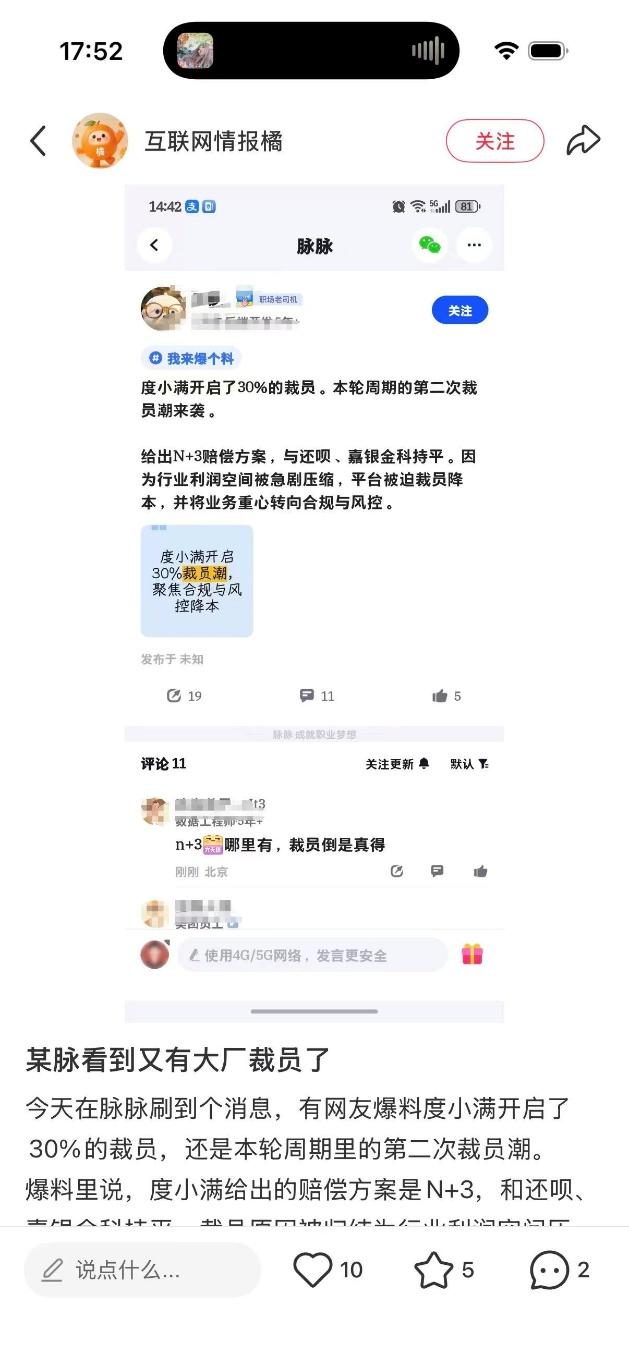
In fact, Chinese internet companies have always positioned their financial businesses not to pursue perfection, but to be a cash cow. When the growth of the main business reaches a ceiling and R & D investment devours profits, the financial sector should play the role of transfusing blood to the parent company.
A qualified cash cow needs to have three characteristics: first, a stable and sustainable profit source; second, a low - marginal cost structure; third, a positive and predictable cash flow. Comparing these characteristics, Du Xiaoman has not met these standards for several years.
Precisely because it can't even be a good cash cow, Du Xiaoman's position within the group and in the market has become increasingly awkward.
03
Can AI Save the Day?
Du Xiaoman also had its glorious days. In 2018, Baidu announced that its financial services business group had officially completed the spin - off, and the "Du Xiaoman" brand was launched for independent operation. It completed a Series A financing of $1.9 billion, with a post - investment valuation of about 26 billion yuan. International capitals such as TPG and The Carlyle Group all entered the market.
When summarizing this business spin - off, Robin Li expressed a rather metaphorical view: "Under Baidu's AI ecological strategy, I'm glad to see the financial business 'graduate first'."
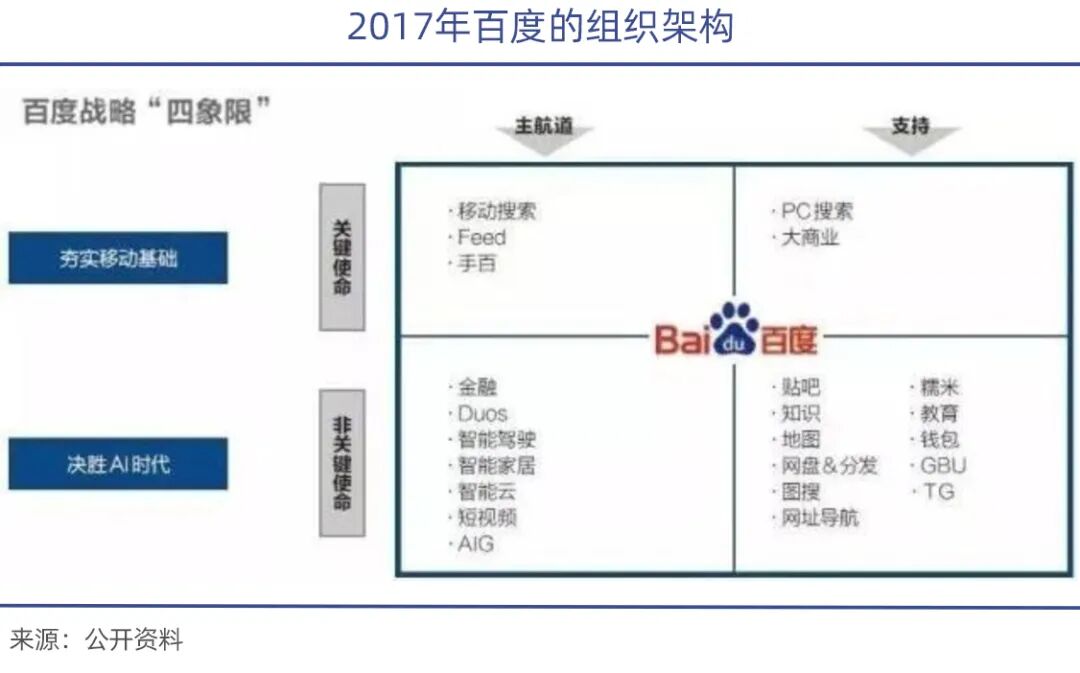
With Qi Lu's joining Baidu as a watershed, since 2017, Baidu has clearly regarded artificial intelligence as its corporate development strategy. Robin Li shouted the slogan of "All in AI" at the Baidu Developer Conference. Spinning off Du Xiaoman, a non - core and highly indebted online lending business, was in line with the expectations of the capital market.
Moody's said in a subsequent rating report that "after the spin - off, Baidu currently holds about 41% of the equity of Du Xiaoman Finance and has removed Du Xiaoman's assets and liabilities from its consolidated financial statements."
This means that Baidu has been able to shed the heavy financial debt burden and present itself as a more pure "artificial intelligence company" to Wall Street. Du Xiaoman also has the opportunity to be a more pure cash cow to support the group.
However, it seems that neither of these plans has been realized.
Last year, Baidu's total revenue from AI business was 40 billion yuan, a year - on - year increase of 48%. In Q1 2026, Baidu's revenue from new AI business was 13.6 billion yuan, accounting for 52% of general business revenue, exceeding advertising revenue for the first time. But the key problem is that the growth of the AI business is not enough to fill the gap left by the decline of traditional business.
Baidu's own pain in transformation is not just a problem for its parent company for Du Xiaoman, but more like a cruel logical preview. Because the underlying laws of business are the same - no matter how cutting - edge the technological transformation is, as long as the new business model cannot generate real money faster than the old business, it will be mercilessly questioned by the market.
From AI risk - control models to intelligent customer service, from AI credit approval to today's ClawPay payment solution, Du Xiaoman's current AI narrative covers almost every aspect of fintech. But the real question that the market cares about is whether these so - called AI capabilities can really change the business model of making money from interest rate spreads after external traffic acquisition?
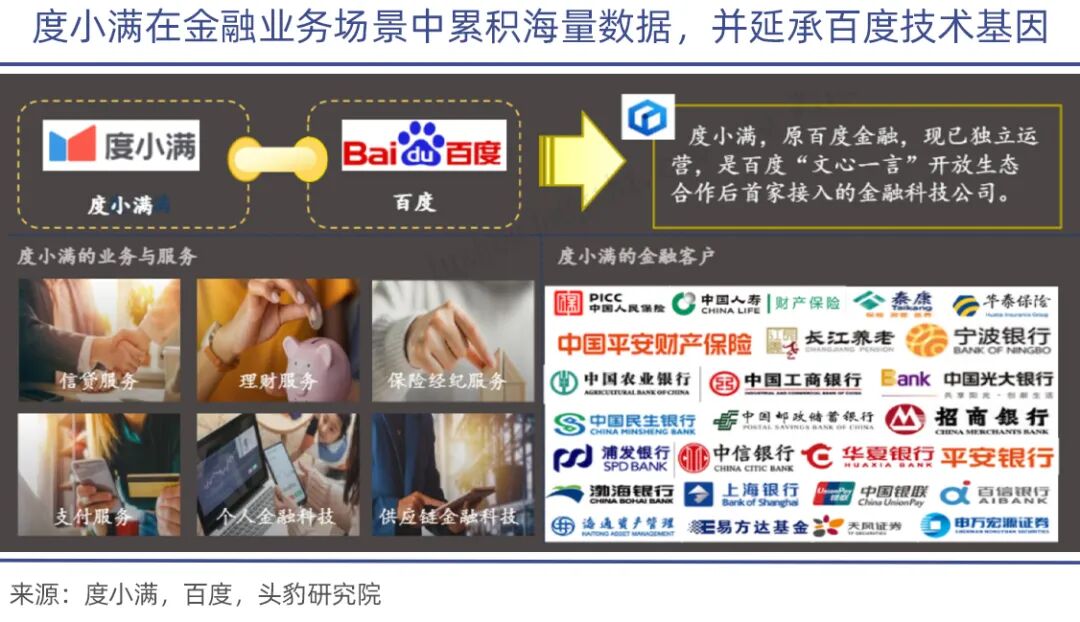
At present, the answer is not optimistic. Du Xiaoman's core profit still comes from traditional credit business, and the quality of its growth also seems to be full of moisture. So Du Xiaoman's valuation has dropped from 26 billion yuan at the beginning of independent operation to 11 billion yuan (data from Hurun's "Global Unicorn List 2024").
Moreover, Baidu's own AI commercialization is still racing against time, and the empowerment that Du Xiaoman can get from it is far less than expected. Baidu is fully promoting the government and enterprise implementation of AI cloud and the spin - off and listing of Kunlun Chip. At the stage when its own AI business still needs to prove its profitability, it is probably difficult to spare energy to help Du Xiaoman build an AI payment ecosystem.
It can be predicted that in the next period, Du Xiaoman will still have to continue its old - fashioned business model and carefully maintain the delicate balance between scale growth, customer acquisition cost, and actual interest rate spread.
Ultimately, Baidu's own AI transformation is a mirror for Du Xiaoman, and Du Xiaoman just makes this mirror clearer - when you tell an AI story on the edge of a cliff, the audience will only stare at the abyss beneath your feet.