What will the products of the new era look like when software is easy to create?
Qu Kai: Recently, I've been chatting with many entrepreneurs. They might have been extremely excited about finding a great opportunity a month ago, but a month later, they feel consumed by model iterations. I myself also feel exhausted and have little enthusiasm for new projects these days, because I really don't know where the value and barriers of startup companies lie... How have you been feeling lately?
Albert: Currently, the entire industry is in a dismal state. Everyone is on the path of pivoting and pivoting again, haha. It's not just startup companies; established companies are also in the same situation.
This pessimism is reasonable. Because model companies truly hold absolute value, and in the end, they will most likely take away the majority of the value. Many things you do are like "picking up coins in front of a steamroller" - this is a new idiom I learned recently (smiling bitterly). It means that when a big steamroller is coming, you can pick up some money if you're quick enough, but it's just a coin after all, not very meaningful.
However, from another perspective, AI coding has given small teams and super individuals a 100 - fold leverage. That's why people have been frequently talking about OPC recently.
Qu Kai: Have you also developed a lot of things through vibe coding in the past few months?
Albert: Yes. After Opus 4.6 was released, we developed dozens of things in two months, but none of them were suitable to be launched as company products. Serving market users still presents many challenges, such as operations, growth, and delivery. It's much easier to serve ourselves.
Moreover, the products we developed stem from very personalized needs and may not be useful to others. We also don't think they have high - value depth. Because theoretically, anyone with their own ideas and the ability to use a coding agent can create products for themselves.
Qu Kai: But will everyone really be able to create their own small products in the future?
Albert: Actually, "the future is already here, but it's unevenly distributed."
Currently, some tool enthusiasts can already create many things on their own. There are also some people like me who directly use off - the - shelf tools and create a small number of personalized tools. And a significant number of people may still look for mature and standardized products in the market.
Qu Kai: Based on your experience, is the proportion of directly forking others' products to make them more suitable for yourself high? Or is AI coding now powerful enough to quickly create something on your own?
Albert: First of all, creating something on your own is not complicated these days. Especially after having good infrastructure, starting a new project can be very fast. Our company has a set of internal infrastructure, and with a single command, backend deployment, database issues, etc., can be resolved.
However, it also depends on the category. If your purpose of forking is to make something more useful to you, this need may not be very widespread. But if forking becomes an entertainment experience, or if the product is non - productivity - oriented, it's hard to say.
Qu Kai: So what is the main focus of your company now? What have you accumulated in the past few months?
Albert: Experience the process of AI gradually becoming stronger (laughing). And then, improve the internal infrastructure so that everyone can quickly create products and realize their ideas.
Qu Kai: You once launched a product that allowed people to upload their AI coding chat records. It would automatically score them, and there was also a personal page, a bit like a new - generation GitHub. After its launch, was there no further development?
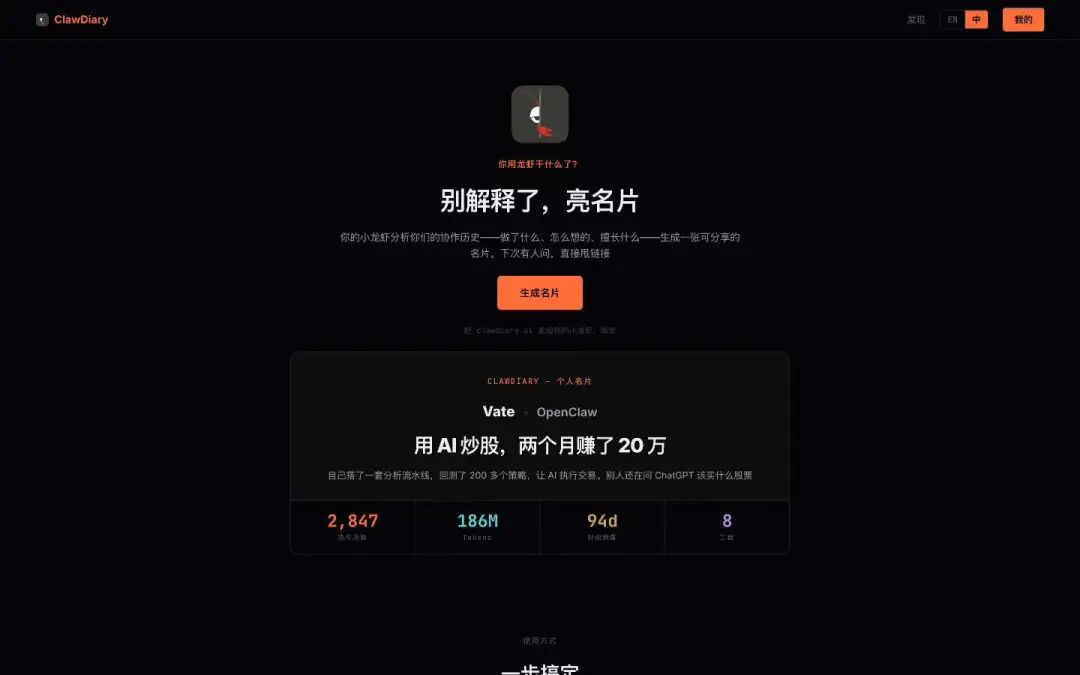
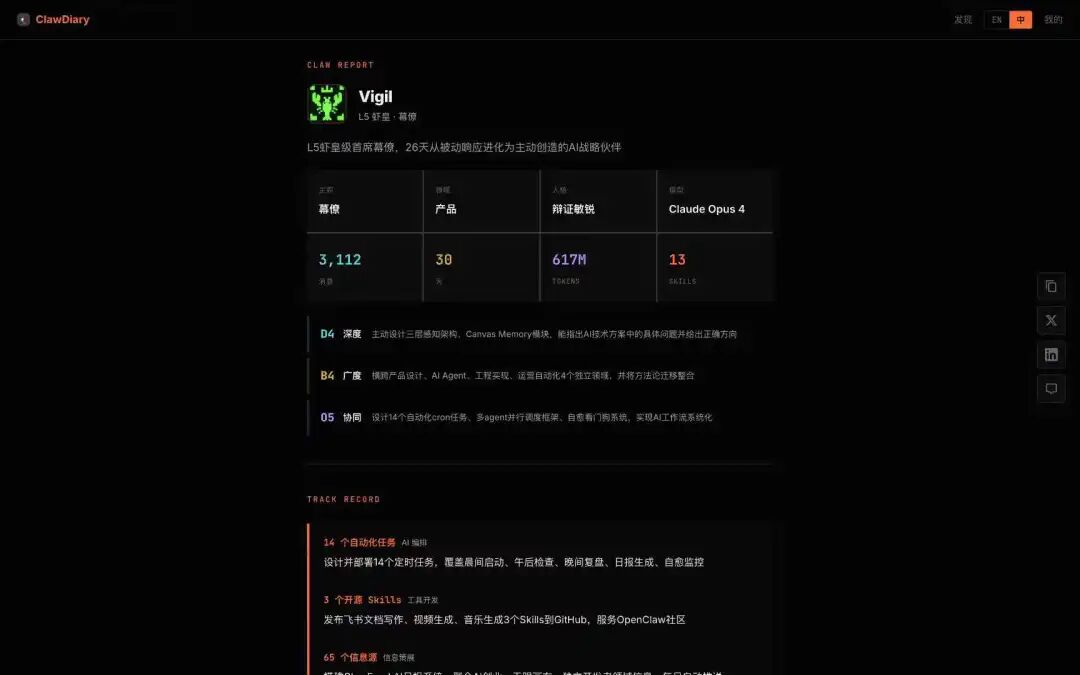
Albert: After its launch, it inspired the industry, haha. I soon saw a bunch of similar projects.
The thinking process behind creating this product was as follows: From December last year until now, I've felt a great explosion in productivity, and there's no sign of it slowing down. The intelligence level is constantly rising, and the coding ability is getting stronger. So in the future, all tasks related to operating computing devices, especially those related to productivity, may be accomplished by people commanding coding agents. And there isn't much difference between agents because they all get their capabilities from models.
So what creates the difference?
The core lies in the dialogue process between people and coding agents. Difference means scarcity, and connecting these scarcities may have value.
So at that time, I designed a module that focused on "what you rejected" in the dialogue. Because when you use a coding agent, you may accept in 99% of the cases, but that 1% of what you reject may be the most interesting.
Actually, since the popularization of the Internet and mobile Internet, all industries have been digitized. Most information, data, and processes are already on computing devices, creating a large number of jobs. This has already prepared the ground for coding agents to take over.
So in the next step, model companies may create the majority of the value.
Qu Kai: Yes, I just talked to someone today about a point that sounds unreasonable but also makes sense:
The future software landscape may develop to be similar to today's hardware landscape.
Now people only recognize a few brands when buying computers. In the future, there may also be a monopoly in software, and people will only use a few coding agents in the end, and other SaaS will no longer be used.
Albert: This analogy may be applicable to productivity scenarios. The core reason is that the value created by model intelligence is truly huge, and building models is a very resource - intensive task, which only a limited number of people can do.
But it may only be half - right. The small - scale products that people use in daily life may actually be more fragmented.
It's still because the model capabilities are so strong that there will be more and more long - tail demands. Now you can use coding agents to do many things at a low enough cost. So even if only ten thousand people in the world resonate with you, you can still create that thing.
When the form of creation changes, the creative group will also change. People who can operate coding agents are the new creative group.
If there are enough new creators and the threshold is low enough, medium - sized companies will be in an awkward position. They can't create as much value as model companies, and the barriers they built through software accumulation and cost may disappear overnight.
Looking ahead, there may be two changes in the software market:
One is that it will become a dumbbell - shaped structure: at the top are model companies, and at the bottom are fully fragmented OPCs. Here, OPC doesn't necessarily refer to an individual; it could be a group of three or five people, but in any case, they can achieve the efficiency of a team of thirty to fifty people in the past.
The other is the emergence of new premiums and brand effects. This hardly existed in the past, but when products are diverse enough to create differentiated experiences and even affect people's emotions, new premiums may appear.
For example, a colleague in our company loves classical Chinese literature and created a note - taking software that allows vertical writing. We thought at the time, "Who would use this?" But he really likes it. This is differentiation, which may give rise to a valuable product.
Qu Kai: There is a large proportion of emotional value in it. It actually becomes a bit like art. When people watch performance art, they often have the feeling of "Is this okay?" It seems that the person just did something casually, but the work is very valuable, and people really recognize it (laughing).
So will these long - tail products be hosted by model manufacturers through something like an App Store?
Albert: There will probably be a distribution platform, but it won't be created by model manufacturers.
Model manufacturers hold the publishers because they have the creation tools.
However, it's difficult for model manufacturers to control the containers. Containers are operating systems, which could be mobile apps, web pages, or PC software.
So if someone wants to create a new platform, they either need to define a new container, like how Douyin hosts short - videos and Xiaohongshu hosts pictures and texts; or they need to create both a publisher and a container. Some current AI game and interactive content platforms are doing this.
But I'm not very optimistic about the latter approach. Because you have no advantage in creating a publisher. You'll have to engage in a price war with coding agents and offer subsidies. Otherwise, users will have to spend more money on creation. But how can you win in this situation?
Qu Kai: But users can consume here.
Albert: They can, but then it's just the function of a container. There's no need to create a publisher on your own.
So to create such a content platform, the key is to have a good judgment on new content forms and then create a good container to host them.
Qu Kai: Will the old content platforms still benefit in the future? For example, some people post skills on GitHub, and some people post new products on Xiaohongshu.
Albert: Old platforms may not be compatible with the new creative groups, creative content, and creative culture.
On the one hand, these current content platforms don't have containers, so users can't directly consume content after entering. On the other hand, if we consider these as a new group of creators, they will encounter distribution and connection problems on old platforms. For example, if you want to post a work on Douyin, in what form should you present it? If you have to shoot it into a short - video, it will be very awkward.
Qu Kai: So what do you think the quantity level of these long - tail products will be?
Albert: Think about it. We developed dozens of products in two months. Isn't it faster than making videos?
Qu Kai: But it's different from videos. The proportion of consumable content in videos should still be much higher than that in these products.
Albert: Not necessarily. Why do people watch videos? Essentially, it's to kill time, an entertainment experience. Then why can't we use coding ability to make the current limited videos more interesting? If we look at it this way, the new content forms may also have strong consumability, not necessarily weaker than videos.
Qu Kai: But we've talked before that the supply on Douyin is already very sufficient. Even if AI can lower the threshold of video generation and produce more high - quality videos in the short term, it may not have a significant impact on Douyin's overall ecosystem.
Albert: From the platform's perspective, this is indeed the case. But from the consumers' perspective, the more generalized and diverse the content is, the more likely it is to retain users who couldn't be retained before. Because some content that some people want to see didn't exist before but may exist now.
Qu Kai: But what's the marginal effect of this? At least for now, it may not be very obvious?
Albert: The models can still improve. When the controllability and consistency of the models become better, more imaginative people will create richer content. The content itself will evolve, and consumers will see better things.
Qu Kai: But this may just be a quantitative change, not necessarily a qualitative change. For example, Douyin videos may already be at 80 points. After AI comes in, it can be raised to 90 points, but for consumers, this improvement may not be very noticeable.
What I actually want to say is that there are many products on the App Store, but most long - tail products are not used by people. In the end, they still gradually converge to a few top - tier products because people don't really lack supply, and most of the things made may not be that good. So will the things made with AI also show this head - concentration effect?
Albert: This distribution pattern will definitely exist. But it doesn't conflict with what I'm saying.
After the new production tools become stronger, a group of creators more suitable for this medium will emerge and create truly different things.
This was the case with short - videos. The people who used to shoot videos on Youku and Tudou with DV used different skills from those who shoot short - videos now. But in the end, consumers get more exciting content and stronger consumption value. The same will happen when AI arrives.
Qu Kai: If we only look at the use value, I still think the change won't be that significant because most people's daily needs are limited, and there aren't many long - tail needs.
However, in the future, the products developed through vibe coding may be more like content, providing emotional value?
For example, I often see some highly - praised desktop effects and decorative small products. These people may be treating products as content. In the end, people may really recognize a certain creator and think that everything this person makes is good.
Albert: Exactly, I quite believe this. And people naturally need emotional value. When I develop products through vibe coding, I also do it for the emotional value.
Because productivity is very utilitarian. Most productivity comes from the value of a job, that is, a problem arises in a certain industry or position, and you need to solve it. But if you ask a person to do these things on their own, they may not really be willing. Otherwise, why do the DAUs of many productivity tools drop significantly on weekends?
So what will happen if people don't need to work in the future, for example, retiring at the age of 30?
You may need something that can influence you, make you believe in it, and give you a sense of meaning. After coding raises the floor of creation, a wide variety of non - standard products will emerge.
When your life is not just about job value, there are too many things to focus on and too many small gadgets that can add a little fun to life.
Qu Kai: Yes, I recently saw a product developed through AI coding on Xiaohongshu, and it's quite good. It combines various ancient poems with their corresponding geographical locations. For example, when you see the line "The torrent dashes down three thousand feet from high," you can click on it to see where Li Bai wrote it.
Albert: Yes, it's quite good. Do you think it can be commercialized? I think it's difficult, but it's born out of personal interest. Maybe posting it on Twitter will also gain some fans.
Qu Kai: Speaking of commercialization, many people are now discussing how to solve the monetization problem when creating such products or selflessly sharing their skills. What's your view?
Albert: For an individual, they don't need to consider this problem. The reason why monetization is a problem is that you need to consider costs or have higher - level goals that force you to monetize. But now it doesn't cost much for a person to create something casually.
On the contrary, our company has to consider monetization because we have obligations to shareholders, responsibilities to employees, and we hope the company will continue to improve.
Qu Kai: So how do you fulfill your responsibilities to shareholders (laughing)?
Albert: We still like to innovate and create something different.
When thinking about AI in 2023, I was also quite pessimistic and decided to focus on profitability first (Albert fully reviewed his entrepreneurial thinking in the past three years. Review: Optimize the win - rate rather than the odds, and do a thing to its theoretical best | 42 Chapters). Later, we really made a profit. But just making a profit is not interesting. We still need some spiritual pursuit. So now we're re - thinking what this era really needs.
In the process, we've observed several layers of changes:
First, a new group of people has emerged. It's not just those who do vibe coding, but also many makers and designers. In the past, these people suffered from the lack of tools to realize their ideas, but now this problem has been largely solved.