The veil of Mythos has become the lever for Anthropic to pry trillions.
Foreign media reports suggest that Anthropic will complete a financing round of approximately $30 billion as early as next week, with a valuation exceeding $900 billion.
As early as February, Anthropic's valuation was $380 billion. In just three months, it has almost tripled.
But the most interesting part is that Google has also participated in this round of financing.
Google promised in April that it would invest up to $40 billion in Anthropic. It would initially invest $10 billion in cash, with the transaction valuation at that time being approximately $350 billion. The subsequent investment of up to $30 billion would be linked to Anthropic's performance.
Google has Gemini, and it recently launched Gemini 3.5 at the I/O Conference.
Wouldn't it be better to use this $40 billion as R & D funds for its own products? Moreover, it's an investment in a competitor.
Therefore, I think Google may not want to buy Anthropic's models. What they want to buy is a position.
Actually, it's not uncommon for competitors to invest in each other. Intel has invested in AMD, Microsoft has invested in Apple, and Sony has invested in Epic Games.
Large companies often invest in promising startups. They can not only obtain financial returns but also stay in touch with new technologies.
However, Google's investment scale and continuity in Anthropic seem a bit "excessive".
After all, this is $40 billion! It's enough for Google to build another AI team.
So what on earth has Anthropic done to captivate Google? Apart from Opus 4.7 and some minor product updates, the only thing left around Anthropic is Mythos.
This is a model that Anthropic claims is so powerful that it can never be made available to ordinary consumers. Corresponding to Mythos is the Glasswing Project, a network security cooperation project.
It's like saying that I've written a shocking article but won't publish it because I'm afraid that once it's published, everyone who reads it will be deeply immersed and unable to extricate themselves.
This is quite absurd. But through various explicit and implicit means, Anthropic has made the power of Mythos tangible in everyone's minds. Even if you've never seen it, you can clearly outline the profile of this model through various news and snippets.
So I think that Anthropic's model products are not the core of the company. Its truly admirable aspect is its ability to tell stories.
It can turn something you can't see or touch into real money.
01
Latest Progress of Glasswing
We have to admit a fact, that is, the market accepts pie-in-the-sky promises.
On May 23rd, Anthropic published an article titled "The First Update of the Glasswing Project", which talked about the latest progress of Glasswing.
The article states that the Mythos Preview has scanned over 1,000 open-source projects and discovered 6,202 high-risk or severe-level vulnerabilities. After evaluation by an independent security research company, 90.6% of them were confirmed to be true positives, and 62.4% were identified as high-risk or severe-level.
It wasn't until I read that article twice that I realized it was actually a "fluff" piece.
The most subtle thing about these numbers is the lack of a reference frame.
Anthropic didn't tell you what scale these over 1,000 projects are, how much code was scanned in total, how long it took, or how much improvement there was compared to traditional security tools.
Among these 6,202 candidate vulnerabilities, only 1,752 were actually evaluated.
This is very un-"Anthropic". Previously, Anthropic's articles were reproducible. For example, they used Qianwen to simulate whether humans could control AI when AI surpasses humans in the future.
The reason for using Qianwen instead of their own Claude was so that you could reproduce it after reading the article.
But the Glasswing article doesn't have this. You can't reproduce it, and there's no way to verify it.
More importantly, Anthropic has packaged the "non-public release" as an expression of responsibility. It's afraid you'll misuse it, so it doesn't release it. And it only releases it to specific users, and then uses the feedback from these users to indirectly confirm the model.
Anthropic uses such a marketing story to transform the "unreleased" thing into proof of the company's high technological level.
This gives it a special immunity. It doesn't need to prove that it's stronger than all competitors. It only needs to prove that it's "too powerful to be publicly available".
Anthropic also mentioned in the update that the common practice in the software industry is to publicly disclose vulnerabilities 90 days after they are discovered or 45 days after the patch is released. This means that the details of the vulnerabilities discovered by the Mythos Preview can't be fully disclosed yet, otherwise, it will put end-users at risk.
This is a protection mechanism.
Just like the vulnerability mechanism of Windows. When a research team discovers a Windows vulnerability, they will first send it to a specific email. Only after Windows releases an update patch to fix the vulnerability will these research teams publicly announce what the specific vulnerability is.
Anthropic's statement is logically impeccable, but it's not Microsoft, and Claude is not Windows. It's just a model. If I can't use Claude, I can use ChatGPT. If your computer can't use Windows, it's just a brick (I might be exaggerating a bit. You can also use Linux, etc., but only if you know how to use it).
This is the most amazing thing about Mythos. It's not just potentially powerful. It's designed with a product narrative that "the less it's made public, the more powerful it seems".
Anthropic has grasped this feature. It doesn't need everyone to be able to use Mythos. It only needs the market to believe that Mythos represents a certain higher-level ability. And because this ability can't be widely verified, it seems even more mysterious and powerful.
This is what Anthropic is doing.
It's using a very smart way to transform the "unverifiable ability" into "imaginable value".
And this value will ultimately be reflected in the valuation, in the financing, and in the overall judgment of Anthropic by the market and society.
02
The White House Reuses Claude
If only Anthropic says that Mythos is powerful, it's just company marketing.
But if the US government regards Anthropic as a supply chain risk on one hand and is reported to be close to allowing intelligence agencies such as the NSA to use its advanced models on the other hand, the story is completely different.
In February, Trump said that the US government would put Anthropic on the blacklist, and the Pentagon called Anthropic a supply chain risk.
The most interesting thing at that time was that the White House didn't say that Claude was not good. On the contrary, the conflict arose precisely because of "wanting to use it too much".
Foreign media reports suggest that the Pentagon hopes to use Claude more freely in military and national security scenarios, but Anthropic insists on not allowing two types of uses: large-scale domestic surveillance in the US and fully autonomous weapons.
At that time, the situation was indeed like the left brain attacking the right brain. The White House thought that Anthropic's restrictions made it a supply chain risk on one hand, and on the other hand, it admitted that the technology in Anthropic's hands was important enough.
But right after the first update article of Glasswing was published, foreign media suddenly reported that the White House had reached a cooperation with Anthropic, allowing specific agencies to use Claude, and it's very likely to be Mythos.
If even the White House is willing to go against its own ban and reuse Claude, it means that this thing is really amazing.

This contradiction itself is an endorsement for Anthropic.
Although the news doesn't directly say it, it conveys a signal that Anthropic's technology has unique value.
Because right after the White House banned Claude, OpenAI reached a cooperation with the White House and became the White House's AI supplier. But now the White House's action is like telling you that "Anthropic is irreplaceable".
Anthropic doesn't need to prove to the public how powerful Mythos is. It only needs to let the market know that Mythos has now joined the White House's carefully selected list.
The procurement by government agencies, especially those related to national security, means that your technology has passed the highest standard of review.
Once you're on the procurement list, it means that your company has met the US government's requirements in terms of supply chain security, technological reliability, and long-term support ability.
More importantly, government procurement often comes with long-term contracts and stable income.
This is very important for investors, especially since Anthropic is about to go public.
Having such a large order shows that Anthropic not only has technology but also has the ability to transform technology into stable commercial income and has the most reliable customers.
What's more interesting is that Anthropic didn't show a submissive attitude before.
After being named by the Pentagon, it publicly emphasized that it's not refusing to serve the US defense but can't abandon two red lines: large-scale domestic surveillance and fully autonomous weapons.
Amodei later said in the company's statement that he could apologize for the tone of the internal speech, but these principles would not change.
That is to say, Anthropic first packaged a procurement conflict as "I have principles", and then through subsequent news from the White House and the NSA, it became "the US government still needs me in the end". This has more dissemination value than simply winning the US government's business.
However, Anthropic didn't mention a single word about this cooperation.
If it were to publicize loudly that "we're cooperating with the NSA", the market might suspect it's a marketing ploy. But this complete silence will instead make the market more convinced of the power of Mythos, because it has made the US government use it even if it means going back on its words.
Even if the cooperation between the White House and the NSA doesn't fully materialize in the end, and even if the specific content of the agreement is different from what the outside world imagines, this narrative itself has already had an effect.
It has made the market believe that Anthropic is a company capable of cooperating with national security agencies and a company whose technological ability meets the White House's standards.
The most powerful thing about Anthropic is not convincing consumers but convincing the most difficult-to-persuade procurement parties.
The decision-making process of the national security system is extremely complex, involving multiple aspects such as technological evaluation, security review, policy consideration, and budget approval.
Being able to pass through these processes itself shows the company's comprehensive strength.
03
All for Financing and Going Public
Technological narratives can be hyped, security narratives can be told, and the cooperation with the US government may also have various gray areas.
But financing is the most straightforward. Capital ultimately turns stories into money.
In the past, when investors evaluated a company, they would look at its revenue growth, profit margin, market share, and technological barriers.
But in the AI industry, these traditional indicators are often not enough. Because until now, no one can clearly see the potential of an AI company.
Foreign media reports suggest that Anthropic has told investors that its annualized revenue will exceed $50 billion next month.
Anthropic's earliest commercial revenue growth didn't actually come from ordinary Claude subscriptions. It mainly came from enterprise APIs, cloud platform distribution, and code generation demands.
Foreign media reported in May 2025 that Anthropic's annualized revenue increased from nearly $1 billion in December 2024 to over $2 billion by the end of March 2025, and then to about $3 billion by the end of May. The main driving forces were enterprise demands and code generation scenarios.
In the second half of 2025, Claude Code began to become an independent growth engine. Foreign media reported that Claude Code's annualized revenue was about $400 million in July 2025 and then approached $1 billion.
Anthropic later confirmed in the official announcement of the acquisition of Bun that Claude Code reached a run - rate revenue of $1 billion within six months of its public release.
By February 2026, Anthropic officially disclosed that the company's overall run - rate revenue reached $14 billion, and Claude Code alone exceeded $2.5 billion. That is to say, Claude Code has transformed from a small developer tool into a large product worth billions of dollars.
In April 2026, Anthropic said in the announcement of the computing power cooperation with Google and Broadcom that the company's overall run - rate revenue had exceeded $30 billion, continuing to skyrocket from about $9 billion at the end of 2025.
At the same time, the number of enterprise customers with an annual consumption of over $1 million increased from more than 500 in February to more than 1,000.
Investors are obviously willing to believe these numbers. Because there are various facts to support Anthropic's storytelling.
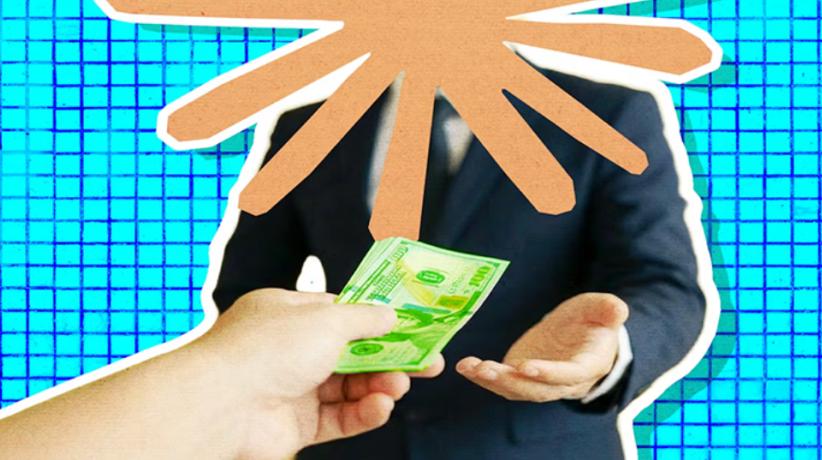
Google's continuous investment has made Anthropic's story even more compelling.
If an ordinary VC invests in Anthropic, the market might think it's a normal venture capital investment. But if an AI giant like Google is investing in Anthropic, it means that Anthropic really has something special.
Google doesn't lack money, technology, or talent. Its investment in Anthropic is definitely not because Anthropic can make up for its shortcomings, but because it believes that Anthropic may become an important player in the AI field, and it doesn't want to miss this opportunity.
This judgment itself has also become an endorsement for Anthropic.
When making decisions, investors often refer to the choices of other investors. This is not called following the crowd. It's called "a rational way of collecting information".
Each investor has their own information channels and judgment abilities. When multiple top investors make the same choice, the probability of this choice being correct increases.
Google's investment is such a strong signal. It tells other investors that Anthropic is worth investing in, and it's worth a large - scale investment.
So, other investors have also started to follow. Sovereign funds, top VCs, and large technology companies have all expressed their interest in Anthropic. This collective action has further pushed up Anthropic's valuation.
The increase in valuation, in turn, has strengthened Anthropic's narrative.
When a company's valuation reaches $900 billion, the market will naturally think that this company must have very powerful capabilities and a very broad prospect. Otherwise, how could it be worth so much?
Money plays the most crucial role in the story.
You may not understand the technology, and you may not understand the White House, but can you not understand the US dollar?
What Anthropic has now is this kind of real - money endorsement.
This is the pricing function of capital. It ultimately converts all narratives, all imaginations, and all expectations into a specific number.
Of course, this consensus may