He, "Zhang Xue" 20 years ago, is the toughest king in China's motorcycle industry.
On the evening of May 17th, Zhang Xue's motorcycle team won the championship at the WSBK Czech Grand Prix, which is also the fifth championship in WSBK this year.
In Chongqing, 10,000 kilometers away, Zuo Zongshen, the chairman of Zongshen Group, might have mixed feelings when seeing this:
In 2002, it was he who led the Zongshen team to shine in Germany and Italy, winning the annual championship of the World Motorcycle Endurance Championship and achieving a zero - breakthrough for Chinese motorcycles on the world stage.
At that time, Zongshen, along with other motorcycle giants in Chongqing such as Lifan and Loncin, was making its way out of China. Twenty - odd years have passed in a flash. Among the once - famous Zongshen, Lifan, and Loncin, only Zongshen remains today.
01
Self - made Heroes, Battling Foreign Capital
Zuo Zongshen, who started from scratch, worked as a kiln worker in his early years. After the reform and opening - up, he went into business, selling martial arts books in the north, wholesaling fruits, and dealing in clothing. After suffering many setbacks, he returned to Chongqing to learn motorcycle repair. He later recalled:
"As the saying goes, one shouldn't learn a new skill after the age of thirty. I originally thought I'd just live a plain life, but unexpectedly, I got involved with motorcycles."
In 1982, Zuo Zongshen set up a tin shed in Banan, Chongqing, to repair motorcycles. Compared with Zhang Xue, who can assemble an engine blindfolded, he also developed a "special skill" of diagnosing engine problems just by listening to the engine sound.
Moreover, he dared to say boldly, "If I can't fix it, you don't have to pay."
With talent and hard work, Zuo Zongshen became a well - known "local expert" in the area. In just 10 years, he developed his small shop into a repair factory.
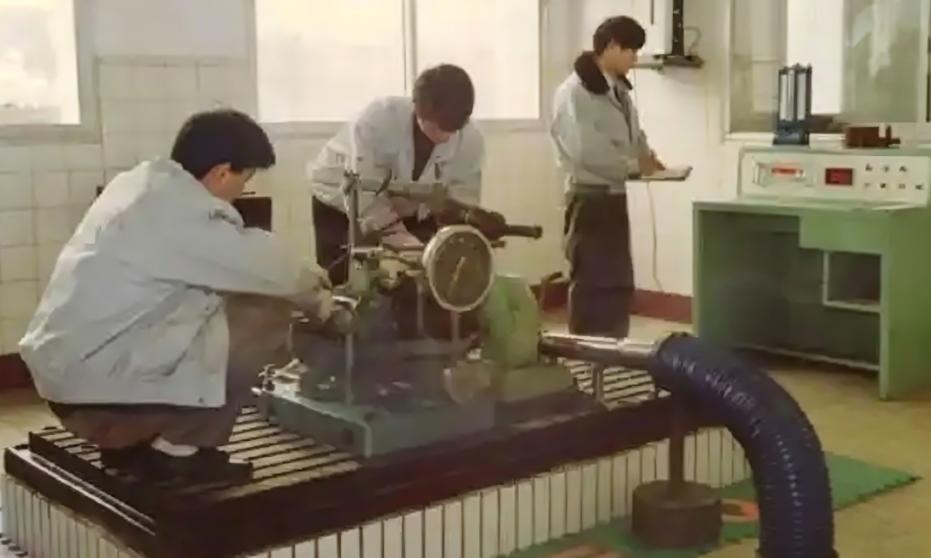
A bigger opportunity came in 1992. At that time, there was a shortage of engines in the market and the quotas were tight. So Zuo Zongshen managed to raise funds to establish Zongshen Motorcycle and focused on engine research and development.
▲ Image source: Upstream News
At that time, the state implemented a motorcycle production catalog system. Only state - owned large factories like Jialing and Jianshe had production qualifications. Zongshen's production of engines was regarded as "illegal operation" and could be shut down at any time.
But Zuo Zongshen was very determined. Starting from the essence and pros and cons of the matter, he thought, "I'm not doing anything illegal. There's no law in the country that prohibits private enterprises from making motorcycles, and I pay taxes according to regulations. Why can't I do it?"
Sure enough, the next year, the state relaxed its policies, and Zuo Zongshen began to make great strides in the motorcycle industry.
During those years, Yin Mingshan established Lifan Motorcycle and Tu Jianhua founded Loncin Motorcycle. Together with Zongshen Motorcycle, they formed the three giants of the Chongqing motorcycle gang later.
In the following years, the three giants rose rapidly. They not only competed with each other openly and secretly, fighting for patents in court and competing fiercely in the market, but also joined forces to deal with foreign enemies. They united in the domestic market to fight against Japanese car companies and also went to Southeast Asia together, once forcing Japanese motorcycles to retreat steadily.
Around 2000, the market share of Chinese motorcycles in Vietnam reached 80%, and the Japanese brands that once monopolized the market were squeezed to about 20%, with their living space greatly restricted.
At that time, the annual production and sales volume of Zongshen Motorcycle exceeded one million units, and its total assets reached 2 billion yuan. Zuo Zongshen started with 2,000 yuan in startup capital and snowballed it into 2 billion yuan in wealth, a million - fold increase.
02
Old Friends Fading Away, Dominating the Market
In the same year when Zongshen was established, Zuo Zongshen also co - founded a research institute with Yin Mingshan, who made his fortune selling books. One had technology but lacked money, and the other had money but lacked technology, so they started researching engines.
Yin Mingshan named the research institute Hongda, a homophone of Honda (HONDA) to gain popularity. But Zuo Zongshen firmly opposed infringement and advocated creating a self - owned brand, not wanting to leave hidden dangers.
In 1995, Zuo Zongshen firmly separated from Yin Mingshan and focused on operating the Zongshen brand. Only two years later, Hongda changed its name due to potential trademark infringement, and its subsequent assets and business were transferred to "Lifan".
Yin was imaginative and good at marketing planning, while Zuo was down - to - earth and insisted on technology as the foundation. Their completely different business concepts might have foreshadowed the fates of Lifan and Zongshen early on.
Around 2010, Zongshen and the entire motorcycle industry encountered unprecedented difficulties.
On the one hand, there was a large - scale consumption upgrade. Cars were rapidly entering thousands of households, and electric bicycles were also beginning to gain popularity in rural areas. On the other hand, more than a hundred cities across the country restricted or banned motorcycles, and the core consumer market shrank.
At that time, Lifan chose to abandon its main motorcycle business and crazily crossed over to the automobile industry. By 2018, the automobile accounted for 55% of Lifan's revenue, while the main motorcycle business was less than 30%.
Yin Mingshan invested over 10 billion yuan in automobile manufacturing, hoping to achieve high sales volume with low prices. However, the market response was mediocre. The cars couldn't be sold, and then Lifan borrowed money to enter the new - energy vehicle and battery industries and even invested heavily in shared cars.
Another motorcycle giant, Loncin, also betrayed the motorcycle business during that period. Its boss, Tu Jianhua, made bold moves and crossed over into real estate and finance. He borrowed money to invest in cultural tourism and commercial real estate, but finally suffered heavy losses due to the major adjustment in the real estate market.
Compared with the radical moves of the other two giants, Zuo Zongshen chose to stick to the main business and make steady progress.
Zuo Zongshen often said, "I've loved motorcycles all my life." For anyone, when they take their hobby to the extreme, it becomes the best business model.
In 2013, sitting in his office, smoking and thinking about why the motorcycle industry was in a slump and where Zongshen should go?
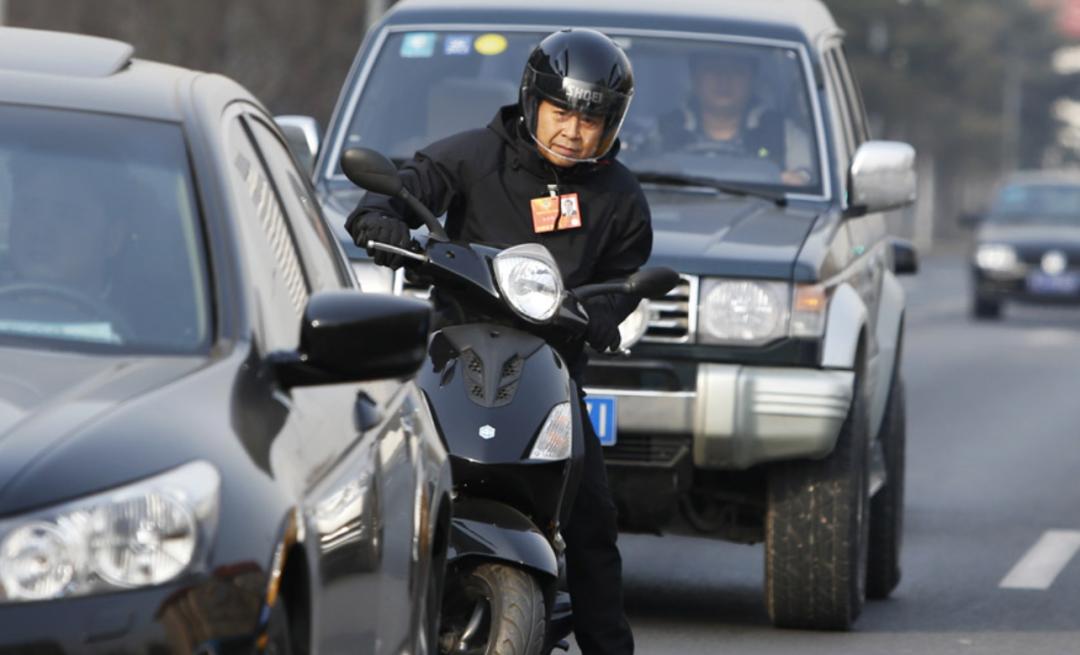
Finally, he did a seemingly silly thing. He went to Beijing to have a race: he rode a motorcycle, while the other two took the subway and drove a car to see who would reach the destination first. He wanted to take the opportunity to show the convenience of motorcycles to the outside world.
▲ Image source: China News Service
Subsequently, Zuo Zongshen also spoke up at the Two Sessions, suggesting a limited cancellation of the motorcycle restrictions in cities, relaxing restrictions on technologically advanced and environmentally friendly motorcycle models, and cultivating the high - end market.
What he suggested was also what he wanted to do. Although he decided to stick to the motorcycle business, Zuo Zongshen understood that each era should have its own motorcycles. So what were the motorcycles of the new era? Zuo Zongshen set two directions: large - displacement and electrification.
For example, in October of that year, Zongshen launched the Cyclone RX3 touring motorcycle with a displacement of 250cc, officially entering the medium - and large - displacement market and breaking the stereotype that Zongshen only made low - end motorcycles.
In terms of electrification, in 2013, Zongshen sent a team to participate in the FIM eRoadRacing World Cup. They won three consecutive championships in Spain, Germany, and France, marking that Zongshen had reached the international advanced level in the core technology field of electric motorcycles.
So far, Zuo Zongshen's perseverance has paid off.
Data shows that last year, Zongshen sold 465,000 electric motorcycles, second only to Yadea and Luyuan. It ranks first in electrification sales among traditional fuel - powered motorcycle enterprises and is the only manufacturer that ranks among the top three in both fuel - powered and electric motorcycle sales.
However, Lifan and Loncin, which once stood side by side with Zongshen and even outshone it, have both failed and been buried in the dust of the times.
The once - popular Lifan was reorganized in 2020. It had assets of 13.6 billion yuan but liabilities of up to 27.3 billion yuan. Its founder, Yin Mingshan, was reported to have lived a lonely life in a nursing home in his later years.
Due to the failure of its diversified layout, Loncin's debts began to overdue since 2018, growing from 2.4 billion yuan to 12 billion yuan. It was reorganized in bankruptcy in 2021. The once - richest man in Chongqing fell from grace, and finally, Zongshen acquired Loncin's motorcycle business for 3.3 billion yuan.
The old friends are gone, but the market still exists, yet the order and pattern have changed completely.
03
Bringing Glory to the Country, Soaring into the Sky
In recent years, Zuo Zongshen has also been accelerating the pace of transformation and upgrading. However, he still insists on focusing on his core field, choosing to deeply cultivate mechanical power and extending to high - tech fields such as drones and aviation power.
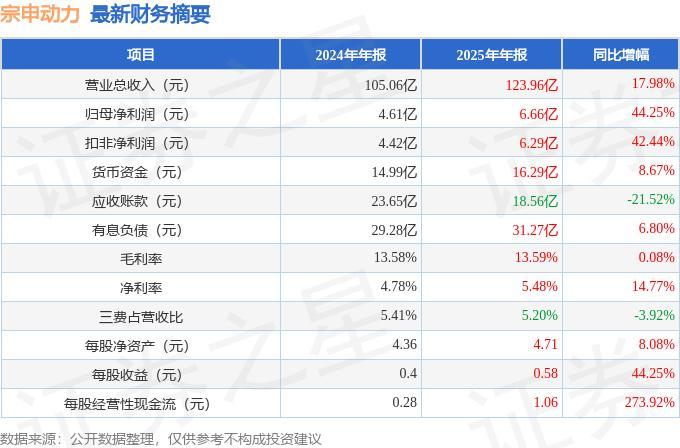
Last month, Zongshen Power released its 2025 performance report. Against the backdrop of pressure on the traditional motorcycle business and intensified industry involution, it presented a very impressive report card.
The annual report shows that Zongshen Power achieved an annual revenue of 12.4 billion yuan, a year - on - year increase of 18%; and a net profit of 666 million yuan, a year - on - year increase of 44.25%. Among them, the motorcycle engine business contributed 4.601 billion yuan, the general machinery business contributed 6.015 billion yuan, and the rest came from emerging businesses such as energy storage and aviation power.
▲ Image source: Securities Star
In particular, the development of aviation power, manufacturing engines for drones and light aircraft, is highly expected by Zuo Zongshen and is also his most important card in the trillion - level low - altitude economy.
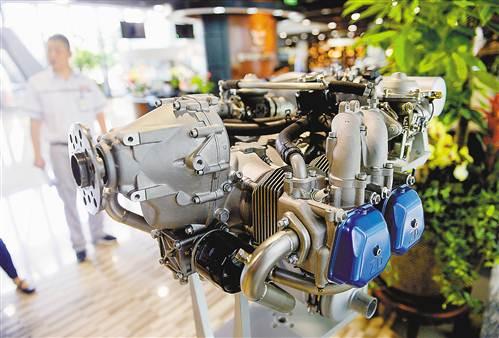
In August last year, Zongshen's self - developed CA500 aviation piston engine was successfully installed on the Shanhe Xinghang Aurora SA60L light - sport aircraft and obtained airworthiness approval from the Civil Aviation Administration. At the beginning of this year, the first light aircraft equipped with this engine was officially delivered.
This is a breakthrough from 0 to 1 for domestic aviation piston engines, breaking the long - term foreign technological monopoly.
The low - altitude economy is an emerging trend, and it's commendable that Zuo Zongshen started planning and layout 17 years ago.
In the National Day military parade in 2009, the Chinese drone troops made their first appearance, which greatly shocked Zuo Zongshen, a "weapon and equipment enthusiast".
When he learned that Chinese drones were still using imported engines, he vaguely felt that this was an opportunity. Although it was a big challenge to shift from ground - running vehicles to flying ones, he still set a goal and was determined to strive for it!
"We must manufacture 100% domestic drone engines."
He wasted no time. In 2011, Zongshen Group bought out all the intellectual property rights such as patents and production molds of the American general aircraft manufacturer Windcraft and signed its core technical staff to work in China.
On the other hand, Zuo Zongshen sent a large number of talents to aviation engine factories around the world for inspections to gain experience.
When he was repairing motorcycles in his early years, Zuo Zongshen was very persistent. He usually disassembled and reassembled a motorcycle repeatedly. He wouldn't eat or sleep until he fixed it. He had the same spirit when manufacturing aviation engines.
▲ Image source: 36Kr
For example, to test the performance of the aviation engine under low - temperature and low - pressure conditions, Zuo Zongshen led his team to transform a 40 - foot container into a mobile laboratory and transported it by truck to Zhaotong at an altitude of 2,000 meters, Golmud at 3,000 meters, and the Kunlun Pass at 4,750 meters, just to replicate a more extreme test environment.
It's precisely because of this attitude of respecting technology and pursuing perfection that Zongshen's aviation engine products can withstand the tests of the market and customers time and time again, providing key components for many well - known drone models such as Rainbow, Wing Loong, and Tengdun.
Currently, Zongshen has a market share of over 60% in the domestic drone piston engine field. This septuagenarian has been laying the groundwork for more than a decade, creating a second growth curve for Zongshen.
At the Chongqing Motorcycle Expo last year, Zhang Xue met Zuo Zongshen on the spot. He took the initiative to trot forward, bowed respectfully, and the latter showed a long - lost smile.
These two people, who started from the greasy work of motorcycle repair apprentices, happen to stand at two important time nodes in the development of the Chinese motorcycle industry.
The rise of Zhang Xue's motorcycle team means that someone will continue the journey of the Chinese motorcycle industry from "manufacturing" to "creation".
However, Zongshen Group, which Zuo Zongshen has managed for most of his life, is facing the embarrassing situation of having no one to take over. His two children are not very interested in the manufacturing industry and have no intention of taking over the business.
At the age of seventy, Zuo Zongshen still has to be at the forefront.
He has been rooted in the field of mechanical power for half his life. He doesn't chase after trendy opportunities for speculation or covet quick and huge profits. He has been deeply involved in technology and is persistent in innovation all his life. Even when the industry's dividends fade away and new tracks are difficult to navigate, he still calms down to polish core technologies.
From the ground to the sky, Zuo Zongshen has always had the pursuit of doing real - world business and practical things in his bones. This is the key for him to go from sharing the stage with Yin Mingshan and Tu Jianhua to sharing the stage with Zhang Xue.