BYD to "acquire" Maserati? The latest response is here.
In recent days, the automotive industry has been shaken by a piece of news.
Some people say that BYD is going to acquire Maserati. That's an Italian top - tier ultra - luxury brand with a trident logo and a century - long heritage. Will it be bought by a Chinese automaker?
It sounds a bit fantastical, but upon closer consideration, it seems reasonable. The news quickly went viral and topped the Tonghuashun sentiment ranking list.
The investment circle was in an uproar, and BYD's A - shares soared on the same day. However, on May 21st, BYD's official statement poured cold water on the speculation: "It's untrue. It's a rumor."
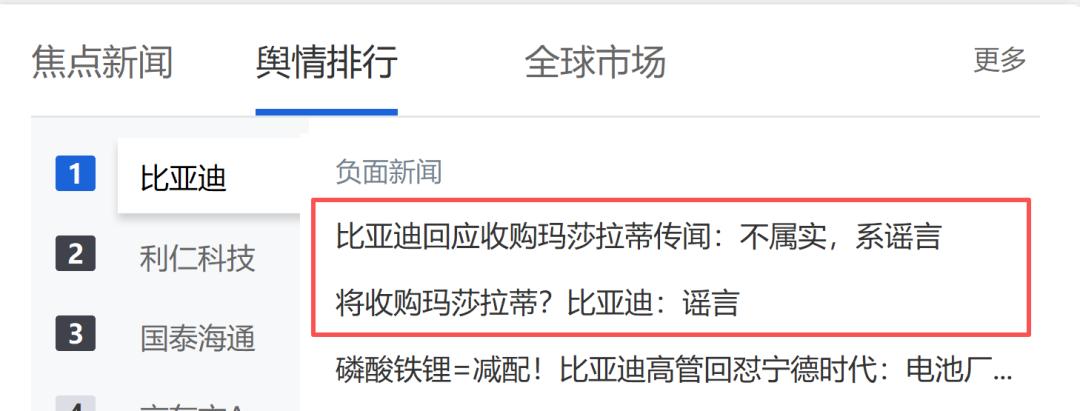
However, despite the rumor being refuted, this matter is not that simple. Behind this "rumor", there might be something more interesting than the truth.
01 How did the rumor start?
The following is based on public information inquiries and summaries. Let's rewind the time a bit.
On May 14th, Li*, the executive vice - president of BYD, said at an industry summit in London: "The company is indeed looking at high - end assets in the European market, including Maserati." This statement was quite straightforward. Not only Maserati, but all the struggling traditional luxury brands in Europe are within BYD's scope of consideration.
Immediately afterwards, on May 16th, Li Si*, the vice - president of BYD's international business, confirmed again at another London meeting: The company is evaluating the acquisition of traditional luxury brands in Europe that are under pressure, and Maserati was specifically mentioned again. From May 14th to 21st, the media reported that BYD was going to acquire Maserati, which caused a viral spread.
So this matter is not a baseless and absurd fabrication. The origin lies in the words of BYD's senior executives.
However, the so - called "rumor" might actually be that BYD is indeed "looking", but the market interpreted it as "going to buy". It's like a young and talented couple. They seem well - matched on the outside, but they've just met and haven't started dating yet, while some people interpret it as an engagement.
A single word can make a world of difference. What BYD has truly confirmed is that they are in negotiations with the Stellantis Group to take over idle factories in Europe, aiming to achieve local production before the EU imposes additional tariffs.
The parent company of Maserati, Stellantis, has a firm attitude. It said as early as March this year: "The Maserati brand is not for sale." Even so, the market is still enthusiastic about it. Why? Because although this deal seems absurd on the surface, it makes sense logically.
02 How is Maserati doing?
To understand why this rumor has caused such a stir, we need to first see what state Maserati is in today.
The data is shocking.
According to public inquiries, in 2025, Maserati only delivered 7,900 new cars globally, a year - on - year plunge of 30%. In contrast, Ferrari sold 13,640 cars last year, Lamborghini sold 10,747 cars, and Porsche? 279,449 cars. The amount Porsche sells in 10 days is equivalent to what Maserati sells in a whole year.
Looking at the financial accounts, in 2025, the revenue dropped from 1.04 billion euros in 2024 to 726 million euros; the net loss was 198 million euros. With huge losses for two consecutive years, the profit margin dropped to an astonishing - 27.3%.
This means that every time a Maserati is sold, it's not making money but burning money.
What's even more desperate is the trend. Maserati's peak was in 2017, when it sold 51,500 cars globally. Since then, it has been on a downward trend. From 2021 to 2023, it could still maintain around 25,000 cars. In 2024, it suddenly dropped by 57%, and in 2025, it dropped by another 30%. It's still alive, but slowly withering.
There are many reasons for the slowdown: the product line is too narrow. After the production of Levante and Ghibli stopped, the main model is only the Grecale SUV, plus two supercars and two GTs, which can't support the dignity of a luxury brand; the transformation to pure - electric vehicles is seriously lagging behind. The Folgore series uses the "fuel - to - electric" conversion, with extremely conservative technology, and the market response is cold.
The rumor of being sold is not something new. As early as 2025, there was a version of "Chery acquiring Maserati", and in March this year, there was a hot discussion about "Xiaomi acquiring Maserati".
A once high - end luxury brand has now become the "heroine" of all kinds of "gossip with the wealthy".
In a sense, Maserati is no longer just a simple car brand. It has become a symbol, an epitome of the dilemma of European old aristocrats in the face of Chinese new rich.
03 How is BYD's financial situation?
If Maserati is a frustrated aristocrat looking to be sold, then BYD is the wealthy and handsome guy. But even the wealthy and handsome guy has his own worries.
In 2025, BYD's annual revenue reached 803.96 billion yuan, a year - on - year increase of 3.46%. However, the net profit attributable to the parent company was only 32.619 billion yuan, a year - on - year decrease of 18.97%.
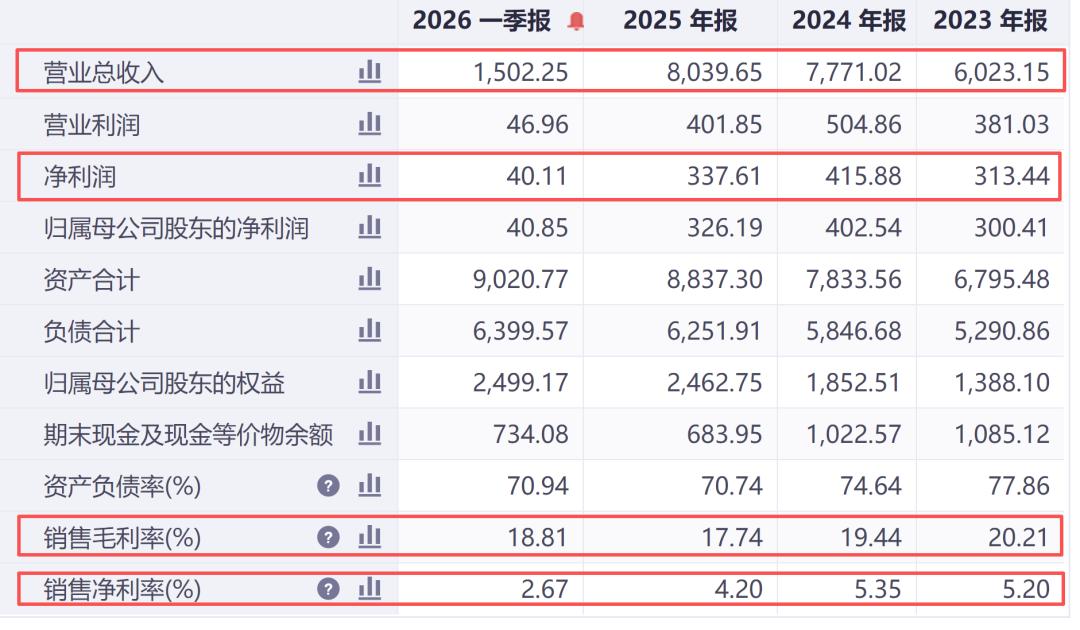
Source: Tonghuashun IFinD
This was the year with the lowest revenue growth rate in the past six years, and it was also the fourth consecutive quarter of year - on - year decline in net profit. In 2024, the profit per vehicle was about 10,000 yuan, but in 2025, it dropped to 6,174 yuan, a year - on - year shrinkage of nearly 30%.
The domestic market is gradually reaching its ceiling. In 2025, the domestic revenue (including Hong Kong, Macao, and Taiwan) decreased by 11.17%. The domestic price war has thinned BYD's profit margins.
The R & D investment is still increasing rapidly. In 2025, 63.4 billion yuan was invested, a year - on - year increase of 17%. Calculated, it burns 174 million yuan every day. This amount is nearly twice the net profit, ranking first among A - share automobile companies.
The overseas market is currently the most prominent breakthrough point. In 2025, the overseas sales volume exceeded one million for the first time, reaching 1.0496 million vehicles, a year - on - year increase of 145%. The overseas revenue was 310.7 billion yuan, accounting for 38.65% of the total revenue.
In the first quarter of 2026, the proportion of overseas sales was already close to 46%. In April, the overseas sales volume was 134,542 vehicles, setting a new historical high.
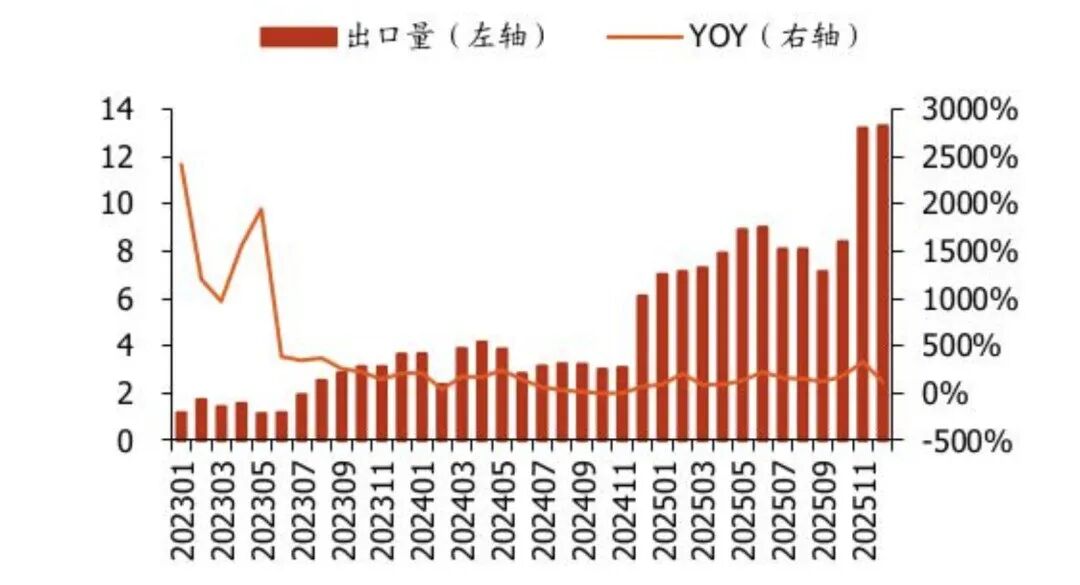
Source: China Automobile Industry Information Network, BYD official account, Guosheng Securities Research Institute
The high - end strategy is also advancing. The three high - end brands, Yangwang, Denza, and Fangchengbao, sold a total of 396,500 vehicles in 2025, more than doubling compared to the previous year.
Especially Yangwang. In the million - level luxury car market, both the U8L and U8 models made it into the top 20 of the 2025 Chinese million - level luxury car sales list - this is the first time for a Chinese brand.
It sounds quite exciting, but if we put BYD and Maserati in the same table, the gap is obvious:
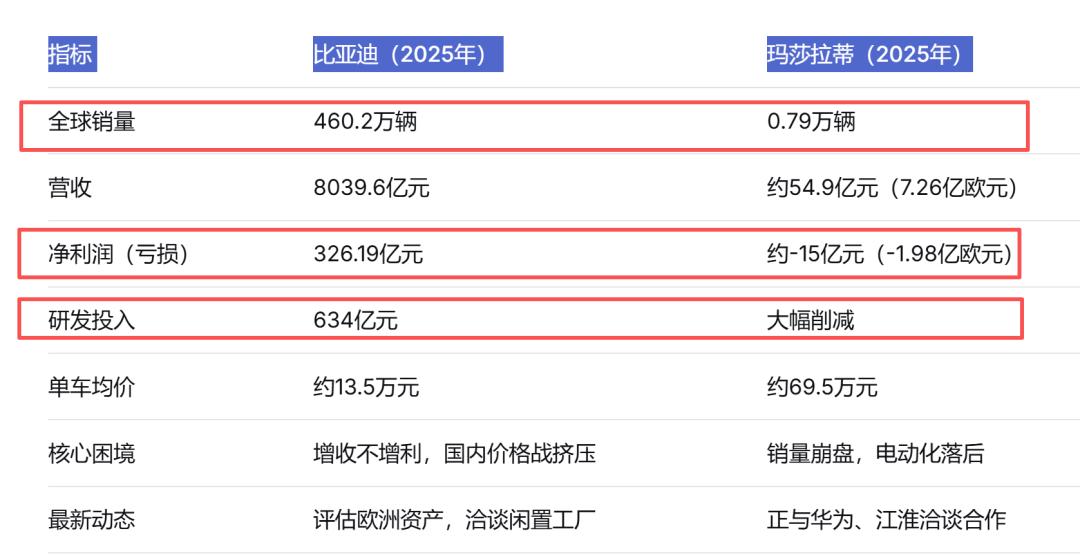
Source: Public inquiries
BYD's technological reserves and large - scale production capabilities are historical, but its profit margins have been thinned. Maserati still has brand assets, but its sales system and profit model are collapsing. One has money but lacks high - end stories, and the other has stories but lacks money.
04 Behind the acquisition rumor
Whether the rumor is true or not is one thing, but why the rumor emerged is another.
Let's look at a more notable data: In the first quarter of 2026, the total sales volume of BYD's high - end brands (Fangchengbao + Denza + Yangwang) was 84,131 vehicles, and 319,751 vehicles were sold in the overseas market. The overseas market is more than three times the sales volume of the high - end brands.
What does this mean? BYD's current priority is clear. First, break through in the overseas market on a large scale, and then consider brand acquisition for emotional premium.
This is completely different from the logic of acquiring Maserati. What BYD really wants are the idle factories in Europe.
They are in negotiations with European automakers such as Stellantis. They are not buying the brand, but the production lines, production qualifications, and a physical ticket to enter the heart of Europe. This battery factory that started in Shenzhen is planning to move its machines into factories in Italy and France.
Behind this is a pre - emptive layout against future trade barriers. The EU is investigating subsidies for Chinese electric vehicles and may impose new tariffs at any time. Instead of being passively affected by logistics costs and policy risks, it's better to move the factory to the opponent's doorstep.
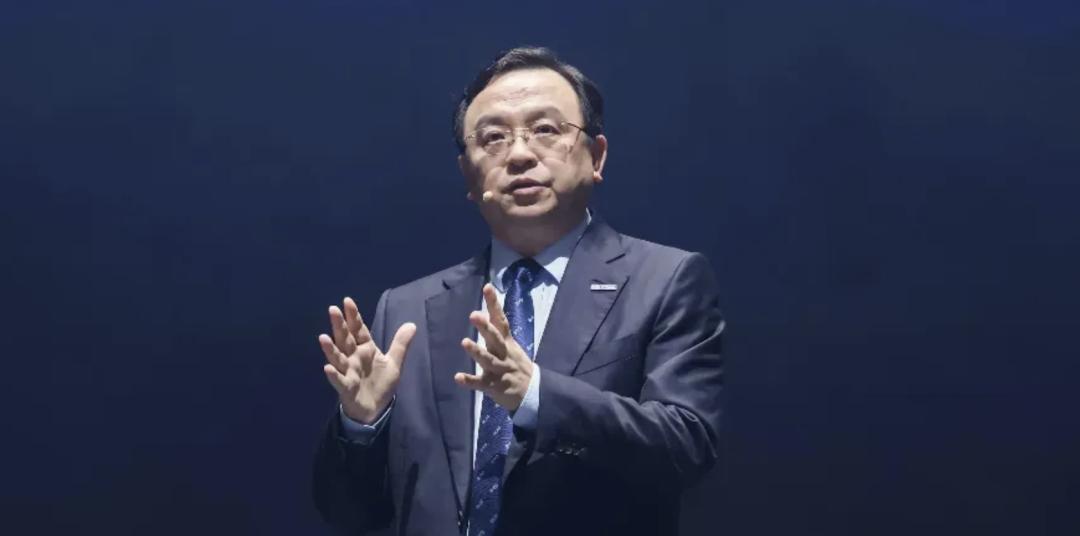
So, "looking at Maserati" has never been the focus. "Revitalizing the idle production capacity in Europe" is the game that Wang Chuanfu is playing.
There is also a small episode: Almost at the same time, Huawei, Jianghuai, Stellantis, and Maserati are in discussions about cooperation.
HW provides intelligent driving and electric drive technology, Jianghuai is responsible for production, and Maserati provides the brand and design. It's a "dual - brand for the same car", with the Zunjie brand in the domestic market and the Maserati brand overseas.
The author believes that Maserati is cashing in on its luxury status in another way: It is no longer an automobile manufacturer, but a luxury label supplier.
05 Looking at it in a broader context
Ultimately, this whole thing is an epitome of the globalization of Chinese automakers.
Looking at the trend in the high - end car market: In 2025, BMW had a slight global increase of 0.5%, Mercedes - Benz decreased by 10%, and Audi decreased by 2.9%. The continuous growth momentum of BBA for many years came to a sudden halt in 2025. A group of European luxury brands represented by Maserati are either suffering heavy losses or have severely shrunk in scale.
However, the total global luxury car market is still expanding. In 2025, the market scale was about 567 billion US dollars, and it is expected to reach nearly 818 billion US dollars in 2031.
In this trillion - level market, traditional players are giving up their shares, and Chinese new players have joined the game.
BYD is taking a two - pronged approach in high - end development. On the one hand, the Yangwang U8 has entered the million - level market; on the other hand, Denza and Fangchengbao are establishing a foothold in the 300,000 - 600,000 yuan range. This strategy has a huge advantage: it is self - controllable, doesn't need to buy brand authorization from others, and is not subject to others.
