Why has playing the chip card become the common choice of major companies?
Good news keeps pouring in for domestic chips.
Changxin Technology and YMTC, known as the "two storage giants", have both launched their IPOs, kicking off their journey into the capital market. Earlier, Kunlunxin, a subsidiary of Baidu, officially initiated the guidance for its listing on the Science and Technology Innovation Board. Meanwhile, T-Head Semiconductor, a subsidiary of Alibaba, is also considering an IPO.
This means that the heavyweight domestic chip unicorns are stepping into the spotlight from behind the scenes.
As a key part of Baidu and Alibaba's AI layout in hard - tech, Kunlunxin and T-Head Semiconductor carry high hopes for cost reduction, efficiency improvement, and technological independence, which have always been a hot topic in the outside world.
Both Baidu and Alibaba have chosen chips as the key focus. Why do they share the same view? What are the differences in their respective strategies? And what is the key to overtaking on the curve in the future?
Self - controllability is the king
Internet giants have always been keen on developing their own AI chips.
Overseas, Google has launched the AI chip TPU, shifting its AI strategy from focusing on training to focusing on inference; Microsoft has introduced its self - developed AI chip Maia 200, which is designed for the latest models using low - precision computing and significantly improves the Token throughput; Amazon has also launched the AI chip Inferentia, which is optimized for inference scenarios...
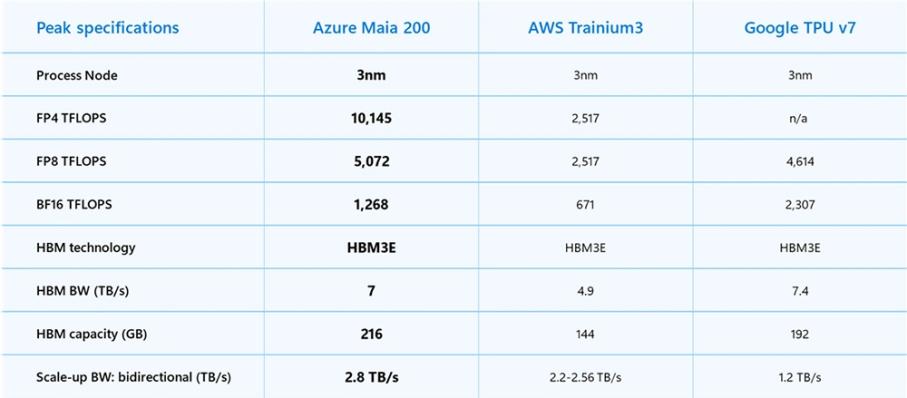
Overseas giants develop their own chips. Source: US Stock Research Society
Overseas companies are actively involved, and domestic ones are no less so.
Among them, Baidu is particularly worth mentioning. As early as 2011, it launched a chip project called FPGA AI accelerator with the original intention of reducing search costs.
Robin Li once recalled: "When we were doing search, buying chips from others was too expensive, costing $10,000 per chip. But when we made them by ourselves, we could do it for 20,000 RMB. So we were forced to develop our own chips."
As the saying goes, one's efforts may bring unexpected results.
In 2018, the international situation suddenly changed, and chips became the focus of technological competition. Enterprises of all sizes embarked on the "chip - making" journey, striving to gain autonomy in the supply chain.
In that year, Baidu released the first - generation Kunlun AI chip, and the prototype of full - stack AI began to take shape.
After that, Kunlunxin continued to iterate and finally became a force to be reckoned with in the computing power market. By the end of 2025, Kunlunxin had completed the deployment of tens of thousands of cards, lighting up the first fully self - developed cluster of 30,000 cards in China and solving the problems of high prices and unstable applications in the past.
Apart from Baidu, Alibaba also deserves praise.
To address the potential risk of being "held back", Alibaba integrated the previously acquired C-Sky Microsystems and the chip R & D team of DAMO Academy in 2018 to form T-Head Semiconductor.
One year later, T-Head Semiconductor released the AI chip "HanGuang 800" with an inference performance of 78,563 IPS, becoming Alibaba's first self - developed chip for large - scale commercial applications.
After tasting the sweet fruits, T-Head Semiconductor couldn't stop.
Public information shows that T-Head Semiconductor has launched core data center chips such as the Zhenyue series of storage controller chips, the Yitian series of Arm server CPUs, the Zhenwu series of AI chips, the ICN Switch interconnection chips, and the Panmai series of intelligent network cards, achieving full - stack self - development of computing power, network power, and storage power.
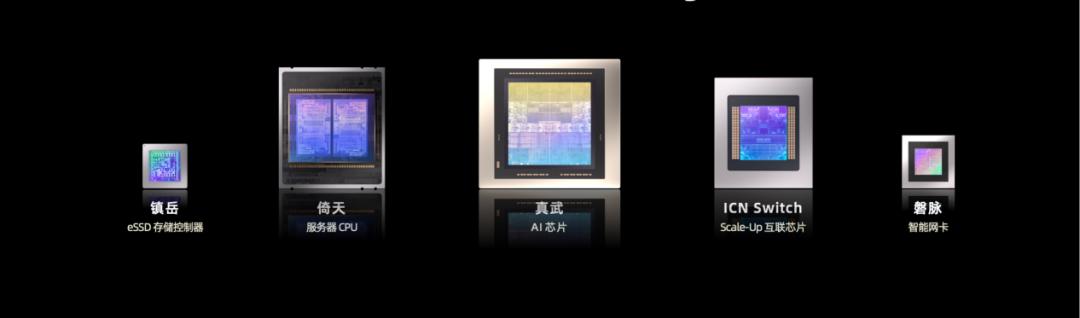
Source: T-Head Semiconductor official website
In retrospect, although Kunlunxin and T-Head Semiconductor both emerged as the times require, they have taken different paths.
Kunlunxin's chip categories are relatively concentrated, with its main business focusing on large - model inference, cloud - computing clusters, etc., and it actively exports computing power externally. T-Head Semiconductor has a relatively rich variety of chips, covering most mainstream chip systems, but it mainly serves Alibaba's computing - power ecosystem and has not yet provided external empowerment.
RISC - V is an opportunity to overtake on the curve
Although they have different focuses, both Kunlunxin and T-Head Semiconductor are highly interested in the capital market. There are three reasons behind this.
First, the best opportunity has emerged.
As we all know, the chip industry is a high - investment, high - risk, and high - return field. Relying solely on the support of the group is not a long - term solution. Leveraging the capital market can be a win - win situation.
In fact, the capital market spares no expense for the pioneers in the AI era.
For example, Cambricon's operating income in 2025 was 6.497 billion yuan, a year - on - year increase of 453.21%; its net profit was 2.059 billion yuan, turning profitable for the first time in a year. Cambricon has now become a "chip king", and its stock price has surpassed that of Kweichow Moutai.
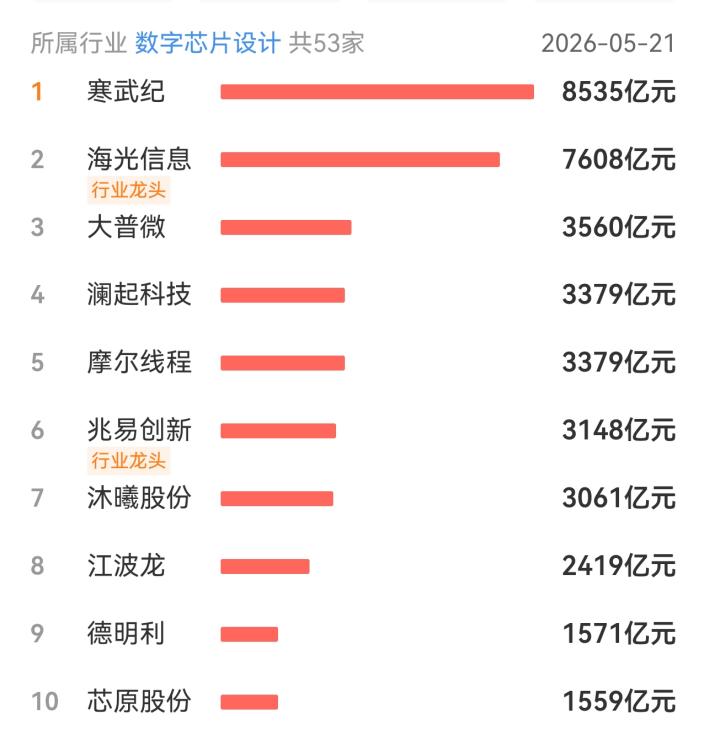
Chip listed companies receive high premiums
Another example is Yuanjie Technology, a company in the optical chip field. Due to the high - growth demand triggered by AI computing power, it has become a ten - bagger stock in the A - share market, amazing the outside world.
In short, the capital market is willing to pay for chip companies with high barriers and high growth potential.
"Lian Xian Insight" said: "Intel has been deeply involved in chip technology for decades, growing from an implementer of Moore's Law to the cornerstone of global computing power; Tesla survived the winter of the electric vehicle industry and defined the future of intelligent vehicles through continuous technological iterations; Amazon has persisted in cloud - computing layout for twenty years, and finally made AWS the core engine in the enterprise - service field. The common characteristic of these giants is that when the industry chases short - term dividends, they adhere to the high - threshold and long - cycle hard - tech track and finally reap the technological compound interest at the turning point of the era."
Data from J.P. Morgan shows that Baidu's Kunlun chip revenue is expected to soar from about 1.3 billion yuan in 2025 to 8.3 billion yuan in 2026, a growth of more than six times.
From this perspective, listing is a win - win choice for both the enterprise and investors.
Second, eliminate the concerns of third - parties.
In recent years, Kunlunxin has continued to expand externally, and the proportion of external customers has reached as high as 40%, including industry giants such as BYD, China Merchants Bank, China Southern Power Grid, and China Mobile.
For example, in China Mobile's centralized procurement project of artificial - intelligence general - computing equipment (inference type) from 2025 to 2026, Kunlunxin won 70%, 70%, and 100% of the shares in bid packages 1, 2, and 3 respectively.
If it wants to further expand its business, independence is inevitable.
After all, in addition to financing, listing also has benefits such as a more independent brand image, more standardized corporate governance, and more transparent financial data, which are of great benefit to Kunlunxin and T-Head Semiconductor.
Shen Dou, the president of Baidu Smart Cloud Business Group, pointed out sharply: "Only by being completely independent can we win the trust of customers who regard Baidu as a competitor. Listing is the best 'coming - of - age ceremony' and 'letter of credit'."
Third, the competition has entered the deep - water area.
Only after replenishing resources and eliminating concerns can one go all out. After continuous iteration of capabilities, the relationship with overseas chip giants has changed subtly, and there is an overlap in some areas.
The US media "The Information" reported that T-Head Semiconductor's PPU chip is more powerful than NVIDIA's A100 and has been used in some small - sized large - model trainings of Alibaba, leading other domestic chip companies.
In other words, Kunlunxin and T-Head Semiconductor are moving into the deep - water area of competition.
It should be noted that domestic chips not only aim to catch up but also have greater ambitions, especially by increasing investment in emerging technological routes to seek to overtake on the curve.
RISC - V is the key.
Hu Zhenbo, the founder of Xilaisemi, said: "The Vector Processor Unit (VPU) based on RISC - V can well assist accelerators such as GPUs and NPUs to provide more general - purpose performance."
For this reason, RISC - V is regarded as the vane of next - generation chip technology.
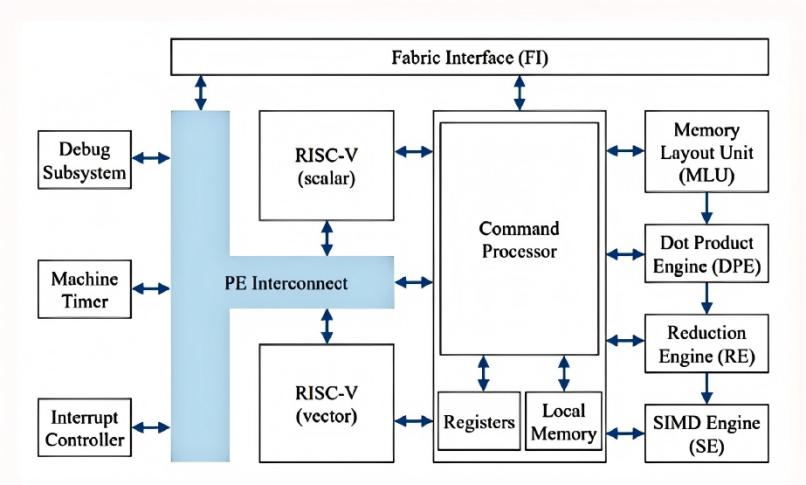
RISC - V architecture
Even the "leader" in the industry is actively embracing RISC - V and promoting the adaptation of CUDA to the RISC - V chip architecture, which was previously only adapted to the x86 and ARM chip architectures.
It is not difficult to see that the competitive landscape of the x86 and ARM duopoly is being quietly reshaped.
In fact, domestic chips are booming in the RISC - V field and are widely used in fields such as automobiles, home appliances, communications, and intelligent terminals.
Take T-Head Semiconductor as an example. It has launched the Xuantie series of chips based on RISC - V, with 16 CPU IPs covering the embedded to server fields and more than 250 chips put into mass production.
Data from SHD Group shows that from 2024 to 2031, the market penetration rate of RISC - V - based SoC chips will increase from 5.9% to 25.7%, and the shipment volume of RISC - V chips will exceed 20 billion by 2031.
All in all, under the wave of the AI revolution, chips, as hard - tech, have changed from hidden resources to visible assets. They are not only the cornerstone of the AI technology closed - loop but also the key to creating a second growth curve.
There is no doubt that chips are the last piece of the puzzle in the AI strategy of large enterprises.
This article is from the WeChat official account "Xin Kedudu" (ID: znkedu), written by Chen Dengxin and published by 36Kr with authorization.