Haier Smart Home starts to pay a higher price for growth.
The home appliance industry has returned to a period of low growth.
Data from Aowei Cloud Network shows that in the first quarter of 2026, the total retail sales of China's home appliance market (excluding 3C) across all channels decreased by 6.2% year-on-year. During the same period, Haier Smart Home achieved revenues of 73.687 billion yuan, a year-on-year decrease of 6.86%; its net profit attributable to the parent company was 4.652 billion yuan, a year-on-year decrease of 15.22%.
However, this is not a simple story of "pressure on the main business." In 2025, Haier Smart Home's operating revenues exceeded 300 billion yuan for the first time, and its net profit attributable to the parent company still increased by 4.39%. The company also emphasized in its first-quarter report for 2026 that after excluding the impact of the North American market, the total operating profit in the first quarter increased by more than 10%.
What has truly changed is the way of explaining growth. In the past, home appliance companies could explain their growth by relying on replacement cycles, channel efficiency, high-end positioning, and globalization. Now, the marginal pull of policy subsidies has weakened, the impact of the real estate market and consumer confidence still persists, and North American tariffs and extreme weather have added external uncertainties.
If Haier Smart Home does not quickly explore new tracks for its home business, the company will most likely face growth difficulties after the dividend cycle of large home appliances peaks.
This explains why Haier Smart Home has expanded its business boundaries in two directions in the past two years: home robots and vehicle-home interconnection. The former aims to transform home appliances from passive devices into active service providers, while the latter extends the "home" entrance to vehicles.
These actions may seem like diversification, but in fact, they all point to the same thing: Haier Smart Home wants to redefine the "home." In the past, it sold refrigerators, washing machines, and air conditioners; now, it hopes to sell a set of devices, data, and services in a home scenario.
Haier Smart Home is reconstructing its home business. However, this path is still in its early stages, and it is difficult to replace the profits and cash flow of traditional home appliances in the short term.
Can growth be achieved by breaking down the home into three layers?
Haier's new actions can be broken down into three layers.
The first layer is perception. In March 2025, Haier Smart Home first introduced the "AI Eye" technology at the Shanghai Ecosystem Conference, shifting the smart home from voice control to visual perception. Just one year later, the AI Eye was upgraded to version 2.0, with significantly improved recognition accuracy and scenario coverage.
Its significance lies not in adding a camera to home appliances, but in enabling the home system to understand the environment. The refrigerator knows what ingredients are inside, the washing machine can identify clothes, and kitchen equipment can judge the cooking status. Only then does the system have the opportunity to move from "responding to instructions" to "making pre-judgments."
The second layer is execution. Alongside the AI Eye, three categories of "Haiwa" home service robots were also launched, covering multiple scenarios such as cleaning, handling, and companionship. At the AWE 2026 exhibition, the Haiwa robots demonstrated complex operations such as peeling bananas, classifying and storing ingredients, and autonomously completing the entire laundry and drying process. The synergy with smart home appliances has indeed improved.
The third layer is connection. In 2025, Haier signed a strategic cooperation agreement with Changan Automobile and later signed a contract with Chery Ruixiang Life to promote the interconnection of people, vehicles, and homes. The most basic level of vehicle-home interconnection allows users to control air conditioners, floor heating, and security systems in the car. A deeper level involves connecting continuous scenarios such as going out, coming home, shopping, cold chain, and energy management.
These three layers together form the new story that Haier wants to tell. In the past, Haier sold individual devices that entered households; now, it wants these devices to form a home operating system.
What seems like a diversified cross-border move actually still serves the home scenario. Behind the transformation of the old scenario with new methods lies the growth dilemma of Haier Smart Home's traditional home appliance industry.
In terms of performance, Haier Smart Home's performance in the fourth quarter of last year declined significantly. Its operating revenues were 68.293 billion yuan, a year-on-year decrease of more than 6%, and its net profit dropped by 39.15%. This temporary decline in performance has continued to this day. In the first quarter, Haier Smart Home's operating revenues were 73.687 billion yuan, a year-on-year decrease of 6.86%; its net profit attributable to the parent company was 4.652 billion yuan, a year-on-year decrease of 15.22%.
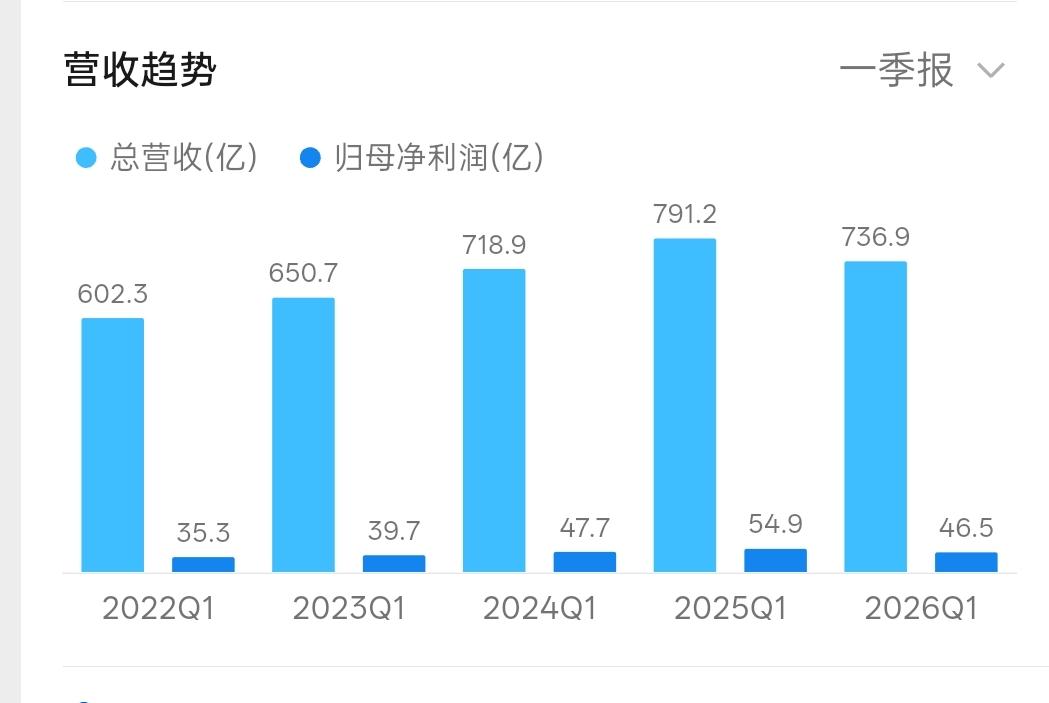
The traditional home appliance market has been affected by various factors such as rising memory costs, and its growth ceiling has become apparent. Haier seems to have to accelerate the search for a new growth engine.
New growth comes from new products, and new products require new investments. Although in 2025, Haier Smart Home's total R & D investment reached 10.717 billion yuan, a year-on-year decrease of 571 million yuan, which was the first year-on-year decline in R & D investment since 2013. In the long run, Haier Smart Home may attempt to optimize the allocation of R & D resources and concentrate more funds on cutting - edge fields such as AI and robotics.
Multiple sources of information indicate that in the automotive sector, Haier Group has invested at least over 15 billion yuan to develop the automotive ecosystem. Of course, looking deeper, the growth curve of the domestic traditional home appliance business has begun to flatten. Only companies that plan ahead for the next track can win the future.
Whether Haier can gain a share in the trillion - level markets such as robotics and vehicle - connected ecosystems will more or less affect whether it can continue to lead the home consumption of smart hardware in the next decade.
Spend money before generating revenue
Although Haier Smart Home has been active in the field of home smart products, from the financial data, these new businesses have not yet made a substantial contribution to the company's performance growth.
In the annual reports for 2025 and the first quarter, Haier Smart Home did not separately disclose the revenues and profits of sectors such as home robots and vehicle - home interconnection. This in itself indicates that the scale of these businesses is still limited and far from the stage of commercial returns. In contrast, Midea has grouped some new businesses into sectors such as robotics and automation and smart home.
Although it hasn't made money yet, Haier doesn't hesitate to make investments.
In terms of brand image building, in the past, when consumers thought of Haier, they first thought of the three major traditional home appliances. Now, Haier hopes that more and more people will associate it with the sense of technology and fashion represented by new businesses such as smart home, artificial intelligence, and robotics.
In terms of marketing expenses, in 2025, Haier Smart Home's sales expenses were 33.878 billion yuan, a slight year - on - year increase of 0.80%, and the expense ratio was optimized by 0.6 percentage points. This was due to the implementation of the unified warehouse TO C model in the domestic market and the digital transformation of marketing. In the first quarter of this year, the sales expense ratio was optimized by 1 percentage point. Assuming there is no repeated brand promotion, there is also a possibility of optimizing promotion projects.
New businesses often require the injection of brand image and communication potential. Relevant investments also need to have a positive impact on brand positioning and market perception to facilitate the development of new businesses. Only a change in brand image can open up greater room for imagination for Haier's future development.
In addition to the renewal of the brand image, there is also the market competition pressure faced by Haier Smart Home.
For example, in the field of home robots, companies such as Ecovacs and Roborock have dominated the market for floor - cleaning robots. Vertical players such as Ubtech, CloudMinds, and Unitree have also accumulated years of experience in the field of humanoid robots.
As for the vehicle - home interconnection field, technology giants such as Tesla, Huawei, and Xiaomi are actively deploying. Tesla's "vehicle - home integration" ecosystem has taken initial shape, and Huawei's Hongmeng Smart Mobility has also attracted many ecosystem partners to join.
Moreover, in the construction of an open ecosystem, Haier Smart Home still focuses on its own products. Compared with open platforms such as Huawei's Hongmeng and Xiaomi's Vela, it seems to face the problem of how to transform its technological advantages into ecological advantages when attracting third - party device access.
The development of any new business takes time. From technology R & D to product launch, and then to market promotion and large - scale profitability, it is a long - term process.
How much confidence does the manufacturing giant still have?
In the past, home appliance manufacturers understood the "home" as a space filled with home appliances. Haier Smart Home's core competitiveness lies in its manufacturing capabilities. By continuously improving product quality and production efficiency, it provides users with better home appliances.
In the era when craftsmanship and manufacturing standards were emphasized, whoever could produce better refrigerators, air conditioners, and washing machines could win the market. Haier Smart Home became a global leader in the home appliance industry with its strong manufacturing capabilities and brand influence.
Now, the industry's understanding of the "home" needs to change fundamentally. The "home" is a dynamic and living smart ecosystem.
For Haier Smart Home, its core competitiveness can no longer be just manufacturing capabilities. It has entered an era of competing in AI models and data understanding capabilities.
Although the whole - house smart industry has developed for many years, most ordinary families are still at the stage of voice wake - up and home appliance interconnection.
However, home humanoid robots and vehicle - connected ecosystems may require intelligent agents that can actively perceive user needs and provide services. Achieving these goals inevitably requires data support.
In the new home business landscape, the richer the data, the more accurate the AI model, the more personalized the services provided, and the more it can affect the market competitiveness of its home robots.
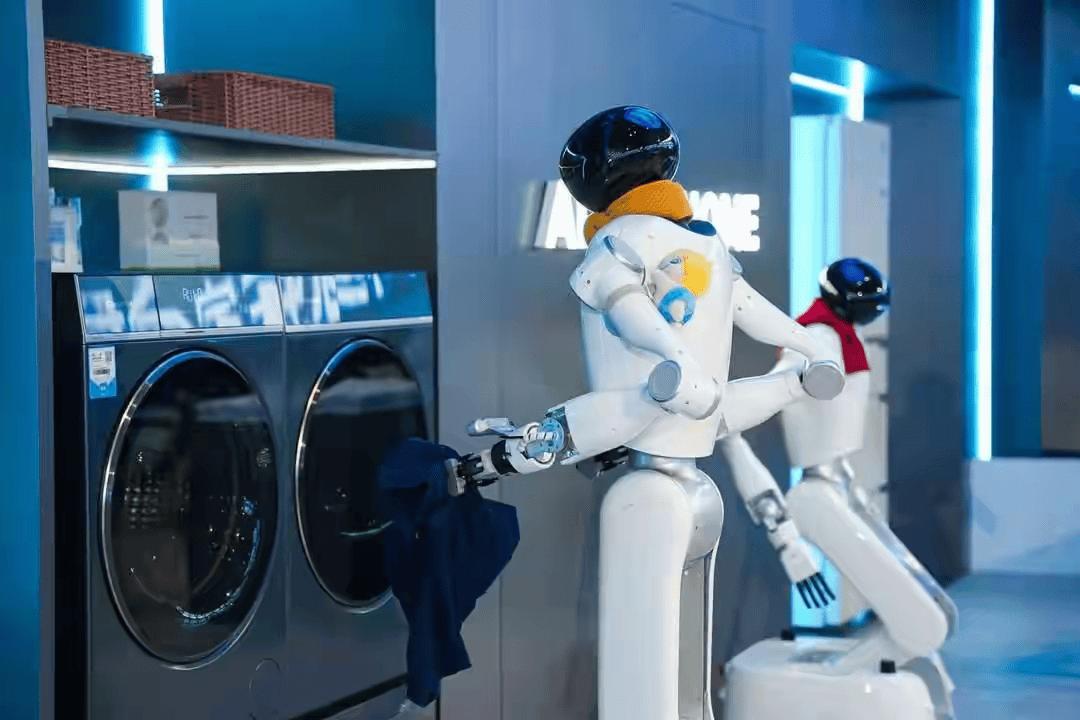
Objectively speaking, Haier Smart Home has a significant advantage in user scale. Currently, the cumulative number of global registered users of Haier Smart Home has exceeded 130 million. The total number of interactions in smart scenarios throughout the year reached 86.1 billion, with an average of 7.175 billion interactions per month. San Yinao has more than 13 million active users in China.
These data provide a foundation for Haier to enter the next stage. Both home robots and vehicle - home interconnection require scenario data, and home appliance companies are naturally close to real - life home scenarios. They know what's in the refrigerator, when the air conditioner is turned on, how the washing machine is used, and the changing needs of a family in different seasons and time periods.
However, the foundation does not equal the result. This is the boundary of Haier Smart Home. It has hardware, home scenarios, and a user base, but it still needs to prove that it can transform these resources into algorithms, platforms, and continuous services for home scenarios, rather than just enabling more Haier devices to interact with each other.
This article is from the WeChat official account "Market Insights," author: Market Insights. Republished with permission from 36Kr.