Who is enabling small and medium-sized factories in the mobile phone supply chain to make money with dignity?
In 2026, the mobile phone industry is witnessing the largest price increase in the past five years.
The demand for AI computing power has driven up the costs of storage chips and core components. Counterpoint predicts that starting from March 2026, the average price of new mobile phones in the Chinese market will increase by 15% to 25% compared to the same - level models last year. From Samsung and Honor to OPPO, vivo, and Xiaomi, the price increases of mainstream flagship phones from mobile phone manufacturers are concentrated between 600 - 1200 yuan, and the high - end or large - storage versions can reach 1500 - 1600 yuan.
Passing on price increases to downstream is the most direct way for brands to transfer cost pressure. At the same time, brands will also pressure upstream suppliers for lower prices, extend payment terms, and cut orders. Ultimately, it is the small and medium - sized upstream factories that bear the brunt. Data shows that the net profit of some ODM contract manufacturers in the first quarter of this year decreased by 90% year - on - year.
OPPO has chosen a different approach. Since 2024, OPPO has been freely sharing its in - house lean production system with upstream suppliers: sending engineers to the workshops to help with “production” hands - on. Initially, there were two pilot projects, and later it expanded to nine core suppliers; more than 1000 person - times of lean production training have been completed, all free of charge.
Among domestic mobile phone manufacturers, OPPO is the only one doing this.
01 Small and Medium - Sized Factories in the Price Increase Wave Urgently Need to Improve Quality and Efficiency
Price increase is just the surface phenomenon in this round of market trend. Behind the price increase is the competition among mobile phone manufacturers, which has reached a new critical point in 2026.
In the first quarter, according to Omdia statistics, the domestic shipment volume was 69.8 million units, a slight year - on - year decrease of 1%. Although the decline on the surface is limited, beneath the surface, the top five brands, Huawei, Apple, OPPO, vivo, and Xiaomi, have captured 82% of the market share, an increase of one percentage point compared to the same period last year. The Matthew effect has reached a historical high.
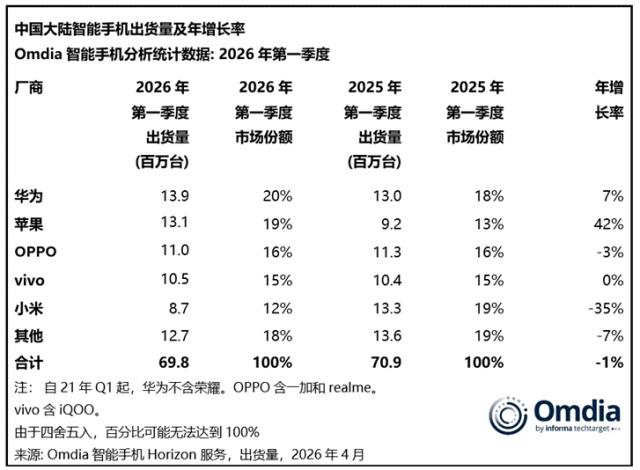
The more concentrated the market share, the fiercer the competition among the top brands. Huawei has returned to the top with a 20% market share, Apple is closely following with 19%, and OPPO ranks third with 16%. No one wants to give up their market share, so the profit pressure is naturally passed upstream.
The most pressured are the upstream structural component factories and contract manufacturers. They neither have control over the brand nor pricing power or influence on consumer perception.
Zhang Bin, the general manager of Pinmei Group, a manufacturer of mobile phone middle - frame structural components, summarized the operating pressure in the past few years into three points: intensified competition among terminal brands, over - capacity, and extended consumer replacement cycle.
At the terminal level, top brands have increasingly high requirements for the prices of hardware - related materials such as structural components. In terms of production capacity, although some mobile phone production capacity has been transferred to Vietnam, Mexico and other places, the local production capacity in China has not shrunk synchronously, and the structural component industry as a whole is in a state of over - capacity. On the demand side, the consumer replacement cycle has been extended from a dozen months in the early years to three years or even longer, and the contraction in demand has further exacerbated the over - capacity.
Zhang Bin calculated an account for “Dingjiao One”: since 2020, the gross profit margin of the entire mobile phone structural component industry has declined by at least 10 percentage points.
The annual goal of many factories has been downgraded from “making money” to “not losing money”. Small - scale enterprises have successively struggled to survive. Zhang Bin mentioned that a peer in Shenzhen went bankrupt due to operating pressure, leaving a huge debt.
In the face of this situation, the first reaction of most factories is often to cut prices, lay off employees, and reduce working hours. However, those who have been in the industry for more than a decade know clearly that the cost savings cannot make up for the losses caused by the decline in yield and the loss of orders.
There is only one way out: improve quality and efficiency. For every one - percentage - point increase in yield, the unit labor output increases; for every one - day reduction in the delivery cycle, the factory's inventory pressure decreases.
However, knowing the direction is one thing, and knowing how to do it is another.
Small and medium - sized enterprises in the mobile phone supply chain in Guangdong, Jiangsu, Anhui and other areas accumulated their wealth in the early years thanks to the industry's dividends. However, they have never really made up for the basic skills in lean management, whether it is production efficiency, yield stability, or waste control in the process. When the industry was booming, the problems were masked by profits; when the market turned bad, the management weaknesses were exposed.
In order to make up for the management weaknesses, many manufacturers have tried to invite external consultants. However, Zhang Bin said bluntly, “There are relatively few cases where the improvement can be really promoted.”
The reason is very practical. The lean transformation of mobile phone structural components involves very specific scenarios such as production line rhythm, mold switching time, quality inspection procedures, and cross - factory material coordination. An external consultant who is not familiar with mobile phone structural components can at most provide concepts; it is very difficult to implement specific improvements to the production line and reduction of UPPH (units per person hour).
It is difficult to solve the problem of efficiency improvement by spending money, and it is hard to figure it out on their own. This has been the dilemma of most small and medium - sized suppliers in the past few years. In 2024, there was a new solution to this situation.
02 When the Client Sends Engineers to the Workshop
Let's start with OPPO itself.
In 2020, OPPO began to introduce and implement a lean production system internally. In simple terms, it is “using modern management means to optimize production efficiency and eliminate redundant waste”. After running this system for several years, OPPO has reduced its manufacturing cost by about 10% every year.
However, OPPO also found that even if it runs fast, if the entire supply chain cannot keep up, the final product delivery and quality fluctuations will still be affected.
In July 2024, after a supplier meeting, OPPO gathered 9 core structural component suppliers — each with a scale of 3,000 - 8,000 people — and shared the plan to establish a “Lean Alliance”.
Pinmei was one of the selected members of the “Lean Alliance”. After half a month of preparation, in late July, the launch meeting of the Pinmei Lean Alliance was held, and OPPO's lean mentors entered the factory.
In August 2024, the “Lean Alliance” was officially launched.
According to Zhang Bin's recollection, for the first improvement project, OPPO's mentors led the way and demonstrated the methodology on - site; starting from the second project, Pinmei's own people gradually took the lead. This implementation rhythm of “first demonstration, then let go” aims to cultivate a local team within the supplier that can independently run lean projects, rather than simply introducing the methods.
The effect was immediate. In 2025, a Pinmei factory saved about 15 million yuan through lean management.
Specifically at the production line level, UPPH (units per person hour) increased significantly. As Zhang Bin described, “Previously, 100 people were needed to produce 1,000 products a day. After the improvement, only 70 people may be needed to produce the same amount.” This means that 30% of the labor force has been released from the original production line and can be re - allocated to higher - value links.
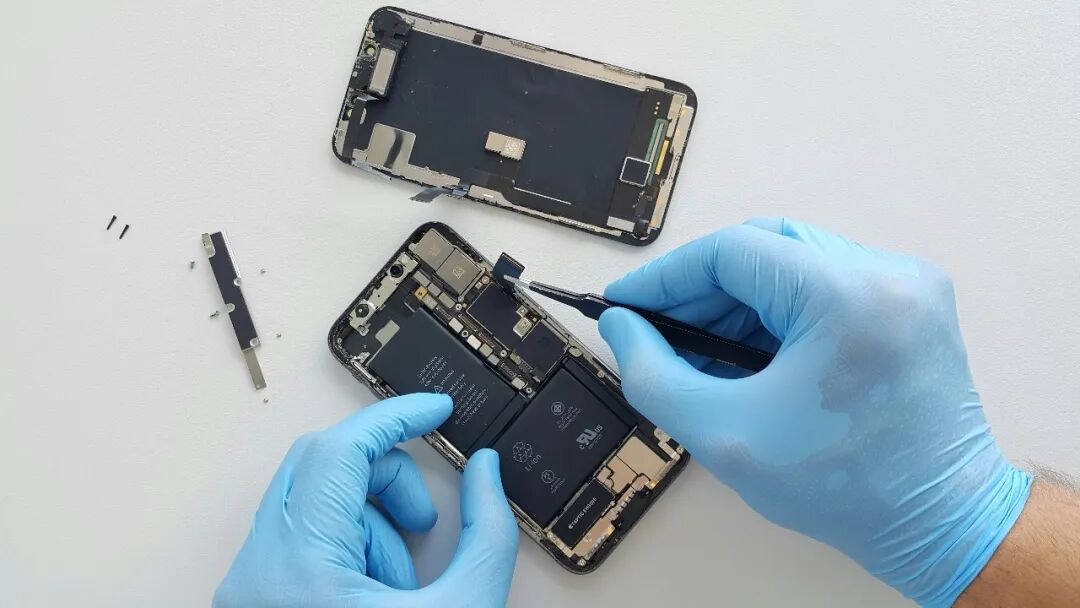
Image source / unsplash
The first - pass yield (the ratio of products passing the inspection at the first time) increased from the range of 80% - 90% to 95%. In the structural component industry, every one - percentage - point increase in the first - pass yield directly corresponds to a decrease in the scrap rate and a reduction in rework costs.
In terms of equipment utilization rate, through the data statistics and methodology of TPM (Total Productive Maintenance), the number of effective working days per month increased from 20 days to 25 days. With the same equipment investment, there are 5 more days of effective output.
Similar effects have also been verified in other alliance members. For example, Jin Longhao, a manufacturer of mobile phone touch glass covers in Anhui, saved about 27 million yuan in costs in half a year.
The Lean Alliance not only boosts the production line, but also improves efficiency at the design end.
Pinmei and OPPO also jointly promoted the standardization of mobile phone model design. The two parties hold a meeting every two weeks, classify dozens of mobile phone models into Class A and Class B, normalize the design of the same - type models, and then incorporate them into OPPO's design specification (Checklist).
For example, if the assembly of mobile phone buttons adopts a similar design in different models, the automation equipment can be used universally. The normalization at the design end in turn promotes the automation at the production end, which is something that external consultants cannot achieve. Because it requires not only methodology but also the design - end say of the brand.
Zhang Bin compared and said, “Previously, we also tried to improve efficiency internally, but lacked data support and methodology, so it was slow to promote it to the R & D end. Now that OPPO's people are on - site, they can see that a slight design change can save 5 people or make the quality more stable. With this combination, the promotion is more successful.”
OPPO's lean experts stayed at Pinmei for about one and a half years (from August 2024 to the end of 2025). Since 2026, the two parties have changed to regular monthly exchanges. The on - site support was withdrawn because Pinmei's own people have been trained. Teaching people to fish is better than giving them fish. This is OPPO's concept of the Lean Alliance.
In the field of lean management, there is a “Black Belt” and “Green Belt” grading system borrowed from the international Six Sigma system. Pinmei currently has 1 Lean “Black Belt” recognized by OPPO and more than a dozen “Green Belts”, all of whom can independently lead teams to carry out lean projects.
In addition to on - site support, OPPO also holds two sessions of lean production training every month, and all suppliers can sign up. The cumulative number of participants has exceeded 1000. OPPO has also built a practical training base of about 4,000 - 5,000 square meters internally — it is still being expanded. There are 43 lean training and combat courses, and more than 200 Green Belts have been trained. In just the first five months of 2026, OPPO has organized 17 sessions of training.
All these on - site support and training courses are provided by OPPO free of charge. When asked whether suppliers need to “exchange” by lowering prices, Zhang Bin replied, “When introducing lean management, it was clearly stated that lean management and business are completely separate.”
This investment is not a loss for OPPO. As the production efficiency of suppliers improves, the response speed of OPPO's supply chain also increases; as the yield of suppliers increases, the stability of OPPO's final products improves, and the after - sales cost decreases; with a stable supply chain, OPPO can also continuously obtain stable production capacity. It's a win - win situation for both parties.
03 Why OPPO: Willing and Capable
The logic of the Lean Alliance is not complicated, but Zhang Bin said, “Currently, among domestic mobile phone manufacturers, OPPO is the only one that conducts lean cooperation to this extent.”
Why is OPPO the only one doing this? There are two prerequisites behind this: one is the willingness to do it, and the other is the ability to do it.
Let's first talk about “willingness to do it”.
The payment term is the most telling indicator of a brand's attitude towards suppliers. In the current situation of increasing order fluctuations, the payment term is the lifeline of factories. OPPO's payment term for suppliers has been maintained at 60 days for a long time, and for some categories, it can even be 45 days or 30 days. Zhang Bin gave a comparison: “OPPO's payment term is probably the shortest in the industry. The payment terms of ODM manufacturers are basically between 90 and 120 days, and they also require acceptance bills; for new - energy vehicle manufacturers, it is basically half a year.”
He also mentioned a detail: OPPO pays on time. If it falls on a weekend, the payment will be made in advance rather than postponed.
The payment term directly affects the cash flow. “We do 100 million yuan of business a month. An additional month of payment term means an additional 100 million yuan of working capital is tied up.” Zhang Bin added.
70% - 80% of Pinmei's business comes from OPPO, and it is a deeply - bonded partner. Zhang Bin described the cooperation relationship between the two parties like this: “It's very reassuring to be OPPO's supplier. As long as we do our job well and maintain our competitiveness, OPPO won't let the supply chain lose money.”
There is also a saying within OPPO's supply chain cooperation department: “Look for the cause within oneself”. The general idea is that if the suppliers are not performing well today, it is because OPPO didn't manage the supply chain well two or three years ago. The supply chain is not a simple relationship between the client and the supplier, but a community.
The 60 - day payment term, the attitude of “looking for the cause within oneself”, and the free sharing of the Lean Alliance are not temporary responses when the market is bad, but a long - standing way of doing things.
Within OPPO, this way of doing things is called “being true to oneself”. OPPO's founder and CEO, Chen Mingyong, has publicly said many times that if technological innovation lacks a self - restraint mechanism, it may become a burden. For OPPO, this restraint mechanism is “being true to oneself”. This set of values has been carried forward since the BBK era.
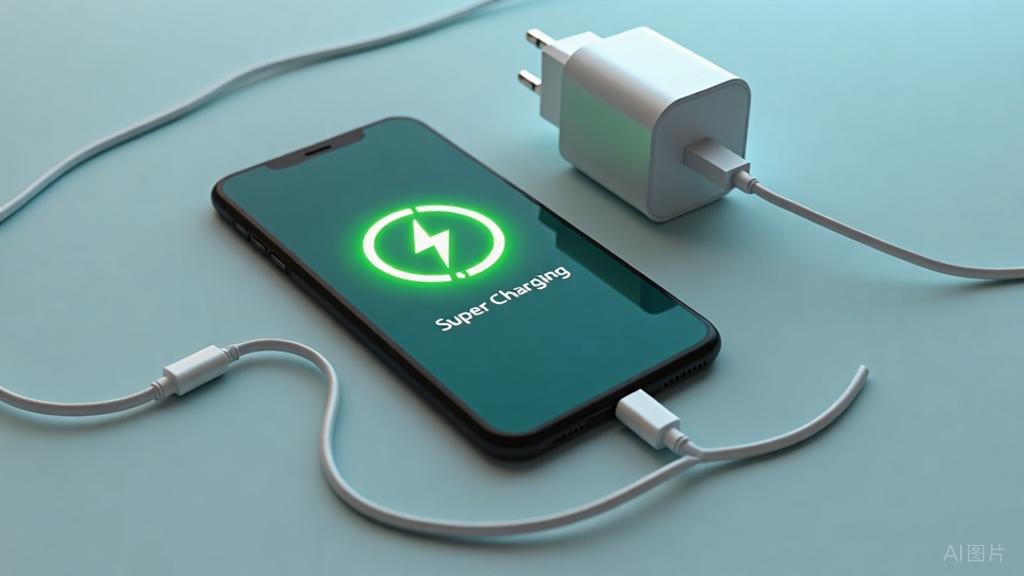
Looking back at OPPO's development, it started as a small factory in Dongguan in the BBK era in the 1990s, producing MP3s and Blu - ray DVDs. In the era of smartphones, it gradually became one of the top five global brands. The well - known slogan “Charge for 5 minutes, talk for 2 hours” in the early days made VOOC flash - charging technology one of the most iconic technology brands in the history of mobile phone fast - charging. The low - voltage, high - current direct - charging route it represents was once included in the recommended direction of the national communication industry's fast - charging standard and is still the core fast - charging protocol for OPPO products. Step by step, it has accumulated through technology and product development.
Now let's talk about “ability to do it”.
Willingness is one thing, and being able to bear the cost is another. The prerequisite for sending lean experts to suppliers for free is that one's own profit margin can support such “concessions”