Do hotels really dislike long-term renters?
An incident has recently occurred at the Rosewood Residences in Guangzhou.
A lady rented a room there on a long - term basis, paying 100,000 yuan per month for the convenience of her child's schooling. When she checked out, the hotel presented her with a list, stating that there were 13 areas of wear and tear on the floor and furniture, and she needed to compensate 3,300 yuan.
She felt aggrieved, claiming that these marks were already there before she checked in. Even if there were new ones, they were the result of normal use and she shouldn't be held responsible for the compensation. When the incident was exposed online, public opinion was almost one - sided, all in support of her.
Think about it. With a monthly rent of 100,000 yuan, that's 1.2 million yuan a year. For a hotel in the luxury apartment accommodation business to haggle over 3,300 yuan when a guest checks out is like a market vendor short - changing customers.
Finally, the Rosewood Residences responded that they would resolve the issue through negotiation with the lady, and the market regulatory authorities also intervened.
The storm has subsided for now. But if you only view this as a story of "a big establishment bullying a customer and being taught a lesson by public opinion", you'll miss the truly important part.
What's really worth discussing in this incident is not whether the 3,300 yuan should be charged. Instead, it's that the traditional hotel industry is opening up a new business model - long - term rentals.
Although the form is not entirely new, many hotels started accommodating long - term renters during the pandemic. However, in the current industry environment, the value of these renters and how to provide good service to them require new thinking.
01
Before discussing long - term renters, we need to understand what the hotel industry is going through.
In the past two decades, the core growth logic of the Chinese hotel industry has been simple: opening new stores. Chain brands have been expanding their territory, real estate developers have been building supporting hotels, and the low - tier markets have been filled. The supply has been continuously increasing because there is demand to support it - business trips, tourism, conferences and exhibitions. These traditional sources of customers have supported the expansion of the entire industry.

But this logic is no longer working.
On the one hand, the supply can't stop. Once a hotel property is built, it's difficult to convert it to other uses. Even if the occupancy rate drops, the rooms are still there, and the hotel has to find a way to sell them. On the other hand, the structure of traditional customers is changing. Companies are reducing their business travel budgets, and video conferences have replaced some face - to - face negotiations.
Tourism consumption is recovering, but it shows obvious fluctuations between peak and off - peak seasons. During peak seasons, there are no available rooms, while during off - peak seasons, the hotels are deserted. For most hotels, they spend nearly half of the year struggling with high vacancy rates.
This has created an awkward situation: As of the end of 2025, there are 375,000 hotel facilities in the country, competing for a market that is no longer growing at a high speed. Price wars have become the only weapon.
In the past two years, the average room rates of economy and mid - range hotels have hardly changed, but costs such as labor, linen washing, and platform commissions have continued to rise. The profit margins of many hotels are so thin that they can't withstand any minor fluctuations. Moreover, in essence, the hotel business is selling "the right to stay overnight", which resets at midnight. This is an extremely fragile product form.
At this time, the emergence of long - term renters provides a new possibility.
The core of this possibility is not "selling a few more rooms", but rather shifting the hotel from "selling by the day" to "selling by the time period", and from pure product sales to a part of asset management logic. The rooms are no longer perishable items that become useless after tonight. They can be locked in advance and sold for future time periods. This is of far greater value to the hotel than the apparent occupancy rate.
To put it bluntly, the hotel is like a "sub - landlord". The guest rooms it owns are no longer just overnight products but also a living space that can be rented out for a long period. This transformation of identity is not an active choice but is forced by the market.
02
In traditional hotel revenue management, rooms are for sale, and the higher the price, the better. Therefore, long - term renters are usually not welcome because they get a much lower price than individual travelers, and they occupy rooms that could be sold at a high price during peak seasons.
But today, many hotels are actively embracing long - term renters, and the underlying accounting has changed.
First, the real cost for a hotel is not the discount on the room rate, but vacancy. If a room is not occupied tonight, its value becomes zero, but the costs such as rent, labor, and depreciation remain the same. Long - term renters provide certainty. Even if the price is lower, it's better than leaving the room empty.
This principle is the same as airlines selling long - term tickets and cinemas scheduling non - prime time shows. The fixed costs have already occurred, and it's better to recover some of them.
Of course, filling the vacancy is only a short - term benefit. The more important long - term value lies in the structural change of the channel cost.
Long - term renters usually negotiate the price directly with the hotel front desk, and this transaction probably doesn't require paying a commission. The longer they stay, the more commission the hotel can save. More importantly, they are no longer affected by the fluctuations of platform traffic and won't be lured away by competitors' promotional activities. This is the hotel's own asset, not rented traffic.
There is also another value in terms of operational efficiency.
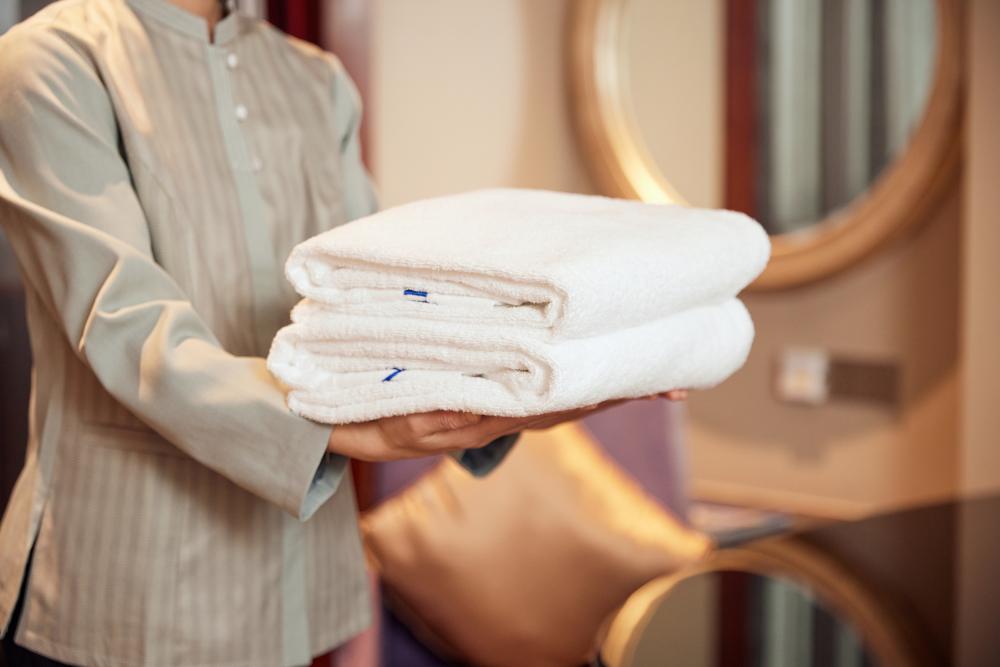
The service chain for short - stay guests is long: daily cleaning, changing linens, replenishing consumables, and handling check - in and check - out procedures. All these require manpower. The service frequency for long - term renters is significantly reduced. Some weekly or monthly rental products can even be cleaned once a week. The saved labor, water, and electricity costs for washing have a real impact on improving the profit margin.
But this account shouldn't only focus on the cost - saving aspect. Long - term rentals are also changing the asset depreciation cycle of hotels.
When a room is used by short - stay guests, the wear and tear come from high - frequency entry and exit, dragging luggage, and various usage marks during short stays. Long - term renters use the room differently. They treat it as their home, cooking, doing laundry, and staying for a long time. Different usage scenarios bring different types of wear and tear.
The problem is that for the wear and tear in the short - stay scenario, the hotel already has a mature renovation cycle and cost amortization model. For example, regularly cleaning carpets and periodically replacing wallpapers are all included in the pricing of daily - rented rooms.
But for the wear and tear in the long - term rental scenario, this model is missing. This is why disputes like the one at the Rosewood Residences in Guangzhou occur - the hotel claims compensation based on its own understanding, while the guest believes they shouldn't pay according to their own understanding, and there is no recognized standard for both sides.
This leads to a deeper question: When a hotel shifts from "selling rooms by the day" to "selling living space by the time period", how should its services and boundaries be re - defined?
03
The rental market has a relatively mature set of rules. When a landlord rents out a house and a tenant moves in, the landlord is responsible for normal usage marks, and the tenant is responsible for compensating for man - made damage. There are of course disputes, but at least there is a general legal framework and industry practice.
Hotel long - term rentals are in a middle ground. They sign accommodation agreements, not lease contracts. Guests are not legal tenants and are not protected by the lease terms of the Civil Code. However, their length of stay is much longer than that of ordinary travelers, and the usage marks they leave are far more than those of a one - or two - night stay.
When a dispute occurs, the hotel presents the quote from its internal engineering department, and the guest has no independent appraisal standard. The right to interpret the rules lies entirely in one party's hands, which lays the groundwork for friction.
The bigger mismatch is in service expectations.
The price the hotel offers to long - term renters is essentially a wholesale price. A wholesale price corresponds to reduced services: no daily cleaning, no daily linen changes, and no breakfast. This is the hotel's underlying logic - pay less, get less service.
But some guests' underlying logic is: I've paid for a month in one go. I'm your stable source of income and an "important customer", so I should get more accommodation and care.
This is not a question of who is right or wrong. It's that two sets of logic are operating in the same space, and collisions are inevitable.
The deeper problem lies in the interpersonal relationship.
For service staff, a guest staying for three days is just a node in the standard process. They smile, greet, clean, say goodbye, and then move on. The situation is completely different for a guest staying for three months.

A sense of familiarity will develop between the guest and the staff, and familiarity can blur the boundaries. The guest thinks they are a regular customer and should have some conveniences, while the staff thinks the rules are the rules, regardless of familiarity. This tension occurs every day in the long - term rental scenario.
For example, a netizen posted a complaint on social media: She had rented a room in a hotel for three years, spending 200,000 yuan. She paid on time, understood the hotel's omissions, and gave small gifts to the staff during festivals. Later, she accidentally heard the chambermaid complaining about her as "troublesome" behind her back. She was very hurt, and her post sparked a lot of discussions.
The comment section was divided into two camps. One camp said the maid was ungrateful, while the other camp said the problem was that the female blogger regarded her efforts as an emotional investment and expected special treatment in return. When her expectations were not met, both sides felt they had suffered a loss.
This discussion itself shows one thing: The interpersonal relationship in hotel long - term rentals is showing a complexity that the traditional hotel service framework cannot accommodate. It's more like a community neighborhood relationship, but it occurs in a commercial setting, consisting of paid service staff and paying guests. The hotel industry has no answer yet on how to manage this relationship.
04
Anyway, hotel long - term rentals won't disappear because the forces supporting it are not just a temporary consumer trend but two deeper structural changes.
Firstly, there is a change in the way of working. As more and more jobs don't need to be done in a fixed location, people's mobility has changed from "going on a business trip for a few days" to "staying in a city for a few months". This puts forward new requirements for living: it needs to have a more homely feeling than a hotel and more freedom than renting a house.

Secondly, the housing market is offering fewer choices for young people. The rental costs in core cities remain high, and the high threshold of the housing sales market has made many people give up their short - term home - buying plans. Long - term hotel rentals are not the optimal solution, but for some people, they are the most practical choice at present.
Differentiation on the supply side has already occurred.
Some hotels are making long - term rentals an independent product line. They arrange the rooms on specific floors, use more wear - resistant materials for decoration, clearly state the service scope and wear - and - tear recognition standards in the contract, and take photos together with the guests for archiving when they check in. These practices seem cumbersome, but in fact, they are building the infrastructure for this category.
Once the rules are established, the possibility of large - scale operation will emerge.
Some hotels are also moving towards a deeper operating model. They realize that long - term renters are not travelers but temporary residents. These guests have needs closer to community life - public kitchens, shared work areas, express delivery collection, and visitor reception. Hotels that can provide these facilities will outperform others.
In essence, this is a shift from "space rental" to "residential service". The profit point is no longer just the room rate but the extended needs generated around living. It will force the emergence of a new set of rules, new product forms, and new talent structures.
The 3,300 - yuan incident at the Rosewood Residences in Guangzhou is, on a small scale, a failure in the service process. On a large scale, it's the inevitable friction when the entire industry enters an unfamiliar battlefield.
For hotels, the long - term rental business won't disappear. But it doesn't just need to discount the daily - rented rooms for sale. Instead, it requires a completely re - thought product logic.
This article is from the WeChat official account "Wenlv" (ID: wenlvpai), author: Guo Hongyun, published by 36Kr with authorization.