Is the governance of Kuaishou and Xiaohongshu out of conscience or for show?
If you were a Kuaishou user six months ago, there's a high probability that you came across scenes like these:
An AI-generated filial son, accompanied by emotional background music, would offer heartfelt greetings to empty-nest elders in front of the screen. Every word struck a chord, all in an attempt to induce them to click on the shopping link below. In another sliced video, "Quan Hongchan" was tirelessly hawking so-called "ecological free-range eggs" with an extremely realistic AI-synthesized voice.
In the hidden corners of Xiaohongshu, black and gray industry gangs no longer need to hire human trolls. All they need to do is type a few lines of code and apply a few large model templates, and they can mass-produce hundreds or thousands of highly realistic persona accounts and hundreds of thousands of fake product recommendation notes with a strong sense of "personal real experience" within seconds.

Quan Hongchan, the champion of the Diving World Cup. Image source | People's Daily
When this hard-to-distinguish AI junk spreads like cancer cells in the information stream, the very "air" that content platforms rely on for survival is completely polluted.
Against this backdrop, Kuaishou and Xiaohongshu have recently released their latest community governance reports, and Kuaishou has even published a new, hundred-page ESG report. They have shifted from their previous pursuit of traffic and are now focusing on governance details such as digital security, technological fraud prevention, and suspected AI labels. It seems that these big tech companies have realized that in the face of increasing regulatory pressure and rising public aesthetic standards, if their ecosystem governance is not strict enough, their content credibility may go bankrupt, and the foundation of their communities will crumble first.
01 Shattered "Trust among Friends" and "Moisture" in Compliance
In the technological tsunami brought by AI, Kuaishou was probably the first to panic.
In its early days, Kuaishou built a solid moat in the sinking market with its unique "friendship culture." At that time, a simple "friend" could quickly bring two strangers closer. Based on this highly sticky trust asset, Kuaishou was able to build a differentiated "trust-based e-commerce" ecosystem.
However, under the impact of AI black industries, this simple trust is collapsing. The AI-face-swapped "Jin Dong" makes affectionate confessions on the screen, and AI-generated religious figures collect incense money in live-streaming rooms. This low-cost, highly realistic scam has turned Kuaishou's most proud "trust asset" – its users – into cash cows that can be exploited at will.
In response to this situation, Kuaishou has indeed made great efforts to rectify and improve the situation. For example, in its latest community governance report, Kuaishou presented tough data: "In the short-video field, the platform claims to have taken strict action against new types of violations such as using AI to impersonate celebrities for product promotion and emotional blackmail through fake personas. It has blocked more than 5,000 related e-commerce short videos and banned or removed more than 700 merchants."
At the macro-compliance level, Kuaishou mentioned in its ESG report that it has not only completed the self-assessment pilot and security capability filing for the "Basic Requirements for the Security of Generative AI Services," but its AI development platform has also newly obtained the internationally recognized ISO 42001 AI management system certification.
On the surface, this is an excellent "report card," demonstrating the platform's tough stance and its image as a compliance model. However, if you take a closer look at Kuaishou's content ecosystem, you'll find that there is still a significant amount of "moisture" in this report, and there is even a certain sense of disconnection.
With a simple search on Kuaishou, you can still find a product promotion account that uses AI to highly reproduce Li Yapeng's portrait and voice.
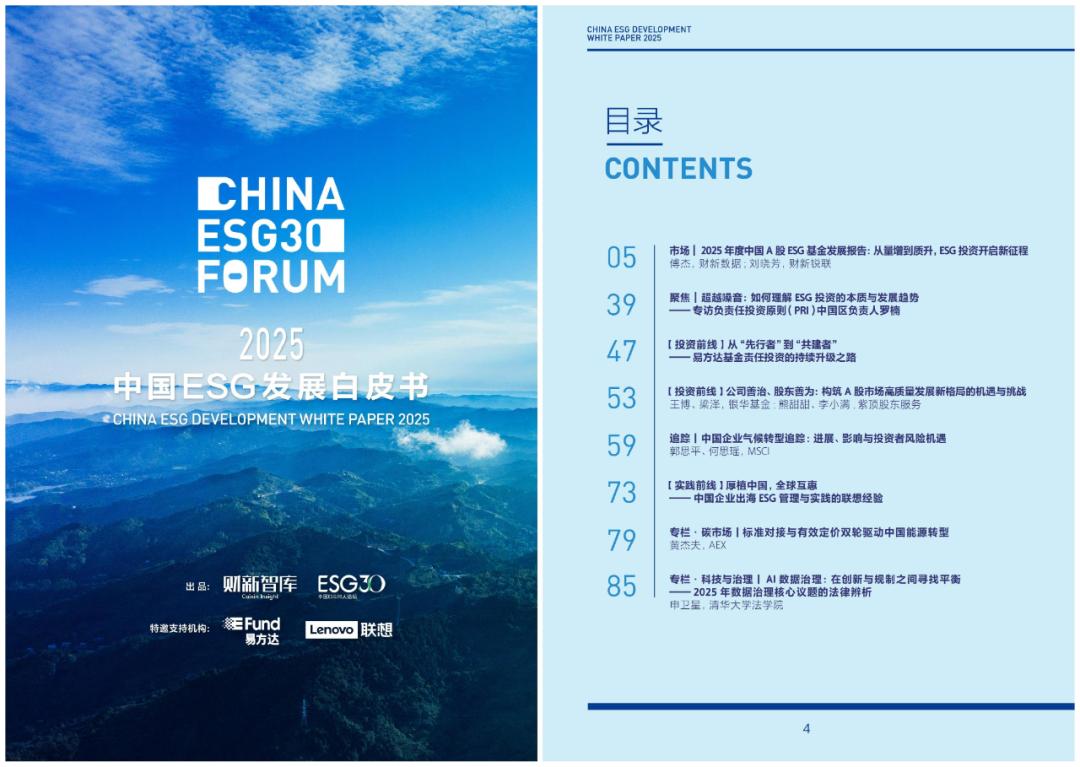
China ESG Development White Paper. Image source | Caixin.com
This absurd reality, where the platform issues an announcement only to be immediately contradicted by the black and gray industries, exposes Kuaishou's vulnerability in AI governance.
This can also be seen from the platform's subjective downplaying of the core ESG issues. In Kuaishou's latest ESG materiality matrix, there is a thought-provoking detail: Issues such as "information security and privacy protection" and "content governance" have been highly promoted by stakeholders as extremely important, while "AI security and governance," the core of the current trend, has been quietly classified as a "low-importance" issue.
This deliberate downplaying of AI governance may be due to the long-standing contradiction between "cybersecurity" and "short-term business interests" at Kuaishou. Financially, the cybersecurity and ecosystem governance departments have always been regarded by corporate executives as pure cost centers that do not generate direct economic benefits.
According to Kuaishou's recent financial reports and public media reports, when the platform's overall strategy focuses on profitability and the research and development of core AI technologies (such as KeLing AI), there has actually been a certain degree of tightening in the investment in general R & D and security personnel outside of AI.
Therefore, when Kuaishou announced the reduction of manual review and the replacement with AI, its review system was quickly penetrated by black and gray industry gangs that are now proficient in using AI image interference, frequency-converted voices, and multi-account matrix packaging. This low-level defense mechanism was instantly turned into a sieve.
Only when a large number of violating contents erupts on the platform, causing serious social negative impacts and even triggering actual interviews, will the platform issue the pre-prepared announcements.
This post-hoc approach of "taking action only when the fire is at the door" has punctured the professional, rigorous, and responsible image presented in the ESG report. The early "trust among friends" is easily eroded under the tightened security budget and half-hearted technological defenses.
02 Sincerity Undergoing a Dimensionality Reduction Attack: Xiaohongshu's "Black Industry Quagmire" and Dilemma
If Kuaishou's governance problem lies in insufficient budget and determination, then the problem Xiaohongshu faces is much more severe. It is facing a trust crisis that can shake its commercial foundation.
The underlying asset of Xiaohongshu is authenticity. Users come to Xiaohongshu for the real consumption experiences of ordinary people. This unique user attribute has made Xiaohongshu the most valuable "product recommendation" destination on the entire network. However, with the advent of the AI era, "faking authenticity" has become a highly profitable business with almost zero cost.
Take the notorious "Zhengzhou Gang" approach in the marketing circle as an example. Black and gray industry gangs no longer need to hire trolls to manually write. They use AI tools, input long-tail keywords, and with just one click, they can fabricate a large number of seemingly sincere consumption pictures and texts. They can produce thousands of soft articles per day, filling the search information stream.
In the face of this systematic crisis, Xiaohongshu launched a fierce "defense war" for its community in the past year.
According to two special announcements made by Xiaohongshu's official account "Shuguanjia" on May 15th: Since 2026, Xiaohongshu has dealt with more than one million cases of bad AI behavior in total. Among them, there are more than 800,000 AI-managed accounts and nearly 150,000 AI-faked notes. It has also taken strict legal actions against 18 entities suspected of AI-related infringements in cooperation with relevant institutions. After the special governance, the volume of AI-generated posts from external mini-programs has decreased by about 35%.

Xiaohongshu's official announcement. Image source | Xiaohongshu
Behind these figures, it's not just the platform's moral self-discipline. Xiaohongshu has been forced into a commercial dilemma between the encroachment of black and gray industries and its own advertising revenue.
First of all, for Xiaohongshu, completely rejecting AI creation is a dead end.
Because the wide application of AI technology (such as intelligent photo editing and copywriting assistants) can indeed significantly lower the creation threshold for ordinary users and is also the core lever for the platform to maintain its daily active users and content production efficiency. Moreover, many brand owners and MCN agencies that place advertisements on the platform now highly rely on AI tools when mass-producing long-tail KOC content.
This is the most difficult deadlock for Xiaohongshu: If the governance scale is too loose, the overwhelming AI homogeneous and watered-down content and "AI virtual amateur accounts" will quickly dilute the platform's sincere attribute, turning the community into an "AI garbage dump."
However, if the risk control algorithm strategy is too aggressive, it will not only misjudge ordinary creators who use AI for writing, leading to a shrinkage in the platform's content volume, but also touch the interests of brand owners who rely on mass marketing, thereby harming the platform's advertising revenue.
Therefore, in AI governance, Xiaohongshu has played a delicate balance of "blocking on one hand and guiding on the other." On one hand, it publicly opposes the use of AI in black and gray industries and the fabrication of personal experience. On the other hand, it quietly leaves a green interest channel in the rules – it clearly announces that as long as the high-quality AI content is actively compliant with the label and is "aesthetic, narrative, and has real information increment," the platform will not only not suppress it but also give it an advantage in public domain traffic.
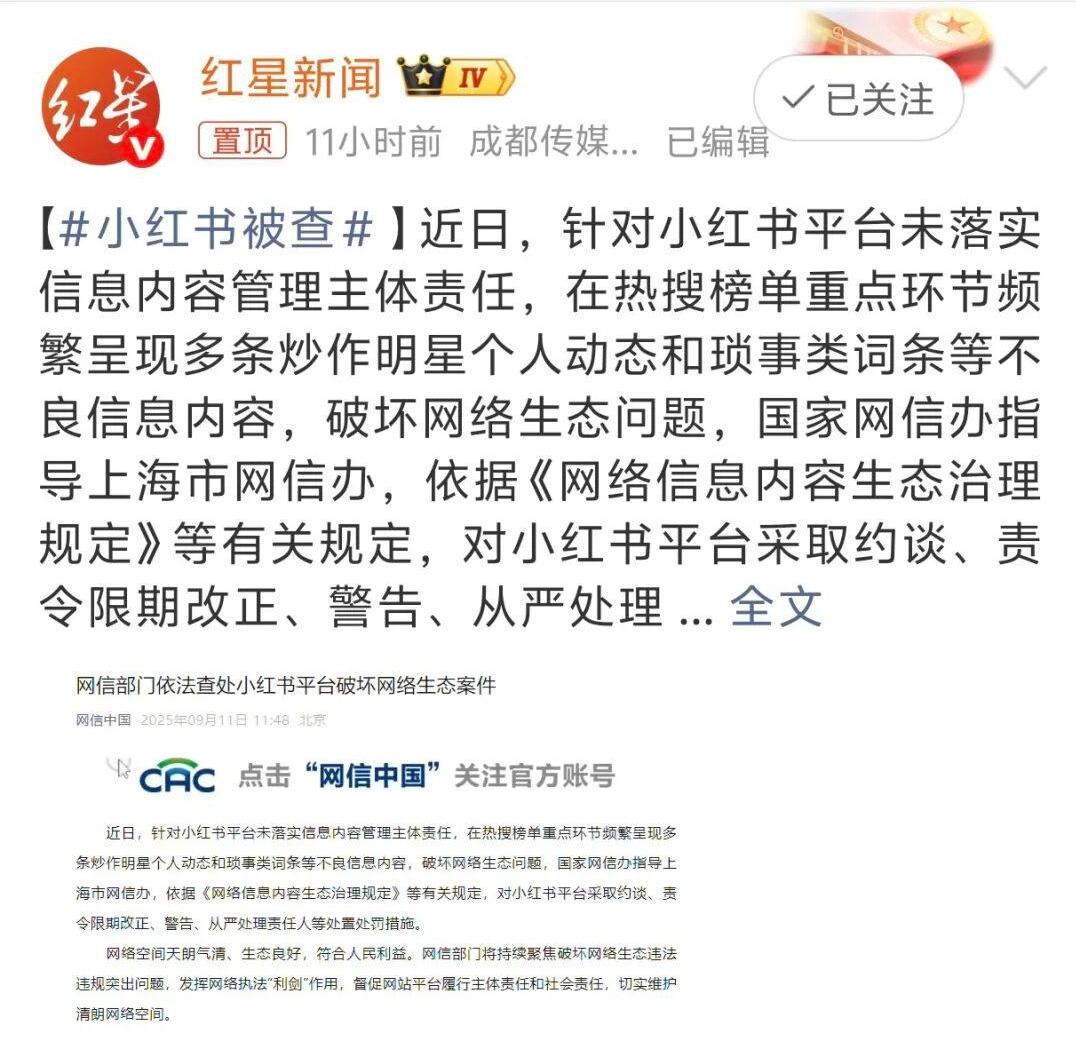
A report by Hongxing News about Xiaohongshu's investigation. Image source | Weibo
This is a clever conspiracy. Xiaohongshu is smart. It knows that since it can't eliminate the black and gray industries, it might as well use public domain traffic as a bait to lead them into the open, get them to label themselves voluntarily, and regain the pricing power of the "trust asset."
03 Insights and Solutions: Two Principles for Platform AI Governance
After understanding the pain and setbacks that Kuaishou and Xiaohongshu have faced in AI governance, we have to admit a harsh industry truth: The previous "patchwork" measures of "treating the symptom rather than the root cause" or the face-saving projects for compliance are completely ineffective in the AI era. The "formal alignment" and word games that domestic big tech companies like to use will be exposed in front of the ever-changing technological black industries.
To protect their own credibility and maintain their "credit ratings," in future AI governance, big tech companies need to adhere to two rules at the underlying code and operational rules:
First, return the creative initiative to real people and relegate AI to the role of an auxiliary tool.
There's no denying that AI can exponentially increase the efficiency of content production. However, when formulating rules, platforms must clearly return the creative initiative to real people and strictly limit AI to the role of an efficiency tool. Because only the unique creativity, subjective aesthetic perception, and sincere sharing of real people are the core premiums that AI can never copy or mass-produce.
Whether it's short videos or product recommendation pictures and texts, only those who can first establish a content moat driven purely by real human creativity can avoid being eliminated in this industry reshuffle from traffic dividends to credit ratings.
Second, for groups with weaker cognitive abilities, platforms must provide mandatory "AI warning and intervention."
Currently, Kuaishou and Xiaohongshu mostly place a very small, light-gray label saying "This work is suspected to be created by AI" at the edge of the screen or above the comment section to mark AI-generated content. This approach seems compliant on the surface, but in essence, it shirks the responsibility of content authenticity verification to users through the formalism of "labeling everything." This cold, disclaimer-like prompt may work for young people, but it is almost completely ineffective for groups with relatively weaker cognitive abilities, such as the elderly.
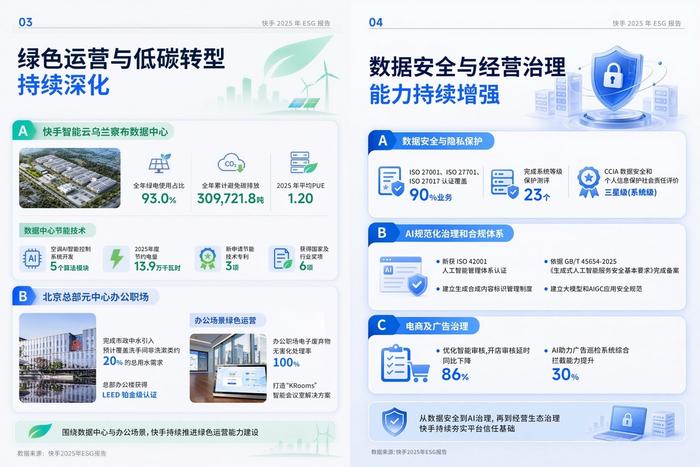
Kuaishou's 2025 ESG report. Image source | Kuaishou's official website
For example, in the sinking market represented by Kuaishou, there are a large number of middle-aged and elderly users who have no concept of AI.
Even though Kuaishou proudly stated in its ESG report that it has led the compilation of industry standards such as the "Guidelines for Identifying and Warning Vulnerable Groups in Short Video Communities," when these senior citizens see the "star sons," "filial daughters," or "famous medical experts" synthesized by AI face-swapping and voice cloning technologies on the screen, offering them greetings, emotional blackmail, or promoting products, the tiny gray words at the edge of the screen are completely ineffective in awakening their rationality. The dimensionality reduction attack brought by the technological gap is making them hand over their trust and savings without any defense.
Therefore, platform AI governance must go beyond the initial stage of "only providing prompt labels."
For specific high-risk groups and high-risk violations, platforms need to establish a more binding "AI warning and intervention" system at the underlying logic, such as pop-up risk blocking and enhanced face verification at the payment end. Using hard technological means to protect vulnerable groups who are almost "naked" in the face of the AI gap is the real action that should be written in the ESG report and truly takes on the bottom-line social responsibility.
This article is from the WeChat official account "TouchBase Landing". Author: TouchBase Landing. Republished by 36Kr with permission.