The soul of Japanese cars is handed over to China, and the Japanese supply chain goes bankrupt.
"There were people from Chinese suppliers at the Toyota STM you investigated, but it's not certain whether they were from Wuhu Yuefei or Zhejiang Jinfeng."
I was really shocked when my Thai friend revealed this piece of news to me. Although if you take apart a Japanese car like the Toyota bZ3X or Nissan N7 on the street, you'll find Chinese components everywhere. However, it's still quite unexpected to hear that Chinese components have penetrated the overseas bases of Japanese cars.
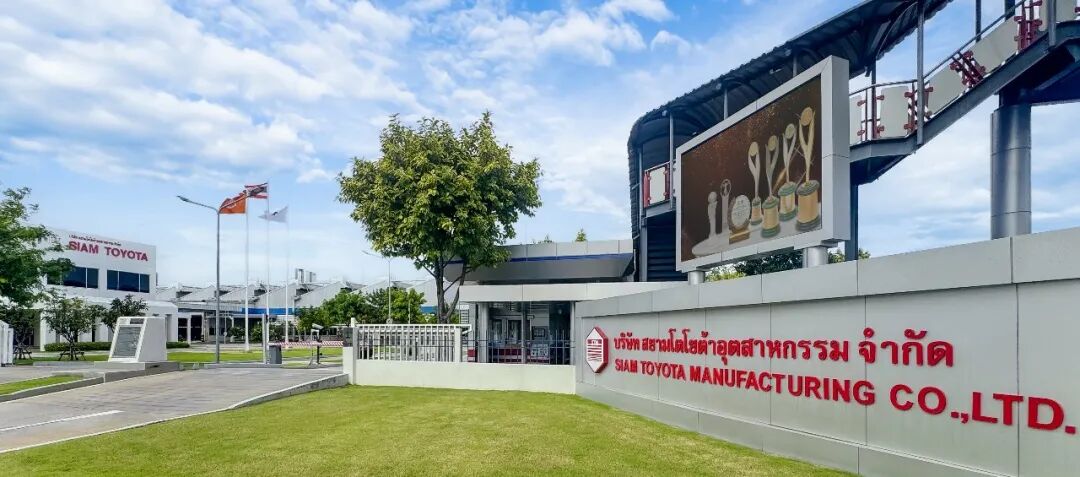
STM is the abbreviation of Siam Toyota Manufacturing. It's located in the Gateway Industrial Park in Chachoengsao Province, east of Bangkok, Thailand. Its products range from the Corolla, Yaris to the Fortuner, etc.
In the summer of 2024, our Auto Commune/C Dimension team conducted a one - week investigation in Thailand, mainly observing Chinese car companies, covering SAIC, GAC Aion, Changan, Great Wall, Nezha and other enterprises. At that time, BYD's Thai factory hadn't opened yet. By the way, we also took a stroll around the Toyota branch near Bangkok and Japanese 4S stores.
Two years later, instead of the scenario we expected of "a bloody battle between Chinese and Japanese supply chains in Southeast Asia", there was a direct supply substitution in the local market.
The supply - chain battle we witnessed is the root, and the decline in the sales of Japanese cars is the branches and leaves. In 2025, the market share of Japanese cars dropped to 9.67%, more than halving compared to 23.1% in 2020. The trunk is the large - scale and hidden industrial revolution taking place.
The Nikkei Shimbun began to describe all this with a panicked tone, using the term "Keiretsu (series) disintegration" to describe this trend. It believes that what's more fatal than the decline in vehicle sales is that the "innards" and "soul" of Japanese cars are being rapidly replaced by the Chinese industrial chain.
The essence of the fraud scandals of Japanese component giants like Nidec has three layers. The first layer is the shame of the enterprise; the second layer is a cruel truth: when the survival pressure reaches a certain level, the "craftsman spirit" will be forced to become the "bowing spirit"; the third layer echoes the fact that the "soul of Japanese cars is being handed over to the Chinese supply chain".
The decline of the Japanese supply chain is not only a defeat to the opponent but also a defeat to an era.
Collective Blood Loss of Japanese Suppliers
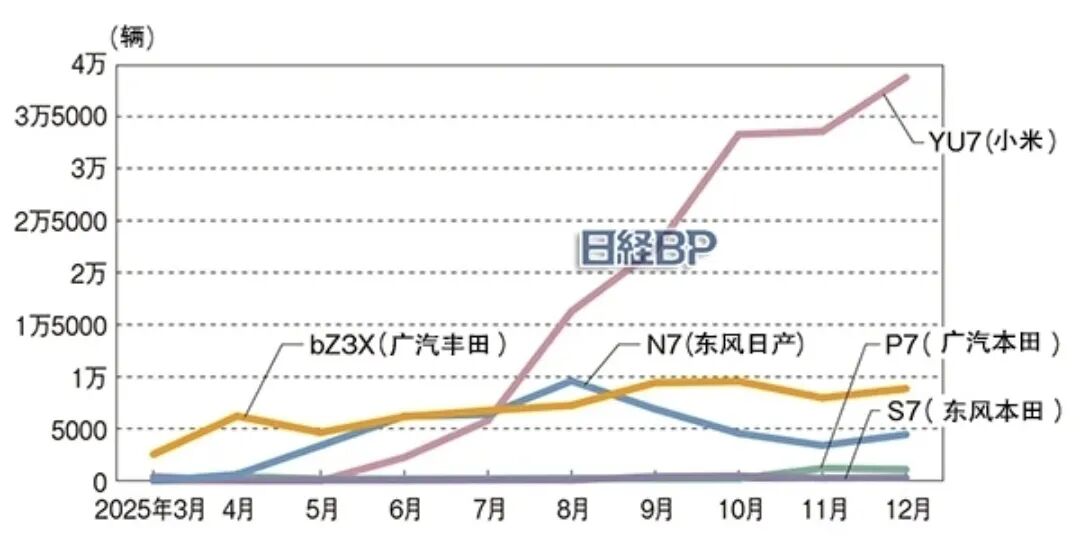
"The monthly sales of the GAC Toyota bZ3X returned to five - digit figures in April!"
With 10,027 units sold, the domestic retail sales of the bZ3X set a new record, exceeding those in October and November last year. This is an honor for GAC Toyota, a glory for Toyota China, and even a relief for Toyota's headquarters, but it's by no means good news for the entire Japanese automotive industrial chain.
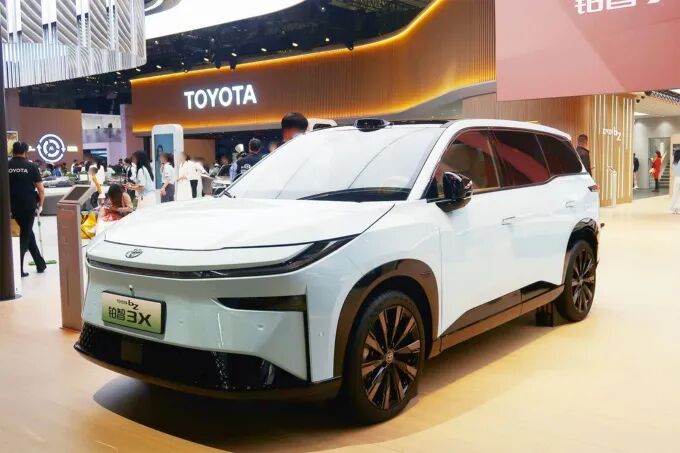
In March 2025, when the bZ3X was launched, it caused a silent earthquake. The power batteries are from Fudi, CALB and Sunwoda; the intelligent driving algorithm is from Momenta; the lidar is from Hesai; the domain controller is from Desay SV... Oh, the motor is from Nidec, which was involved in the fraud scandal at the beginning of this article. However, the company that directly supplies the motor is Guangzhou Nidec Automotive Drive Co., Ltd., in which GAC also holds a joint - venture stake.
Multiple analysts estimated that the proportion of Chinese components in this car is close to 90%. This means that after selling cars in China for so many years, Toyota has built a "Chinese car with a Toyota shell" for the first time.
This is not Toyota's betrayal but an instinct for survival.
After China overtook other countries in the new - energy vehicle field in 2020, the advantages and disadvantages of the Chinese and foreign automotive industries reversed. Since then, Japanese universities and institutions have continuously disassembled Chinese new - energy vehicles, from the Wuling Hongguang MINI to the BYD Seal, etc., but all ended up exclaiming that "the cost is beyond Japan's reach".
In 2022, the price difference between BYD's and Toyota's pure - electric models was about 2 million yen (about 100,000 RMB), and the gap with Nissan was as high as 3 million yen.
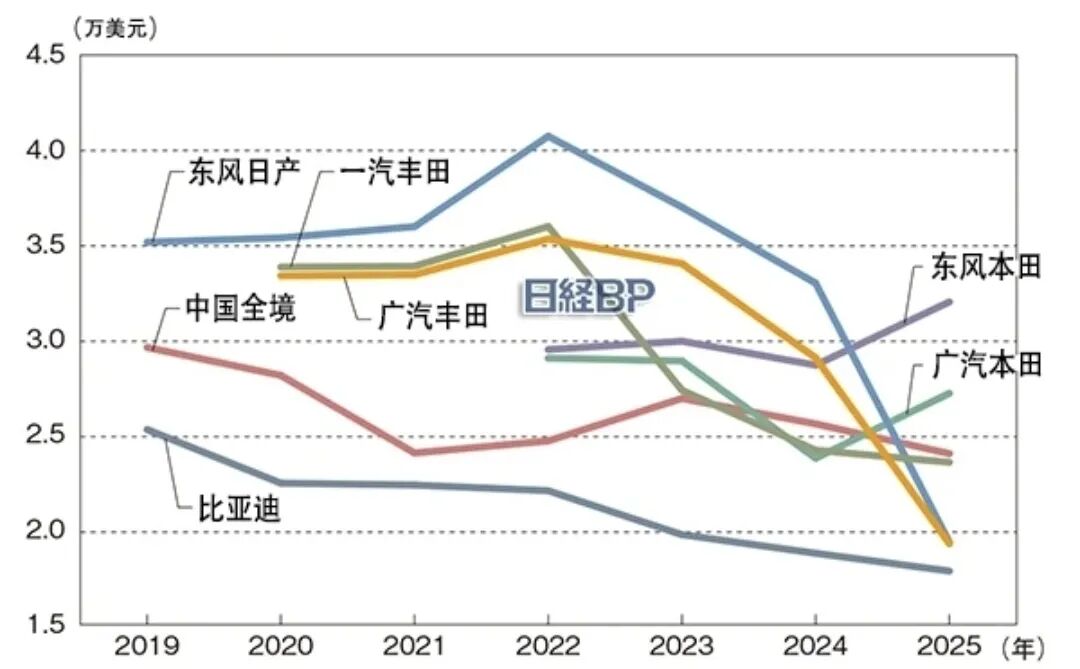
In the Chinese market where the price war is extremely fierce, such a gap is equivalent to a death sentence. By 2025, Japanese pure - electric models have barely narrowed the gap to about 200,000 yen - at the cost of a large - scale "de - Japanization" of the supply chain.
After the bZ3X, the FAW Toyota bZ5 continued this route. Even though the proportion of Japanese components in the 2026 bZ7 was pulled back to about 30%, the overall trend is irreversible. The same goes for Nissan's N7. In this pure - electric sedan developed by Dongfeng Nissan, the imprint of Chinese suppliers can be seen everywhere, from the three - electric system to the intelligent cockpit.
The direct consequence of this shift is a cliff - like decline in the performance of Japanese component suppliers in Japan and China. According to a report released by Japan's Teikoku Databank in May 2025, there were 32 bankruptcy cases of Japanese automotive component manufacturers in the 2024 fiscal year, a 33.3% increase year - on - year, setting a new high in the past 10 years. In the first four months of 2025, the number of bankruptcy cases remained high at 11.
Old - established suppliers like Japan Spring and Yazaki have started to liquidate or close their Chinese factories. Giants like Mitsubishi Electric and Panasonic have divested their automotive businesses. This is not a structural adjustment but a systematic blood loss.
The logic behind this is simple: Chinese component enterprises have a cost advantage of 30% to 40%, and their response speed is far superior. Chinese manufacturers only need 10 months from receiving an order to mass - production, while Japanese enterprises need more than a year and a half. What scares the Japanese even more is that the quality gap is disappearing. Hiroshi Yasuda, the deputy president of Toyota Boshoku, publicly admitted that "there is no longer a gap", and Tsutomu Hiranaka, the president of UACJ, said bluntly that "the difference is becoming less and less noticeable".
When the Japanese supply chain loses in terms of quality, cost, and speed, its decline is not just the result of a price war but a comprehensive collapse of the competitiveness of the industrial system.
The Japanese supply - chain system, which is as precise, closed, and globally dominant as a family tree, is falling apart under the triple pressure of Chinese cost, efficiency, and quality.
Battlefield Spill - over: Encircling the Japanese Backyard
If the decline of Japanese cars in the Chinese market is an expected storm, then the penetration of the Chinese industrial chain in Southeast Asia is a precise raid on the Japanese "backyard".
Southeast Asia, a region dominated by Japanese cars for half a century, was once the most solid overseas stronghold of the Japanese supply chain. From the Toyota factory in Bangkok to the Honda assembly line in Jakarta, from the Mitsubishi after - sales network in Manila to the Denso component base in Ho Chi Minh City, Japanese car companies and suppliers have built a closed, self - contained, and highly profitable industrial ecosystem.
However, this ecosystem is being undermined from the bottom by the Chinese supply chain.
First, Chinese car manufacturers are pouring in. BYD's factory in Rayong Province, Thailand, started production in 2024, with an annual production capacity of 150,000 vehicles. After the renovation of Great Wall Motors' factory in Rayong, Thailand, it has become an export base for right - hand - drive vehicles. Nezha, Changan, and GAC Aion have all built factories in Southeast Asia.
These Chinese brands bring not only complete vehicles but also the underlying supply - chain system - from battery packs to motor controllers, from seats to wiring harnesses. Chinese suppliers are landing in Southeast Asia in a "group - going - global" manner.
More subtly but more lethally, Chinese components are penetrating the Southeast Asian factories of Japanese cars.
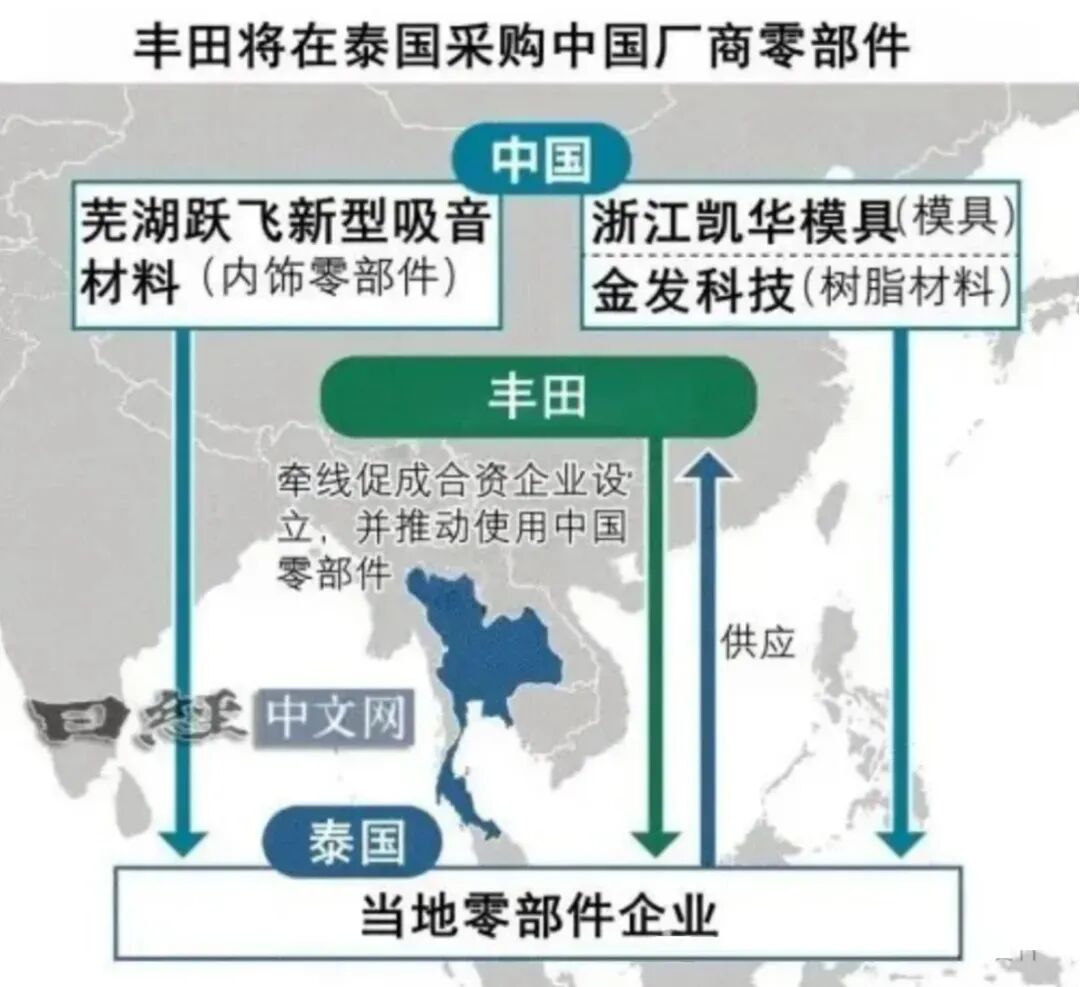
At Toyota's production base in Thailand, Wuhu Yuefei has started to penetrate the interior component field, providing new - type sound - absorbing materials for Toyota locally. Zhejiang Kaihua Mould provides molds, and Jinfeng Technology contributes resin materials.
Japanese enterprises don't just purchase Chinese components. They also act as match - makers to set up joint - ventures and promote the use of high - quality and low - cost Chinese components.
A sales manager of a Japanese second - tier supplier based in Bangkok complained to me: "Previously, Japanese factories here only used Japanese suppliers. Now they openly say they'll switch to Chinese products if we don't lower the price. Our profit margin has been squeezed down to only 3%."
A research report by Morgan Stanley defines the period from 2025 to 2030 as the second stage, namely, "the period of intensified technological competition between Japanese component enterprises and Chinese local enterprises".
However, in Southeast Asia, this competition has already reached a white - hot stage ahead of schedule. The advantage of Chinese enterprises lies not only in price but also in delivery speed. It takes Japanese suppliers three months to modify a mold, while Chinese enterprises can finish it in three weeks. In today's era when the iteration of electric vehicles is measured in months, speed is the lifeline.
The loss of the Japanese supply chain in Southeast Asia is more symbolic than in China. Because Southeast Asia is not only a market but also an important pillar of the global profits of Japanese cars and a touchstone for testing the competitiveness of Japanese manufacturing. When this touchstone starts to crack, the foundation of the entire Japanese supply - chain edifice is shaking.
On the contrary, what makes the Japanese manufacturing industry both relieved and shocked is that the future way out for Japanese suppliers may actually be the "rescue" of Chinese car brands.
On February 6, 2026, Musashi Seimitsu Industry Co., Ltd. of Japan announced through its Chinese subsidiary (Musashi Precision Automotive Components (Zhongshan) Co., Ltd.) that it had received a large - scale order for BYD's MPV Xia. The core products include ball joints for suspension and tie - rod ends for steering.
According to the fiscal - year report (as of March 2025), the company's sales to BYD are expected to reach 6 billion yen (about 300 million RMB).
One month before this, Toyota Boshoku Corporation issued an official press release on its official website, officially announcing that its curtain airbags had been adopted by the LS9 model of the Chinese high - end electric - vehicle brand IM Motors. This is the first time Toyota Boshoku has received an airbag order from a Chinese car company.
Dynasty Change Is Not a Fair Duel
Just as the volley of muskets completely defeated the cavalry charge in the cold - weapon era, the collapse of the Japanese supply chain has never been a fair war.
The ultimate battle in manufacturing lies in the dimensionality - reduction strike of scale, speed, and ecosystem.
On the surface, this is a competition about cost, quality, and delivery speed. But the deep - seated logic is a collision of two manufacturing philosophies: the Japanese "precision conservatism" versus the Chinese "lane - changing iterationism".
The peak era of Japanese manufacturing was built on three pillars: lean production, a closed - series ecosystem, and incremental innovation. The Toyota Production System was once the bible of global manufacturing, and its essence lies in "stable efficiency" - in an era when the technological route was clear and the market changed slowly, this model could control quality and cost to the extreme.
The problem is that the automotive industry is undergoing a once - in - a - century transformation. The speed of technological iteration in electrification, intelligence, and networking far exceeds the adaptability of the Japanese supply chain. When Chinese car brands are rapidly iterating their models and frequently updating OTA functions, the rhythm of Japanese suppliers, which is "a facelift every three years and a full - model change every five years", is like a horse - drawn carriage galloping on a highway.
The real advantage of the Chinese supply chain is not being cheap but being "unique" and "fast". "Unique" means finding a new way, overtaking others in electrification and intelligence; "fast" means faster trial - and - error, faster mass - production, and faster scaling. The 10 - month time from receiving an order to mass - production compared with more than a year and a half for Japanese suppliers may not have been fatal in the era of traditional fuel vehicles, but in the era of electric vehicles, it means that Chinese suppliers can complete two rounds of product iteration in the time it takes for Japanese opponents to complete one facelift.
The scale advantage further amplifies the speed advantage. The annual sales of new - energy vehicles in China have exceeded 15 million, accounting for more than 60% of the global market. Such a huge market capacity allows Chinese component enterprises to spread R & D costs in a very short time, forming a positive cycle: more orders → lower costs → more R & D investment → stronger technological advantages.
The Japanese supply chain is caught in a negative cycle: loss of orders → rising costs → shrinking R & D → declining competitiveness. This is why Mitsubishi Electric and Panasonic are divesting their automotive businesses, and Japan Spring and Yazaki are closing their Chinese factories - they have seen the end.
N