Why has cockpit-driving integration become a popular technological trend in 2026?
Assisted driving and intelligent cockpits are the most typical features of intelligent vehicles. However, in the early days, they were independent of each other in a vehicle. The earliest integration attempts began in 2022. The integration of the cockpit and parking system, as well as the integration of driving and parking, can be regarded as early technological explorations.
It wasn't until 2024 that the "cockpit-driving integration" architecture, which fully integrates the intelligent cockpit and the assisted driving system on a single chip or central computing platform, was systematically proposed. This architecture was first implemented in the Jihu Alpha T5, which was launched in October 2025. The Leapmotor D19 and Geely ZEEKR 8X, launched this year, respectively built cockpit-driving integration platforms based on the Qualcomm 8797 and NVIDIA Thor chips.
"End-to-end" was a hot topic in 2024, but it was replaced by the "world model" just one year later. This year, "cockpit-driving integration" has become the center of attention. The intelligentization of Chinese vehicles is undergoing technological iterations at an unprecedented speed.
However, the industry still has two attitudes towards cockpit-driving integration. The supportive side believes that the cockpit-driving integration solution can reduce computing latency and costs, and it is also considered the optimal means to unify the experience of intelligent cockpits and intelligent driving. The opposing side, on the other hand, believes that high integration means more complex engineering and less controllable experience effects.
Cost reduction: The biggest demand of automakers
The automotive industry is currently going through an extreme cycle. On the one hand, automakers need to make vehicles highly cost-effective by focusing on functional configurations and intelligent experiences, and at the same time, they need to carry out rapid product updates and iterations to attract consumers' attention. On the other hand, automakers also need to maintain high-intensity R & D investment.
Over the past three years, the price war combined with high-intensity capital investment has pushed the profitability of the automotive industry to an all-time low. According to the statistical data released by the National Bureau of Statistics on January 27 this year, the profit margin of the automotive industry last year was 4.1%. In the first quarter of this year, the analysis report of the China Passenger Car Association showed that the sales profit margin of the automotive industry dropped to 3.2%.
The rising raw material prices have not yet triggered a price increase wave in the automotive industry, and automakers' demand for cost reduction is even stronger. As core components of new energy vehicles, the intelligent driving system and the intelligent cockpit account for a significant proportion of the total vehicle cost.
Since upstream manufacturers offer different quotes to different downstream automakers, and the proportion also varies among different models, this proportion is not a fixed figure. According to the research report of Guojin Securities, the cost of the intelligent driving system (including chips, cameras, radars, etc.) accounts for 5% - 8% of the total vehicle cost. According to the public speech of Shen Shaojie, CEO of Zhuoyu Technology, at the China Electric Vehicle 100 Forum, the reasonable proportion range should be 3% - 5%.
Chips are the most core component of the intelligent driving system, and the industry generally expects that they account for 25% - 30% of the cost of the intelligent driving system. In total, chips account for at most 0.75% - 2.8% of the total vehicle cost, and this proportion will increase as the vehicle's demand for computing power rises. For example, NIO initially used four Orin chips, and many flagship models of new car - making forces also use at least two Orin chips.
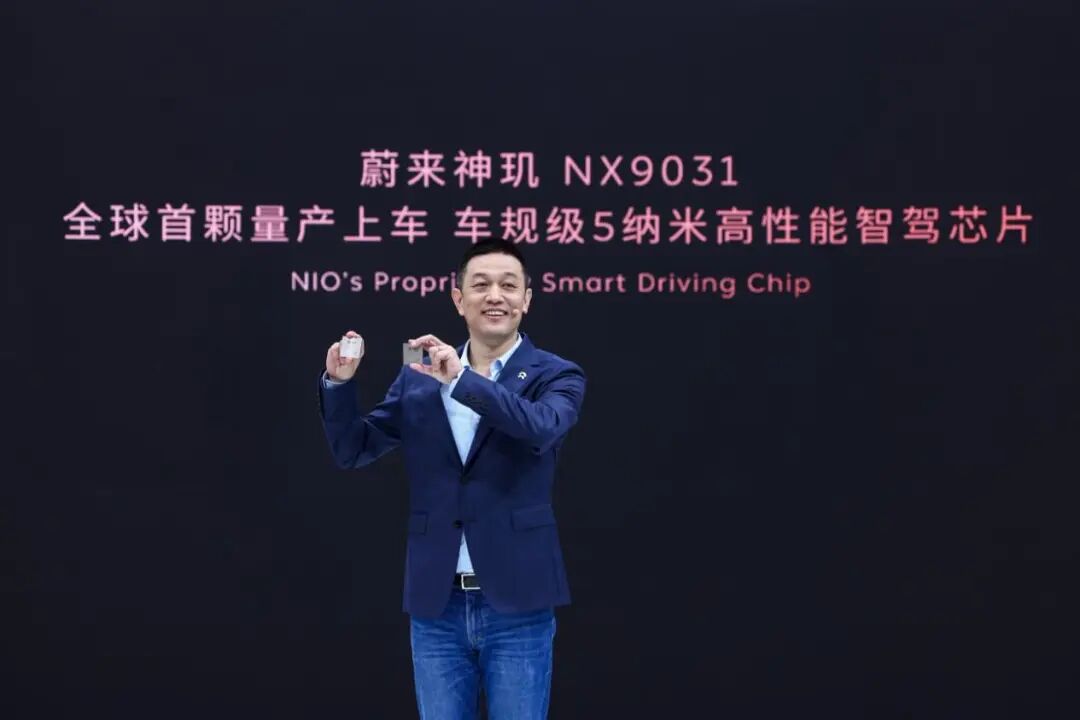
At this year's High - level Forum on the Development of Intelligent Electric Vehicles, Li Bin, the chairman of NIO, presented a cost breakdown: NIO had long been purchasing NVIDIA Orin - X chips for its intelligent driving system, and at the peak of demand, the annual purchase amount reached up to $300 million. Considering NIO's chip R & D progress and annual sales volume, the cost of the four Orin chips per NIO vehicle ranges from $1,900 to $2,500.
Then there is the intelligent cockpit. The mainstream cockpit chips are from Qualcomm. In the past two years, automakers have started using Qualcomm's 8295 chips in flagship models and 8155 chips in mainstream models. The proportion of the cockpit system in the total vehicle cost is higher than that of the intelligent driving system, generally ranging from 10% to 12%. Among them, the cost proportion of the cockpit chip ranges from 1% to 3%, mainly depending on the configuration.
Since 2025, the price of memory chips (DDR) has increased by more than 300%, further pushing up the costs of intelligent driving system and intelligent cockpit chips. Among them, the high - level intelligent driving system is more affected by the upstream fluctuations.
In the traditional architecture, the intelligent driving domain and the intelligent cockpit domain are independent of each other. Two different architectures correspond to different chips, different integration solutions, two sets of memory configurations, and two sets of heat dissipation and wiring harness layouts. This not only sacrifices a large amount of in - vehicle space but also requires two teams to update two products, which requires a huge investment in both funds and manpower.
Last year, no Chinese automaker had a net profit per vehicle exceeding 10,000 yuan. The highest was 9,936 yuan for Seres, and five companies had a net profit per vehicle of less than 2,000 yuan. Among them, SAIC, Leapmotor, and Changan had 1,647 yuan, 1,810 yuan, and 960 yuan respectively. If the high - value overseas data is excluded, the net profit per vehicle of BYD and Chery in the domestic market is only about 1,000 yuan.
Yu Kai said that in the long run, automakers, the supply chain, and users will all lose. Automakers engage in price wars, the profits of the upstream and downstream of the supply chain are squeezed, and users are likely to lose after - sales support. The entire industry will eventually fall into a vicious cycle of zero - sum game. The ideal situation should be that a vehicle priced at 160,000 yuan can be sold for 190,000 yuan due to a good intelligent driving experience. Then users will be willing to buy with confidence, and both the upstream and downstream will have considerable profits, which can be invested in the R & D of the next - generation technology.
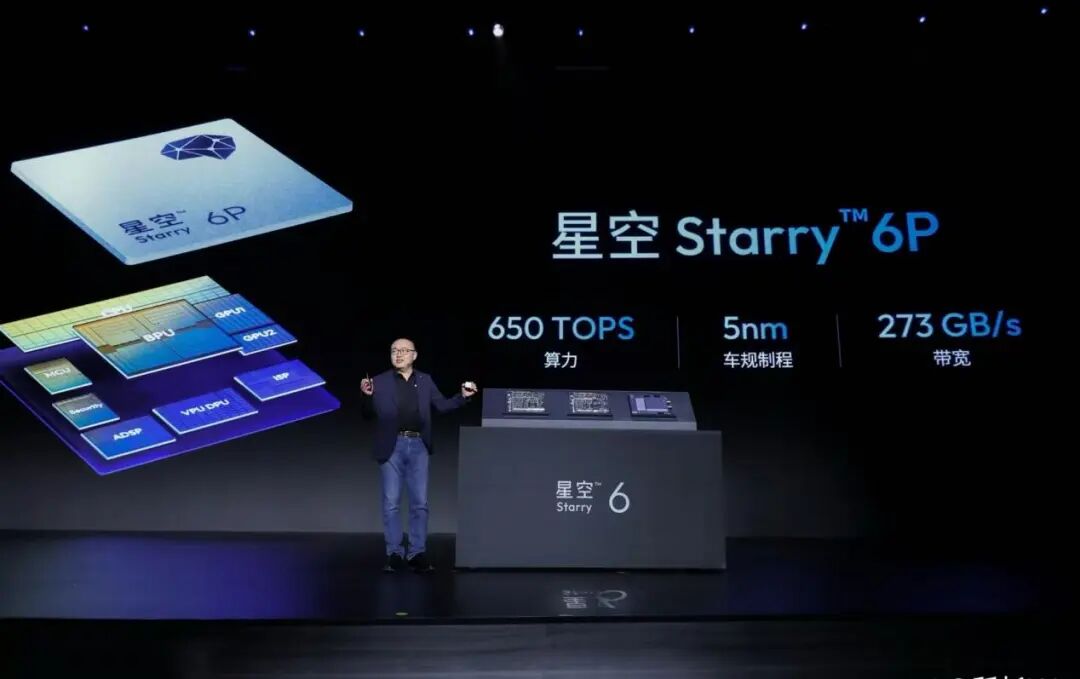
Therefore, cost reduction and efficiency improvement are the core attractions for automakers to choose the cockpit - driving integration solution. Yu Kai, the CEO of Horizon Robotics, also used specific cost breakdowns to illustrate the extent of cost reduction: the overall hardware cost of the single - chip cockpit - driving integration solution is reduced by 20% - 30%; the space occupied by the vehicle's intelligent hardware is reduced by 50%, and the comprehensive cost per vehicle is reduced by 1,500 yuan to 4,000 yuan; the R & D and delivery cycle is shortened from 18 months to 8 months.
At the High - level Forum on the Development of Intelligent Electric Vehicles in April, Li Bin mentioned that standardizing battery cells and normalizing chip types could provide a potential cost - reduction space of 100 billion yuan. Currently, the standardization of battery cells is gradually taking shape. He suggested that relevant departments should organize automakers to normalize chip types as soon as possible to increase the usage of normalized chips per vehicle.
Organizational structure change accelerates "cockpit - driving integration"
Cockpit - driving integration has become an obvious trend. Prior to product implementation, the adjustment of the company's internal organizational structure is taking place. The new car - making forces, especially XPeng and Li Auto, are the first to keep up with the trend.
In February this year, XPeng merged its two first - level intelligent departments, the Autonomous Driving Center and the Intelligent Cockpit Center, into the General Intelligence Center, led by Liu Xianming, the former head of autonomous driving. He Xiaopeng believes that the functional partition development model cannot meet the high - level intelligentization requirements, and synergy must be achieved through a unified base model, central computing architecture, and data closed - loop.
Li Auto's organizational form is different from XPeng's, but they are similar in the general direction. Li Auto initiated the organizational structure change earlier than XPeng. It split the originally independent autonomous driving team and established three parallel teams: the base model team led by Zhan Kun, the software body team led by Gou Xiaofei, which integrated the software, data, and mass - production delivery departments of the original intelligent cockpit and intelligent driving, and the hardware body team taken over by Zhan Yifei, which was originally led by Lang Xianpeng.
Based on the software body team led by Gou Xiaofei, Li Auto has achieved unified management of the intelligent cockpit and intelligent driving at the software and business levels. This also breaks the previous partitioned functional development model and realizes intelligent decision - making with full - domain synergy.
However, Li Auto promoted cockpit - driving integration earlier than the adjustment of the organizational structure. Li Xiang mentioned at the 2025 Li Auto Technology Day: "A vehicle with two independent 'brains' will always have a fragmented experience. Starting from 2025, all new models of Li Auto will be developed based on the cockpit - driving integration architecture."
At the product level, NIO, Leapmotor, Changan, and IM Motors have adopted the cockpit - driving integration technology architecture. Taking NIO as an example, at the hardware level, NIO has upgraded from domain - control separation to the central computing platform ADAM. The central computing platform of NT 2 platform models integrates four NVIDIA Orin chips and one Qualcomm 8295 cockpit chip. In the latest ET9, ADAM integrates two self - developed Shenji chips of NIO and one Qualcomm 8295P chip. At the software level, it is NIO's in - house full - vehicle operating system SkyOS·Tianshu.
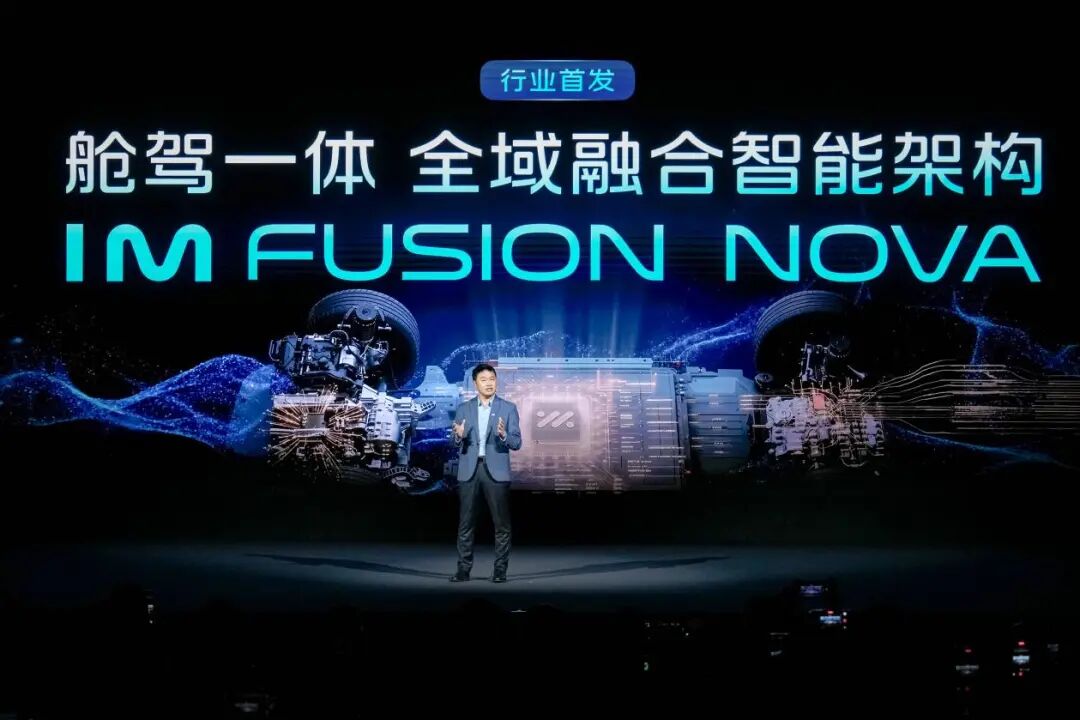
In a strict sense, the Shenji chip is not a cockpit - driving integration chip. It mainly supports intelligent driving, but due to the upgrade of the central computing platform Cedar ADAM, its computing power can also support some intelligent cockpit tasks, realizing cross - domain computing power scheduling.
Both XPeng and NIO have gradually increased the proportion of self - developed chips. XPeng's Turing chip and NIO's Shenji chip are both designed with high computing power, with single - chip computing power reaching 750 TOPS and 1000 TOPS respectively. In flagship models, XPeng uses four Turing chips, and NIO uses two Shenji chips. They are also two of the companies with negative net profit per vehicle in 2025, and the other one is GAC Group.
Among them, XPeng's net profit per vehicle is only a loss of 1,071 yuan. If it can switch to self - developed chips across the entire product line, the net profit per vehicle is expected to turn positive quickly. NIO has the lowest net profit per vehicle, with a loss of 38,080 yuan. However, NIO's average transaction price per vehicle is much higher than XPeng's. The ratio of this loss per vehicle to the average transaction price is less than 20%, and it is also expected to narrow if cost control is proper.
The real - world challenges of cockpit - driving integration
In terms of cost reduction, the cockpit - driving integration technology solution is very attractive to automakers. However, the reason why cockpit - driving integration has only really been put on the table this year is that there are still many challenges in practical applications.
One of them is the integration of the two domains. The intelligent cockpit must be designed according to the safety and reliability standards of the intelligent driving system. The intelligent driving system requires a safety level of ASIL - D, while the intelligent cockpit usually only requires a level of ASIL - B or lower. At the system level, the intelligent driving system is mainly based on BlackBerry's QNX system, a closed - source operating system known for its high safety and real - time performance.
However, the intelligent cockpit is usually designed based on Android or Linux, both of which are open - source systems. Especially Android, due to its rich ecosystem, is more often chosen by automakers for in - depth customized development of the intelligent cockpit.
To achieve the cockpit - driving integration experience, there are currently two mainstream methods. One is the Type - 1 Hypervisor virtualization technology also adopted by Tesla, which runs the intelligent driving system in the QNX safety domain and the cockpit system in the Android application domain. The other is to develop a full - vehicle operating system like NIO and Li Auto to achieve multi - domain integration.
Another approach is that of Horizon Robotics. When Horizon launched its Xingkong system, it also introduced the "Fortress" safety physical isolation architecture to achieve physical isolation between the cockpit and intelligent driving.
The scheduling and allocation of computing power resources also affect the user experience. A user of the Jihu Alpha T5 reported that during the use of the vehicle, they occasionally encountered problems such as the inability to start the intelligent driving system and the automatic shutdown of lane sensing. The vehicle could only return to normal after a reboot. This model is equipped with Qualcomm's 8797 cockpit - driving integration chip.
At the Beijing Auto Show in April this year, Dianchang learned at the Zhuoyu Technology booth that the Qualcomm 8775 chip has 8 cores, of which 4 and 2 are allocated to the intelligent cockpit and intelligent driving respectively, and the other 2 cores are for flexible scheduling. For example, when the vehicle is stationary, the computing power will be tilted towards the intelligent cockpit; when the intelligent driving is activated, it will support the intelligent driving more. Zhuoyu Technology is the intelligent driving solution provider for the Jihu Alpha T5.
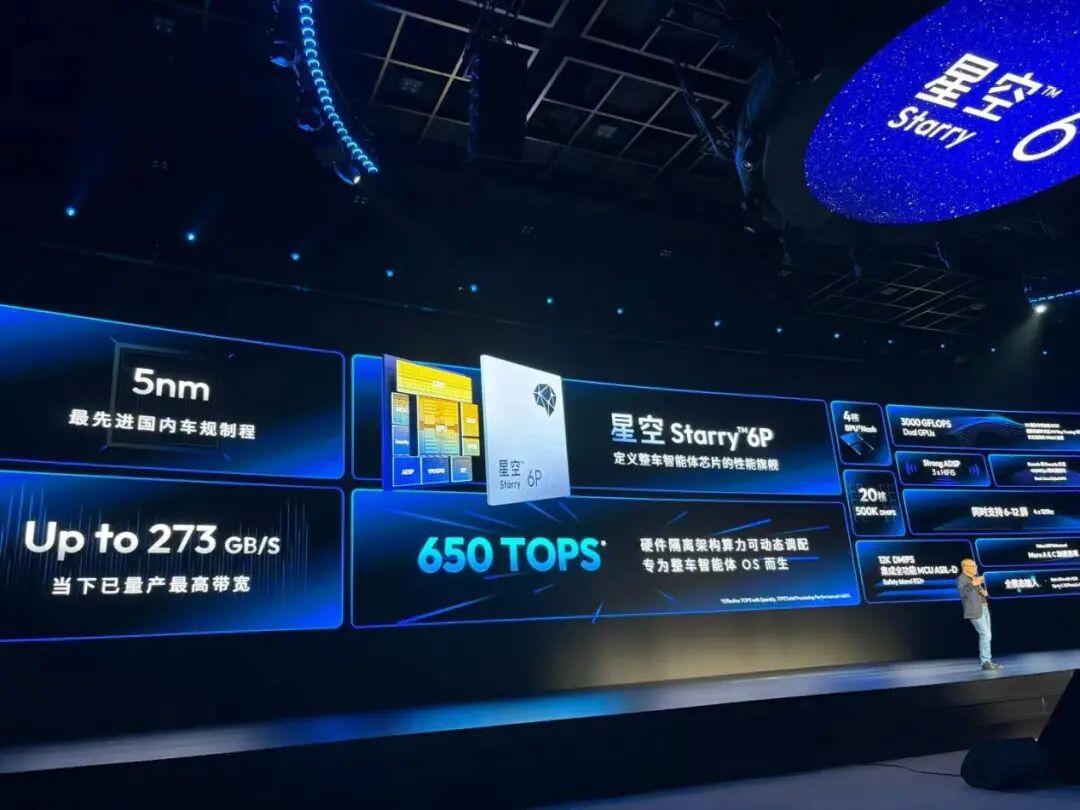
To solve the early - stage problems, Qualcomm and Horizon Robotics have designed more cores and higher computing power. Take the latest Qualcomm 8797 as an example. It has up to 18 cores, and the single - chip computing power is about 640 TOPS. The Leapmotor D19 is equipped with two Qualcomm 8797 chips, with a computing power close to 1280 TOPS. The Xingkong 6H and Xingkong 6P chips of Horizon Robotics have computing powers of 500 TOPS and 650 TOPS respectively, and 14 and 20 cores respectively, taking into account both performance and flexible scheduling of computing power resources.
The positive impact of the cockpit - driving integration solution on vehicle sales has begun to show. Since its launch in October last year, the Jihu Alpha T5 has achieved a monthly sales volume of 10,000 units, making it the best - performing Jihu model in the market. The Leapmotor D19 received over 15,000 firm orders just 15 days after its launch.
However, in the past three or four years