AI watches me go to the toilet and listens to me snore.
When tech enthusiasts in the new era go out, there isn't an inch of free space on their bodies.
They wear smartwatches on their wrists that can display mood changes, hang AI necklaces around their necks to monitor heart rate, and wear AI rings on their fingers to measure sleep quality...
Due to humans' innate health anxiety, numerous AI hardware teams have launched one new product after another, making the scenarios for AI to serve human life become increasingly "demanding".
For example, going to the toilet and sleeping.
These two scenarios may not sound very decent, but they are highly in line with business logic. An adult visits the toilet 7 - 9 times a day, and spends about one - third of their life in bed... A person may forget to wear their watch or leave their ring on the bedside table, but it's hard for them to go without using the toilet or sleeping for a long time.
As long as the devices are embedded in these scenarios, data collection no longer depends on willpower but becomes a part of daily life.
Just like the default settings of short - video platforms, when you open the software platform, recommended videos play automatically, and everything happens very easily.
The toilet sees your poop
Different from traditional smart toilets, the main selling point of AI toilets is not automatic flushing and automatic lid - opening, but non - intrusive collection of user data and using AI for analysis to judge a person's health status.
So, the question is, how does a toilet judge a person's health?
The answer is not mysterious: by looking at excrement. That's right, humans use their eyes, while toilets use sensors such as cameras to "look".
It may sound a bit offensive to talk about this, but many companies are seriously engaged in this business. The Dekoda launched by the bathroom brand Kohler is a typical example.
This product is a health - tracking device installed on the edge of the toilet, looking a bit like a large plastic clip. Through the camera facing down inside the toilet, this device can observe changes in the hydration state of feces, fecal morphology, etc. Simply put, it cares about whether you are short of water recently, whether your feces shape is normal, and whether there are abnormal signals such as blood in the excrement that are worthy of attention.
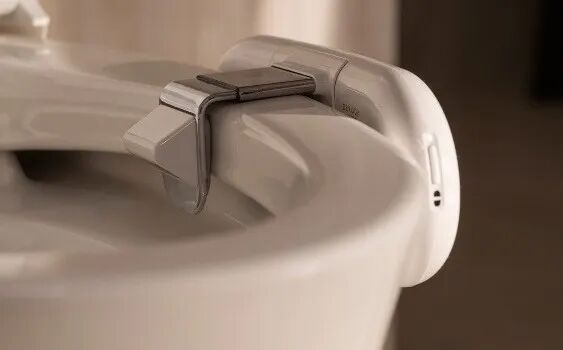
Device photo | Image source: Kohler official website
This device is not cheap, with a price of $599. If you want to view long - term fecal observation reports, you need to subscribe to the software, which costs $7 per month or $70 per year.
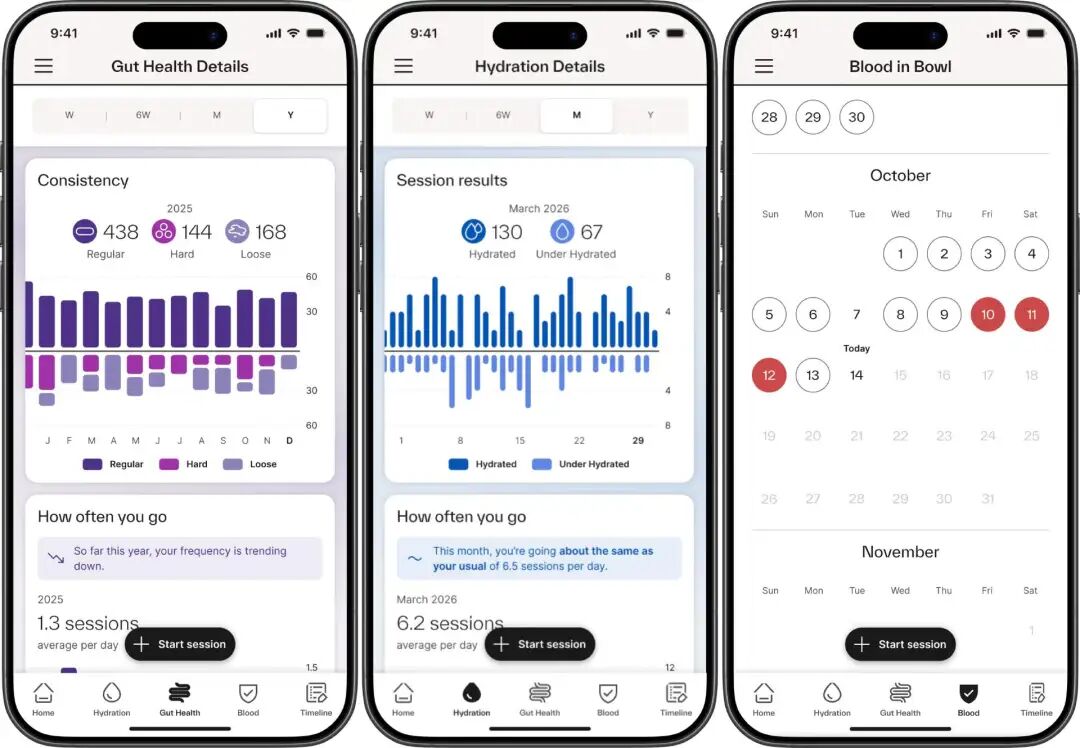
Subscription software | Image source: Kohler official website
The doubts raised by such products are not only about the risk of personal privacy leakage but also about the cost - effectiveness of their functions. Spending more than 4,000 yuan just to use a camera to understand the shape of feces, can't people achieve the same effect by just taking a look back?
If such toilet health hardware wants to prove its value, it must prove that automatic and continuous recording is more meaningful than our occasional visual observation. Otherwise, it's just packaging an action that humans can do by themselves into an expensive subscription service, hoping to attract people with gastrointestinal health anxiety.
To avoid the discomfort of privacy caused by cameras, the Japanese toilet brand TOTO has chosen another path. It doesn't use cameras but instead uses LED light sources and reflected signals to judge the shape, color, and discharge volume of feces.
There are also domestic companies that regard the toilet as an entrance for health data.
Shenzhen Shanmu SHANMU focuses on urine detection. Compared with fecal morphology, the connection between urine indicators and metabolic status is more direct and closer to the traditional medical testing scenario.
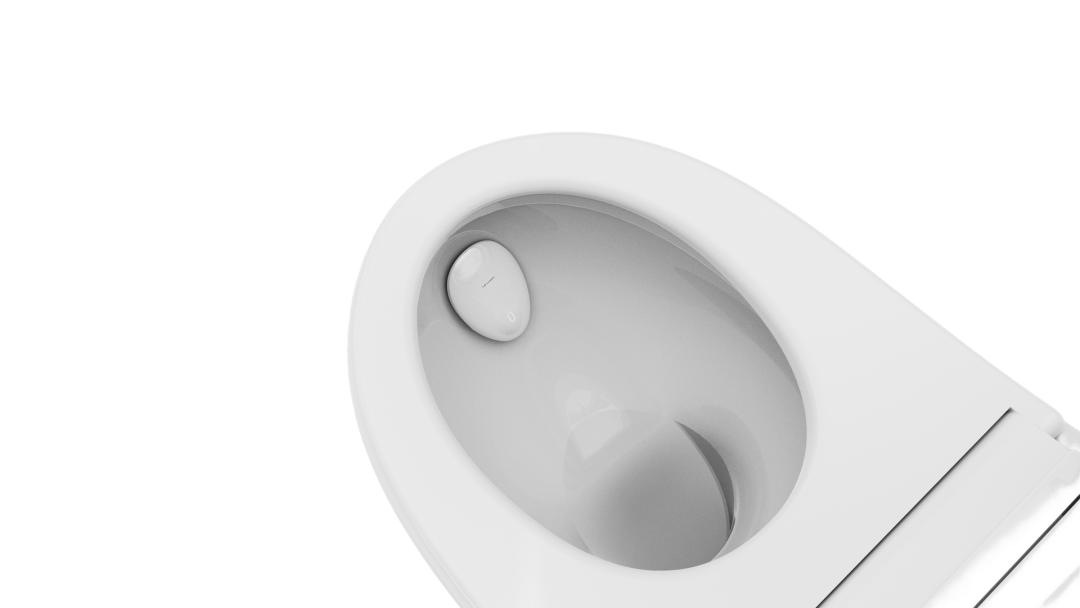
Early product form | Image source: Shanmu SHANMU official website
The development of the product is based on the founder Lin Hequan's concern about his own body. He found that he had high uric acid and high blood lipid during a physical examination, but he didn't feel any discomfort. Only then did he realize that chronic diseases such as chronic nephritis and diabetes have no symptoms in the early stage. By the time symptoms appear and people go to the doctor, they often miss the best treatment time.
So he tried to create a product that can give early warnings before the onset of the disease. The test results can tell patients how to conduct preliminary treatment at home, thereby reducing people's dependence on the medical system and increasing their autonomy in self - health management.
After installing such hardware in the toilet, users can receive daily analysis on their mobile phones to form an understanding of their long - term physical condition. On the product's official website, they can check the detection indicators and corresponding diseases.
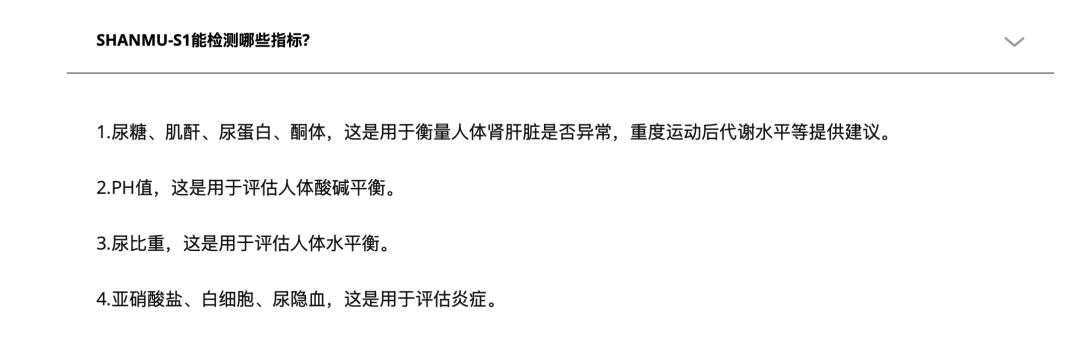
Image source: Shanmu SHANMU official website
Of course, there is a new problem with this product - battery life. After all, this device is located inside the toilet and seems to be subject to frequent flushing... According to the official statement, the company says that this product is specially designed for the toilet environment, is waterproof, and is attached inside the toilet, so pollutants cannot enter the interior.
According to 36Kr, the company completed a nearly 100 - million - yuan Series A financing this month and launched a new product form, Dotmax. This time, the device is mounted on the outside of the toilet and can complete the morning urine sampling within 2 seconds when the user uses the toilet.
The bed hears your snoring
In addition to the toilet, there is another place at home that is more suitable for long - term data collection - the bed.
After a person lies on the bed, the mattress doesn't need to remind the user to "start measuring". As long as it's there, it can record heart rate, breathing frequency, and body temperature changes, and even further adjust the temperature and support mode.
The most representative company in this field is Eight Sleep. Eight Sleep doesn't sell mattresses, or rather, the value of their products doesn't lie directly in the mattress but in their "sleep operating system".
After entering the Chinese market this year, the starting price of the Pod 5 series is 19,999 yuan. Pod 5 is the core product of the brand, a smart bed cover about 1 inch thick that can be placed on an existing mattress. Through an array of pressure sensors, this product can directly monitor a person's heart rate and breathing frequency. This is nothing new, but another function is more interesting. Through water circulation, biosensors, and AI algorithms, this bed cover can make the temperatures under the bodies of two people on the left and right sides different, ensuring that both people sharing the bed can enjoy their own comfortable environmental temperatures without arguing over the air - conditioning temperature.
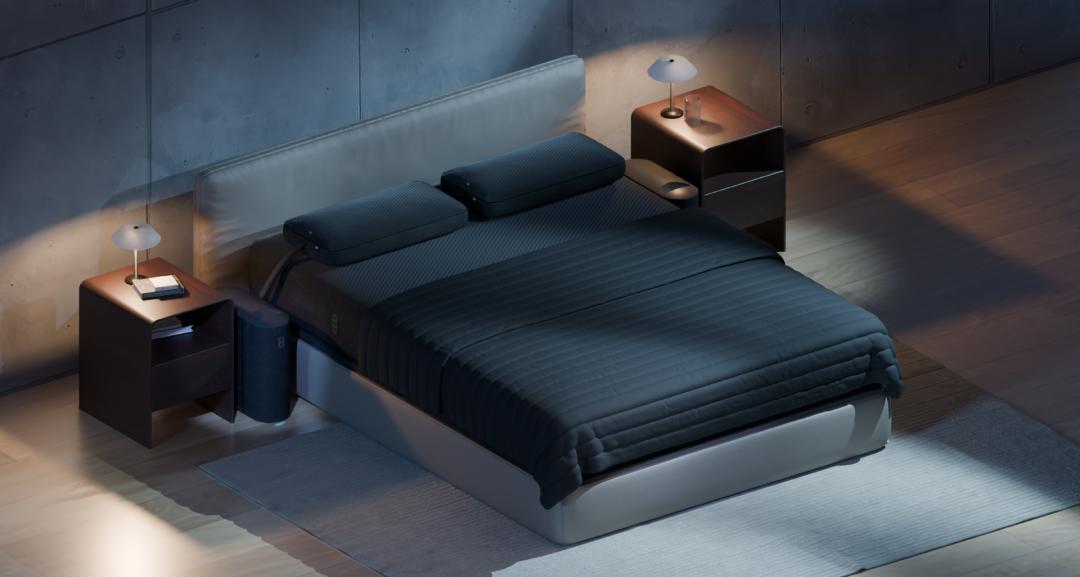
Image source: Eight Sleep official website
In addition to temperature control, this bed can also adjust its angle. When it detects snoring, the system will automatically raise the height to keep the airway clear and reduce snoring. This ensures the health of the person who snores and the sleep quality of the person beside them.
Capital is also betting on this logic.
In 2025, Eight Sleep announced that it had received $100 million in financing and said it would continue to develop AI sleep optimization and medical - related applications, including directions such as menopausal sleep and sleep apnea.
Domestic counterparts have quickly followed, and there is more than one. The most representative one is Stareep, a brand under Dreame. It completed a nearly 100 - million - yuan second - round financing in early 2026, and its post - investment valuation reached 1 billion yuan.
The story it tells is also about "mattresses participating in sleep management", but its functions are concentrated on "shape - changing".
When a person changes their sleeping position, the AI mattress will first sense it and then automatically adjust the hardness and height to provide support or reduce pressure. In addition, this product is equipped with functions for scenario - based adjustment, such as lulling to sleep like a cradle and intelligent wake - up, aiming to let people return to the baby - like state and enjoy a deep and immersive sleep.
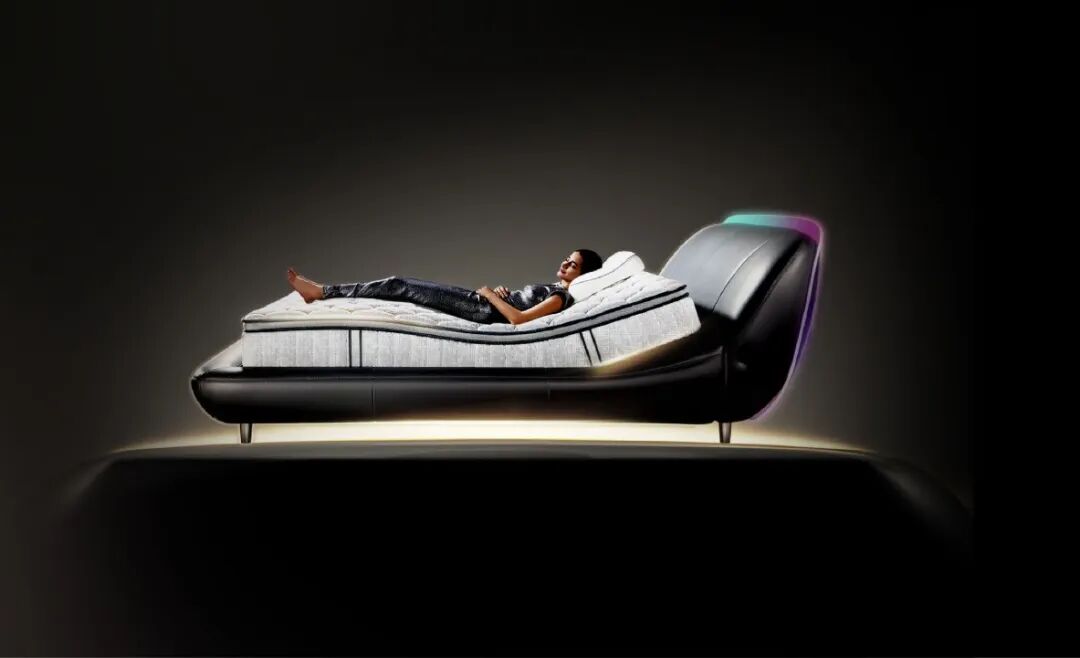
Image source: Stareep official website
Another company worth observing is "Today is a Good Day to Rest".
It was founded by Wang Teng, a former senior executive of Xiaomi, with a focus on sleep health and energy management. In January 2026, Today is a Good Day to Rest received tens of millions of yuan in seed - round financing, with investors including the mattress brand Sleepeast. In May, it completed a new round of financing.
The start of the business was a bit dramatic. According to Wang Teng's post on his Weibo, after leaving Xiaomi, he was under a lot of pressure and wanted to change his mattress. After comparing in the home - furnishing market for a long time, he bought a smart mattress from Sleepeast. But after using it, he found "several flaws". So he complained to Chen, the chairman of Sleepeast. In the heat of the conversation, he blurted out, "I have a lot of product ideas. Why don't you invest in me to do it?" Then Sleepeast invested.
Why has this field been favored by capital recently? Home - use health monitoring is not a new field. Products such as blood glucose meters, blood pressure monitors, and body fat scales have long entered the market, but they have not been the focus of the market in recent years. Under the wave of AI hardware, why have toilets and mattresses become the hottest AI health products?
Why toilets and beds?
The biggest problem with blood pressure monitors and the like is that they trust humans too much.
They assume that users are self - disciplined enough to measure regularly, record carefully, and review continuously. But in reality, most people stop using the devices after a short time, and they end up being stuffed into a drawer.
Health anxiety is real, and lack of action is also real.
Wearable devices have solved some problems. Watches, rings, and earphones make the detection process more convenient and can continuously record heart rate, sleep, and stress. But they still rely on wearing, and the range of data they can collect is limited.
The advantage of toilets and mattresses is that they are "passive" enough. Users don't need to turn on the devices, learn new actions, or remind themselves to keep using them every day. As long as they live their normal lives, data will be generated. This is also the reason why AI health hardware is increasingly fond of home scenarios. For health monitoring, the truly high - frequency entrances are the things we have to use every day.
For the traditional home - furnishing industry, this is also a new story.
In the past few years, the downturn in the real - estate market has affected home - furnishing consumption. Mattresses, bathroom products, and customized home - furnishing all need new growth narratives. AI health hardware provides them with a direction. Based on their existing supply chains and users, traditional home - furnishing brands can combine AI to manufacture new health - detection home - furnishing products and achieve non - one - time sales.
Based on rich user health data, these home - furnishing products are also good helpers for training medical models. In the field of AI medical care, the development of many medical AI models relies on in - depth cooperation with hospitals, and one of the major problems in training models is data. Sufficient long - term user data is also beneficial for promoting possible insurance medical services in the future, bringing more long - term commercialization space for the products.
In this way, during the day, your toilet understands your metabolism from your excrement, and at night, your mattress analyzes your sleep state from your body temperature and snoring. The furniture at home not only supports your body but also interprets your body.
Even mirrors have been involved. At CES 2026, NuraLogix demonstrated a Longevity Mirror. It analyzes facial blood - flow changes through a about 30 - second face scan and generates a so - called "longevity index", covering indicators such as cardiovascular risk, metabolic health, physiological age, and psychological stress.
These AI health hardware devices do seem amazing, but excessive health monitoring can also create unnecessary worries. For example, if the sleep report says you didn't sleep well, will you start to doubt your own feelings? If the toilet prompts that your fecal state is abnormal, will you keep worrying about your stomach and intestines? If the mirror gives an unsatisfactory lifespan score, will you start to feel nervous in the morning?
A home can have AI, but it shouldn't become a never - off - duty medical examination center. After the wave passes, the products that can stay may not be the ones that are best at producing reports, but the ones that truly improve life.
Reference materials:
1. "An AI - native health hardware company completed nearly 100 million yuan in financing", Yingke, May 2026.
2. "Interview with Hurun U30 | Lin Hequan, founder/CEO of Shanmu SHANMU: Self - developed AI home medical robot, focusing on the global group of over 1.5 billion chronic disease patients", Hurun Report, September 2024.
This article is from the WeChat public account "Ciweigongshe" (ID: ciweigongshe), author: Editorial Department of Ciweigongshe, published by 36Kr with permission.