The 618 shopping festival is coming, and the price of iPhone 17 has dropped. Why did the Huawei Enjoy 90 sell so well before?
According to the judgment of Lujiu Business Review, future competition will not be limited to a single price segment but will involve a full - scale, all - ecosystem competition. The mobile phone battle during this year's 618 is going to be quite a spectacle.
The era of two - front warfare in the smartphone age has arrived. During this 618, Apple took the lead in starting a price war. Even high - end mobile phones have reduced their prices against the backdrop of rising memory prices.
Previously, the main battlefield of the domestic mobile phone price war was in the mid - and low - end models. Among them, the most eye - catching was the Huawei Enjoy 90 series.
This product, which many people have labeled as an "entry - level thousand - yuan phone", sold like hotcakes upon its release, attempting to help Huawei make a full - scale comeback in this price range.
Of course, the success of the Enjoy series has also exposed a layer of the industry's veil: in the past five years, all manufacturers have been desperately vying for the high - end market, often collectively neglecting the mid - and low - end users who account for nearly 50% of the market.
With the arrival of this strong competitor, Huawei, the defenses of the mid - and low - end market are starting to be breached one by one, and Xiaomi and others seem rather helpless.
But is this the end? No.
As Huawei returns to this forgotten battlefield with a complete technological and channel system, the structural crisis of the Chinese mobile phone industry, which has been "focusing on the high - end while neglecting the low - end", is finally fully exposed. This is a significant feature that has been somewhat overlooked in the current market competition.
Mid - and Low - End Products at Bargain Prices
According to industry forecasts, the annual shipments of the Huawei Enjoy 90 series are expected to reach 12 to 15 million units in 2026.
However, many people's perception of Huawei has mainly been limited to the high - end labels of the Mate and P series. When it comes to Huawei mobile phones, most people's first reaction is the flagship phones priced at five or six thousand yuan, which are representatives of domestic high - end products. Few people have noticed that one of the fastest - growing segments for Huawei in 2026 may well be the mid - and low - end market priced between 1000 and 2000 yuan.
It is reported that the Huawei Enjoy 90 series includes three models: Huawei Enjoy 90, Huawei Enjoy 90 Plus, and Huawei Enjoy 90 Pro Max, with a starting price of 1299 yuan.
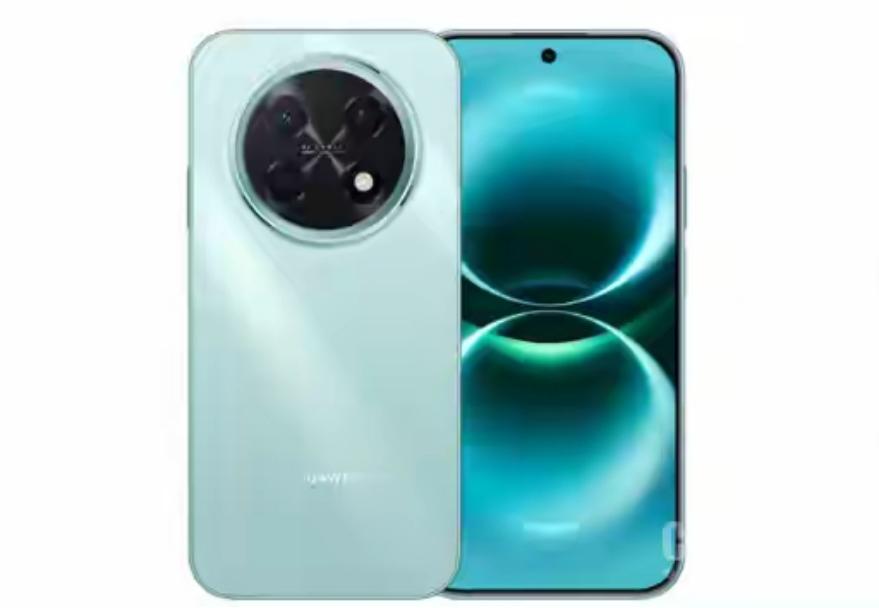
Due to chip issues in previous years, Huawei was forced to abandon most of its mid - and low - end market share. Some mid - and low - end mobile phones had to be replaced by smart - selected phones, and the mid - and low - end market was quickly divided up by Xiaomi, Honor, OPPO, vivo, etc. Huawei's share was relatively limited.
According to a previous report from Kuaikeji, in the brand share of the 0 - 2K yuan mobile phone market in 2025, vivo took the first place in the 1000 - 1500 yuan price segment. OPPO and Honor ranked second and third respectively, and the three together accounted for 66% of the market share. The 1500 - 2000 yuan price segment became Honor's advantageous area, ranking first in this segment, with vivo and Xiaomi ranking second and third. The top three brands together accounted for 70% of the share, indicating a highly concentrated competition in this range.
Honor's first - place position in the 1500 - 2000 yuan price segment is largely due to the large - capacity Qinghai Lake battery technology and the strong performance of models such as the X70 series in the entry - level market. This also shows that Huawei has a great deal of room for improvement in this area but also has to face many formidable competitors in this price segment. In the future, if Huawei wants to make a breakthrough in the above - mentioned price segments, responding to the differentiated demands of the market and users is a necessary task.
With the release of the Enjoy 90 series this year, the situation has suddenly reversed. It is rumored that the total sales volume across all channels on the first day of sales exceeded 250,000 units, making it one of the best - selling mobile phone products at the beginning of 2026.
Someone who has been involved in Huawei's business told Lujiu Business Review that this effort was not a sudden decision.
This person believes that, on the one hand, Huawei needs to rebuild its market defense across all price segments. The high - end market is the brand's high ground, but the mid - and low - end market is also the basic sales volume. Previously, Huawei's advantages in this area were not obvious, and the penetration of relevant markets also requires the support of mid - and low - end shipments. On the other hand, the Enjoy series bears the core mission of the penetration of the Hongmeng ecosystem. Currently, the user base of the Hongmeng system is experiencing rapid growth and is expected to exceed 100 million before this winter. The number of terminal devices equipped with Hongmeng 5 and Hongmeng 6 has already exceeded 47 million. The mid - and low - end user base is large, and only by enabling Hongmeng to enter the phones of millions of ordinary users can a real ecological closed - loop be formed.
Looking back, the market has no distinction between high and low. There are only differences in user needs. Those ordinary users who have been ignored by the industry are actually the largest and most loyal consumer group. Huawei's move into the mid - and low - end market is not so much a downgrading attack as a return to the essence of business: providing valuable products to the widest range of users.
If all manufacturers are looking up at the stars, there will be someone who will look down and pick up the land under their feet.
The Success of the Enjoy Series: Beyond the Product, There is also Operational Value
Is the success of the Enjoy series really just due to factors such as the Hongmeng system, Kirin chips, and large - capacity batteries as the outside world says?
Lujiu Business Review got some insights from the staff at the terminal retail stores. In the eyes of this person, the Enjoy 90 series has a stronger signal, longer battery life, fewer ads in the Hongmeng system, a stronger anti - fraud system, better privacy protection, and a more drop - resistant body. She also mentioned that since the budget of mobile phone - purchasing users is limited, they always recommend the Huawei series. They only consider other brands when users can't find a suitable option in the same price range.
On the one hand, the above - mentioned views do indicate that product features, including the Hongmeng system, are the key factors for the success of Huawei Enjoy. But they also show that factors such as retail promotion are also important.
This means that manufacturers are not simply "selling at low prices for high volume". It is a comprehensive verification of Huawei's technological, brand, and channel capabilities in the mid - and low - end market, redefining the competition rules for thousand - yuan phones.
For example, the differentiated advantages of the Kirin chips and the Hongmeng ecosystem are indeed the basic requirements for the Enjoy series. Other models in the same price segment often use only Qualcomm Snapdragon 4 series or MediaTek Dimensity 6 series chips, while the Enjoy 90 is equipped with self - developed Kirin chips, combined with the pure - blooded Hongmeng system, which ensures good fluency and stability. This is Huawei's unique moat.
However, in addition to these, the operational ability is also needed to further boost the sales of the Enjoy series. The "retail promotion" mentioned earlier is just one of the factors.
So, before discussing the sales of the Enjoy series, we need to clarify the factors for a smartphone to succeed from product R & D to new product launch. In the view of Mr. Zhu in the mobile phone industry, apart from the well - known supply chain and product technical features, a mobile phone going to market goes through at least several steps (taking the offline market as an example):
(1) New product distribution. Manufacturers usually determine the distribution rules, whether to focus on core retailers and stores or to cover the whole market. Sometimes, the two strategies can be implemented in sequence, first focusing and then expanding, or only focusing on one. The specific distribution rules generally take into account factors such as historical sales contribution, customer level, retail resources such as salesperson demonstration machines, and the customer's previous market order situation.
(2) Training, launch mobilization, and resource investment. On the one hand, there is a comprehensive product feature training for the retail team. In the launch mobilization, for important products, sales targets will also be determined with customers. Resource investment includes retail incentives, commissions, etc. These are the things usually provided for new product launches.
(3) Market order control. Monitor and manage the secondary - market prices of new products.
For Huawei's products, sometimes they can be ordered freely on relevant order - placing platforms, and sometimes they rely on distribution. At least for the Enjoy 90 series, this time the distribution strategy seems to be full - scale coverage. Some retailers told Lujiu Business Review that "we can get the products as long as they are available" and "there is a sufficient supply of various SKU models in this series", indicating that this series of models is being sold widely.
Public information shows that currently, Huawei's retail system includes personnel such as retail GTM, retail managers, retail supervisors, and retail salespersons. Honor's retail team is similar, and this characteristic of the retail team will bring some new impacts.
For example, someone close to the terminal business emphasized to Lujiu Business Review that for many Huawei models, the manufacturer and agents will regularly follow up on the sales volume of retail customers and stores, and then follow up on replenishment and sales conversion.
In terms of price, Huawei generally has good control over new products. It also pays attention to the secondary market, strictly prevents channel dealers from cross - selling, maintains market price stability, and encourages retailers to focus on real - world retail to generate profits.
Therefore, factors such as distribution rules, retail management, and market order are also the reasons for the great success of the Enjoy 90 series. Another factor is channel management ability. Currently, nearly 60% of the sales volume in the Chinese mobile phone market comes from offline channels, and the sinking market almost entirely relies on offline channels. Huawei's channel model is very different from that of other manufacturers.
Some manufacturers generally adopt the "provincial agent exclusive sales" model. The manufacturer sells the products to provincial agents, and subsequent distribution, sales, and promotion are basically the responsibility of the agents, with limited control from the manufacturer. Huawei uses the representative office system. Each province has an operating team directly representing the manufacturer, which plays a guiding role in efficiency and the implementation of the manufacturer's policies and is also a guarantee for winning market competition.
If we expand from the Enjoy 90 series to the entire mid - and low - end product line of Huawei, different from other players, Huawei also has the smart - selected phone model (smart - selected phones enjoy Huawei's technology and ecological adaptation and are models jointly launched with partners), which also provides an important supplement for mid - and low - end growth. From the currently available products, even if the Kirin chips make a full - scale comeback, Huawei still retains series such as Mai Mang and nova smart - selected phones, which are jointly operated with various partners such as China Telecom and Dingqiao. These products fill the gaps in different price segments of Huawei and further expand market coverage by using the channel resources of partners.
It can be seen that the competition in the mid - and low - end market is not just about a single product but a competition of systematic capabilities. Product performance such as chips, systems, and battery life is just an entry ticket, and channel, operation, and operational capabilities are also key factors in determining the outcome.
Focus on the High - End or the Low - End: A Difficult Choice
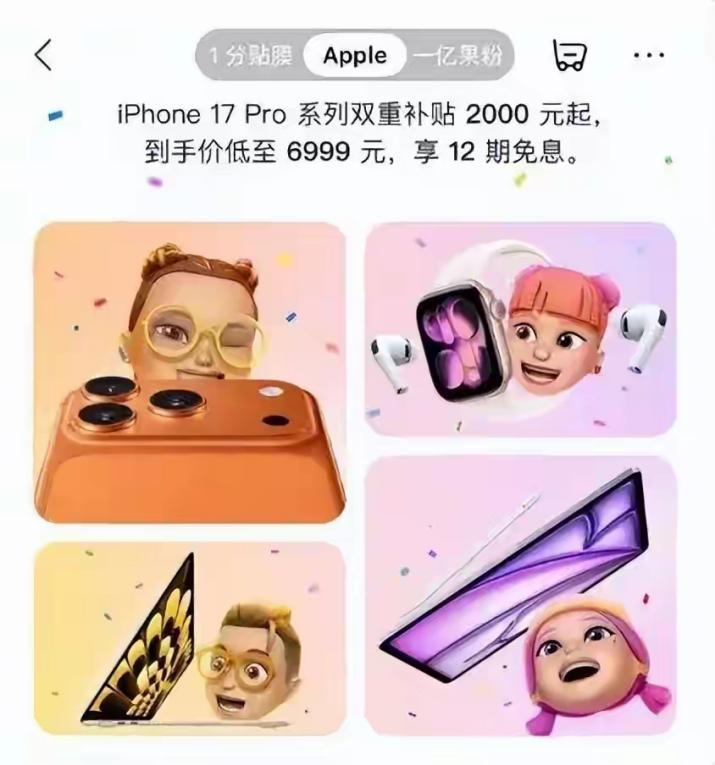
This time, Apple's iPhone 17 Pro took the lead in reducing prices in the high - end mobile phone market, and domestic mobile phone manufacturers have all felt the pressure.
Over the past decade or so, in the high - end market of the Chinese mobile phone industry, there have always been only two players: Huawei and Apple. Apple and Huawei can account for 70% - 80% of the market share, while all other domestic manufacturers together account for about 20% - 30%. Xiaomi and others have been trying to break into the high - end market but have never achieved a breakthrough. In recent years, vivo's performance in the high - end market has only been mediocre, relying on imaging technology and foldable screens.
This is in sharp contrast to the new energy vehicle industry. In the automotive market, new forces such as Li Auto, NIO, and XPeng have successfully broken through the monopoly of traditional luxury cars. The market share of domestic brands in the market above 300,000 yuan in the entire industry is getting closer and closer to 50%. In the mobile phone industry, except for Huawei, no domestic manufacturer has been able to truly gain a foothold in the high - end market and win a high market share.
What's even more embarrassing is that while manufacturers are desperately trying to break into the high - end market, they are being attacked from both sides in the mid - and low - end market.
In the past, some mid - and low - end products became "volume - selling tools" with reduced configurations and poor user experiences, which led to a lot of complaints from users. As a result, they failed to break into the high - end market and also lost the low - end market, falling into a situation where they couldn't please either end.
Now, as others return to the mid - and low - end market, this contradiction has been completely intensified.
The mid - and low - end market already has thin profit margins. When someone enters the market with technological and channel advantages, it further squeezes the living space of other manufacturers. Many manufacturers are facing a difficult choice: if they follow Huawei's configuration, they will incur losses; if they don't, they will lose market share.
So we can see that some manufacturers have started to reduce their technological investment in the mid - and low - end product lines and concentrated a lot of top - level configuration resources on the high - end. Recently, manufacturers such as Apple and Xiaomi have also carried out price promotions, and the high - end mobile phone market has been under pressure. Some manufacturers are trying to transform into the overseas market, but the overseas mid - and low - end market is also highly competitive.
However, it cannot be denied that some manufacturers are actually quite competitive in the mid - and low - end market and are also exploring some new innovative technologies. For example, Honor launched the new Honor GT Pro, targeting the e - sports market, with comprehensive upgrades in performance, battery life, and eye protection. It won the sales championship in the 3 - 5K price segment on all platforms on the first day of sales. At the same time, Honor Power was the first to break through the 8000mAh barrier in the industry, driving Honor to rank first in the 2 - 2.5K price segment and return to the top five in the domestic market during this period. Redmi detonated the market with the Redmi Turbo 4 Pro, which has an "extra - large - capacity" battery. vivo expanded its market coverage with e - sports optimization and fast - charging technology.
This means that competitors have the ability to define products in the mid - and low - end market. Although the Huawei Enjoy 90 series has sold well, it also faces a complex and intense market competition environment. Moreover, the rankings in the domestic smartphone industry do not seem to be fixed, and the advantages of some manufacturers in the past have been short - lived.
Looking back, without the high - end, there is no future; without the low - end, there is no present. A healthy industry should have coordinated