Tianjin's robotics industry can no longer stay under the radar.
Recently, the bright yellow "Underwater Hornet" that shuttles nimbly on the seabed has become a hit in the CCTV footage.
When docked at the shore, it looks square, solid and heavy, like a silent and steady square box, showing no obvious edge.
However, when it slowly sinks underwater, it immediately takes on a different look.
The dark blue sea water wraps around the fuselage, and the bright yellow shell is particularly eye - catching in the deep sea. Just like a real "Underwater Hornet", it hovers steadily in the undercurrent, turns nimbly, moves forward and backward freely. The sonar and detection equipment are turned on simultaneously, accurately scanning and carefully inspecting the dark seabed, leaving no hidden danger of submarine cables unnoticed.
This "Underwater Hornet" is China's first submarine cable detection robot, developed by a company named DeepBlue.
For a long time, this Tianjin - born robot company has been deeply involved in underwater research and development. However, since its products operate underwater and in the deep sea, they are not visible to the outside world.
It was not until DeepBlue's underwater robots started to appear in more and more major events involving complex underwater operations, such as deep - sea scientific research, marine safety, emergency rescue, and water conservancy and hydropower projects, that this company, which has grown into the absolute global leader in underwater robots, emerged from the water.
Not only does DeepBlue hold more than 380 patents and break through strongly as a global benchmark for underwater robots;
The intelligent robot "eye - brain - hand" product matrix of Mech-Mind has been implemented on a large scale in the global market, with an annual shipment of over ten thousand units. Its market share has ranked first in China for five consecutive years and is leading internationally;
The market share of Atom parallel robots ranks first in China, with over 8,000 units shipped; Galileo quadruped robots have just won four national championships; Langyu's 600 - ton heavy - duty AGV has broken the international record...
In Tianjin, a group of down - to - earth robot unicorns have emerged in batches, making a splash across the country with their hardcore strength.
There are more than 200 enterprises in the city, including 104 core chain enterprises, which are characterized by specialization and hardcore strength. Among them, there are 82 high - tech enterprises, 1 national single - champion enterprise, and 13 specialized and sophisticated "little giants".
The overall industrial scale will exceed 25 billion yuan by 2025, with industrial robots accounting for over 75%. Tianjin firmly ranks in the first echelon in China, focusing on industrial implementation and in - depth development.
From the deep sea to the factory, from heavy - duty to embodied intelligence, Tianjin relies on real strength rather than concepts. This northern manufacturing force can no longer be hidden!
"What others can't, we can"
Walking into the headquarters of DeepBlue in Tianjin Binhai New Area, every underwater robot quietly displayed there bears the mark of participating in major national projects.
For example, the "Haiyi" underwater glider is the abyssal - class glider that has dived over 7,000 meters the most times globally and is the only one that can work continuously and stably for a long time. It has completed numerous marine scientific research tasks in the South China Sea, the Indian Ocean, and the Pacific Ocean, collecting hydrological data and observing the ocean topography, completely changing the previous situation of relying on imported related equipment and truly realizing the autonomy and controllability of national marine data security.
According to Tian Chunjiang, the brand director of DeepBlue, DeepBlue's underwater robot products have participated in relevant work of major national projects such as the South - to - North Water Diversion Project, the Three Gorges Hydropower Station, and the water area emergency support for the Shenzhou series of manned spacecraft. They have also played a key role in major emergency rescue scenes such as the bus crash in Wanzhou, Chongqing.
To describe why it is so hardcore in one sentence, it is "What others can't do, we can".
More than a decade ago, the underwater thruster was as important to underwater robots as the propeller is to an airplane. It was the core component of underwater robots, but this component used to rely on imports for a long time, and the cost was also high.
"When the company was founded in 2013, underwater thrusters could only be imported. At that time, the United States mainly mastered the core technology, but the products sold to you by the United States were always backward, and the service life was only 60 minutes. After 60 minutes, if it broke down, there was no warranty, and the unit price was very high." Tian Chunjiang said that in 2015, in order to solve this bottleneck problem, the company decided to independently develop underwater thrusters.
At that time, most of the core members of the team lived in the company. The R & D personnel kept soaking in the seawater test pool. Every time they failed, they would go back into the pool again. During this period, they conducted at least more than a thousand experiments. Finally, in the second half of 2026, the DeepBlue team made a breakthrough and developed an underwater propulsion device with independent intellectual property rights.
As of now, DeepBlue has independently developed a full - series of underwater thrusters ranging from 7 kilograms to 300 kilograms, and some of their performance has exceeded the international level. Market data shows that DeepBlue's underwater boosting robots have captured nearly 60% of the global market share, ranking first in the world.
While DeepBlue's underwater robots shuttle in the deep sea, Langyu's robots lie dormant in heavy - industry workshops.
In the giant dock areas of large shipyards, the general assembly workshops of aviation manufacturing, and the production hinterlands of heavy - industry enterprises, giant components can weigh hundreds of tons, and it is difficult for traditional manpower and conventional equipment to transfer them. However, a series of heavy - duty AGVs with a steady appearance drive smoothly, carrying large fuselages, nuclear power equipment, etc., like huge monsters, accurately shifting, smoothly transferring, and aligning at fixed points, with unmanned operation throughout the process. This is the daily operation scenario of Langyu's robots.
This enterprise, which started in 2008, entered the market from non - standard automation. For 18 years, it has been deeply involved in the heavy - duty mobile robot track, achieved technological independence through continuous innovation, and finally led the world.
In 2021, Langyu's 240 - ton ultra - heavy - duty unmanned transport vehicle was born, breaking the international record. Two years later, the 600 - ton heavy - duty AGV appeared again, breaking the global heavy - duty record. The single - vehicle load of 600 tons still holds the world's first place.
"At that time, no enterprise in the whole country, or even in the world, could achieve this. In fact, our technical reserves have reached the thousand - ton level. If there is market demand, we can produce it." Kong Liang, the deputy general manager of Langyu Robotics, said.
Langyu is not only a breaker of world records but also a definer of industry standards. In 2024, Langyu led the formulation of the industry group standard in the heavy - duty field alone, and the national standard it participated in drafting was officially released and is about to be implemented.
Now, Langyu's robots have fully entered the fields of aerospace, nuclear industry, shipbuilding, large - aircraft production, etc., and have achieved reverse exports to Europe and the United States, covering the core markets around the world, including the Americas, Europe, Southeast Asia, Japan, South Korea, and India.
A Robot High - ground Built through Hard Work
Many star robot enterprises in the market still only apply their products in shallow - level scenarios such as guiding, welcoming guests, and performing, which are still far from industrial productivity.
However, in Tianjin, invisible robot champions like DeepBlue and Langyu have long put their products into factory workshops and vertical operation scenarios that are not easily seen by the public, truly liberating human hands and empowering production operations.
Relying on AI + 3D vision technology, Mech - Mind endows robots with the integrated ability of "eye - brain - hand", specializing in high - difficulty disordered operations and flexible manufacturing scenarios, and enabling robots to truly have the general ability of "seeing, thinking, and doing well". Its products are widely used in fields such as automobile manufacturing, 3C electronics, new - energy lithium batteries, and logistics warehousing, and its market share has ranked first in China for five consecutive years.
Atom's parallel robots have taken the concept of "high - speed" to the extreme. The operation rhythm can reach 80 to 130 times per minute, and one robot can replace 2 - 3 workers. It is specially designed to solve the problems of high - speed sorting, packaging, and loading and unloading of small, light, scattered, and disordered materials. Since 2023, Atom's market share has exceeded that of international giants such as ABB, ranking first among all brands for two consecutive years.
"Currently, more than 1,000 enterprises around the world are using Atom's parallel robots, covering more than 30 countries and regions. More than 8,000 industrial scenarios have been implemented, and it is an absolute leader in the food, daily - chemical, pharmaceutical, and new - energy sub - fields." An official of Atom introduced.
Siasun Robot specializes in industrial necessities: it covers all aspects of spot welding, arc welding, handling, palletizing, and assembly, providing micron - level automated production lines for industries such as automobiles, 3C, and new energy.
Galileo's explosion - proof quadruped robot has achieved self - research in the entire chain of appearance, joints, motors, and algorithms, overcome bottleneck technologies such as high - stiffness explosion - proof joints and all - domain electrostatic protection, filled the gap in domestic electric - drive explosion - proof legged robots, and is widely used in chemical inspection, emergency rescue, and security protection. Its market share in the domestic special - purpose legged robot market ranks among the top.
Wangyuan Technology's pool robots are exported to more than 60 countries and regions around the world. In 2025, its shipment volume will rank first in China and enter the top three globally, firmly holding the leading position in the sub - field.
Not only these, but also HeLi Robotics, Bono Robotics, MuNiuLiuMa, ZhiYiShiDai... A group of robot troops have emerged in Tianjin, making great achievements in their respective tracks.
Their common characteristic is that they only believe in one thing: robots are made through hard work, not through empty talk.
Even in the field of embodied intelligence, most of the well - known star robot companies in the market flock to the most eye - catching and topic - worthy track of bipedal humanoid robots. However, Tianjin takes a different approach by equipping robots with wheeled chassis.
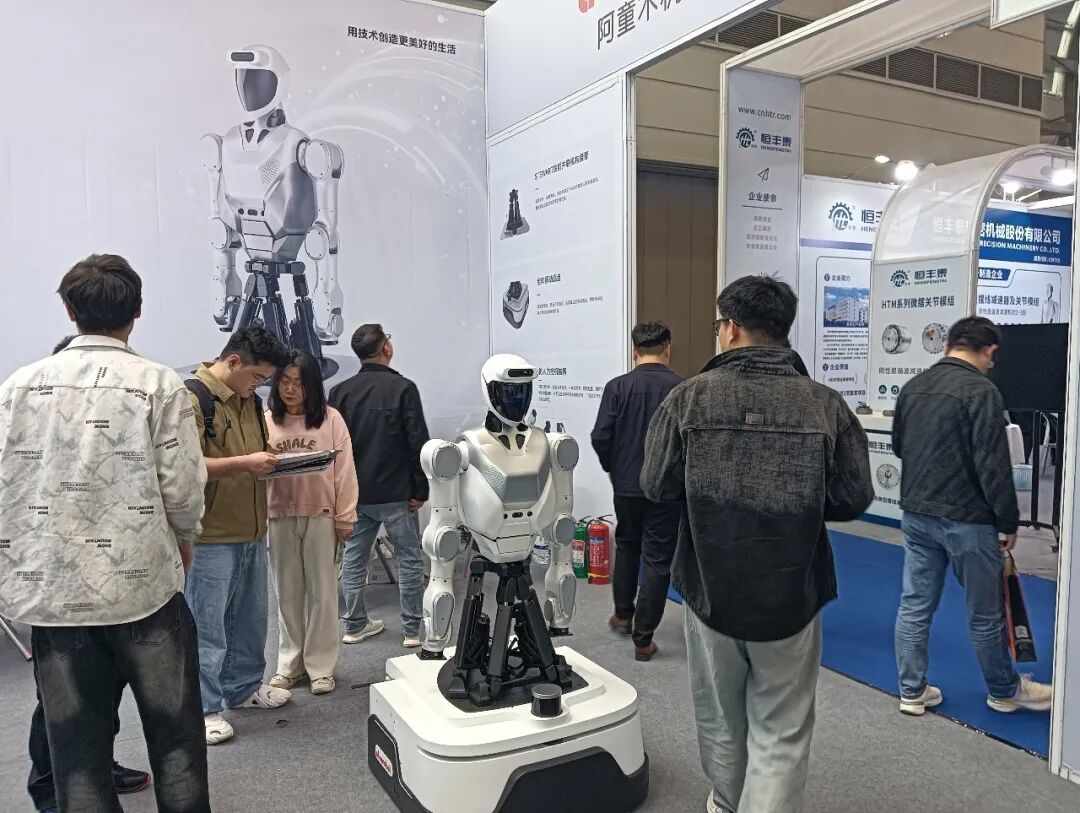
For example, the humanoid robot "Tianbing No. 1" developed by Atom uses a wheeled chassis + parallel waist, with a load - bearing capacity of up to 200 kilograms, and specializes in cross - production - line handling in factories.
Why is it called "Tianbing No. 1"?
It may seem to give people a super - imaginative and imposing feeling, but no, "It means the soldiers from Tianjin."
Then why not make more gimmicky humanoid robots? The answer is even more straightforward: "Our embodied robots are designed to truly enter factories, workshops, and do heavy work. To truly immerse in factory scenarios, operate stably for a long time, and withstand high - intensity handling and other usage scenarios, at present, the wheeled chassis is the most practical, efficient, and implementable choice."
You can see that the starting points of these enterprises are all the same: based on industrial needs, focusing on practical applications, and transforming technological advantages into visible production scenarios to create a batch of hardcore and practical innovative products.
More directly, they don't aim to be internet celebrities but to be the backbone of the real economy.
It is precisely this down - to - earth attitude that has enabled the rapid rise of the robot industry in Tianjin.
Market data shows that as of March 2026, the scale of Tianjin's robot industry has exceeded 25 billion yuan, with more than 200 enterprises. The entire chain of core components, ontology manufacturing, and system integration has been connected, and its strength firmly ranks in the first echelon in China, making it a well - deserved northern robot high - ground.
Why Tianjin?
The quiet rise of Tianjin's robot industry is not a matter of accidental luck but an inevitable result of the long - term accumulation and development of an industrial old city, and it is the down - to - earth confidence engraved in the city's genes.
When talking about the growth path of Langyu Robotics, Kong Liang's memories are full of opportunities of the times and gifts from the city: "When we started our business, we focused on the heavy - duty AGV track, which originated from the urgent pain points of a foreign - funded enterprise in Tianjin. The more we delved into it, the clearer we became that this industrial city of Tianjin has never lacked real industrial needs - the large - scale industrial enterprises all over the city and the front - line manufacturing scenarios not only gave us space for trial - and - error and iteration but also gave us the confidence to continue to delve deeply, allowing us to gain a foothold and grow step by step through hard work."
This is the core secret of the rise of Tianjin's robot industry: the century - old industrial accumulation is not a dusty past but a fertile soil for nurturing new - quality productivity; the solid manufacturing foundation is not a heavy burden but a solid base to support the growth, iteration, and breakthrough of the robot industry.
This confidence is not only deeply felt by local enterprises but also attracts leading enterprises from other places to come and settle down.
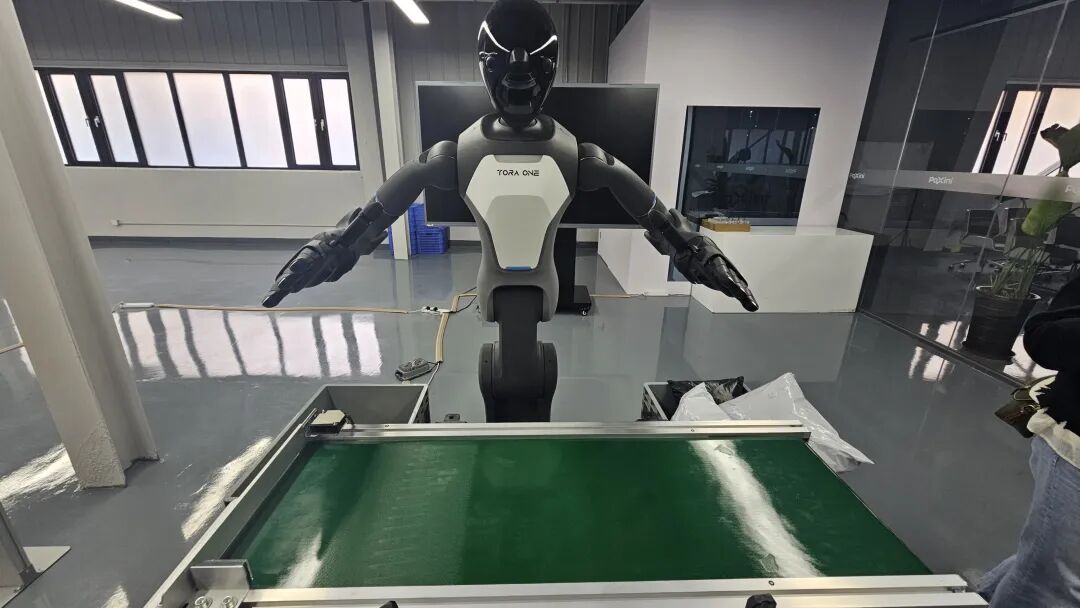
Pacini Perception, a star enterprise from Shenzhen, has chosen to build its first and largest global full - modal embodied intelligence data factory in Tianjin. As of now, more than 72 million high - quality scenario data have been collected here, which is 10 to 100 times the open - source data in the industry, and the annual production target is set at 200 million. It is voting for Tianjin's industrial value with practical actions.
Why Tianjin?
The answer from an official of Pacini reveals the unique advantages of this city: First, the century - old industrial heritage has cultivated a large number of industrial workers who understand scenarios, manufacturing, and needs. They are rooted in various real scenarios such as industry, medical care, and people's livelihood, injecting the most down - to - earth practical wisdom into technological R & D, making products meet the urgent needs from the very beginning; Second, the government, enterprises, and universities work together. With rich university resources, precise policy support, and close enterprise cooperation, a comprehensive support system has been built for R & D and talent cultivation, allowing innovation to flourish; Third, the rich and diverse real industrial scenarios have become a natural test field for the implementation, verification, and rapid iteration of embodied intelligence technology.
As the birthplace of modern industry in China, Tianjin's industrial genes have been integrated into the city's blood and engraved in the city's texture.
It has the most complete industrial system in the country, a solid heavy - industry foundation, and has built a complete closed - loop industrial chain from the R & D of core components, ontology manufacturing to scenario - integrated applications. This profound industrial soil and the closed - loop industrial chain ecosystem are Tianjin's unique ecological niche in the field of embodied intelligence robots, a core barrier that other cities are difficult to copy and cannot imitate, and an important support for the breakthrough of China's robot industry.
Deep soil will eventually nurture towering trees; solid accumulation will eventually lead to glorious moments. Tianjin's robot industry is a perfect example of such "long - term accumulation and sudden outburst".
Now, this strength can no longer be hidden or blocked.
The industry has already seen its edge: In 2025, there were 104 core enterprises in Tianjin's robot industrial chain, including 82 high - tech enterprises,