China holds the key to survival: BMW's new boss fights a do-or-die battle
The BMW Group has witnessed an extremely low - key leadership change.
On May 13th local time, the BMW Group announced important personnel changes. Oliver Zipse, the current Chairman of the Board and CEO, will end his term as planned. Milan Nedeljkovic, the new leader, will officially take over as the Chairman of the Group on May 14th for a five - year term.
Looking back to 2019 when Zipse took over:
BMW actively created momentum officially. Taking the opportunity of the leadership change, it released a new medium - and long - term development plan, clarifying a new route for electrification, digitalization, and globalization. This became a landmark event in the major strategic turning point of the brand.
Back to this year, everything seems a bit “quiet”.
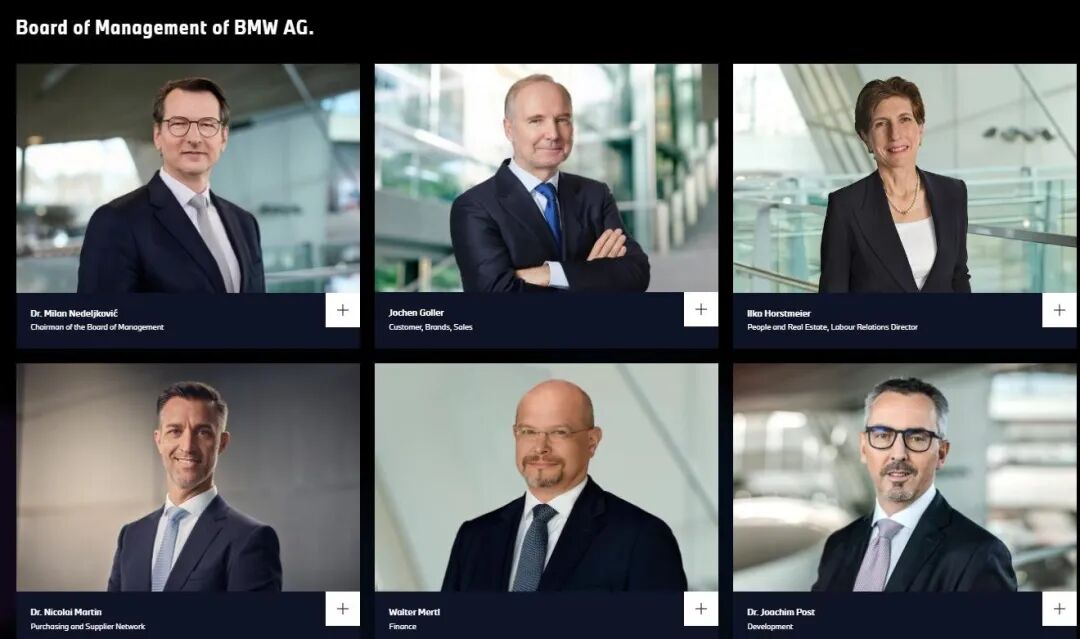
On the one hand, this personnel change is a normal leadership change in the established rhythm. At 61 years old, Zipse has reached the retirement age for European automotive professional managers, and his term contract has expired.
On the other hand, BMW is currently under pressure in its business fundamentals. The Group's strategic focus has shifted to lean cost control and stable operation. Completing the power handover in a low - key manner is in line with the development tone of prudence and stability.
Milan Nedeljkovic is destined to fight the toughest battle.
He is faced with a series of thorny problems:
This is the moment when BMW's external environment is the most adverse. The global economic recovery is weak, international trade barriers are increasing, and the US tariffs are putting pressure on both costs and profits;
This is also the period when BMW's internal contradictions are the most concentrated. The continuous investment in the electrification transformation and the short - term profit target form a natural game. The implementation effect of the new - generation platform will directly affect the company's development ceiling.
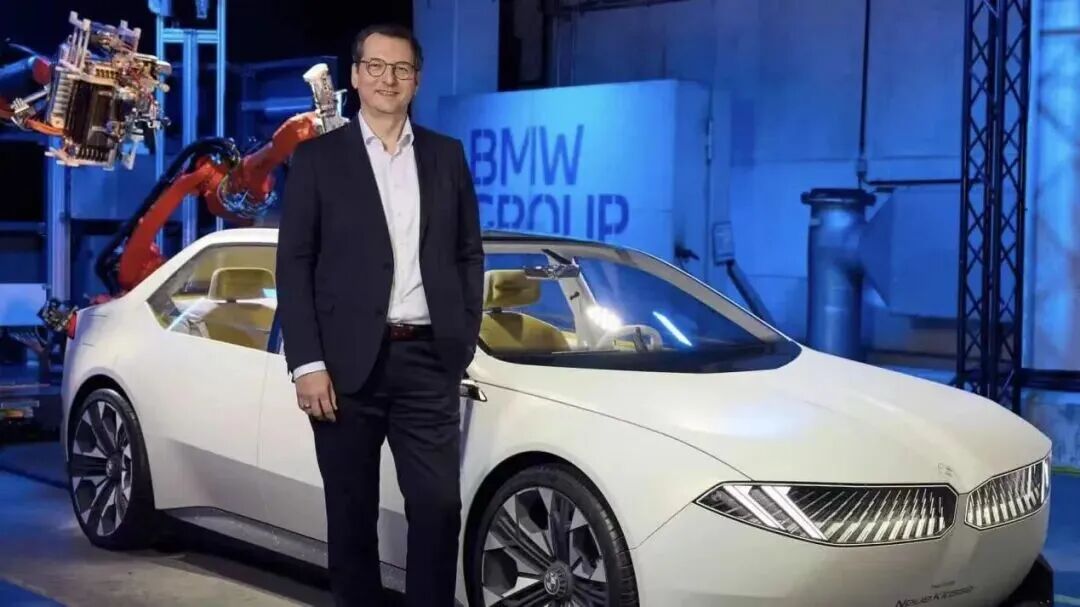
This is also the time when the time window is the most urgent.
From 2026 to 2028 has become the last window period for the electrification transformation of luxury brands. If you are one step behind, you will be left behind in every step. Facing the unfavorable start in the Chinese market, the local brands are continuously eroding the premium space of BBA. In the red - ocean competition, the success or failure of the Nedeljkovic era will largely be determined by the Chinese market.
01
The Two Sides of the Production Expert
This latest appointment makes Nedeljkovic the fourth person in the history of the BMW Group to be promoted to the helmsman from the production department.
His strengths are very obvious:
Within the BMW Group, Nedeljkovic is a production manager deeply involved in manufacturing and also a top - level executor in front - line manufacturing.
He graduated from the top - ranked RWTH Aachen in Germany and the Massachusetts Institute of Technology (MIT) successively, and then obtained a doctorate from the Technical University of Munich. He joined BMW in 1993 and started as an intern.
Nedeljkovic has been responsible for the planning of the body shop, the operation of the stamping shop, and the management of the Oxford and Leipzig plants. In the process of managing the increasingly complex production system, he gradually grew into a manufacturing expert within the Group and was finally appointed as the head of the Munich plant, a landmark of BMW.
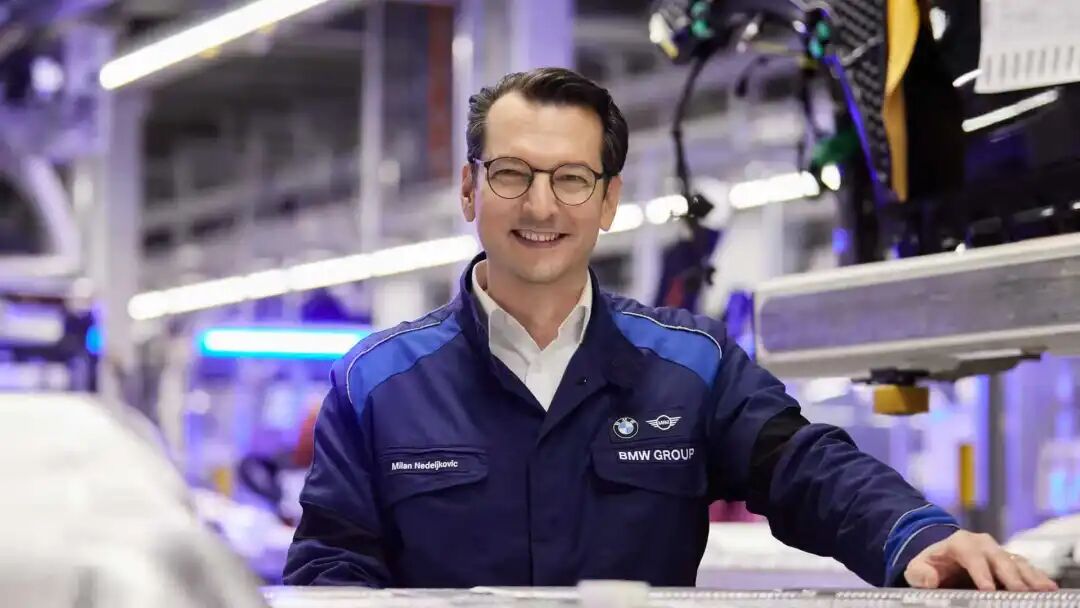
At the Munich plant, Nedeljkovic led the overall transformation and upgrading of the plant, enabling this production base with a profound historical heritage to achieve the mixed - line production of fuel - powered vehicles and electric vehicles.
This breakthrough transformation laid a production foundation for BMW's “parallel multi - power routes” strategic layout and built technological resilience and flexibility for the Group in the new era.
He is not only familiar with manufacturing but also good at innovation.
From the i3/i8 to the new - generation, Nedeljkovic has almost fully promoted the transformation of the BMW Group's production system from fuel - powered to electrified, providing capacity and quality assurance for BMW's electrification strategy.
In the past few years, Nedeljkovic has become the core leader of the new - generation Neue Klasse electric vehicle platform and has successfully used NVIDIA's cutting - edge technology to build a digital twin model for BMW's future factories.
As early as 2021, when artificial intelligence was not yet a popular term in automobile manufacturing, Nedeljkovic, then the head of production at the BMW Group, had the foresight to decide to use NVIDIA's virtual technology to plan future factories instead of Siemens' tried - and - tested factory software suite.
At that time, this was undoubtedly a bold adventure.
It is no exaggeration to say that he is the “anchor” of BMW's manufacturing system.
At this stage, he is the best candidate for the helmsman, but as the commander - in - chief, Nedeljkovic's identity is also the most special.
As mentioned above, Nedeljkovic is a production manager deeply involved in manufacturing and a top - level executor. Different from top leaders like Zipse, he is not a strategic and management expert in top - level design.
He is a direct descendant of BMW's in - house manufacturing. His career trajectory has been highly focused on production and quality, and he has never been responsible for sales, marketing, and brand strategy. Steering the ship during the decisive period of BMW's electrification and intelligence, the margin for error is naturally compressed to the extreme.
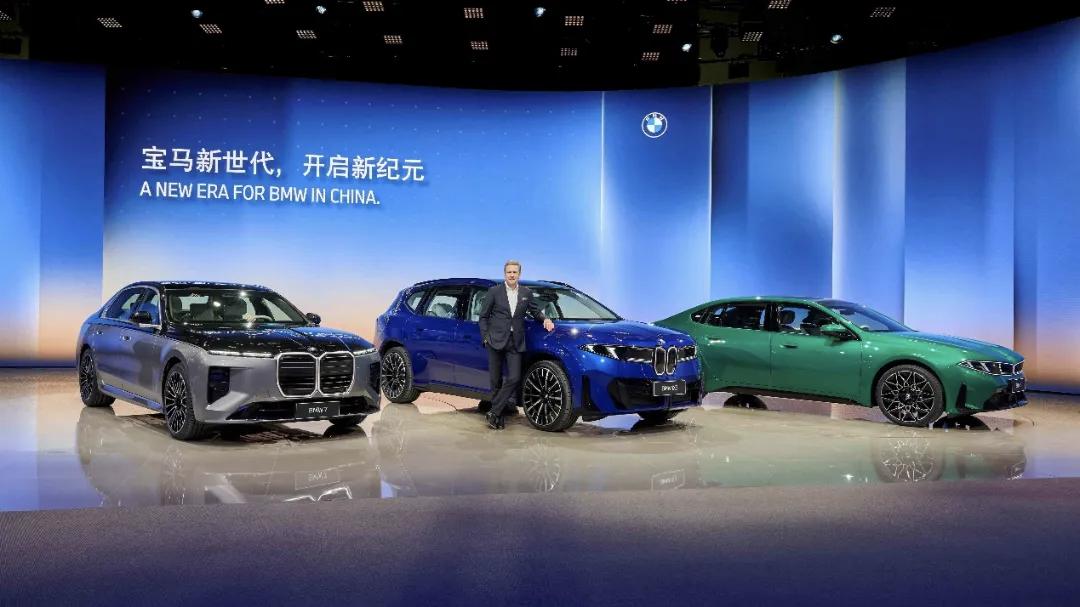
Currently, it is the overlapping period of the electrification battle for survival, the intelligent transformation positioning battle, and the battle to defend the Chinese market for luxury car brands. Each of these three battles is fierce. In the face of the changing times, the leaders of BBA need to plan the strategic direction proactively, balance the global market, and withstand the pressure of transformation with strong execution.
From this perspective, Nedeljkovic's challenges are not small.
It can even be said that if the new - generation platform succeeds, BMW will be stable.
This core carrier, which bears all the hopes of the brand's electrification transformation, once it successfully achieves mass production ramp - up and market popularity, can stabilize BMW's global market share, hedge against multiple pressures such as the involution in the Chinese market and the impact of US tariffs, and maintain the brand's voice in the luxury car market.
If the new - generation platform fails, both Nedeljkovic's career and BMW's future will be under pressure. If the platform fails to meet expectations and the product competitiveness is insufficient, BMW will miss the golden window period of electrification, and Nedeljkovic, the helmsman, will fall into a trust crisis. His performance during his term and professional reputation will be severely damaged.
02
The Chinese Market Determines Success or Failure
At the end of December last year, when the BMW Group officially announced that Nedeljkovic would take over as the new CEO, Moritz Kronenberger, an executive of BMW's shareholder - joint investment company, told Reuters:
“The success or failure of the Nedeljkovic era will be determined by the Chinese market.”
Zipse, the former leader, was very aware of the importance of the Chinese market.
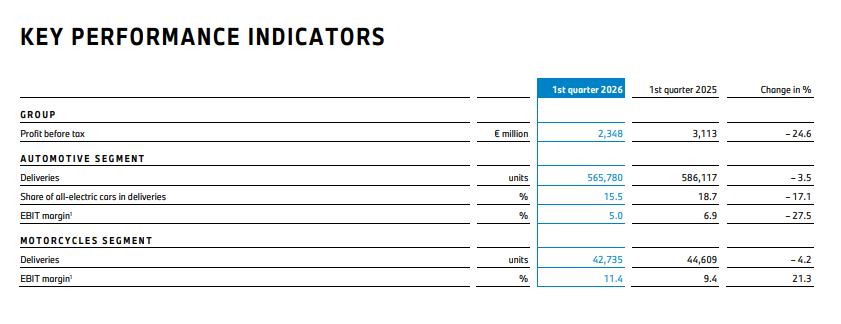
In the years when Zipse was in charge, the BMW Group deepened its connection with the Chinese market with unprecedented intensity. In fact, Zipse was the top leader of a multinational automobile company who visited China most frequently in the past 2025 years. On many public occasions, he frequently emphasized that “China is BMW's second hometown,” raising the level of attention to the Chinese market to an unprecedented height.
Can Nedeljkovic reverse the situation in the Chinese market?
At the beginning of May, the BMW Group released its performance report for the first quarter of 2026. The data shows that the Group's revenue, pre - tax profit, and net profit all narrowed, with a double - digit decline year - on - year.
Although it still seems to maintain positive profitability, the pressure is very obvious:
The revenue was 31.01 billion euros, a decline of 8.1%;
The pre - tax profit (EBT) was 2.348 billion euros, a decrease of 24.6%;
The net profit was 1.672 billion euros, a decline of up to 23.1%.
At the earnings conference, BMW directly “named” China -
“The competition in the world's major automotive markets is becoming increasingly fierce, especially in the Chinese market, which has impacted our pricing and sales volume, and thus had an adverse impact on profits.”
“Affected by multiple factors such as the weakening demand in the Chinese market and additional tariff expenditures, even though cost savings were achieved in the current period, it could only partially hedge the above - mentioned operating pressure...”
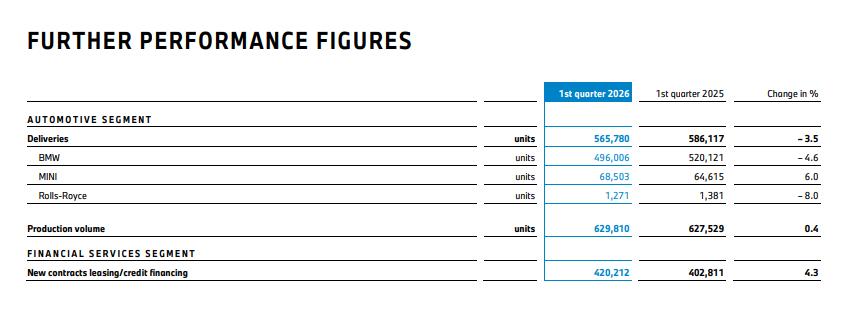
It is not difficult to see that as BMW's largest single market in the world, China has become the core variable dragging down the Group's performance in the first quarter.
The strong rise of local high - end new - energy brands has triggered intense involution, and the continuous price war in the industry has compressed the premium space of luxury cars, making China the key problem dragging down the Group's overall revenue and profit level.
In terms of sales volume, it is also under pressure.
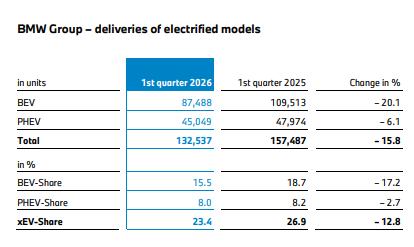
These are the core data of the BMW Group in the first quarter:
A total of 565,700 new cars were delivered globally, a year - on - year decline of 3.5%;
The sales volume of electric vehicles was 132,500, a decrease of 15.9%;
The sales volume of pure - electric vehicles was 87,400, a decline of 20.1%.
Like the profit fundamentals, in the first quarter, the cumulative sales volume in the Chinese market was 143,900, a year - on - year decline of 10%, making it the single market with the largest decline in the BMW Group globally.
Nedeljkovic's “Chinese test” is full of pressure.
On the one hand, as a “technical expert” with 32 years of experience in production and manufacturing, Nedeljkovic's core mission is to fully implement the new - generation Neue Klasse electrification strategy and reverse the downward trend of profits. All of this is based on winning the battle in the Chinese market.
On the other hand, the Chinese market is no longer just an “important market” for BMW, but the “only core market” in the short term. When the growth in the European market has reached its peak and the US market is affected by the reduction of subsidies and tariffs, the Chinese market, where new - energy vehicles are booming, still has room for growth in scale and profit.
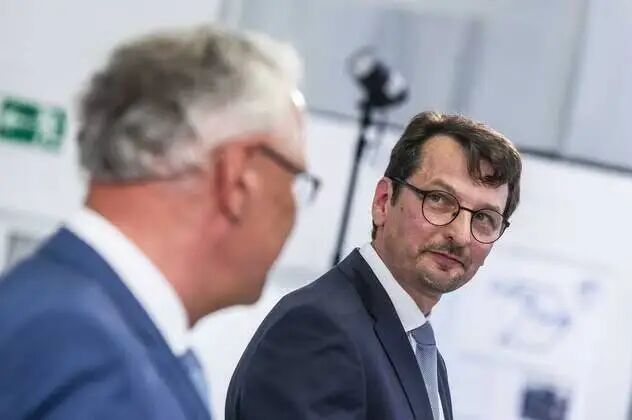
The key is, how will Nedeljkovic make his move?
At this year's Beijing Auto Show, the entire BMW board of directors gathered in the East to witness the global debut of the new - generation BMW iX3 long - wheelbase version, the new - generation BMW i3 long - wheelbase version, and the new BMW 7 Series. The press conference was hosted by Zipse, and Nedeljkovic stayed behind the scenes quietly, communicating with fellow executives about manufacturing and the supply chain -
This was his last overseas public event before taking over as the Chairman.
Amid the ever - changing Chinese auto market, witnessing the strong rise of local new - energy brands and the fierce competition in the luxury car market, Nedeljkovic, who is about to take over the highest power at BMW, must have a mixed feeling in his heart.
Standing at the crossroads of the changing times, he is already aware that the success or failure of his future term and the future direction of the brand are deeply tied to this oriental land full of opportunities and challenges.