ZhiYuan's "Open Strategy": Not Competing in Exhibition Matches, but Betting on the Grand Game
ZhiYuan has staked too much: capital, reputation, and the prime careers of its two founders. It has no excuses or retreats. It must succeed.
In the first half of the year, the Chinese robotics circle was like a magical realist drama.
In April, the half - marathon for humanoid robots kicked off in Yizhuang, Beijing. More than a hundred teams competed on the same stage, and the scene was like a "robot - version Animal World". YuShu's H1 stumbled several times. Although the previous champion, TianGong Ultra, broke the record, it was outshone by Honor, a mobile phone manufacturer that had only entered the field eight months ago.
Almost at the same time, at the scene of the ZhiYuan Partners Conference in Zhangjiang, Shanghai, the founder Deng Taihua and "ZhiHui Jun" Peng Zhihui took turns on stage, presenting a grand narrative including the XYZ curve, the Year of Deployment State, and the "3 - 5 - 8 Blueprint". The numbers "1 billion in revenue", "10,000 units in mass production", "10 billion in five years, 100 billion in eight years" scrolled on the screen.
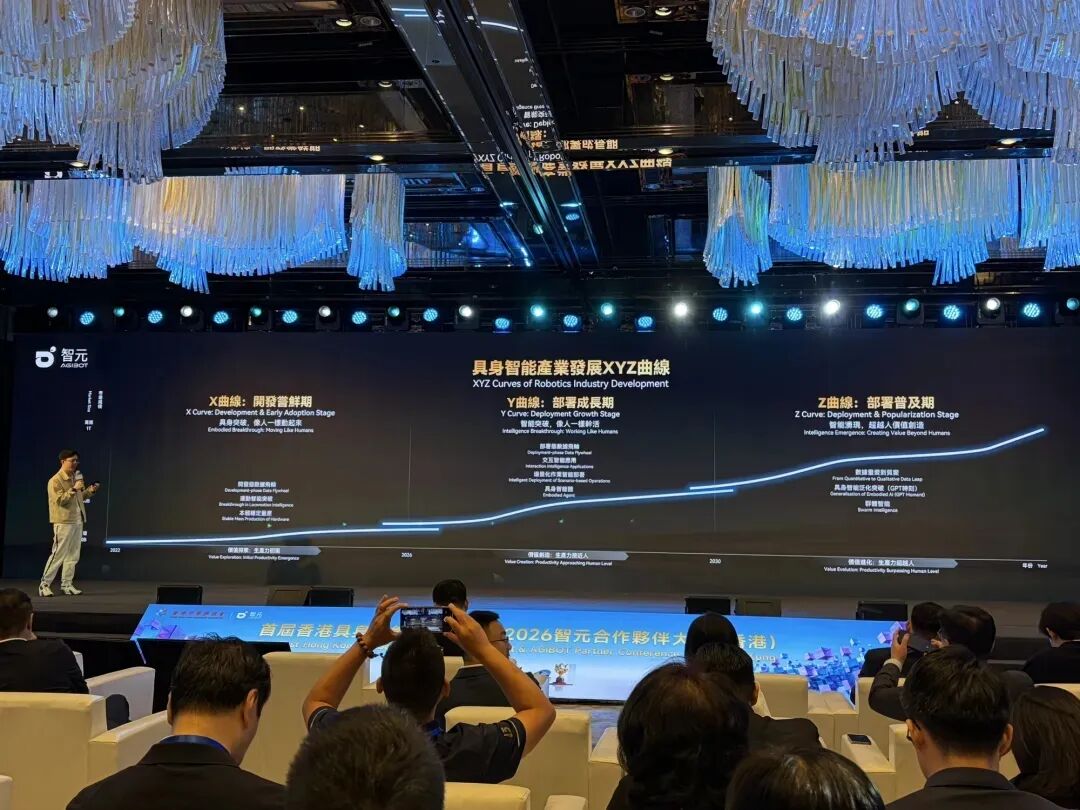
The two events showed two different postures. One was "fighting for a place" on the track, and the other was "talking about the future" in the venue.
ZhiYuan didn't appear on the Spring Festival Gala stage or on the track in Yizhuang. It seems to be deliberately avoiding all pure performances. This is not only a strategic choice but also a well - calculated conspiracy: while the industry is still competing on who can do the most beautiful somersaults, ZhiYuan has started to bet on a bigger game - evolving into a productivity tool and becoming the AI infrastructure of the physical world.
1
ZhiYuan's "Dual Cores": Two Engines from Huawei
Early on, the spotlight from the outside world on ZhiYuan seemed to be more focused on "ZhiHui Jun".
ZhiHui Jun, namely Peng Zhihui, is a "wild Iron Man" with millions of fans on Bilibili and the "technological totem" of ZhiYuan. His words "Embodied intelligent agents will become the biggest Token consumers in the AI era" are full of the romance and grandeur of an engineer. He is responsible for making robots "more human - like", with more natural gaits, more anthropomorphic interactions, and more dexterous hands.
However, all along, the real "anchor" of ZhiYuan has actually been Deng Taihua.
This former vice - president of Huawei and president of the computing product line worked at Huawei for more than twenty years and personally led the construction of the Kunpeng and Ascend computing ecosystems. Peng Zhihui was one of his "genius teenagers" at Huawei at that time. At the end of 2022, Deng Taihua left Huawei to start his own business. At that time, OpenAI had just ignited the flames of large - scale models, and embodied intelligence was still unnoticed. But Deng Taihua believed that AI must move from behind the screen into the physical world, and the best carrier is the humanoid robot. In February 2023, ZhiYuan was officially established.
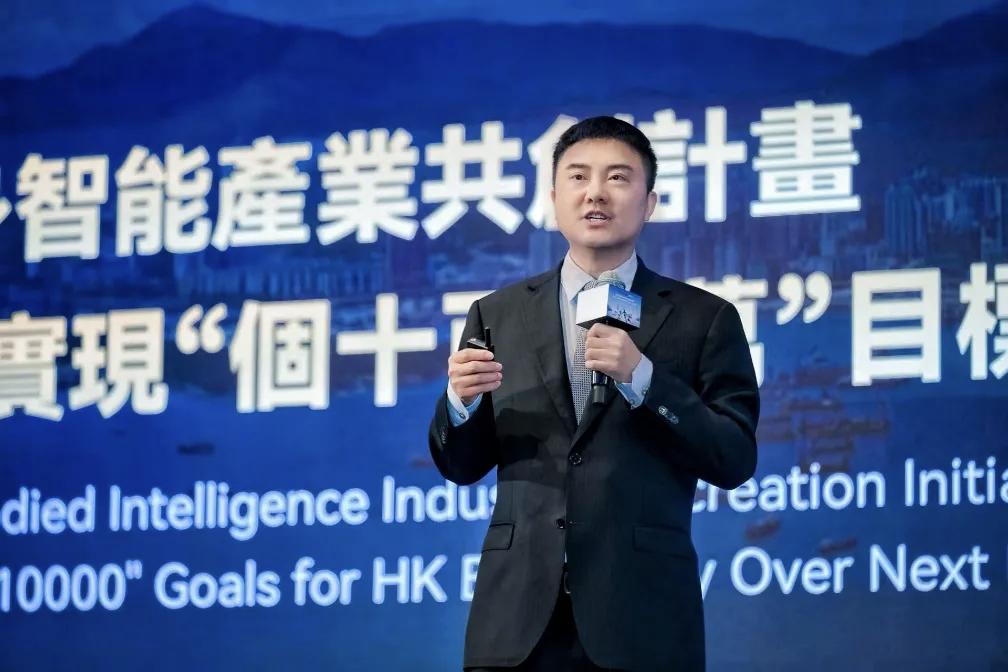
Compared with the tech geek ZhiHui Jun, Deng Taihua is more like a pragmatic industrial realist. He knows too well what an industry needs to go through from 0 to 1 and from 1 to 100. The first thing he did after founding ZhiYuan was not to focus on R & D, but to draw a "3 - 5 - 8 Blueprint": 1 billion in three years, 10 billion in five years, and 100 billion in eight years. This is not an optimism about technology but an inverse deduction of the industry.
Internally, the division of labor between the two is very clear: ZhiHui Jun is responsible for making the robot "smarter", and Deng Taihua is responsible for making the robot "more marketable". One is in charge of product definition and technological height, and the other is in charge of strategic financing and commercial implementation. This dual - core partnership of a strategist and a tech geek is unique among domestic robotics startups. Zhou Jian of Ubtech shoulders the responsibility alone, and Wang Xingxing of YuShu is both a tech maniac and the face of the company, while ZhiYuan has been a "dual - engine" from the start.
But there is a detail worth pondering. Before 2025, almost all of ZhiYuan's public voices were from ZhiHui Jun; after 2025, especially after the acquisition of Shangwei New Materials and the start of large - scale commercialization, Deng Taihua began to frequently step forward. ZhiHui Jun's title changed from CEO to President and CTO, while Deng Taihua became Chairman and CEO. This is not a simple adjustment of division of labor but a fundamental shift of the company's focus, from "making it" to "selling it".
Deng Taihua said at the partners conference: "We are not in a hurry to pursue positive net profit. We should focus on the future. This is a long - distance race." In other words, ZhiYuan can accept losses, but it must build up its scale.
This approach of "occupying the land first and then collecting rent" is a typical Deng Taihua style. He did the same when he was in charge of the Kunpeng and Ascend ecosystems at Huawei: regardless of short - term returns, first invest resources to expand the scale, and then harvest value through the ecosystem. In just three years since its establishment, ZhiYuan has completed 12 rounds of financing, and its valuation has reached 15 billion yuan. In contrast, YuShu Technology, which has been established for nine years, has only completed 9 rounds of financing.
Deng Taihua is using the way of operating a large - scale company's ecosystem to fight the battle of a startup. ZhiYuan is rapidly stockpiling ammunition in an almost "regardless of cost" way: its R & D investment is 5 to 10 times the industry average, and its employee scale is three times that of YuShu. But on the other hand, when the enthusiasm in the primary market fades, how far can this financing - driven model go?
2
How Much Hype is There in the Narrative of Scale?
On the night before Deng Taihua presented the "Year of Deployment State" on stage on April 14, 2026, ZhiYuan did something that silenced the industry on the production line at the Longqi Science and Technology Park in Nanchang, Jiangxi: an 8 - hour continuous live - stream showed that the Elf G2 humanoid robot completed the precise loading and unloading of tablets on the high - speed 3C production line, with 2,283 operations and 0 errors, achieving a 100% success rate.
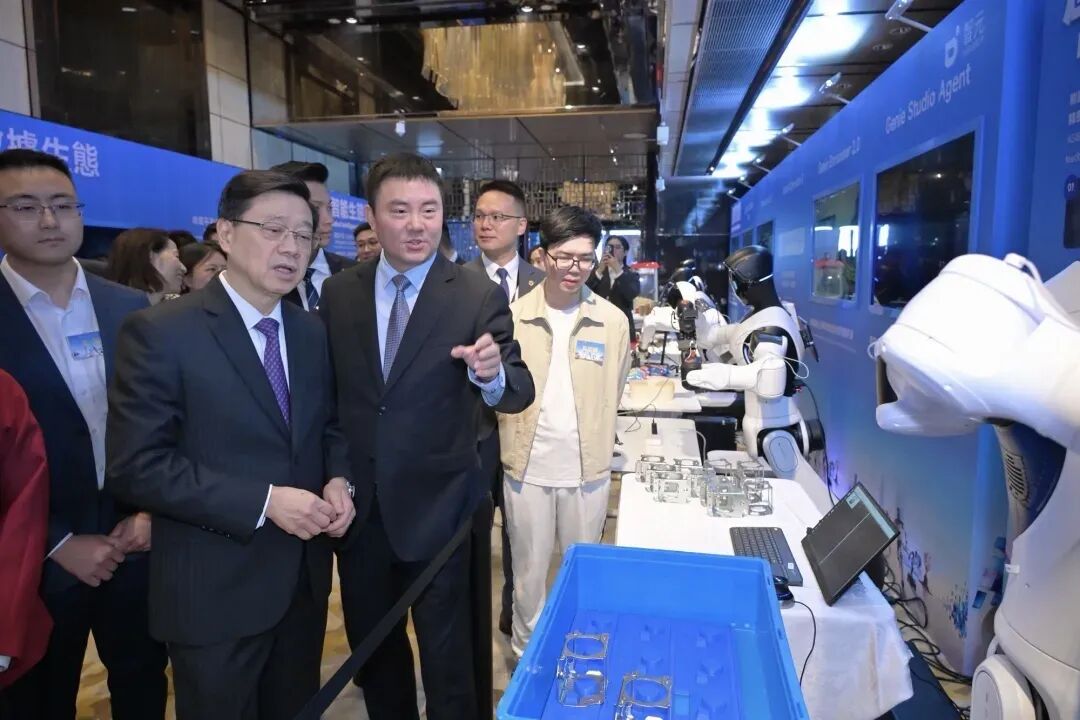
This is not a demo or a rehearsal but a regular deployment. ZhiHui Jun later referred to this live - stream as "the moment when the robot changed from a performer to a worker" in an interview. This also means that the embodied intelligent robot is no longer an exhibit but a tool.
ZhiYuan defines this node as the "Year of Deployment State". The XYZ curve proposed by Deng Taihua is essentially a roadmap for the industry from technology to business: the X - curve (2022 - 2025) is about "being able to move", the Y - curve (2026 - 2030) is about "being able to do", and the Z - curve (after 2030) is about "intelligent emergence".
This division is insightful but not really new. Almost all technology industries follow a similar S - shaped curve. What really deserves scrutiny is that ZhiYuan believes it has taken the lead in entering the Y - curve. Moreover, the official narrative gives three reasons:
First, mass - producing 10,000 units. Deng Taihua repeatedly emphasizes that "scale is king"; second, seven scenario - based solutions covering three major directions: industrial, commercial, and special; third, a data closed - loop. Mifeng Technology is trying to use the real - world data from 10,000 robots to improve the model.
These three layers of narrative seem to be interlocked, but upon closer examination, there are cracks in each layer.
Producing 10,000 units is indeed a milestone, but these 10,000 units are not all full - sized humanoids. They include various forms such as quadruped robots, wheeled robots, and half - sized humanoids. YuShu later clarified that its humanoid robot shipments in 2025 exceeded 5,500 units, higher than ZhiYuan's 5,100 units. This "battle for the first place" is essentially a game of statistical caliber. Although large - scale delivery has been achieved, the "quality of scale" is questionable.
Looking at the scenarios, the seven solutions sound grand, but ZhiYuan has chosen entry points in "simple environments and relatively controllable tasks". For example, the 3C production line has fixed tracks, the palletizing and depalletizing have standard processes, and the security inspection has a preset route. This is of course a pragmatic approach, but there is still a long way to go to reach the end - goal of "complex environments and complex tasks". In short, ZhiYuan has taken the lead in picking the low - hanging fruit.
As for the data flywheel, the logic is correct, but the premise is that the deployment volume must be large enough and the data quality must be high enough. ZhiYuan plans to achieve 10 million hours of effective data in 2026, which is still a drop in the ocean compared to the trillions of Tokens in large - language models. ZhiHui Jun himself also admitted in an interview: "Data is still a big bottleneck."
An even more delicate issue than data is the "self - financing" that ZhiYuan repeatedly mentions. ZhiHui Jun said in an interview in April this year: "We really don't lack money now. The commercialization pace is very fast, and we are able to self - finance. We are not that eager for external primary - market financing."
But what does self - financing rely on? If it relies on hardware sales, with a selling price of 200,000 - 500,000 yuan and a 2 - year ROI, it is difficult to cover the high R & D costs before large - scale production. If it relies on RaaS leasing, the service - based income can only slightly improve the cash flow and make a negligible contribution to the revenue scale. If it relies on the financing return from subsidiaries, it is essentially a capital game of "moving money from one hand to the other" rather than real operational self - financing.
ZhiYuan has not disclosed the specific figure of its loss rate, only saying that it is "continuously narrowing". But narrowing does not mean turning positive. With the goal of 10 billion in revenue in 2027, even if the loss rate narrows to 10%, the annual loss will reach 1 billion yuan. Who will pay this money? The primary - market investors have invested in more than a dozen rounds, and the secondary - market shareholders need to see a clear profit expectation. ZhiYuan says it "doesn't lack money", but that money is raised, not earned. The former is the market's expectation, and the latter is the proof of ability.
3
Who is the "King" between ZhiYuan and YuShu?
All along, the most high - profile and event - creating company in the robotics circle has never been ZhiYuan.
Now this judgment is verified again. On May 12, a video swept across global social media: a nearly 3 - meter - tall manned transforming mech walked out of the garage, punched down a concrete brick wall, and strode forward under the control of the driver. The driver of this mech named GD01 is Wang Xingxing, the founder of YuShu.
This is YuShu's consistent style: extreme, romantic, and directly targeting the C - end mindset. From the Spring Festival Gala stage to the half - marathon, from quadruped robot dogs to manned mechs, Wang Xingxing never hesitates to show the "cool" side of robots to the world.
If we put ZhiYuan and YuShu together, we can almost see the divergence of the development paths of the entire Chinese robotics industry.
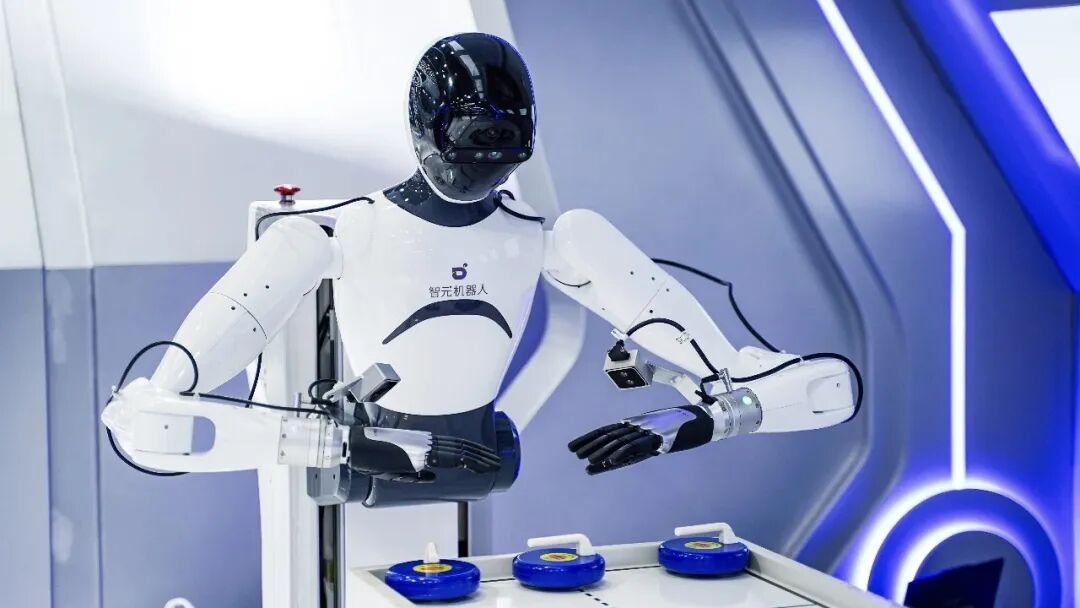
YuShu is the ultimate representative of the "hardware school". Wang Xingxing believes in "building good hardware first and then talking about intelligence". YuShu has been selling quadruped robot dogs for more than a decade. The price of its humanoid robot G1 is less than 100,000 yuan, and more than 90% of its core components are self - developed. In 2025, its net profit exceeded 600 million yuan, making it one of the very few robotics companies that can make a profit from hardware. This GD01 is more like an expression of technological romanticism: we don't just make tools; we also create dreams.
ZhiYuan is fully betting on the "ecosystem school". Although ZhiHui Jun may be similar to Wang Xingxing, Deng Taihua doesn't want a single blockbuster product but a full - stack network covering the robot body, model, data, platform, and scenarios. The four subsidiaries spun off from ZhiYuan each raise funds and operate independently, forming a "carrier battle group". In 2025, its revenue exceeded 1 billion yuan, but its profit situation is kept secret, which in itself is a signal.
There is no absolute right or wrong between the two paths, only different time windows.
Currently, YuShu is undoubtedly the biggest winner. It has a healthy cash flow, a clear profit model, and low - cost, high - cost - performance hardware products. However, its risk is that if there is a breakthrough in the "brain" of embodied intelligence in the next two years, YuShu's hardware advantage may be quickly leveled. Honor only took eight months to build a humanoid robot that can run a marathon, which is a slap in the face of the theory of "hardware barriers".
But if we look further into the future, the winner may be ZhiYuan. It has a complete ecological layout, a luxurious capital lineup, and a clear path for "deployment - state" implementation. However, its risk is also fatal: if the "intelligent emergence" is delayed, if the data flywheel doesn't work, and if customers find that the ROI of the robot on the production line doesn't add up, ZhiYuan's grand narrative will become a castle in the air. Deng Taihua admitted in his speech that the "loss profit rate is continuously narrowing", but narrowing does not mean turning positive. The goal of 10 billion in revenue seems aggressive, but there is huge cash - flow pressure behind it.
YuShu dares to appear on the Spring Festival Gala, participate in the marathon, and launch a manned mech. This is a "show - of - strength" approach, suitable for capturing the C - end mindset. ZhiYuan stays away from performative events and chooses to live - stream an 8 - hour work process in the factory. This is a "show - of - practicality" approach, more suitable for building the trust of B - end customers.
One is attracting fans, and the other is expanding territory. In the short term, YuShu gains popularity, while in the long run, ZhiYuan is closer to the essence of the industry. However,