From network deployment to monetization: Spacety has reached a new turning point in commercial spaceflight.
In 2026, China's space industry celebrates its 70th anniversary.
70 years ago, China's first artificial earth satellite, "Dongfanghong-1", was successfully launched in Jiuquan. This satellite weighed 173 kilograms and broadcast the melody of "The East Is Red" into space at a frequency of 20.009 MHz.
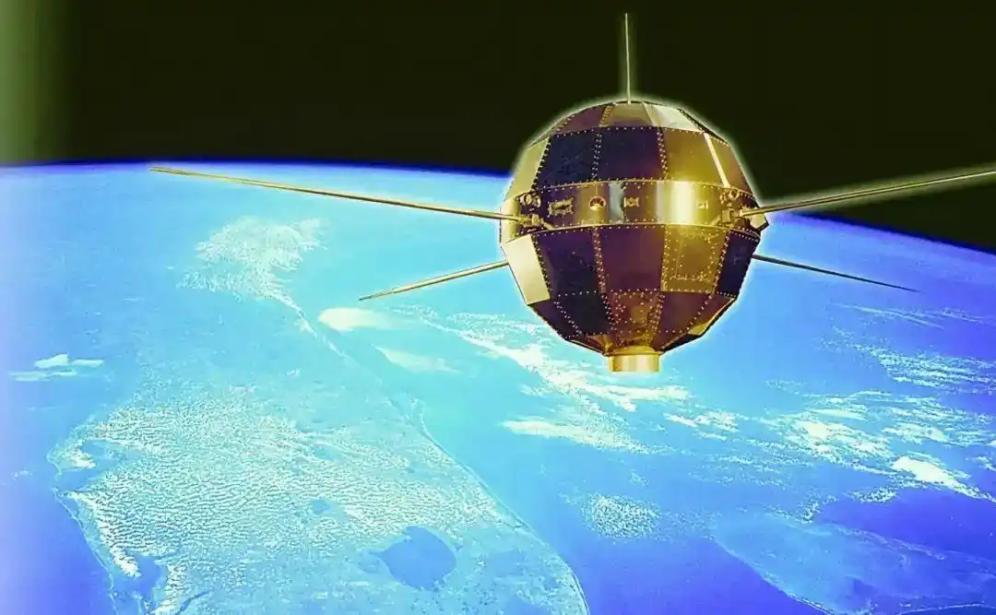
Dongfanghong-1
The successful launch of "Dongfanghong-1" not only marked China as the fifth country in the world to independently develop and launch artificial earth satellites after the Soviet Union, the United States, France, and Japan, but also inaugurated a new era in China's space history.
Over the past 70 years, China's space industry has evolved from the "Two Bombs, One Satellite" era to the "Thousands of Satellites Interconnected" era, and from the model of "pooling resources to accomplish major tasks" to a dual - wheel - driven pattern of "national strategic guidance + market innovation vitality".
In recent years, "commercial space" and "satellite internet" were written into the government work report for the first time. In 2026, "satellite internet" was included in the 14th Five - Year Plan and became part of the country's 109 major engineering projects.
More importantly, currently, China's commercial space industry is at a critical juncture, transitioning from "investment - driven" to "revenue - driven".
After China's commercial space industry has endured a decade of arduous exploration and technological verification, and China has become the world's second - largest commercial space economy, ranking among the top in the world in terms of launch scale, satellite networking, and full - industry - chain capabilities. Today, China's commercial space industry faces a new core proposition - commercial realization.
01. The Era of "Value Realization" for Space Infrastructure
"In essence, the commercial space industry is an infrastructure - based industry. All infrastructure industries inevitably go through three stages: capacity building, scale building, and value realization." During an interview, Wang Yang, the CEO of Space-Time Constellation, told 36Kr.
In Wang Yang's view, the core dividing line for the commercial space industry is not the number of on - orbit satellites or the completion of constellation networking, but whether it has entered the "value realization cycle".
Take the commercial satellite field as an example:
Capacity building addresses the issue of China's commercial satellites "from scratch". Its focus lies in technological breakthroughs and engineering verification.
Scale building solves the problem of "from having a few to wide coverage". Its emphasis is on improving satellite production efficiency, reducing satellite launch costs, and service application costs.
Value realization is the inevitable destination for all infrastructure industries. It marks that the previous investment begins to be transformed into sustainable commercial returns and social benefits. This is the only path for all infrastructure industries to achieve self - sufficiency and enter a virtuous cycle - "space infrastructure" is no exception.

Wang Yang, CEO of Space-Time Constellation
The same applies to individual enterprises. Only when an enterprise completes the key transition from "capacity building" to "value realization" does it mean that its technology has truly passed the market test, found demand and payment scenarios, which will drive the enterprise's business model to form a positive closed - loop and enter a high - growth period.
Space - Time Constellation is precisely one of the few commercial space enterprises that have completed the first two stages and started to enter the "value realization stage".
For example, in terms of large - scale services, after completing the networking of 64 satellites in September 2025, Space - Time Constellation has become the first low - orbit satellite IoT constellation in China with global large - scale service capabilities. It can support the processing of approximately 340 million communication requests per day, serve 20 million users globally, and achieve real - time communication coverage at any location on the earth's surface except the North and South Poles.
More importantly, while the industry is generally still in the "networking capacity competition" stage, Space - Time Constellation has entered the "commercialization capacity verification" stage.
Wang Yang told 36Kr that currently, Space - Time Constellation has established commercial cooperation with telecom operators in more than 20 countries, promoting the low - orbit satellite constellation to provide services locally. Recently, the company has also received intent orders from multiple markets in the Middle East, South America, etc. In 2026, it will promote the implementation and delivery of these orders, achieving large - scale overseas business implementation. This means that the company's growth logic is shifting from "project - based delivery" to a "continuous service revenue model".
In fact, compared with most players in the commercial space track, Space - Time Constellation is somewhat "unique". At the beginning of the industry's development, when all players were telling stories about "high - speed", Wang Yang, the CEO of Space - Time Constellation, led his team to take a "less - traveled path".
02. The "Less - Traveled Path"
In 2014, the State Council issued the "Guiding Opinions on Innovating the Investment and Financing Mechanism in Key Areas to Encourage Social Investment", for the first time clearly encouraging private capital to participate in the construction of the country's civil space infrastructure, kicking off the development of China's commercial space industry.
Also in this year, Wang Yang, who had deep experience in the aerospace system and participated in many major national aerospace missions, started a business in the form of "retaining his position and taking a temporary leave", founding Eurotech Space, becoming one of the earliest commercial satellite companies in China.
In 2018, supported by the concept of "letting satellite technology serve the public", Wang Yang further founded Space - Time Constellation, setting his sights on the broader commercial space track of low - orbit satellite IoT constellations.
Different from the industry's general choice of the consumer - grade market with "high - speed and large - bandwidth", the low - orbit satellite IoT constellation has a more concentrated user base, stronger payment ability, more stable demand, and its revenue is closer to the long - term service income of infrastructure. Wang Yang's choice of the satellite IoT track is essentially a choice of a "long - term infrastructure subscription - based service business".
The essence of the low - orbit IoT constellation is to build a set of space infrastructure for the IoT era. It does not pursue extreme transmission rates but focuses more on long on - orbit satellite life, global seamless coverage, and stable and reliable communication services. The project investment payback period of this differentiated development path is relatively shorter than that of the low - orbit high - speed communication constellation, and it also has long - term sustainable profit margins. To consolidate and magnify the long - term profit value, it is necessary to deeply integrate the ecosystem with operators and vertical industry customers in various countries, which puts forward extremely high requirements for the enterprise's strategic determination and long - term technology accumulation ability.
Correspondingly, once the infrastructure is built, it will form extremely high industrial barriers and long - term stable returns, which is precisely the key for the commercial space industry to shift from "burning money" to "self - sufficiency".
In 2023, in just five years since its establishment, Space - Time Constellation completed the first vehicle - grade R & D and pre - installation mass production application of satellite communication technology. In cooperation with ZEEKR, it integrated the in - vehicle satellite communication terminal and services into the mass - produced ZEEKR 001 FR model for the first time, marking that satellite communication technology has officially entered the large - scale automotive pre - installation market and started to have "industrial - grade implementation ability".
It should be noted that China's annual automobile sales exceed 30 million, which will be a long - term, large - scale market worth hundreds of billions.

In 2025, Space - Time Constellation successfully completed the networking of 64 satellites in the low - orbit satellite IoT constellation and truly transformed the constellation's capabilities into sustainable services and business models, leading the commercial space industry from "networking competition" to "value realization". Wang Yang pointed out: "The real turning point in the industry is not the completion of the constellation but the start of continuous paid use."
Currently, Space - Time Constellation has established cooperation with telecom operators in more than 20 countries and obtained multiple commercial orders and intent projects in markets such as the Middle East and South America. In China, it has also completed commercial verification tests with more than 20 leading enterprises in various industries, promoting the integrated innovation of "satellite IoT + industry" and covering multiple fields such as construction machinery, marine fisheries, emergency communication, energy and water conservancy, logistics and transportation, and low - altitude travel.
"Why Space - Time Constellation?" - This is a key question.
Frankly speaking, even globally, there are not many commercial space enterprises that can achieve large - scale implementation. Most players are still in the first two stages of "capacity building and scale building". Large - scale commercial implementation is a huge gap across the entire industry.
From targeting the satellite IoT track in 2018 to achieving global service implementation in 2025, Space - Time Constellation's "value realization path" has not been achieved overnight. In summary, Wang Yang summarized it as a set of interlocking underlying logics and a set of basic capabilities. The quantitative change led to a qualitative change, which was finally transformed into five core advantages for Space - Time Constellation to cross the industry cycle and be the first to enter the value realization period.
First, it is the autonomy and reliability brought by "full - stack self - development". From satellite design and R & D, to satellite mass - production AIT, constellation measurement, operation, and control, and then to the R & D and mass - production of core chips, modules, and terminals, Space - Time Constellation has built the full - chain independent R & D and mass - production AIT capabilities of the satellite industry. This not only breaks the external technology dependence but also ensures the service performance of satellites from the source. Its on - orbit satellites have 100% reliability. The constellation measurement, operation, and control disaster - recovery backup system with "three centers in three locations" in Qingdao, Shanghai, and Taizhou supports Space - Time Constellation's stable global 7x24 - hour service, laying a solid foundation for large - scale implementation.
Second, it is the security foundation built by the "self - developed communication system" and private protocols. In terms of the communication system, Space - Time Constellation has not only achieved complete independence in the technical route but also built a complete communication security boundary at the engineering level. The user link it adopts has strong anti - interference ability, ensuring the stable transmission of key instructions in a complex electromagnetic environment. In scenarios with extreme security requirements such as government, energy, and transportation, it has built irreplaceable core value.
Third, it is the differentiated positioning focusing on "always - on". While the industry is competing for high - bandwidth, Space - Time Constellation chose to focus on the UHF/VHF frequency bands. Relying on its industry - leading diffraction characteristics, it has built a signal network that is "always - on" and "always - reliable" at the bottom level, making data connection still reliable under various uncertain conditions. It should be noted that in many key scenarios, "no disconnection" is often more important than "high - speed".
Fourth, it is the precise positioning in the ecological niche of the "ultimate backup network". In key industries such as maritime, aviation, energy, and remote infrastructure, a "backup network" independent of the main communication network must be configured to cope with the risk of data interruption in extreme environments. This demand for redundant configuration is driven by global security regulations and industry standards, and Space - Time Constellation's IoT communication services can precisely provide basic communication guarantee in extreme situations, becoming a natural "ultimate backup link".
Fifth, it is the large - scale application enabled by the "miniaturized and low - power terminal". By making the terminal extremely lightweight and low - power, Space - Time Constellation enables satellite services to be embedded in a large number of "small - scale" IoT devices, achieving long - term stable operation. Especially in remote, unmanned, and difficult - to - maintain areas, Space - Time Constellation's solutions are almost the only viable option in such scenarios. And "long - term stable connection" corresponds to a business model of "high - stickiness and sustainable payment", breaking the ceiling of the large - scale implementation of the satellite IoT industry.
Now, the effectiveness of this "combination punch" is accelerating. Wang Yang told 36Kr that this year, Space - Time Constellation will continue to launch satellites to complete the full deployment of the first - phase 72 - satellite constellation. By then, the system's daily communication capacity will soar to 450 million times. In the next three years, Space - Time Constellation aims to connect 2 million users and further open up the global low - orbit satellite constellation market.
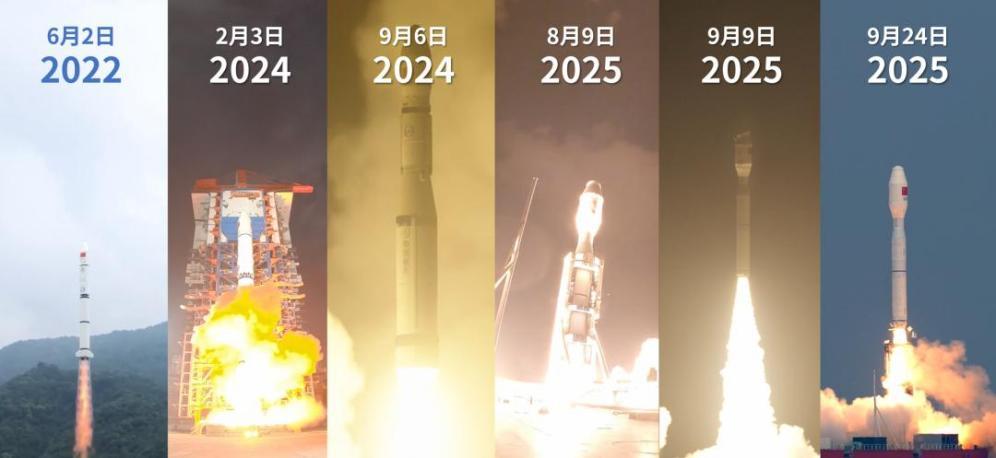
Six consecutive successful launches of Space - Time Constellation's satellites into orbit
As "satellite internet" is included in the major projects of the country's 14th Five - Year Plan, an era of "IoT in space" for all industries is approaching. According to Counterpoint data, the global number of satellite IoT connections is expected to soar from 3.6 million in 2020 to 41 million in 2030, with a compound annual growth rate of up to 28%.
The medium - and low - speed (narrow - band) low - orbit satellite network targeted by Space - Time Constellation will build a global data "backup nerve" and "capillary", integrating a large number of scattered and core IoT devices in key positions into the network, opening up a blue - ocean market worth hundreds of billions.
03. In 2026, the Commercial Space Industry Enters a Definite Growth Zone
In 2026, China's commercial space industry is entering a fast - lane of definite growth.
Capital has cast its vote of trust with real money. According to the data in the "2026 China Commercial Space Supply Chain Analysis Report" by RuiShou Analysis, from 2025 to the first quarter of 2026, 193 financing events were completed in China's commercial space primary market, with the disclosed amount reaching up to 21.968 billion yuan. The IPO processes of multiple leading enterprises are accelerating.
The dual pursuit of industry implementation and capital enthusiasm marks that China's commercial space industry has entered the "definite" growth zone of large - scale commercial implementation from the early technology verification period.
Different from the "private - company - led and industry - free - development" model of the US commercial space industry, the root of the "definiteness" of China's commercial space industry lies in the deep binding and forward - looking positioning of its technological evolution path with the national strategic intention.
After rounds of crazy heating up and bursting of technology investment bubbles globally, "Long China" has become almost the only source of definite growth.
The commercial space industry is not just a "