The more frequent the "circumventing regulations to buy cars" becomes, are Americans snatching Chinese-made new energy vehicles in Mexico?
01
New Route
Americans are engaging in a “new route” activity.
First, they cross the US-Mexico border to reach a Mexican border city. Then, after buying a car locally, they drive directly back to the United States.
As for why they go through this detour, it's because all the cars they buy are new energy vehicles made in China.
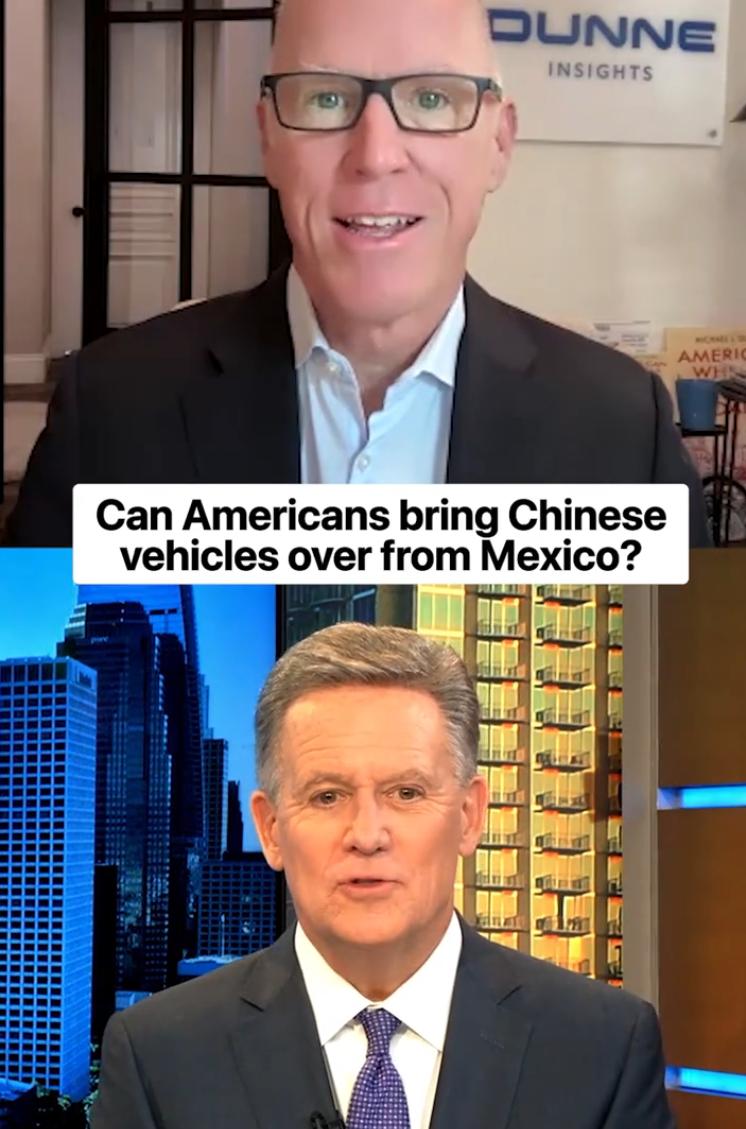
“Can Americans Buy Chinese Cars from Mexico?”
Initially, in response to the major impact of domestic EVs, the US government raised the tariff on Chinese-made electric vehicles to 100% in 2024 and added an additional 25% “national security tariff” in 2025. With such a tariff stacking, it's not easy to buy domestic EVs in the US, and even if you do, you'll end up paying a fortune.
What can Americans do if they want to drive these cars but don't want to be exploited by their own country's tariffs?
Naturally, they turn to their neighboring country.
Recently, The Wall Street Journal reported on this rather peculiar consumption trend. More and more Americans are flocking to domestic new energy 4S stores at the US-Mexico border and continuously driving new energy vehicles from brands like BYD, Geely, and Great Wall back to the United States.
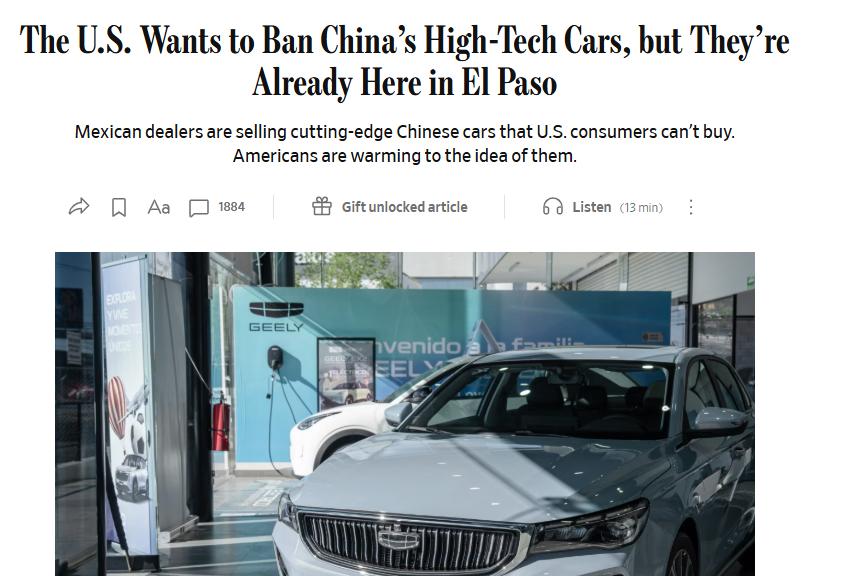
This is a new type of border trade.
Calling it “cross-border personal purchasing agent” is an understatement. Most car owners are actually doing “cross-border personal direct purchasing.” They leave the country, and then “the car people” come back together.
There are often jokes on the Internet about traveling to Japan with just an empty suitcase and then going on a shopping spree upon arrival.
Now, American car owners are the same. They drive back to the US in their newly purchased cars right after picking them up in Mexico. How wonderful!

BYD Shark & Seal are both hot-selling models.
On social platforms like TikTok and Reddit, a large number of “car purchase guides” have emerged.
Many American netizens exclaimed, “What? Why didn't you tell me earlier!”
These guide processes generally include: obtaining a residence permit in a Mexican border city (or finding a proxy holder), purchasing a car in full at 4S stores of BYD, Geely, Great Wall Motors, etc., getting a Mexican license plate, and then driving the car into the US as “personal property” under the guise of cross-border commuting.
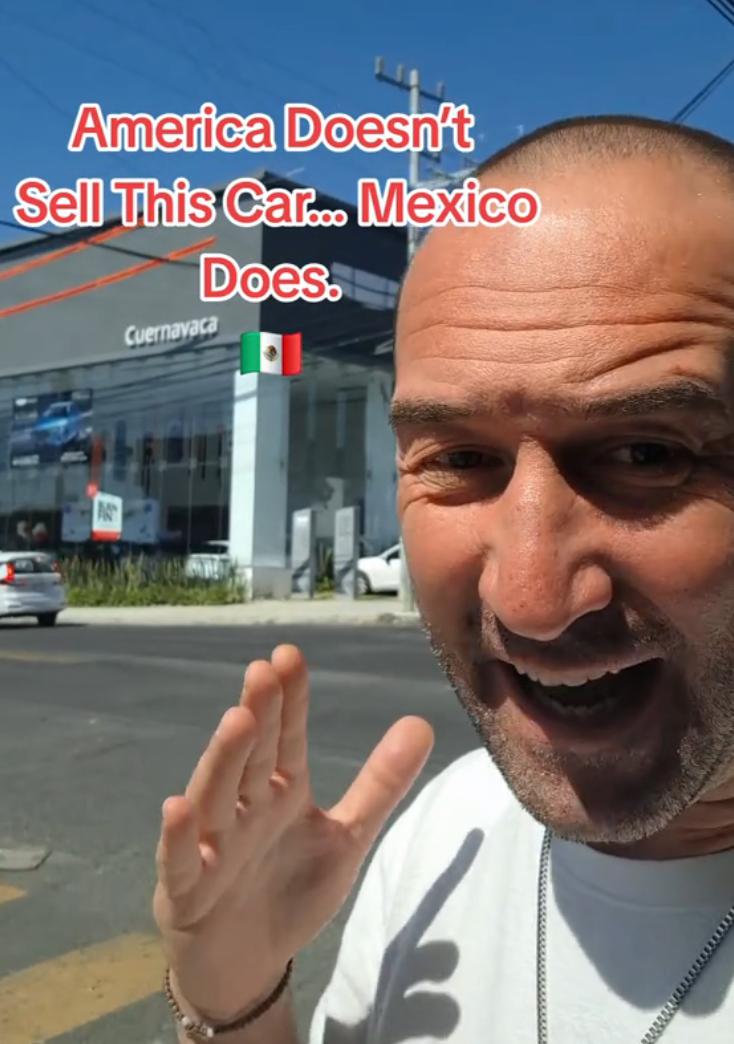
Local Geely sales in Mexico are already in full swing...
As for why they can do this, it's because there is a very tempting “regulatory loophole” along the thousands of kilometers of the US-Mexico border.
The current US federal vehicle management law stipulates that private cars with Mexican license plates can temporarily enter the US without meeting the strict compliance standards of the EPA (Environmental Protection Agency) or the DOT (Department of Transportation). After consumers obtain a temporary license plate and cross-border insurance through a Mexican dealer, the vehicle can be legally used in the US.
Then someone might ask, what about the extension of the roadworthiness and maintenance later?
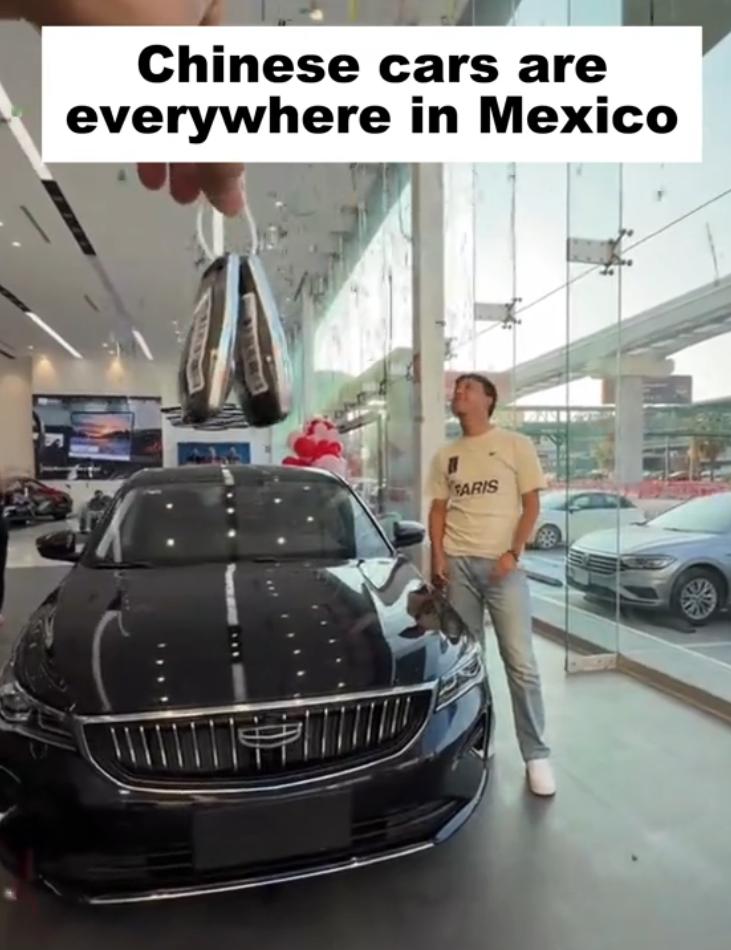
“Chinese Cars Are Everywhere in Mexico”
If they can drive the car back to the US, there are always more solutions than problems.
The simplest way is to take advantage of the loophole at the US-Mexico border when the permit is about to expire and use the entry and exit records to refresh the one-year “stay exemption period”; or let someone with dual US-Mexican citizenship register the ownership. As for more detailed methods, there are always ways, and we don't need to go into details. Don't worry more than the people who should be worried (trust the Americans).
After all, during the previous smuggling boom, in addition to daily products like eggs, domestic new energy vehicles were also popular items.
The higher the tariff, the higher the profit. If someone dares to buy, someone can get it on the road.

“Pragmatism”
As long as the car can enter the country smoothly, the rest can be solved in one-stop service.
There are people to help you prepare materials to avoid inspections, and there are also a lot of Mexican auto repair shops that only accept cash to help with minor repairs and maintenance. Moreover, electric cars generally require less maintenance than gasoline cars. Even if major repairs are needed, you can just drive back to the Mexican 4S store to check the problem and at the same time refresh your customs clearance records.
Why do they go through such a long detour to buy these cars? Doesn't the US also have Tesla?

Well, first of all, it's the relatively unbeatable cost-effectiveness.
In Mexico, a high-tech Chinese EV starts at about $20,000, while the average new car transaction price in the US market has approached $50,000. In 2026, with high inflation and high loan interest rates, the price difference of $30,000 is enough for consumers to ignore the so-called “brand loyalty.”
Moreover, at the same price range, American domestic cars can only offer relatively low-end entry-level models, while Chinese cars usually come with various features like large refrigerators and big-screen TVs. Compared with Tesla, which often requires additional fees to unlock functions, Chinese cars are indeed very attractive to ordinary people.
No wonder some Americans commented angrily, “Well, we'd rather ban imports than make good cars ourselves. American cars are not only more expensive, but also of worse quality.”

“From Texas to El Paso, I Fell in Love with Chinese Cars”
The Wall Street Journal also mentioned in its report the commuting bill of a Mexican student who was attending a flight school in Texas.
He bought a BYD Song Pro plug-in hybrid at a price of about $31,500 (about 220,000 RMB) through an agent in Ciudad Juárez.
The young man said, “In Texas, a hybrid SUV with the same configuration starts at least $55,000, and it doesn't have such a smart in-car system. I drive it back and forth across the US-Mexico border every day. The customs only check my Mexican ID and the vehicle registration certificate, and it's a legal temporary entry.”
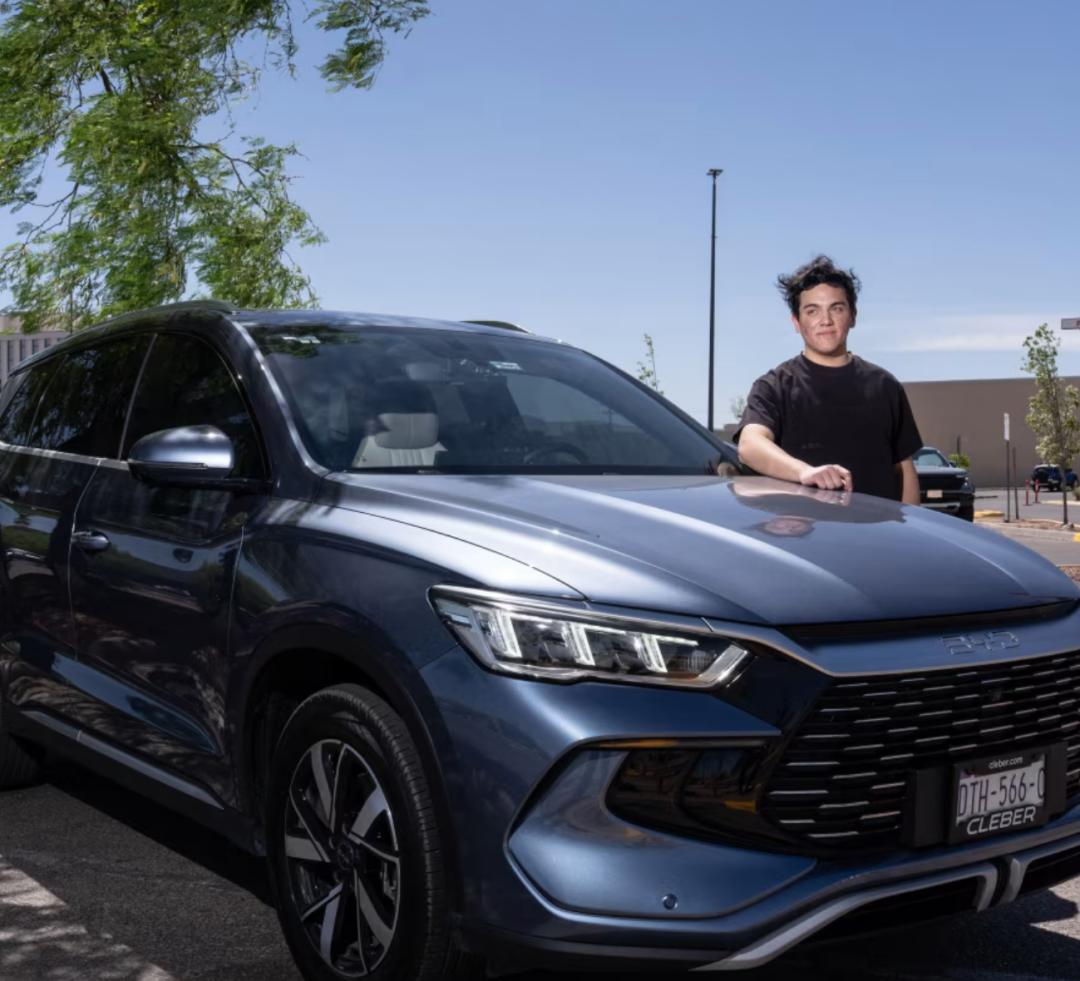
The young man and his commuting car for school
In addition, many “useless features” on domestic EVs that we often joke about, such as large refrigerators and big-screen TVs, are very popular overseas, especially the karaoke function.
BYD and Geely not only retain this function in the overseas market but also greatly enhance the interactive effect. For Latin American and North American consumers who love music and socializing, this is simply a god-like feature.
A Mexican dealer interviewed said, “Many customers bring their whole families to look at the cars. As long as they turn on the microphone and sing a song, half of the deal is done.”
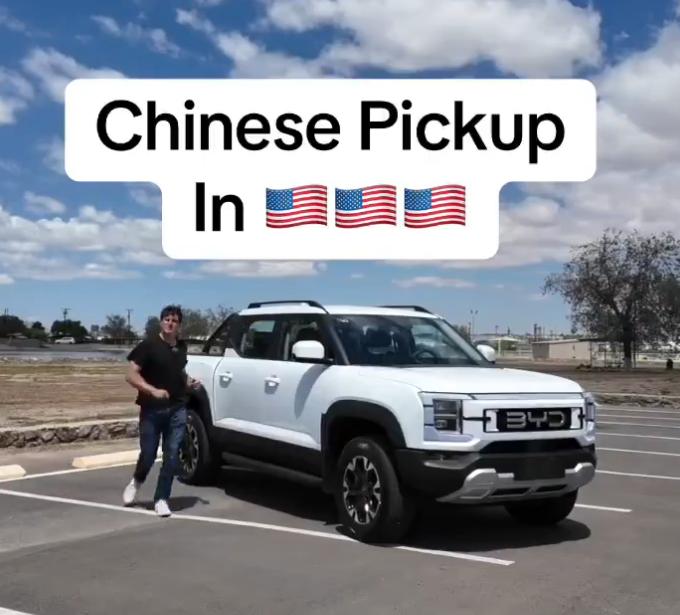
There is even a hybrid pickup truck specially designed for the overseas market, which has really hit the hearts of foreign consumers.
As the soul of the American automotive market and one of the representatives of local automotive culture, domestic new energy pickups have truly launched a “reverse cultural invasion.”
Domestic new energy pickups, with their excellent torque performance and external power discharge function (which can power a drill at a construction site or a barbecue grill in the wild), have directly met the technological imagination of American consumers beyond the traditional Ford F-150 and satisfied their dual hardcore needs in terms of function and performance.

In addition to being a hot seller in the Mexican market, this pickup truck is also selling very well in the entire magical Latin American region and the wild Australia.
No wonder American netizens are so humorous. After all, it's a capitalist market, and the market should decide which is better.
It's a pity that Americans still have to go through Mexico to pick up their cars for now.
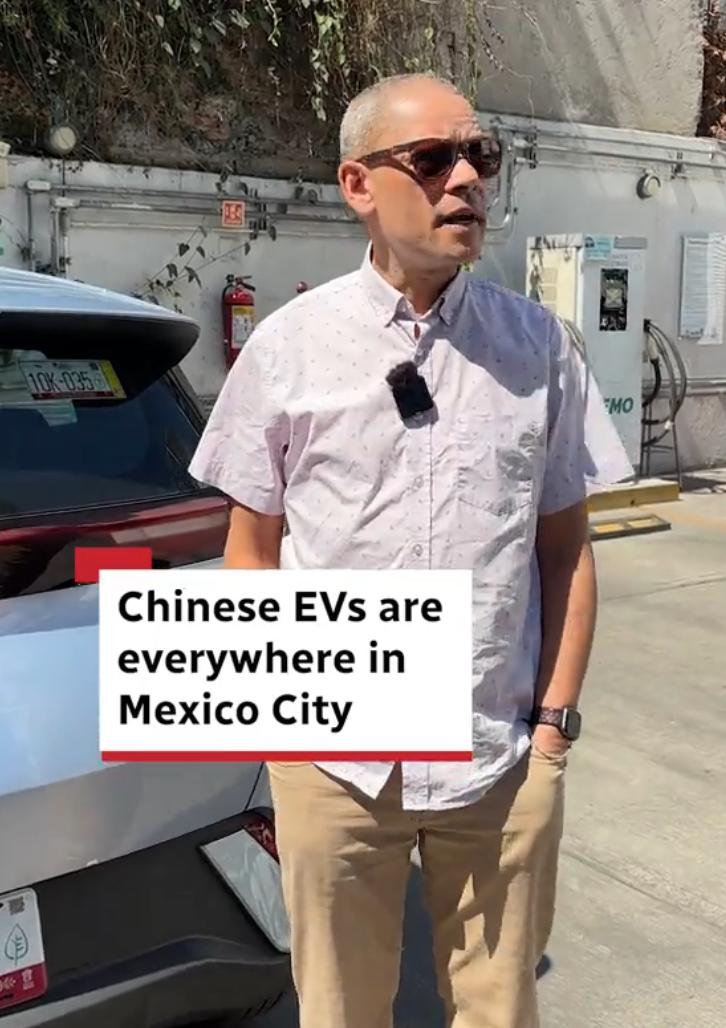
In addition to the border areas, domestic EVs are also everywhere in Mexico City, the capital.
In fact, this consumption trend is not a flash in the pan. It's more like a big explosion after quietly making a fortune.
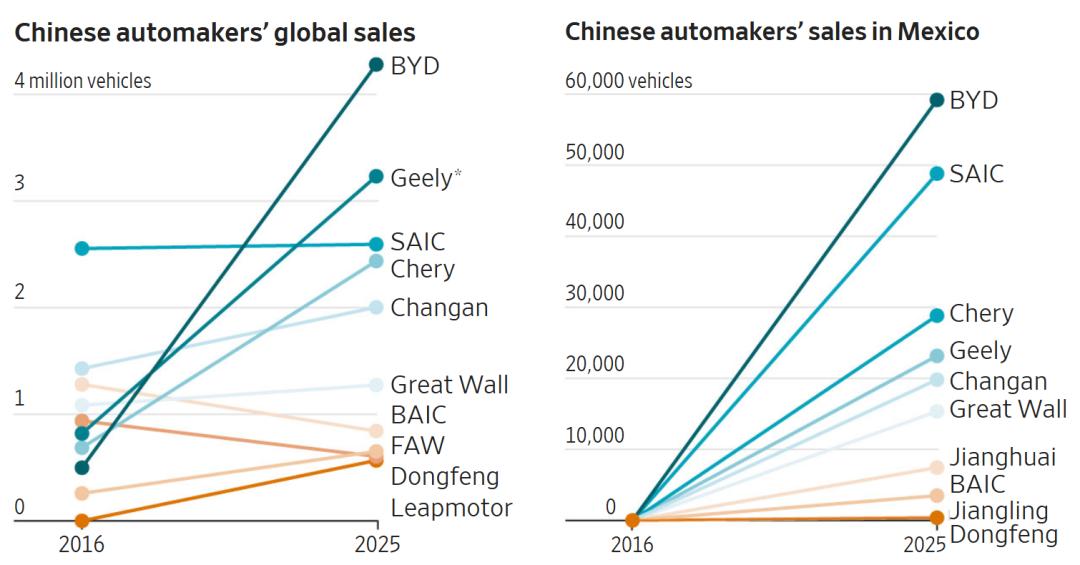
As early as 2023, companies like BYD and Geely began to layout in Mexico and the broader Latin American market.
Data in 2025 showed that Chinese brands had accounted for 25% of the car sales in Mexico, which means that one out of every four new cars on Mexican roads is from China.
Even besides new energy vehicles, domestic motorcycles are also very popular in Latin America now.
In 2025, China exported about 6.7 million motorcycles to Latin America, a year-on-year increase of about 11%, and the export value increased by even 18%.
Among them, the number of motorcycles exported to Mexico alone exceeded 2 million. At the same time, about 80% - 90% of the parts or complete vehicles in the Mexican motorcycle market come from China.

Zhang Xue has really achieved high sales in Latin America this time.
Even if you don't buy domestic motorcycles, you still can't avoid the dominance of domestic motorcycle key components.
No wonder Americans are so wary of the domestic automotive industry now. The pressure is really great.