Valued at $20 billion, Keling AI is reported to be spun off from Kuaishou for separate financing.
Kuaishou might be about to spin off a second "Kuaishou" on its own.
According to a report by The Information, Kuaishou is planning to spin off its video generation model, Kling AI, with a target valuation of $20 billion, and it plans to launch an IPO next year.
How exaggerated is this figure? It's as exaggerated as another Kuaishou.
As of the close of the Hong Kong stock market on May 11, the market value of Kuaishou Technology was approximately HK$224.3 billion, equivalent to about $29 billion.
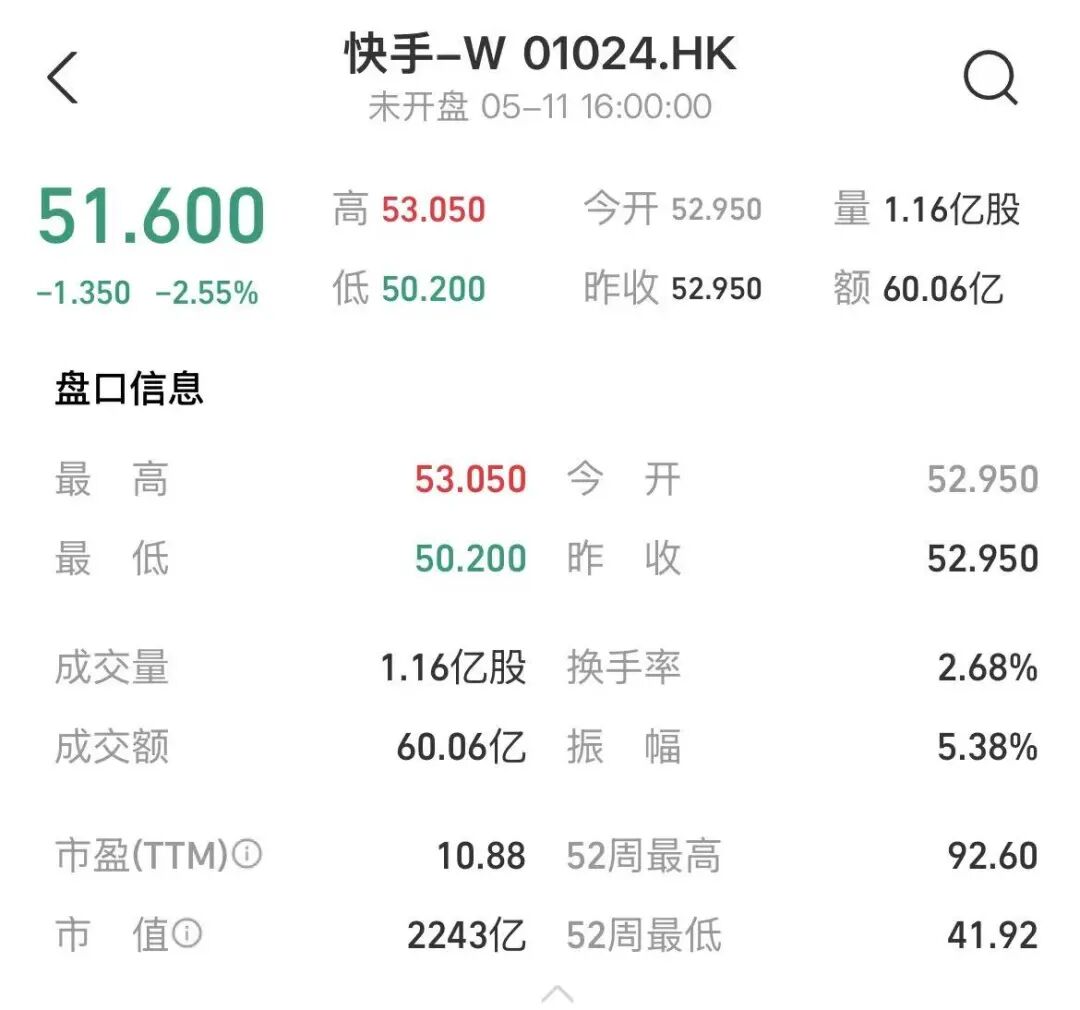
In other words, Kuaishou is preparing to spin off a business with a valuation close to 70% of its own, conduct separate financing, and list it independently.
After two years of developing AI video generation, Kuaishou finally doesn't plan to treat it as just a tool anymore, but as a new company.
Let Kling AI take off!
$20 billion, close to 70% of Kuaishou's market value
The Information cited two people familiar with the matter, saying that Kling is in talks with potential investors for pre - IPO financing at a valuation of $20 billion, with a financing scale of about $2 billion.
As of the close of the Hong Kong stock market on May 11, Kuaishou Technology closed down 2.55%, with a market value of approximately HK$224.3 billion, equivalent to about $28.8 billion.
That is to say, if Kling is separated, its valuation is already close to 70% of Kuaishou's overall value.
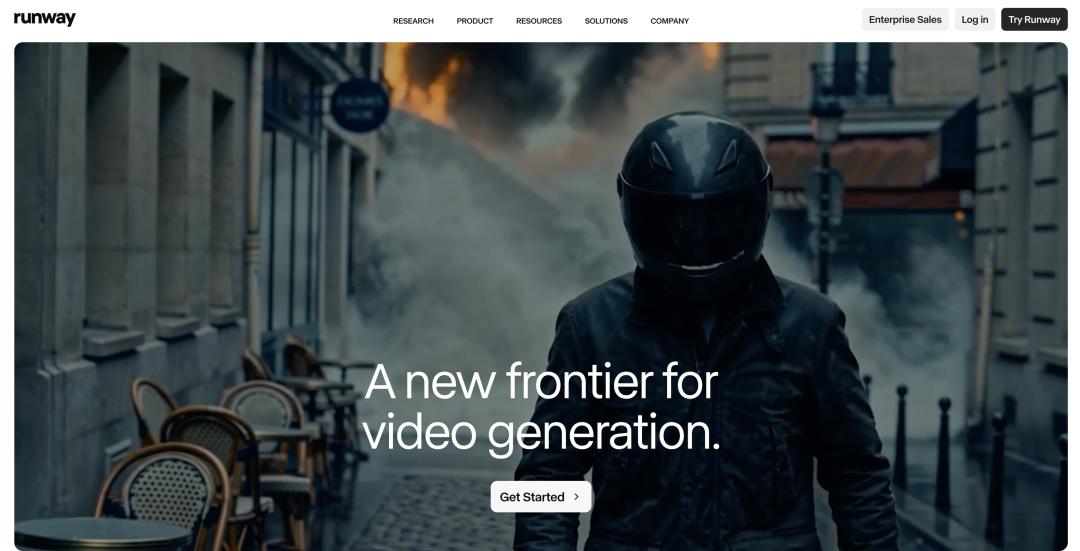
For reference, the currently highest - valued independent video generation product globally is Runway. According to PitchBook data, its latest valuation is about $3.55 billion.
If the transaction of Kling is completed, its valuation will be more than five times that of Runway, taking the top position in the global video generation model valuation.
Capital is willing to offer this price not because of a good story, but because it has already started to make money.
In March, Kuaishou CEO Cheng Yixiao disclosed in an earnings conference call that based on the revenue in January, Kling's annual recurring revenue (ARR) had exceeded $300 million. Two months later, this figure doubled.
According to relevant information, by the end of April, Kling's ARR had reached $500 million. And people familiar with the matter gave the IPO expectation that when the listing process starts in Q1 next year, Kling's ARR is expected to reach $1.3 billion.
The valuation of $20 billion is based on this expectation.
It can be said that in the video generation track where commercialization has been verified, the capital valuation is being pulled to a whole new level.
What is Kling and where has it reached after nearly two years
Kling was launched in June 2024. It is a large - scale video generation model independently developed by Kuaishou's AI team.
The launch time was actually quite delicate. At that time, Sora had just amazed the world, but it hadn't been opened to the public for a long time.

Kling was almost the first high - quality video generation product truly open to the public during this window period.
It was once called by overseas developers: the most Sora - like product in China. But after nearly two years, Kling is no longer just a "Chinese version of Sora", but a truly global business.
People familiar with the matter revealed that in Q1 this year, Kling's revenue was about $75 million, mostly from overseas markets such as North America.
At the beginning of 2026, Kling took off suddenly overseas.
According to Sensor Tower data, it has topped the download lists of the Apple Store and Google Play in the art and design category in more than 40 countries and regions around the world. In South Korea and Russia, Kling even topped the revenue list of iPhone graphics and design apps.
The model iteration speed is also quite fast. It was released in version 1.0 in June 2024, and now it has reached version 3.0 Omni. Kling already supports 4K direct output and has entered the first - tier global AI video ranks.
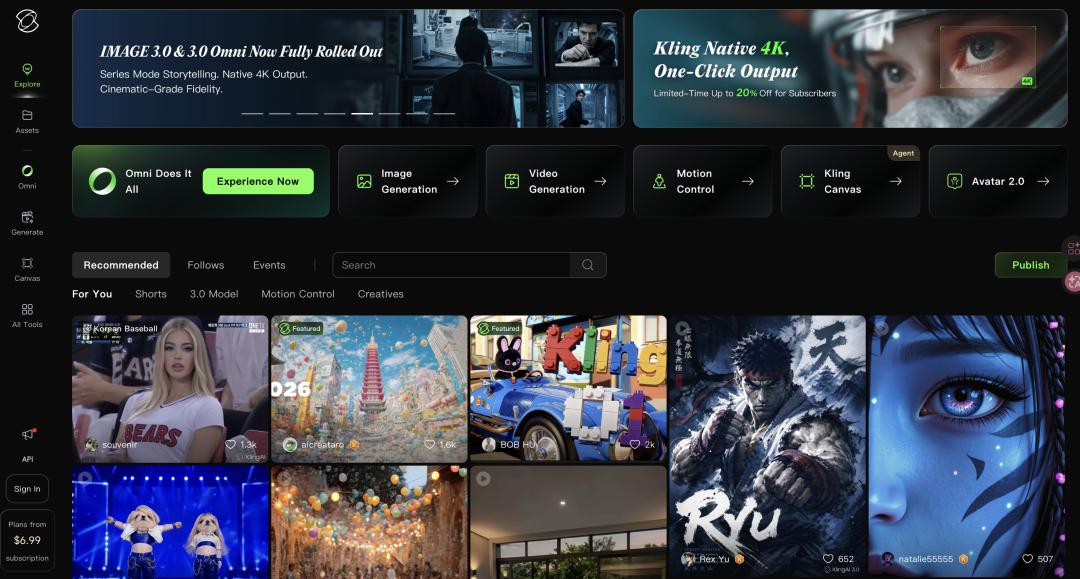
In terms of specific commercialization paths, Kling makes money on the one hand through user subscriptions, and on the other hand, through APIs, it charges enterprise customers in industries such as advertising, e - commerce, film and television, animation, and gaming based on the number of calls. Among a bunch of AI products that are still burning money and telling stories, Kling has already started to make money on its own.
Why spin it off
On the surface, this is a financing move. But behind it, Kuaishou is actually facing three levels of pressure.
The first level is valuation reconstruction.
If Kling remains within the Kuaishou system, the market will still value it based on the logic of a short - video company. If it is spun off, it's different.
Kuaishou is still a short - video + e - commerce company. Kling, on the other hand, will be re - priced as an AI company. The two valuation systems have completely different multipliers.
And the recent market environment has also provided an opportunity. Since this year, AI concept stocks such as Zhipu and MiniMax have performed strongly. At the same time, Alibaba and Baidu have also been reported to be considering spinning off their chip businesses to promote IPOs.
More and more large companies are starting to realize that AI can no longer be priced as "a business department", but as "another company".
The second level is resource pressure.
The competition in video generation is no longer at the model level, but at the computing power level.
After ByteDance's Seedance 2.0 was launched, at its peak, about 90,000 people were queuing, and the waiting time exceeded 10 hours.
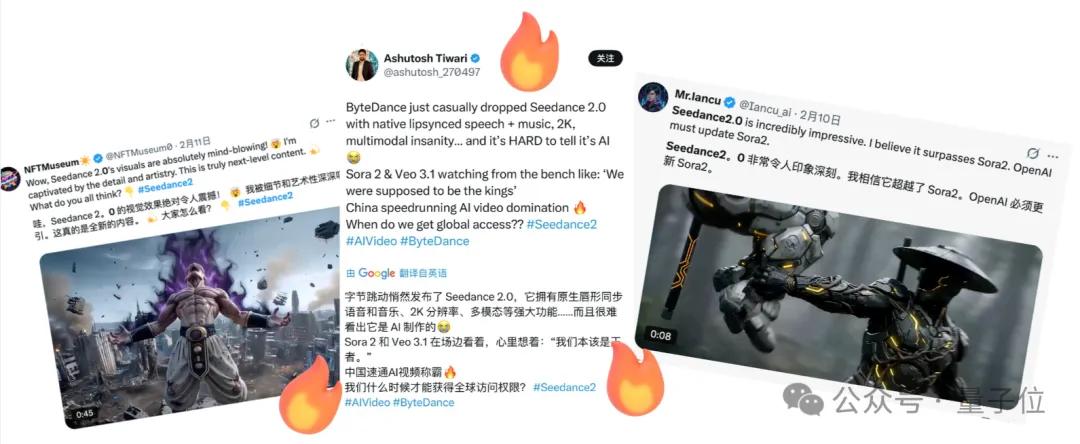
Even ByteDance, a company that has made the most aggressive investment in AI infrastructure, is starting to feel the pressure of computing power.
It is reported that ByteDance's capital expenditure plan will continue to increase in 2026, and the expenditure on AI infrastructure will exceed 200 billion yuan.
Looking at Kuaishou again. In 2025, Kuaishou's total revenue was 142.8 billion yuan, and its adjusted net profit was 20.6 billion yuan.
While the revenue scales of ByteDance and Alibaba have long exceeded one trillion yuan.
To put it bluntly, in the war of AI video, it's time to compete for ammunition. Spinning off Kling essentially allows it to raise funds on its own and replenish its ammunition.
The third level is talent.
Today, the most expensive group of people in the Chinese AI industry may no longer be the large - model teams, but the video generation teams.
Last year, Zhang Di left Kuaishou and joined Alibaba, as happy as a pony.
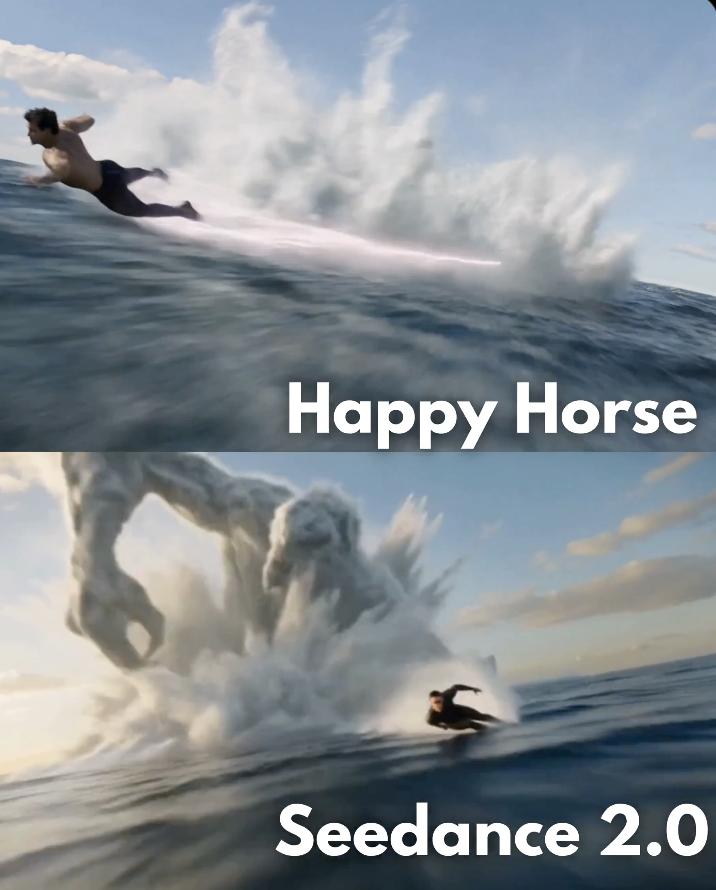
At the end of 2025, Kuaishou set up an option pool for Kling for the first time. People familiar with the matter revealed that if the future IPO valuation reaches $40 billion, the team incentives will be further increased.
This logic is actually the same as ByteDance issuing "Doubao shares" to the Doubao team and DeepSeek using financing to bind its core technology team.
The best way to retain people has never been salary, but to give them a company with a visible valuation.
One more thing
So, is Kling, valued at $20 billion, really expensive?
Compared with Kuaishou, it's expensive. Compared with AI companies, it's not. It depends on what you compare it with.
It is reported that Kimi has just completed a new round of financing of about $2 billion, and its post - investment valuation has exceeded $20 billion.
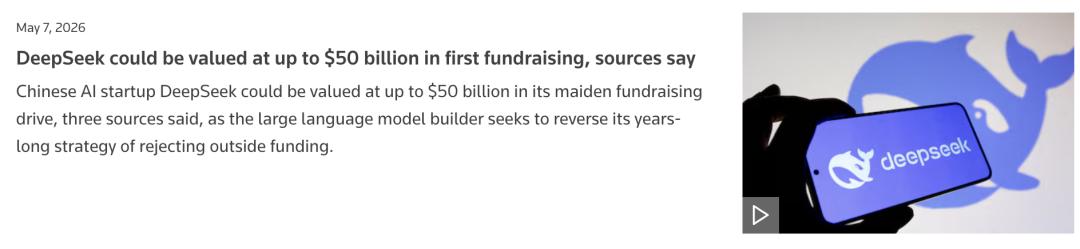
There are also rumors of a new round of financing for DeepSeek, and the market - given valuation has reached about $45 billion.
Jieyue Xingchen has just completed nearly $2.5 billion in financing and plans to list on the Hong Kong stock market at the end of this year, with an expected listing valuation of about $10 billion.
If we look back a little further, we'll find a more interesting change. In the past, there was a default algorithm in the industry for valuing domestic large - model companies:
Use OpenAI and Anthropic as benchmarks. According to the latest financing, OpenAI's valuation is about $852 billion, and Anthropic's latest market quotation has reached nearly $1 trillion.
Many people believe that the reasonable valuation of China's leading large - model companies is about 1% - 2% of theirs.
That is to say, $8.5 billion to $20 billion should be the reasonable valuation for the "first - tier Chinese large - model companies".
But now, this ceiling has been significantly raised.
Just over a month after Zhipu and MiniMax were listed on the Hong Kong stock market, their market values once reached HK$300 billion, both equivalent to nearly $40 billion, which is about 5% of OpenAI's valuation.

In other words, the previous 1% - 2% valuation benchmark is obviously no longer sufficient.
So, what may have really become more expensive is not Kling, the entire Chinese AI industry has been re - priced.
Of course, there is a more fundamental difference between Kling and Kimi, DeepSeek, and Jieyue:
The former sells video generation, while the latter sells general large - model capabilities. One is a vertical track, and the other is a platform capability.
Using the same valuation yardstick, $20 billion may not be a premium in the vertical track.
It's more like capital is betting on one thing:
AI video generation will not just be a function, but an independent business.
(Just look at the AI videos all over the short - video platforms now)
Within the Kuaishou system, Kling valued at $20 billion is like a second Kuaishou.
At today's AI gaming table, it hasn't even sat at the most expensive table.
But there's no doubt that once Kling is spun off and listed, it will be a landmark event. In the track first pioneered by OpenAI's Sora, while Sora has faded, Kling has completed its business flywheel and is going public.
Reference link
[1]https://www.theinformation.com/articles/chinas-kuaishou-plans-spin-kling-ai-video-unit-20-billion-valuation
This article is from the WeChat official account "QbitAI", author: henry, published by 36Kr with permission.