Pure electric vehicles can finally be sold at high prices.
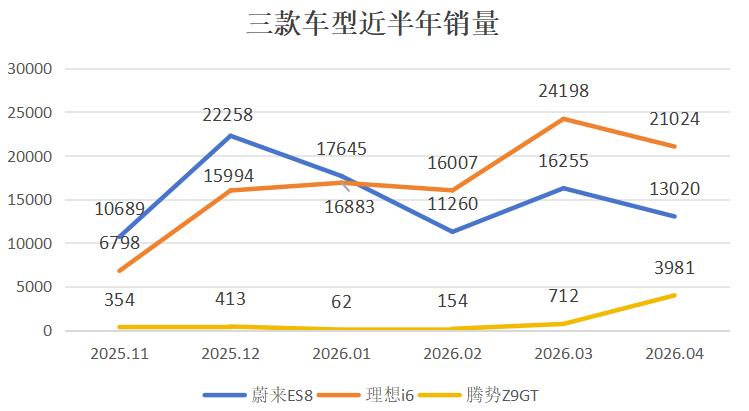
The sales data of the domestic auto market in April has been released. The industry presents a differentiated pattern of "pressure on the overall market and strong performance of pure - electric vehicles". The sales of pure - electric models represented by Li Auto i6 and NIO ES8 continue to rise.
Although the overall sales of Li Auto fell below 40,000 units, the monthly sales of Li Auto i6 exceeded 20,000 units, firmly standing in the mainstream pure - electric track. The newly upgraded Denza Z9GT achieved a sales reversal with the second - generation blade battery and flash - charging technology. Its sales climbed to 3,900 units in April. Another high - end pure - electric benchmark, the NIO ES8, delivered 13,000 units in a month, and its cumulative sales since its launch have exceeded 100,000 units, continuously leading the pure - electric SUV market in the 400,000 - yuan class.
In the past, although the penetration rates of pure - electric and new - energy vehicles have been rising, most of them were concentrated in the low - end market below 150,000 yuan. The penetration rate of pure - electric vehicles in the mid - to high - end market above 250,000 yuan was relatively limited, and most of them were hybrid vehicles such as plug - in hybrids and range - extenders before.
The simultaneous popularity of mid - to high - end models such as Li Auto i6, Denza Z9GT, and NIO ES8, including the NIO ES9 in the 500,000 - yuan class, which received nearly 10,000 orders in just one month of pre - sale, is not just a single - product dividend. It is also a core signal that the pure - electric era is irresistible and accelerating. Behind it is the dual support of product strength and energy - replenishment ecosystem, and it also reflects the profound transformation of the industry track.
01
Li Auto, NIO, Denza
Prying Open the Mid - to High - End Pure - Electric Market
"Why are Li Auto i6, Denza Z9GT, and NIO ES8 selling so well?" This is one of the most discussed topics in the industry recently.
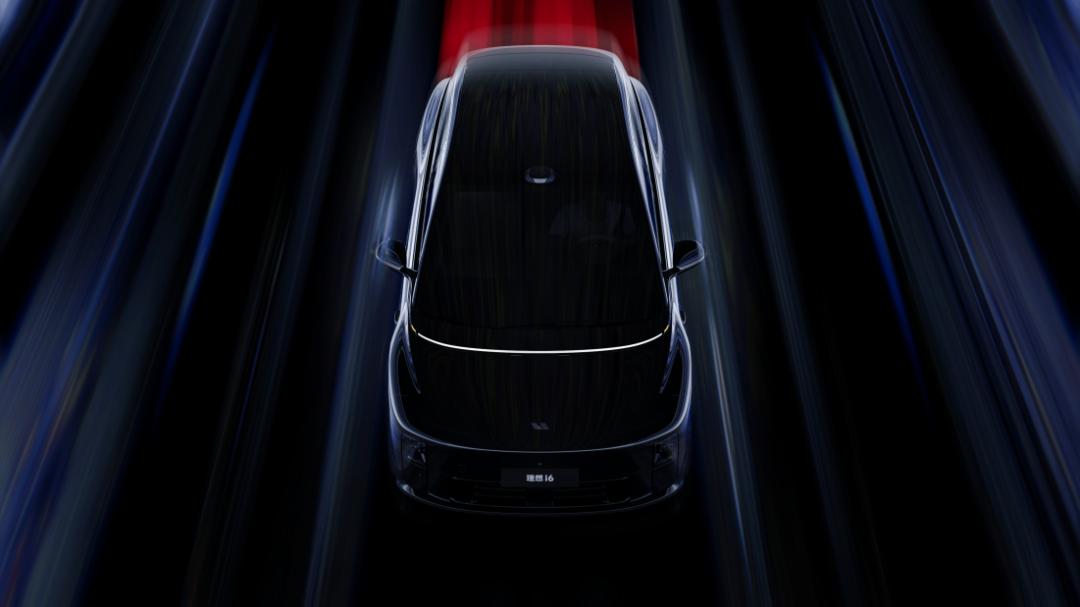
Let's first look at Li Auto i6. As a well - rounded vehicle, i6 has almost no weaknesses in terms of product strength. The self - developed VLA large model, dual - gun magic carpet suspension, 720 - km pure - electric range, and comfortable and intelligent cockpit experience ensure high - level performances in the three core aspects of intelligent driving, handling, and riding. The price of 250,000 yuan precisely hits the mainstream consumption range, allowing consumers to have a premium pure - electric experience.
However, beyond product strength, Li Auto's profound insight into the pure - electric market is more crucial. In addition to brand, price, and product strength, the most core factor affecting current pure - electric consumption decisions is the convenience of energy replenishment. As one of the car manufacturers that best understand consumers, the effect brought by Li Auto's layout of super - charging stations is obvious.
Long before the launch of Li Auto i8, Li Auto accelerated the layout of super - charging stations across the country. In 2025, Li Auto's goal is to build 4,000 super - charging stations. By December 2025, with the installation of the 20,000th Li Auto super - charging pile, Li Auto became the car manufacturer with the largest number of super - charging piles in the country.
For a brand that has just made a large - scale shift to pure - electric vehicles, this pile - building speed is amazing. After its launch, the delivery volume of i6 was limited due to production capacity. It was only after the production capacity at the Changzhou factory increased that i6 really started to gain momentum, with monthly sales exceeding 20,000 units.
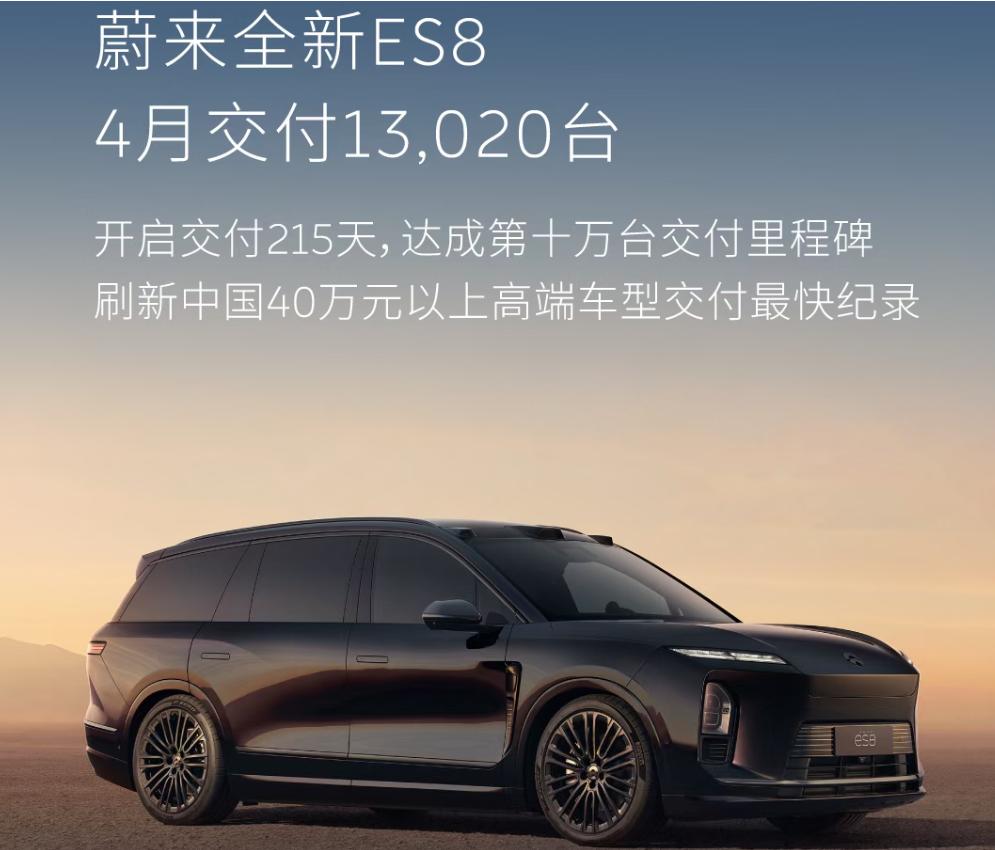
Now let's look at the NIO ES8. After the all - round upgrade of product strength, the starting price of the new NIO ES8 dropped to 400,000 yuan. With the BaaS battery - leasing plan, the price threshold further dropped to 300,000 yuan. Although there is still a monthly battery - leasing fee, this model gives consumers a lower entry threshold, allowing more users to access this high - end pure - electric SUV. At the same time, NIO's long - accumulated battery - swapping network has become more mature, reducing users' range anxiety.
Different from the strategies of new - energy vehicle startups, BYD, an industry giant, has successfully entered the mid - to high - end pure - electric market by solving the problems of energy replenishment and range anxiety through technological innovation represented by the second - generation blade battery and flash - charging technology and high cost - effectiveness.
Before its renewal in March, the monthly sales of Denza Z9GT were hovering at a low level. After being equipped with the second - generation blade battery, its range exceeded 1,000 km. With the support of flash - charging technology, the proportion of orders for the pure - electric version exceeded that of the plug - in hybrid version, approaching 80% in the early stage of its launch, which was completely opposite to the situation where the plug - in hybrid version dominated the first - generation product. In April, the sales of Denza Z9GT soared to 3,981 units, with a daily production capacity of 260 vehicles.
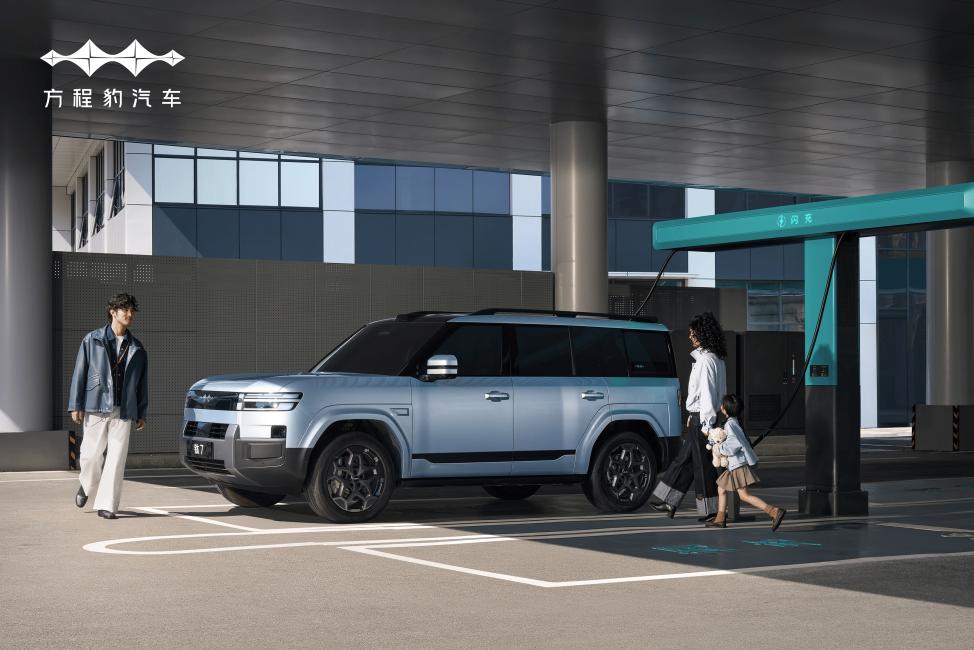
In addition to Denza Z9GT, the Fangchengbao Titan 7 EV flash - charging version is also gearing up. Judging from the market feedback, after its launch at the end of April, its pre - order volume exceeded expectations, and it is expected to see a peak in deliveries in May, changing the previous pattern where the main sales of Fangchengbao were hybrid models.
Different from new - energy vehicle startups, BYD, which entered the market earlier, has accumulated a group of highly loyal car owners. They are now about to enter a new vehicle - replacement cycle. Facing the huge breakthroughs in the brand's battery and charging technologies, they are more likely to switch to pure - electric models. Not to mention that compared with plug - in hybrids with two systems, pure - electric vehicles are cheaper to maintain.
Not only BYD and the companies mentioned above, but also many recently launched multi - power - option models have shown a special situation where pure - electric orders have an overwhelming advantage. According to Dongfeng Nissan's data, for the Nissan NX8 launched in April, the ratio of locked pure - electric orders to range - extender orders at the early stage of its launch was 2:1. In March, the sales of the pure - electric versions of AITO M8 and AITO M9 exceeded those of the range - extender versions, with a ratio of 6:4. Earlier, during the pre - sale of the new Leapmotor C11, the proportion of pure - electric orders was 80%, and the range - extender version only accounted for 20%.
02
Acceleration of the Pure - Electric Era
Five - Seat Vehicles Take Over from Six - Seat Vehicles
What is more worthy of attention than these cars themselves is the market trend they reflect. The simultaneous popularity of multiple mid - to high - end pure - electric models is by no means an isolated event, but a microcosm of the irresistible pure - electric era.
The acceleration of the pure - electric era is irresistible.
According to the data from the Passenger Car Association, the retail sales of the Chinese passenger - car market in April reached 1.4 million units, showing a significant decline compared with March. Against the background of pressure on the overall market, pure - electric models showed strong resilience. Although the sales volume of 579,000 units was the same as that in March, the pure - electric penetration rate reached 41%, a significant increase compared with March.
The acceleration of the pure - electric process is an inevitable result of the superposition of multiple factors.
On the one hand, the continuous high price of fuel has prompted consumers to re - evaluate the cost of using a vehicle. In January and February, affected by purchase tax, the Spring Festival holiday, and price adjustments, the penetration rate of new - energy vehicles slowed down. With the multiple increases in fuel prices in March, the penetration rates of pure - electric and new - energy vehicles also increased.
Although the electricity price of charging piles has been adjusted since this year, the price of most fast - charging piles does not exceed 2 yuan per kilowatt - hour, and it is even cheaper in lower - tier cities, with the charging price remaining below 0.6 yuan all year round. Although the service fee in first - tier cities such as Shanghai is relatively high, overall, the advantage of charging in terms of daily travel costs remains stable.
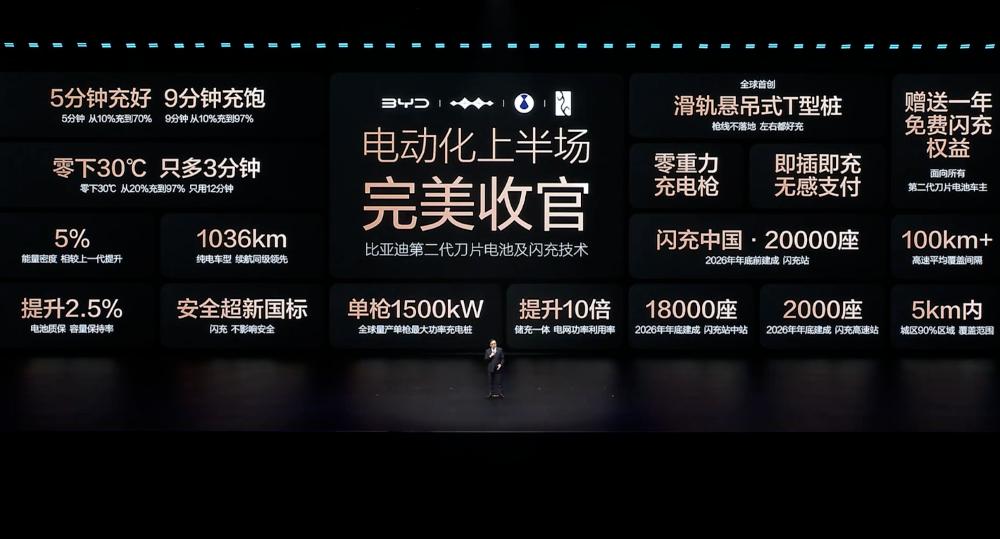
The number of charging piles is also growing rapidly. Car manufacturers and charging - pile companies are accelerating the construction of charging stations. As of the end of March this year, the number of electric charging piles in China reached 21.48 million, a year - on - year increase of 46.9%. BYD, which has just launched the second - generation blade battery, plans to build 20,000 flash - charging stations this year to ensure that there is a flash - charging station within an average of 3 km in first - and second - tier cities, 5 km in third - and fourth - tier cities, and 6 km in fifth - and sixth - tier cities.
Taking the office building where the author's company is located as an example, there were no energy - replenishment facilities when new - energy vehicles first emerged a few years ago. Now, several charging stations such as Xiaoju and Haohan have moved in, and a large number of slow - charging piles are also being connected and improved. The convenience of energy replenishment has been greatly improved, and range anxiety has been alleviated. Especially once you have driven a new - energy vehicle and experienced the convenience of energy replenishment, you won't want to go back to traditional vehicles.
The rapid improvement of infrastructure has removed the biggest obstacle to the popularization of pure - electric models, which is also directly reflected in the change of the market pattern. Brands that accurately understand consumer demand are the first to enjoy this wave of dividends.
As one of the car manufacturers with the most in - depth understanding of the market, Li Xiang, the founder of Li Auto, has always been very accurate in predicting the industry development and creating popular models. Looking back at history, the launch of Li Auto L9 kicked off the boom of six - seat and range - extender vehicles. There was a time when the industry was full of doubts about the range - extender route, but with the success of Li Auto, more and more brands have started to explore the range - extender track. Six - seat models were very popular for a while, covering various price ranges from 150,000 to 500,000 yuan. Brands such as Galaxy, LeDao, NIO, AITO, and Zeekr have all launched best - selling models.
In just the past few months, many six - seat models such as NIO ES9, SAIC Volkswagen ID.ERA 9X, Wuling Huajing S, IM LS8, Wei Brand V9X, Yijing X9, XPeng GX, and Li Auto L9 Livis have been intensively pre - sold and launched. They were everywhere at the Beijing Auto Show, and almost every exhibition booth had a six - seat model with similar parameters in the center. Although manufacturers responded enthusiastically, consumers' attitudes have been quietly changing.
In March this year, only two six - seat models, NIO ES8 and Zeekr 9X, had monthly sales exceeding 10,000 units. Many six - seat models outside the top ten became failures, with monthly sales of less than 1,000 units. Coupled with the change in the birth rate structure, consumers are starting to feel tired and find the homogeneous three - row six - seat models useless. The popularity of six - seat models is rapidly fading, and their glorious golden age is coming to an end.
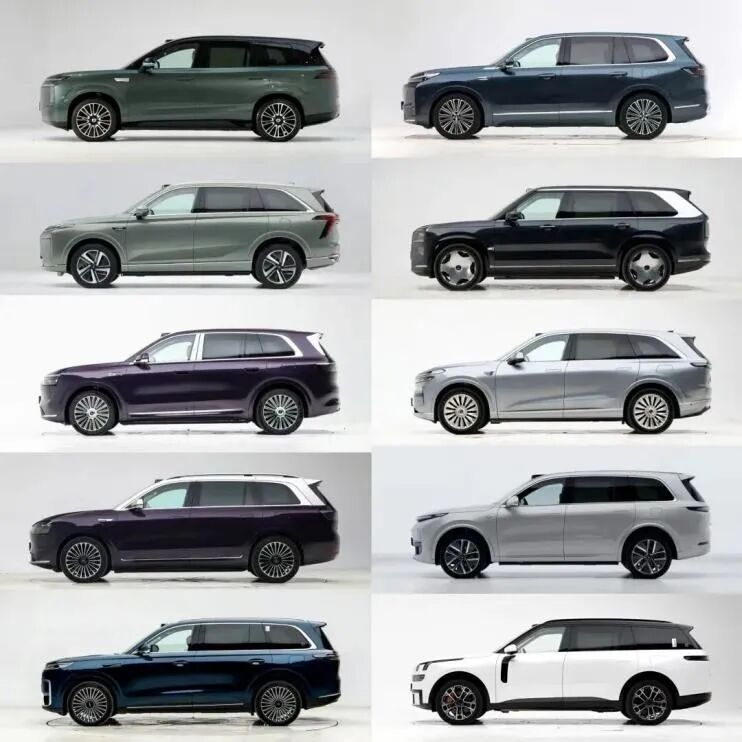
What is taking over is the pure - electric five - seat vehicle represented by Li Auto i6.
In the market below 200,000 yuan, the penetration rate of pure - electric vehicles is already relatively high. Pure - electric small cars such as Xingyuan and Dolphin have high sales, and the acceptance of the economical pure - electric model in this price range is already very mature. However, in the market above 250,000 yuan, there has been a lack of a real best - selling pure - electric model.
With the accelerating arrival of the pure - electric era and consumers' changing perception of pure - electric models, large - scale single products represented by Li Auto i6 have verified the market potential in this price range. The finely polished product strength, combined with the continuous release of the dividends of the pure - electric era, have jointly pried open the key gap in the mid - to high - end pure - electric market.
Compared with the six - seat vehicle market, the market for pure - electric five - seat vehicles is broader. Its market volume of over one million units can accommodate multiple leading players to coexist and thrive, rather than quickly falling into homogeneous involution like the six - seat vehicle market.
Of course, competition is also intensifying, and the pattern of pure - electric five - seat vehicles has not been finalized. The market that Li Auto i6 has just warmed up will soon see strong entrants. The Fangchengbao Titan 7 EV flash - charging version has been launched with high popularity, and the LeDao L80 is also about to be launched. The lower price of the latter under the BaaS plan will directly impact Li Auto i6. Whether Li Auto i6 can maintain its market share will depend on its production - capacity release speed, brand loyalty, and the continuous expansion ability of its super - charging network.
Now let's look at NIO. The success of NIO ES8 is the result of Li Bin's long - term adherence to pure - electric and battery - swapping technologies. From achieving profitability in the fourth quarter of last year to the current situation where NIO ES8 and ES9 are advancing side by side, NIO has finally waited for the real arrival of the pure - electric era.
NIO, which has been focusing on pure - electric vehicles, has always insisted on the battery - swapping layout and high - end pure - electric positioning, even when the range - extender track was hot and the outside world was generally not optimistic. This path has been quite difficult. However, with the accelerating pace of the pure - electric era, NIO's long - accumulated battery - swapping network, brand image, and user community have begun to translate into real market advantages.
From Li Auto i6 to