This knit cap can read your mind
God Translation Bureau is a compilation team under 36Kr, focusing on fields such as technology, business, workplace, and life, and mainly introducing new technologies, new ideas, and new trends from abroad.
Editor's note: California startup Sabi is developing a wearable device that can convert thoughts into text, which is expected to open up a cyborg future of human - machine symbiosis. This article is from a compilation, hoping to inspire you.

Sabi's neural interface device looks like an ordinary knitted cap.
Today, the voice - to - text function has long been popularized in various computer devices. But what if you don't have to speak or use voice input? What would it be like to type just by thinking?
The Silicon Valley startup Sabi has officially ended its low - key R & D phase and announced this goal to the public. The company is developing a brain - worn device that can decode the words silently thought in a person's mind into text on a computer screen. Rahul Chhabra, the company's CEO, said that the first mind - reading knitted cap will be on the market by the end of this year, and a baseball cap style is also being designed.
This technology belongs to brain - computer interface (BCI), which can establish a direct communication channel between the brain and external devices. Many companies, such as Neuralink under Elon Musk, mainly develop brain - computer interfaces that need to be surgically implanted, serving people with severe mobility impairments. However, Sabi's product can be used by ordinary people once they put it on, and everyone is expected to enter the cyborg life of human - machine integration.
It is not exactly the same as the future envisioned by Musk, which involves implanting chips to enable in - depth integration between humans and artificial intelligence. But Vinod Khosla, a venture capital mogul who invested in OpenAI in its early days, believes that non - invasive wearable devices are the only way to popularize brain - computer interface technology among the general public.
Khosla, the founder of Khosla Ventures and one of Sabi's investors, said: "The grandest and most core application of brain - computer interface is to communicate directly with the computer with thoughts. If we want billions of people to control computers with thoughts in their daily lives in the future, we must not use invasive implants."
Sabi's mind - reading cap relies on electroencephalogram (EEG) technology to record the brain's electrical activity through metal sensing contacts attached to the scalp. Currently, with the help of EEG, it is possible to decode the content silently thought in a person's mind, but it is limited to a small number of words and simple instructions, and continuous and natural full - sentence expression cannot be achieved yet.
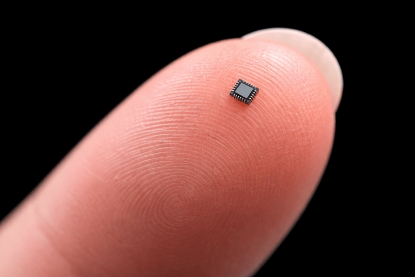
A large number of sensors are arranged inside the cap to non - invasively read brain signals.
The shortcoming of wearable brain - computer devices is that the sensors need to receive brain waves through the skin and skull, and the neural signals will be weakened. Surgical implant devices are close to neurons and can capture stronger and clearer signals.
Sabi's solution is to significantly increase the number of built - in sensors to improve the decoding accuracy. Ordinary EEG devices generally have only a dozen to a few hundred sensors, while Sabi's cap has 70,000 to 100,000 micro - sensors built in.
Chhabra explained: "With the high - density sensor array, it can accurately locate the position and type of neural activity. We can use these high - precision data to greatly improve the reliability of thought decoding."
The company sets the initial thought - typing speed at about 30 words per minute. Although it is lower than the manual typing speed of ordinary people, the official said that the speed will gradually increase as users wear it for a long time and get used to it.
Another major problem in decoding silent thoughts is that everyone's thinking patterns vary greatly. Even if two people are thinking the same sentence in their minds, the brain's electrical wave activities will be different.
The brain - computer interface relies on artificial intelligence to decode neural activities into executable instructions in real - time. The AI models of implantable devices are usually trained only on the brain data of a single person, while wearable devices must be adapted to a large number of different users.
For this reason, Sabi is building a large basic brain model, which is trained based on the brain neural data of a large number of people to learn the general neural activity patterns corresponding to inner speech. Currently, the company has collected brain wave data from 100 volunteers for a total of 100,000 hours.
Jojo Pratt, an independent neurotechnology consultant in San Francisco, believes that for consumer - grade brain - sensing devices to be truly popularized, they must be ready to use right out of the box. Most brain - computer interfaces need to be recalibrated before each use because a person's fatigue level and concentration change every day, and the brain wave signals will also fluctuate accordingly. Products for ordinary consumers must be ready to use out of the box and have stable performance to make people willing to wear them for a long time.
Pratt said: "Such devices must be ready to use as soon as you pick them up. It is the device that should adapt to people, not the other way around."
Wearing comfort and a low - key appearance are also the core competitiveness of wearable brain - computer devices. Pratt said that even for medical assistance purposes, patients prefer devices with an unobtrusive appearance. This is also the reason why companies such as Neuralink, Paradromics, and Synchron are all developing implantable devices with an invisible appearance.
The same applies to consumer - grade wearable devices. Smart bracelets and watches all pursue small size, light weight, and comfortable and unnoticeable wearing. Another neurotechnology company has directly integrated EEG sensors into ordinary head - worn headphones, and the appearance is no different from ordinary music - listening headphones.
Thought - typing sounds cool, but it also brings concerns about neural data privacy and security. Chhabra said that the device data is uploaded to the cloud with end - to - end encryption throughout the process. The AI model can be trained directly based on the encrypted data without accessing the original brain wave information. The company has also hired neuro - security experts from institutions such as Stanford University to conduct a security review of the entire technical architecture.
Chhabra emphasized: "We must recognize that neural data is a person's most private personal information. If we don't protect it carefully, it is irresponsible in itself."
Translator: Teresa