Geely and Ford, a second success.
After completing the acquisition of Volvo 16 years ago, Geely and Ford may join hands again.
But this time it's different from last time. The positions of the two sides have already "switched roles".
Multiple overseas automotive media outlets have reported that from 2027 to 2030, Ford will launch four new all - electric models in Europe. However, all these models will be developed and produced by Geely Automobile, and Ford will only be responsible for exterior design, marketing, and other aspects.
Put simply, it's "Geely builds the cars, Ford slaps on the label".
The core underlying technologies are self - developed by Geely, and Geely is fully responsible for the whole - vehicle manufacturing. The work Ford participates in is only to independently design the exterior and interior styling of the four models, adapt the in - car system for the European market, and complete the terminal delivery through Ford's mature sales network in Europe.
Thirty years on one side of the river, thirty years on the other. Sixteen years ago, Geely borrowed billions to buy brands and technologies with real money. Now, it has started to export products through reverse technology output.
As of now, neither Geely nor Ford has given an official response to this matter.
01 "Going global in a different way"
Let's first look at the details revealed about this cooperation.
According to the overseas automotive media outlet "Autocar", the four new all - electric models that Ford will launch in Europe from 2027 to 2030 will "fully adopt Geely's GEA global intelligent new - energy architecture" and will no longer be equipped with any Ford - self - developed all - electric platforms.
For these four models, such as the three - electric system, battery pack, electronic control logic, and chassis hardware, the core parts supply chain, the whole - vehicle quality control system, and the production and manufacturing standards are all mainly formulated by Geely.
There is already a general plan for these four cars, and the time points are also relatively clear. This includes the "new - generation Ford Puma all - electric model, which will be the first to be launched" in 2027.
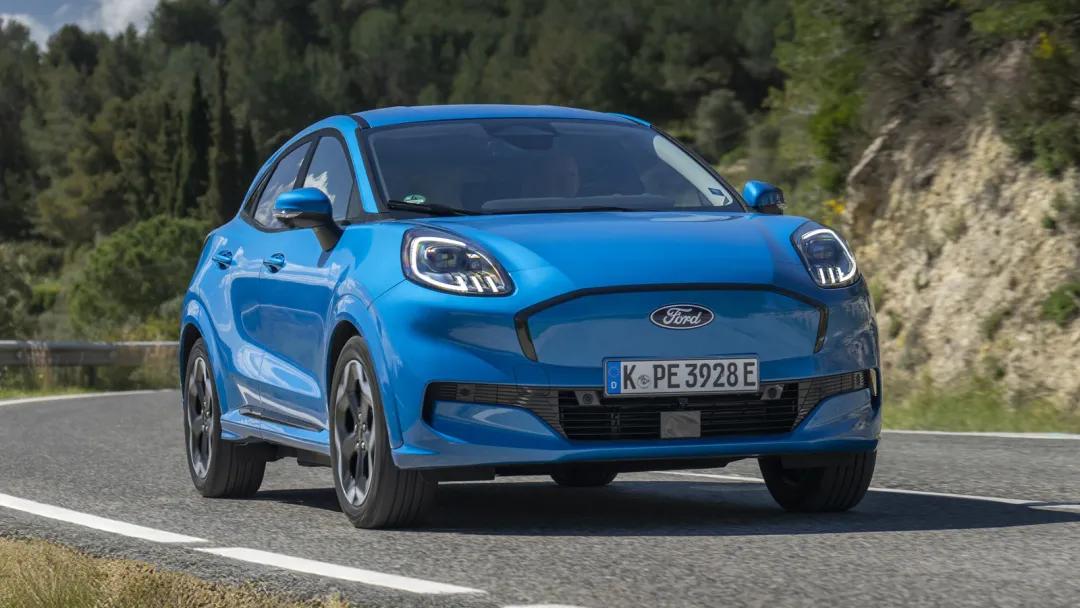
In 2028, a small all - electric crossover SUV will be launched. It has a slightly different size and is mainly for urban commuting and multi - purpose use. In 2029, a compact all - electric SUV will be launched, which is of a higher class. In 2030, an all - electric MPV specifically for the European market will be launched to target family cars and high - end positioning.
Moreover, in this cooperation, Ford's participation is limited to the "operation link". For example, the design of the exterior and interior, and the adaptation of the in - car system for European users. Ford will do independent styling design for these four cars, and the interface style will also follow its own tradition. Coupled with Ford's mature sales channels in Europe, it will complete the terminal delivery.
This is actually easy to understand. Ford is like doing the exterior, interior, and brand packaging on the "blank vehicle" provided by Geely.
Although the two sides have not officially responded, the cooperation between them seems to be a foregone conclusion. Not long ago, the Spanish authoritative automotive media "La Tribuna de Automoción" reported that Geely was going to acquire a Ford factory in Spain and had already reached an agreement.
According to its report, Geely will acquire the "Body 3" third - body assembly production line of Ford's factory in Almussafes, Valencia, Spain.
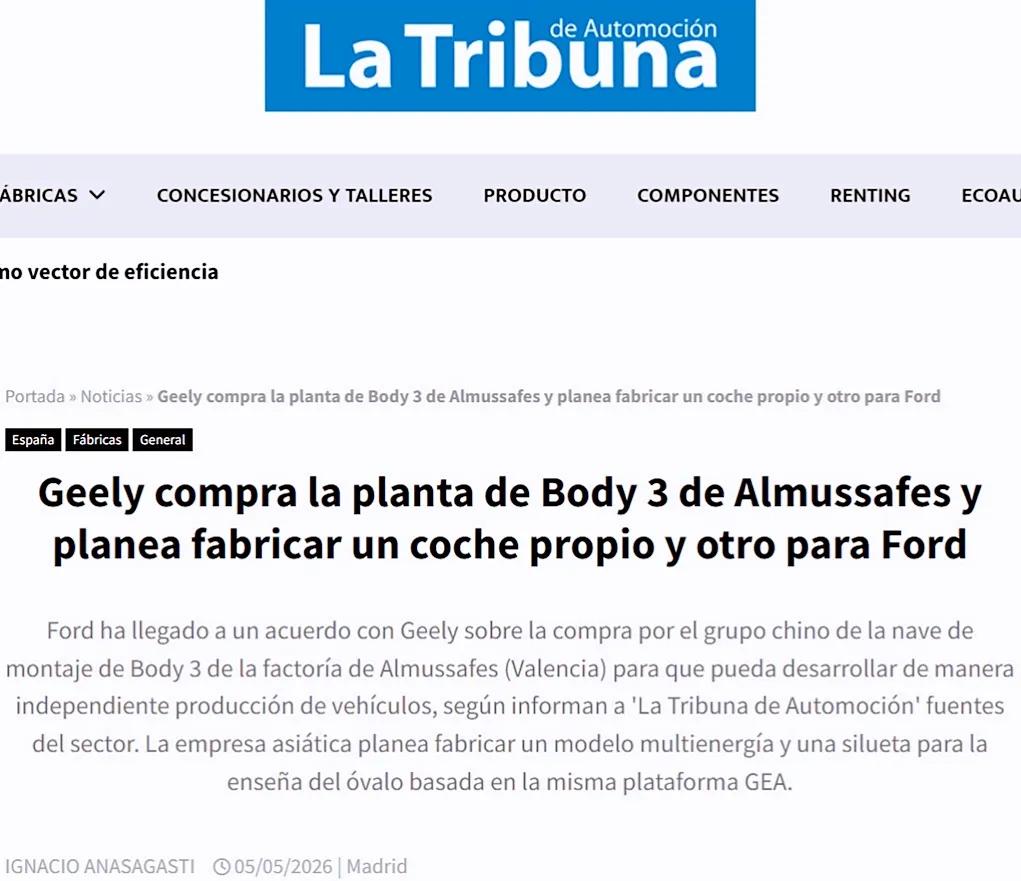
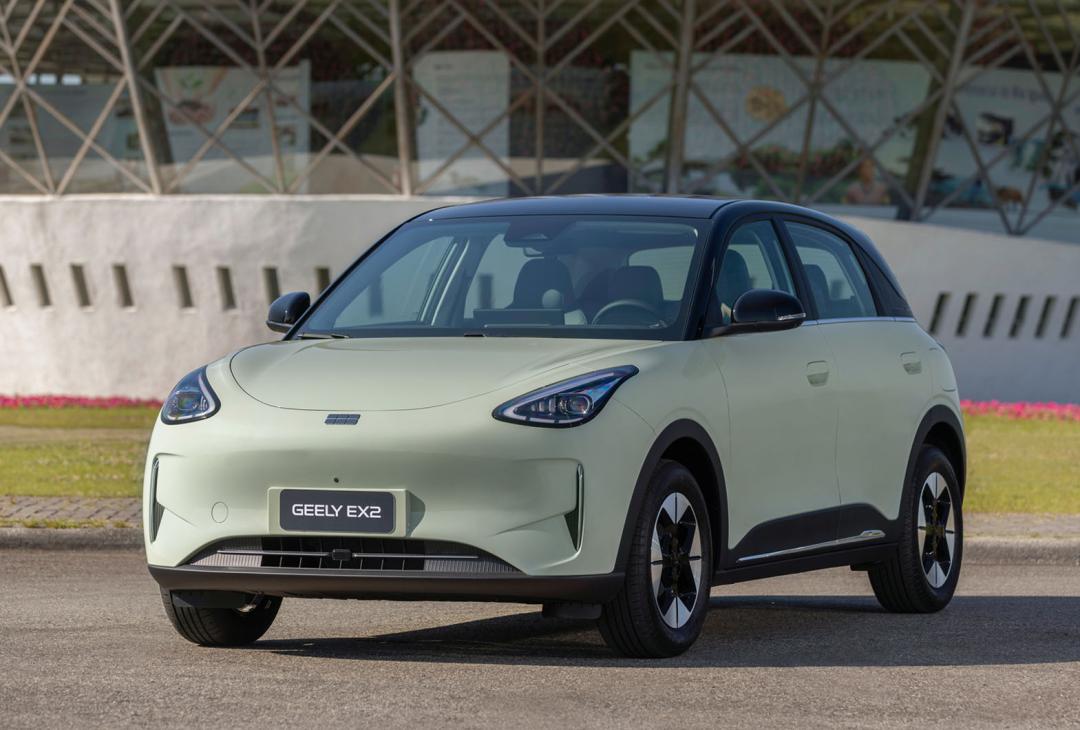
The plan includes two aspects. First, it will produce Geely's own models. A model with the internal code "135" will be developed based on Geely's GEA architecture. This model will offer three power options: hybrid, plug - in hybrid, and all - electric. The industry generally believes it is the EX2 ("Starry Wish Overseas Edition") series of models.
Second, for contract - manufacturing models, Geely and Ford are still in talks about contract - manufacturing a new car for Ford based on the same Geely architecture to fill the production capacity gap at Ford's factory.
Ford's factory in Spain was built on the basis of an orchard acquired by Henry Ford II. It has a manufacturing history of nearly 50 years, started production in 1976, and has produced models such as the Ford Transit Connect, Tourneo Connect, and Kuga. So far, it has produced more than 11 million vehicles in total and "was once Ford's largest production base outside the United States".
Currently, the factory is divided into three production lines. Geely will acquire the most advanced Line 3, which covers an area of more than 80,000 square meters and has been idle since the production of the Galaxy and S - Max MPVs stopped in 2023.
Line 1 is in a semi - stagnant state. It was previously used to produce models such as the Mondeo and S - Max built on Ford's CD4 mid - size platform. With the discontinuation of these models, the production line has been semi - idle.
Only the Ford Kuga is being produced on Line 2. In 2025, the factory's production volume decreased by 17.6% year - on - year to 98,500 vehicles. Calculated, the "capacity utilization rate of the whole factory is less than 25%". This is also the reason why Ford decided to sell some assets to relieve pressure.
It is worth mentioning that before this, Chinese manufacturers such as BYD and Xiaomi had also appeared on the list of potential acquirers.
If the acquisition is successful, it is expected to be renovated and put into production in the first quarter of 2027. After reaching full production, the annual production capacity will be 300,000 vehicles. By then, Geely will take full control of the production line operation, production scheduling, and supply - chain management. Moreover, these four Ford all - electric models will be produced on the same line as the European version of Geely's Starry Wish EX2, achieving dual - brand manufacturing on the same production line.
02 European brand, Chinese car
Sixteen years ago, Geely acquired Volvo in full from Ford for $1.8 billion. At that time, Geely was the "chaser", using capital to exchange for brands and technologies.
Today, 16 years later, the situation is completely different.
In 2025, Ford's global wholesale sales volume was about 4.395 million vehicles, a 2% year - on - year decline. It was surpassed by BYD (4.602 million vehicles) for the first time and fell out of the top five global automakers in terms of sales volume. In the same period, Geely Holding Group's global sales volume exceeded 4 million vehicles for the first time, a 26% year - on - year increase, setting a new historical high.
The story of the role - reversal has also begun. Now, "Geely has become the technology exporter", while Ford, due to its core strategic contraction and over - capacity, wants to exchange production capacity for technology.
For Ford, the most obvious benefit is to improve the factory's capacity utilization rate and revitalize idle assets. Extremely low production will inevitably lead to losses in factory operations, becoming a profit - bleeding point for Ford. Moreover, after this deal is reached, it will also bring in considerable funds for Ford's European division, where sales are declining.
It can also avoid large - scale layoffs at the Valencia factory, ensuring the employment of more than 4,000 existing workers. More importantly, it can obtain advanced electrification technology through cooperation, injecting fresh blood into its European product line. It's a proper "asset optimization".
For Geely, acquiring this ready - made and mature production line from Ford can significantly reduce the initial investment, allowing it to allocate more resources to R & D and the market, and the mass - production rhythm will be faster.
Although the transaction amount has not been disclosed, the industry estimates it to be only "300 - 500 million euros". In contrast, building a new factory of the same scale would cost 1.5 - 2 billion euros. The cost is only one - fifth of that of building a new factory, and it can also save 2 - 3 years of construction time.
Li Shufu once said that in today's world, the automotive industry has serious over - capacity, and making the most of existing resources for resource combination is the most practical form of cooperation. More importantly, it directly obtains the "Made in the EU" status, greatly "avoiding trade barriers".

The timing of Geely's acquisition of Ford's Spanish production line coincides with the EU's tightening of tariff policies on Chinese electric vehicles. Currently, the EU is continuously imposing additional tariffs on Chinese - made electric vehicles, with the maximum comprehensive tax rate reaching "45.3%". This means that when exporting an electric vehicle from China to Europe, the tariff cost will eat up a large amount of profit margin.
So, "using others' resources to achieve one's own goals" has become the optimal solution.
Moreover, Geely has already proven the success of this model: in South Korea and Brazil, it provided technology to Renault and produced Renault - branded models at Renault's factories, helping Renault revive its overseas sales. Now, this "technology - for - channel" approach may be replicated in Europe.
Moreover, "European brand, Chinese car" is, to some extent, another example of the "going - global" path for Chinese automakers.
After all, the EU's "anti - subsidy investigation" of Chinese electric vehicles is still pending, and the risk of additional tariffs in the future hangs like the Sword of Damocles. Facing the huge cost pressure brought by high tariffs, "directly or through equity cooperation to use existing overseas local factories" has become the mainstream option for Chinese automakers' overseas expansion.
Not only Geely, but many domestic automotive brands are also acquiring factories from other automakers to quickly layout overseas production.
For example, BYD is building its first European passenger - car manufacturing factory in Hungary; XPeng Motors has achieved local manufacturing by leveraging production resources in Austria.
After SAIC Group acquired the British brand MG, it has been operating globally under the MG name. GAC has also cooperated with Stellantis. The GAC GS5 has been re - badged as the Dodge Journey and entered the Mexican market. The cumulative exports have exceeded 20,000 units, becoming an important force for GAC's overseas expansion.
Recently, Stellantis also said that it will deepen cooperation with Leapmotor and will re - design Leapmotor's B10 electric SUV and launch it under the Opel brand.
When more and more Chinese cars with overseas brands are running around the world, the once - distant dream of Chinese automobiles is finally coming true.
This article is from the WeChat official account “SuperEV - Lab”, author: Wang Lei, published by 36Kr with authorization.