After a nine-year delay, Tesla's all-electric heavy truck is finally in production.
Here comes the new Tesla vehicle you've been waiting for!
Just one day before the long holiday, Tesla suddenly announced big news: the Tesla Semi, which has been delayed for nearly nine years, has finally started mass production.

You might be a bit confused. What on earth is this? Well, it's the all - electric heavy - duty truck that caused quite a stir back then.
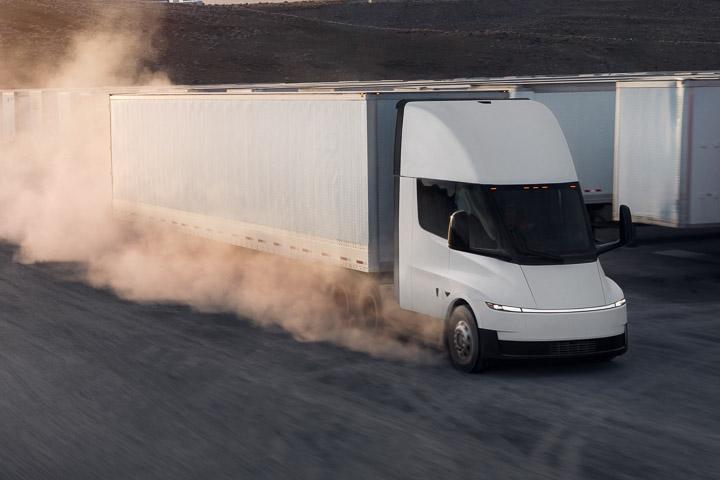
You know, this thing was released as early as 2017. Whether it's the exterior, interior, or performance parameters, they're almost the same as today.
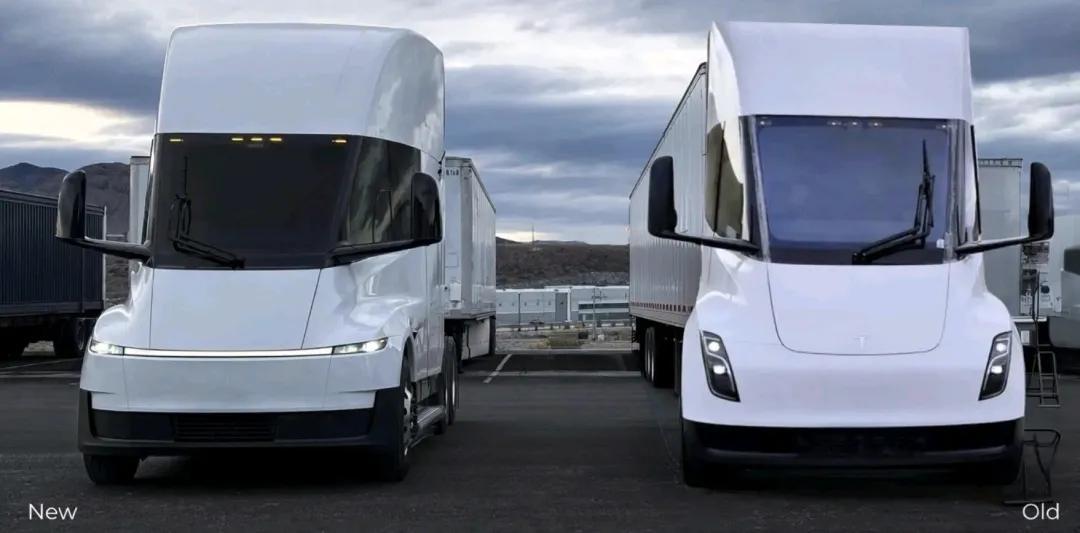
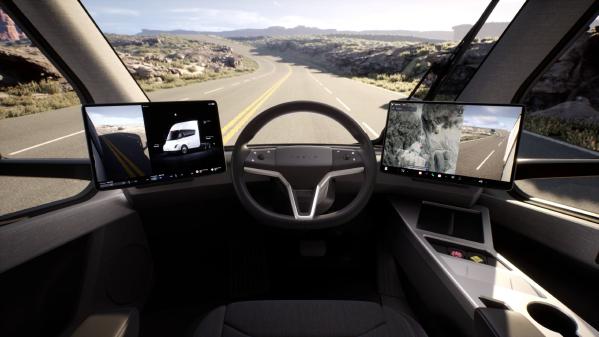
For example, in the front part, mainly the shape of the headlights has been changed to maintain the current family - style design, and the overall dimensions are basically the same; the interior still uses the dual 16 - inch large - screen solution.
Additionally, its range exceeds 800 kilometers, and the power of the three - motor system reaches 800kW. Even back then, this vehicle was drivable. On the day of the release, the young Elon Musk made a cool entrance in it...
Well, if it was already built, why did it take so long to start mass production?
It's a long story. The key issue isn't the vehicle itself, but the batteries inside.
In 2017, Tesla was still using Panasonic's 2170 batteries. For consumer vehicles like the Model 3 and Y, there was no problem. But for the Semi, a heavy - duty truck with higher requirements for battery capacity and charging/discharging power, it was a bit underpowered.
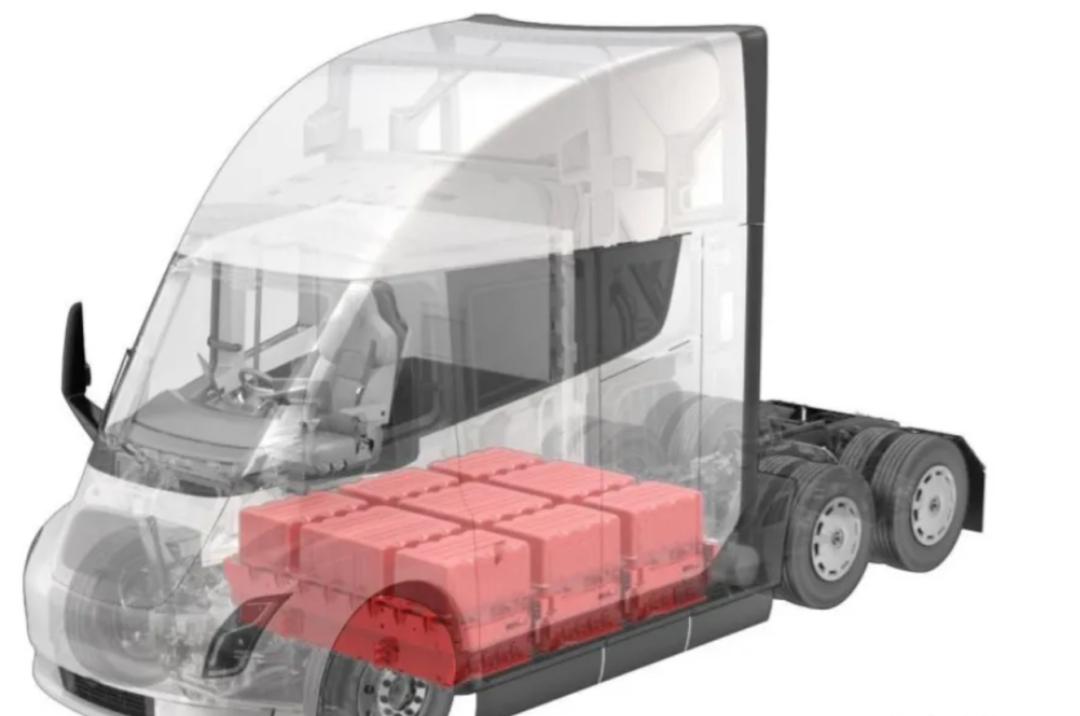
After all, the 2170 battery is small. To meet the Semi's power demand of about 900 kWh, it's estimated that about 50,000 battery cells would need to be installed, and the metal casings account for a large part. Not to mention the welding. When Elon Musk calculated the cost and weight, he almost fainted on the spot.
So, this so - called "PPT vehicle" never got off the ground...
The Semi made its comeback after 2020, when the 4680 battery was announced.
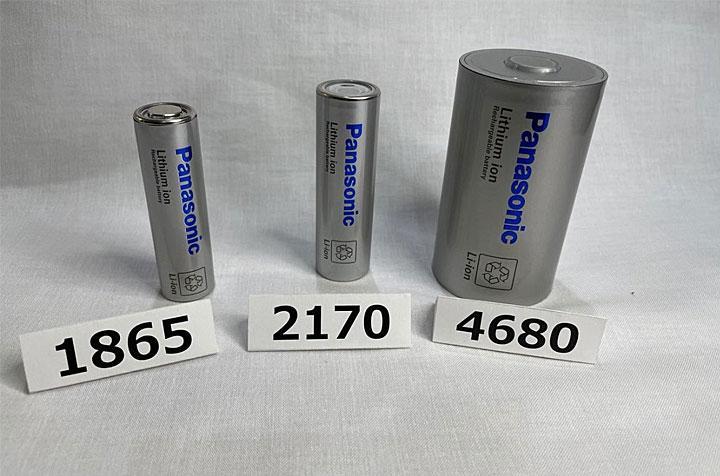
This battery is 5.5 times the size of the 2170 battery. Moreover, it has the advantages of "full tab" and "dry electrode". It has a lower cost, higher capacity, and stronger output power, which is just right for the Semi's needs.
However, the problem is that the technology is still not as simple as described in the PPT. It took Tesla three or four years just to get the "full tab" technology working. Not to mention the more difficult "dry electrode process", which only started to show some progress by the end of last year.
The Cybertruck, which also uses the 4680 battery, was sold with a wet - process semi - finished product. But the Semi had to wait for further technological breakthroughs. Only a few units were symbolically delivered to companies like Pepsi.
In 2024, Elon Musk couldn't wait any longer. Due to the slow progress of the technology, he announced a major layoff. Even Drew Baglino, a core member of the 4680 project, announced his resignation. This made the outside world think that the 4680 project was doomed.

But it was this transformation that allowed Tesla to finally succeed in the dry electrode technology, leading to the mass production of the Semi.
To be honest, this process is quite "Tesla"...
Since it took so long to finally build this vehicle, can this all - electric truck completely revolutionize traditional diesel trucks like consumer new energy vehicles? I think it can. For commercial trucks, economy is indeed the most crucial factor.
According to overseas media estimates, the energy cost of diesel trucks is about $0.6 - $0.7 per mile, while that of all - electric trucks can be reduced to $0.25 per mile. The longer you drive, the more you save. Electric trucks almost completely outperform diesel trucks, not to mention that there are places with even lower electricity prices outside the US.
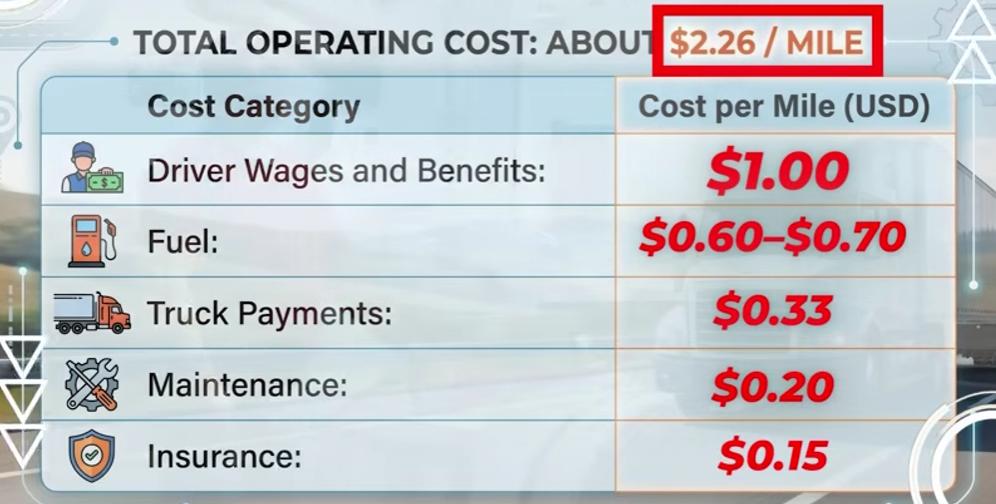
Compared with the cost issue, other "inconvenient" factors can basically be tolerated.
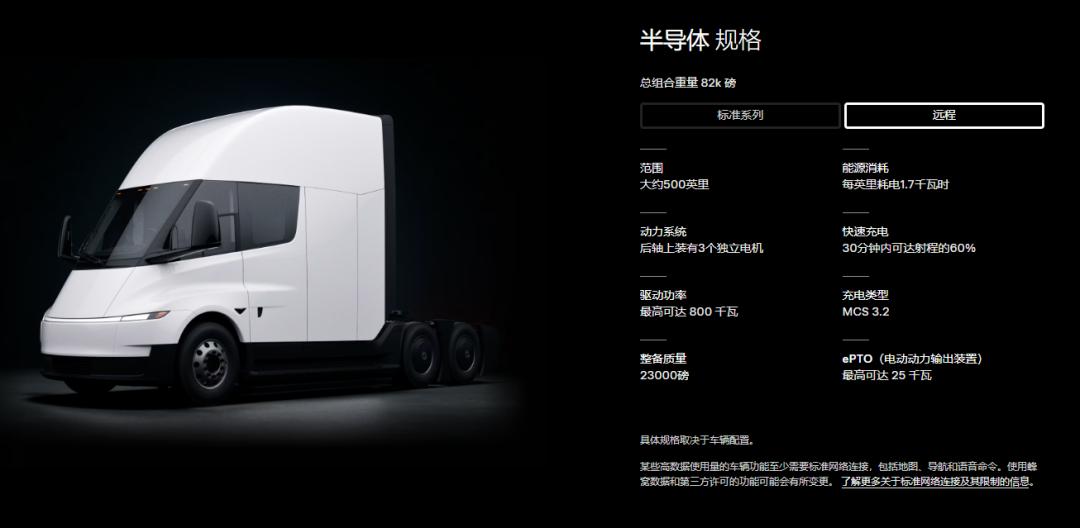
For example, in terms of long - distance range, thanks to the 4680 battery with the "dry electrode process", the Semi can travel up to 500 miles (about 805 kilometers) at most, and the low - end version can still reach 325 miles (about 523 kilometers). Although it can't match diesel trucks that can travel over a thousand kilometers on a single tank, it's still acceptable.
Additionally, due to the large battery, charging is definitely a big problem. Tesla naturally thought of this. Through Tesla's dedicated charging piles, the Semi has also achieved what we call "megawatt fast charging", which Tesla calls MCS. The charging power is as high as 1.2 megawatts, and it can charge 60% in 30 minutes.
After all, according to regulations, truck drivers must take a mandatory rest after continuous driving. For example, in China, drivers need to rest for 20 minutes after driving for 4 hours, and in the US, it's 30 minutes after 8 hours of driving. In theory, as long as there are enough charging piles, this time is just enough to fully charge the vehicle, which isn't much more troublesome than refueling.
Finally, another problem with the large battery is its weight. Since the cab alone weighs 10 tons (top - end version), the outside world has repeatedly questioned the Semi's cargo - carrying capacity.
In 2020, after Bill Gates tested the Semi, he complained, "Limited by the physical bottleneck of battery weight, electric heavy - duty trucks may never become a reality." I'm sure Elon Musk wanted to curse at that moment. He responded by saying that Gates "knows nothing".
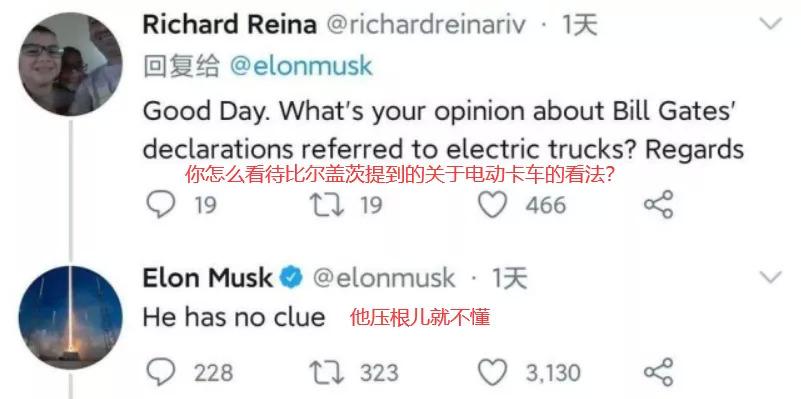
So, who is right in the end? Of course, it's Elon Musk. Although it's true that the all - electric truck is heavy, its power is also stronger. The power of a general diesel truck is about 400kW, while the total power of the Semi reaches 800kW.
This is actually to simulate the down - shifting and torque - increasing of a fuel vehicle. When climbing a slope, the three motors on the rear axle of the Semi will work together to maximize the torque, and it can easily climb the slope.
Later, Tesla conducted a test. With a full - load mass of nearly 40 tons, the Semi drove smoothly on the 800 - kilometer undulating road from the Fremont factory to San Diego.
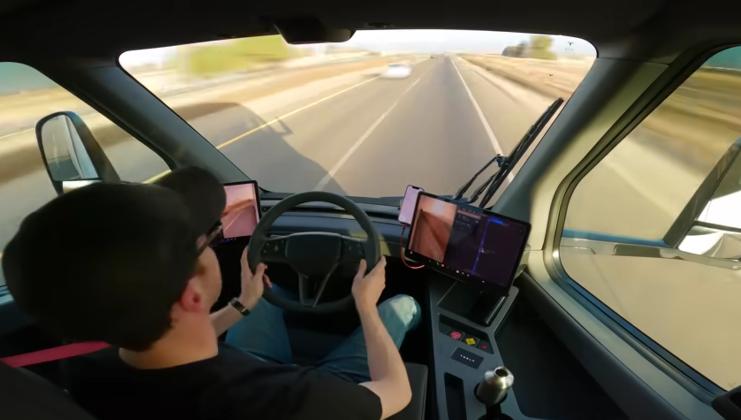
So, after a comprehensive comparison, the Semi is indeed much more powerful than traditional diesel heavy - duty trucks.
The only problem might be the price. Currently, the two versions are priced at $260,000 and $290,000 respectively. If you want a longer range, you'll definitely have to go for the top - end version at $290,000 (about 2 million RMB). Compared with the average price of $240,000 for Class 8 diesel heavy - duty trucks on the market, the price of the Semi is definitely higher.
However, compared with other all - electric brands in Europe and the US, it might be much lower. European manufacturers' all - electric heavy - duty trucks basically sell for over $400,000. For example, the Mercedes eActros 600 sells for $420,000, and the Volvo VNR Electric starts at $400,000.
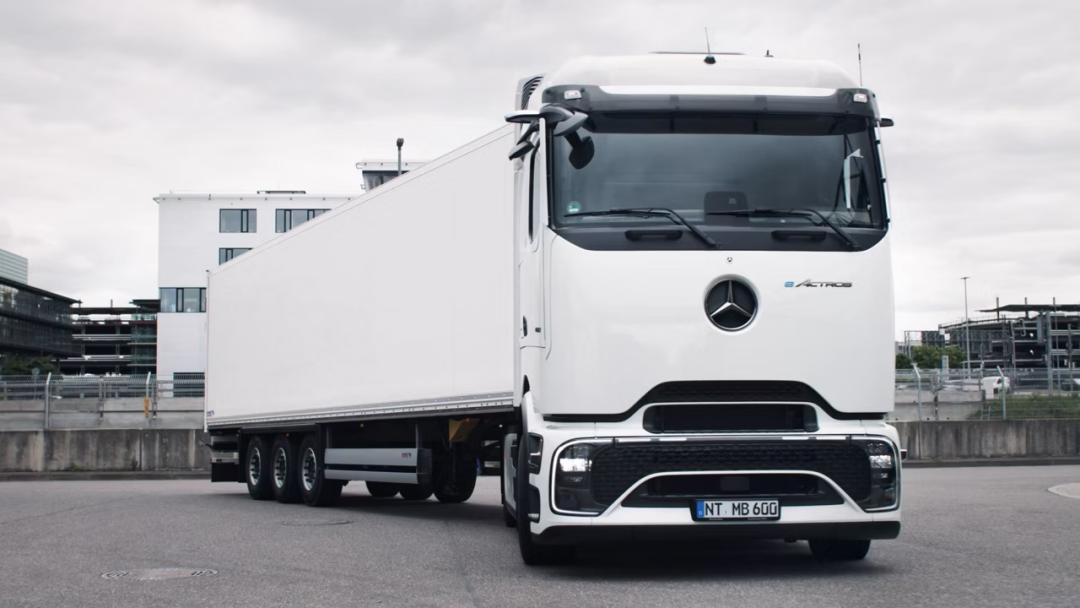
Looking at it this way, the Semi is still very cost - effective.
Many self - operated transportation fleets like Coca - Cola are not sensitive to the initial cost, have fixed routes, and even need to promote the green concept. They really need products like the Semi, and Tesla is helping them save a lot of money.
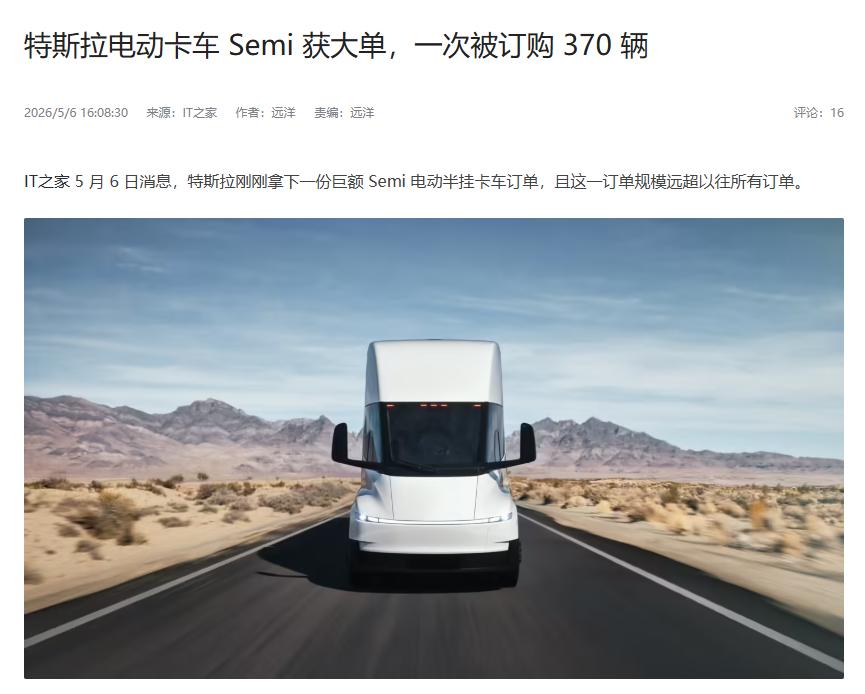
So, it's easy to understand why the Semi received many large orders as soon as its mass production was announced.
But if you consider it as an ordinary freight truck, the situation is different.
For example, in China, it's really hard to imagine who would buy a truck for 2 million RMB. For example, the price of the Geely Remote Xinghan H in the same class is only 1 - 1.5 million RMB.
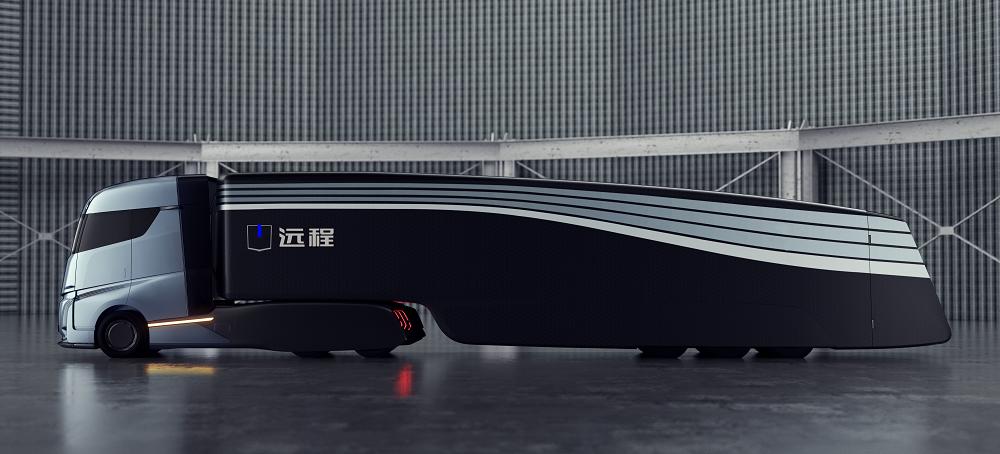
Not to mention that in general, such a large tonnage isn't needed.
Currently, the best - selling all - electric heavy - duty trucks on the market are from brands like XCMG, Sany, FAW, Sinotruk, Shaanxi Auto, Foton, and Geely Remote. Their prices are generally in the range of 500,000 - 1 million RMB.
