Unable to withstand the cost pressure, BYD and other companies have started to raise prices.
Just as consumers have gotten used to the continuous price cuts in the automotive market, a wave of price hikes is quietly emerging. The prices of various key raw materials are rising across the board, posing a severe cost challenge to major automakers - should they sacrifice profit or sales volume? The continuous price war has squeezed the industry's profit margin to the lowest level in nearly a decade. This game between cost and sales volume may become a crucial turning point for the reshuffle of the market landscape.
01
The Wave of Price Hikes Quietly Arrives
On the evening of April 26, Gao Yue, who was planning to buy a car soon, suddenly received a WeChat message from a salesperson at BYD's Ocean Network. The message showed that after May 1, the optional price of the "Heavenly Eye B" assisted driving system would be raised from the original 9,900 yuan to 12,000 yuan. The salesperson reminded those in need to place an order quickly.
Two days later, BYD officially issued an official notice: For some models under BYD's Dynasty Network, Ocean Network, and Fangchengbao, the price of the optional "Heavenly Eye B" assisted driving laser version will be raised from 9,900 yuan to 12,000 yuan. This price adjustment will take effect on May 1, 2026.
The bad news doesn't stop there. Gao Yue found that BYD's discount efforts are much less than before. A salesperson at BYD's Ocean Network told Gao Yue that the newly launched flash - charging version of the car this year has no discount at all when purchasing an additional car. Even for trade - ins, the manufacturer's trade - in subsidy is at most 5,000 yuan. In addition, the home charging pile for the flash - charging version of the new car is no longer given for free and consumers need to pay for it separately.
Different from the madness of the previous two years, the price war in the automotive market this year seems to be hard to start. "Caixin Auto" visited many brand stores and found that compared with 2025, the scope and amount of subsidies covered by many manufacturers have been reduced. Some brands, similar to BYD, offer no subsidies or discounts for purchasing additional new cars.
Not only have the cash subsidies from manufacturers decreased significantly, but there are also signs of price hikes. Hongmeng Zhixing fired the first shot in the price hike. At the Hongmeng Zhixing technology upgrade press conference on March 4, Huawei launched a new - generation dual - optical - path image - level lidar, which is also the world's highest - specification 896 - line lidar in mass production. It was first installed on the new Zunjie S800 and Wenjie M9. Compared with the Zunjie S800 with a 192 - line lidar, the same version with an 896 - line lidar is 20,000 yuan more expensive; the Wenjie M9 with an 896 - line lidar is 10,000 yuan more expensive than the same version with a 192 - line lidar.
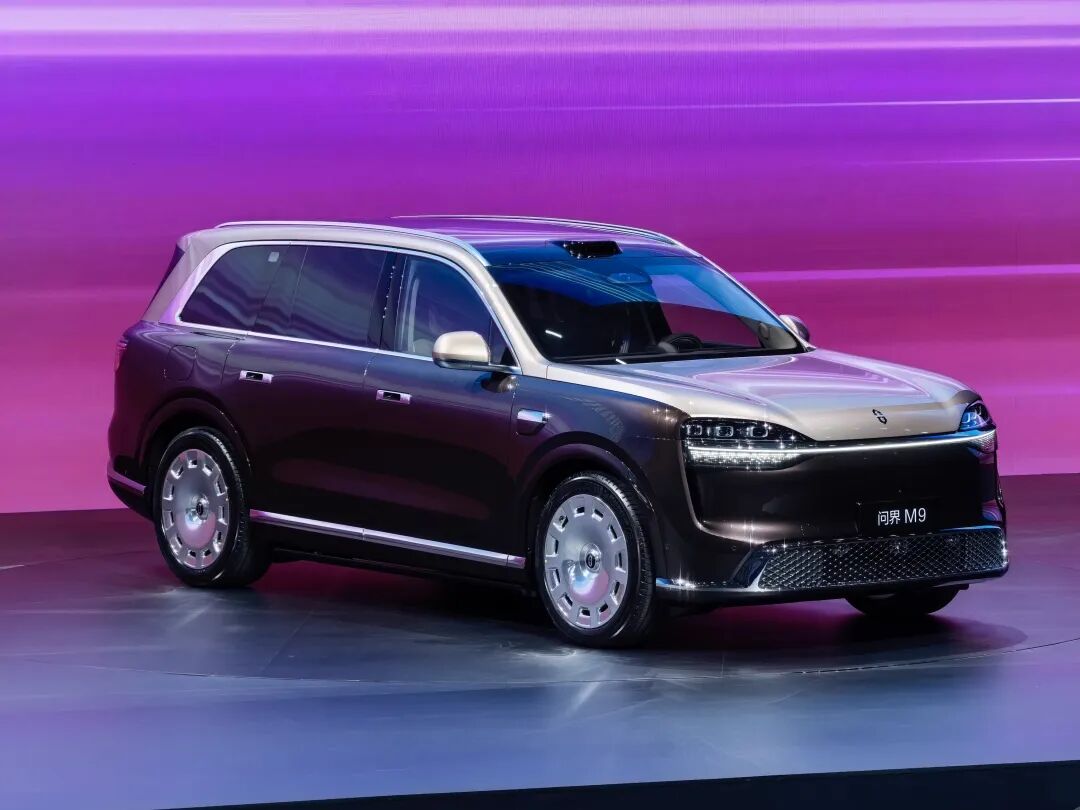
▲ Image source/ "Caixin Auto"
Next came Chery. On March 5, Exeed, a brand under Chery, officially announced an increase in the official guiding price of the Exeed ET5. The announcement showed that only the 210 lidar intelligent top - end version of the Exeed ET5 was involved in the price adjustment, with a price increase of 5,000 yuan. After the adjustment, the guiding price is 164,900 yuan. In comparison, the price increase of this model is mainly due to the intelligent assisted driving system "Falcon 700". It was previously given for free, but after the price adjustment, an additional 5,000 yuan needs to be paid to purchase it.
Some auto executives believe that the future price hikes in the automotive industry are likely to spread to more manufacturers. During the 2026 Beijing Auto Show, Lu Fang, the chairman and Party secretary of Voyah, told the media such as "Caixin Auto" that the prices of automotive raw materials are constantly rising. "It is very likely that automotive prices will increase. When everyone can't stand it at a certain point, the prices may change."
The price monitoring by the China Passenger Car Association also confirms this trend. The data publicly released by Cui Dongshu, the secretary - general of the China Passenger Car Association, shows that in March this year, the average retail price per vehicle increased by 7,000 yuan year - on - year. Among them, the average retail price of traditional fuel - powered vehicles was 181,000 yuan, a decrease of 2,000 yuan compared with the same period last year; the average retail price of new energy vehicles was 169,000 yuan, an increase of 16,000 yuan compared with 153,000 yuan in the same period last year.
Of course, this doesn't mean that the price war has completely disappeared. It has started to exist in a more hidden form. Some manufacturers offer disguised discounts through methods such as "increasing the quantity without increasing the price" or "increasing the configuration with a small price increase". For example, the 2026 LeDao L90 Max+ and Ultra+ versions of NIO, which were launched not long ago, have added NIO's self - developed 5nm automotive - grade intelligent driving chip "Shenji NX9031", the NIO world model, the vehicle's full - domain operating system SkyOS·Tianshu, and lidar compared with the old versions, but the price remains the same.
Xiaomi Auto also adopted a similar approach. After the press conference of the new - generation Xiaomi SU7, Lei Jun, the chairman and CEO of Xiaomi Group, said: "The new - generation SU7 has more than 100 upgrades. Taking the standard version as an example, the material cost alone has increased by nearly 20,000 yuan." However, in terms of pricing, it has only increased by 4,000 yuan compared with the old version.
02
Comprehensive Pressure on Raw Material Costs
The factors affecting the cost of new energy vehicles mainly come from two aspects.
First is lithium carbonate needed for batteries. In 2025, the average price of battery - grade lithium carbonate was 75,500 yuan per ton. Currently, the spot price has exceeded 170,000 yuan per ton, with a growth rate of about 125%. Liu Yu, the regional manager of a self - owned brand, calculated an account for "Caixin Auto". For a 150,000 - level pure - electric vehicle with a 60kWh lithium iron phosphate battery, the increase in lithium carbonate cost alone will increase the battery cost per vehicle by 4,000 - 6,000 yuan.
Liu Yu believes that currently, automakers should not pass on the cost of lithium carbonate to the end - consumers because many automakers have their own battery factories and will also reserve battery raw materials in advance, so they can basically bear the cost pressure themselves.
The biggest burden on automakers is actually the rapidly rising price of storage chips. Analysts from Wedbush, a well - known US financial services company, predict that with the fourth quarter of 2025 as a reference, the prices of DRAM and NAND will increase by three - digit percentages in the first half of 2026. Among them, the increase in DRAM can reach 130% - 150%, and the increase in NAND is also close to this range.
Lu Liang, a person from a domestic chip manufacturer, told "Caixin Auto" that the storage chips needed in intelligent electric vehicles are mainly DDR memory chips (a type of DRAM) used to load content and provide it to the CPU for processing, which are mainly used in intelligent driving and intelligent cockpit systems. "The stronger the computing power of the two systems, the larger the memory required."
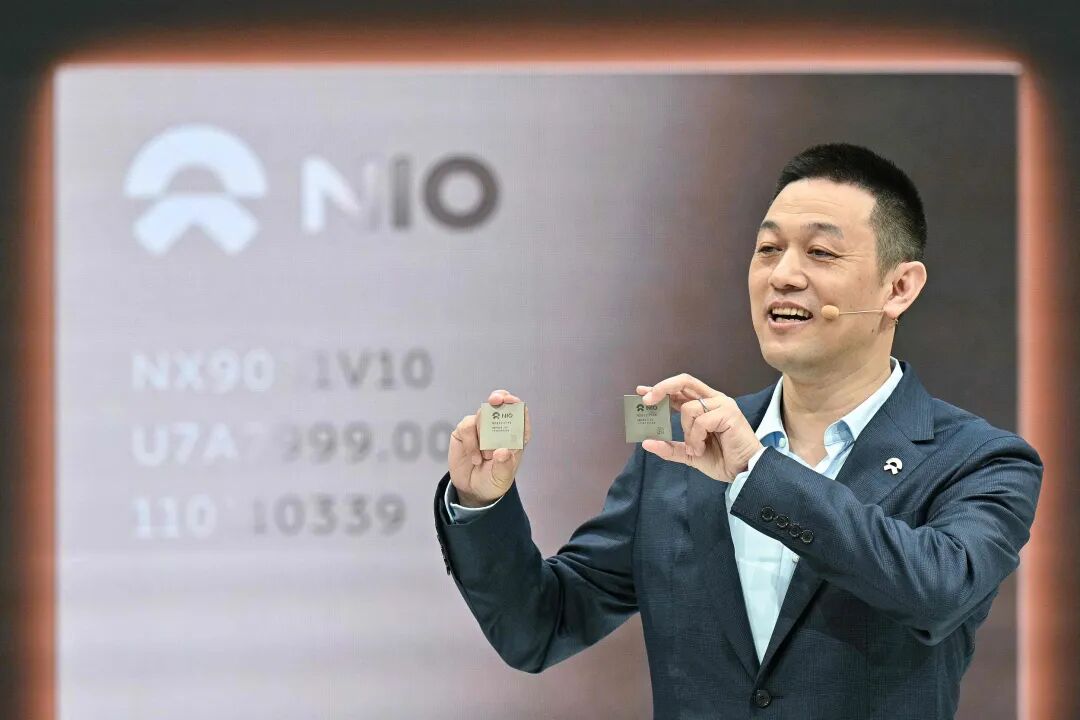
Not long ago, Li Bin, the chairman and CEO of NIO, also calculated an account for the media at the auto show. The storage chips alone will increase the cost per vehicle of high - end intelligent electric vehicles by 3,000 - 5,000 yuan.
Lu Liang said that the root cause of the price increase of automotive storage chips is the same as that of smart terminal devices such as mobile phones and computers. Currently, the large - model industry is in the limelight. Capital is willing to continuously invest in the commercialization of relevant enterprises. With a lot of money in hand, large - model companies have started to snap up storage chips crazily. "They are willing to offer higher prices to lock in production capacity in advance."
From the perspective of the market pattern, currently, the automotive industry accounts for less than 5% of the total global storage chip procurement volume. Automakers are in a weak position in terms of bargaining power. Memory chip giants such as Samsung, SK Hynix, and Micron are naturally willing to tilt their production capacity towards the more profitable large - model industry.
"Now automakers have no way to absorb the memory procurement cost themselves. It's already good to have the goods," Lu Liang said.
Not only lithium carbonate and storage chips, but also the prices of raw materials such as copper, aluminum, and plastics are rising.
Since 2025, the global copper price has been soaring continuously, with a cumulative increase of more than 40% within the year. In 2026, the domestic spot copper price remains at a high level of over 100,000 yuan per ton; the situation of the aluminum price is similar. According to the management of China Hongqiao, a leading aluminum enterprise, the average price of domestic electrolytic aluminum in 2026 may reach 23,000 yuan per ton, with a rising space of more than 2,000 yuan compared with the average price of 20,600 yuan per ton in 2025. The soaring oil price has also pushed up the price of plastic products.
03
The Backlash of the Price War Forces Automakers to Protect Profits
Although the price war can boost sales volume in the short term, the profit space of the automotive industry is already over - burdened.
Data released by the China Association of Automobile Manufacturers shows that in 2025, the national automobile production reached 34.531 million vehicles, a year - on - year increase of 10.4%. The industry's operating income was 11.18 trillion yuan, a year - on - year increase of 7.1%. However, the total profit in the same period was only 461 billion yuan, with a growth rate of only 0.6%. The industry's profit margin dropped to 4.1%, reaching the lowest level in nearly a decade.
Under the backlash of the price war, the financial report of BYD, the industry leader, is a true portrayal of the current survival environment of automakers. In 2025, BYD's revenue scale exceeded 800 billion yuan for the first time, setting a new historical high. However, its net profit attributable to the parent company decreased by 19% year - on - year, reaching 32.62 billion yuan. Based on BYD's total sales volume of 4.6 million vehicles in 2025, the net profit per vehicle was less than 7,100 yuan, about 2,300 yuan less than in 2024. At the same time, BYD's gross profit margin in 2025 also dropped to the lowest level since 2023, at 17.7%.
This result was achieved on the premise that BYD's overseas market was booming and "subsidizing" the domestic market. In 2025, BYD's vehicle exports exceeded one million, a year - on - year increase of 1.4 times. The revenue contributed by the overseas market increased from 28.55% in 2024 to 38.65%. Based on the revenue of 310.74 billion yuan and the gross profit margin of 19.46% in the overseas market in the same period, the gross profit per vehicle in BYD's overseas market is about 58,000 yuan, 2.5 times that of the 23,000 - yuan gross profit per vehicle in the domestic market.
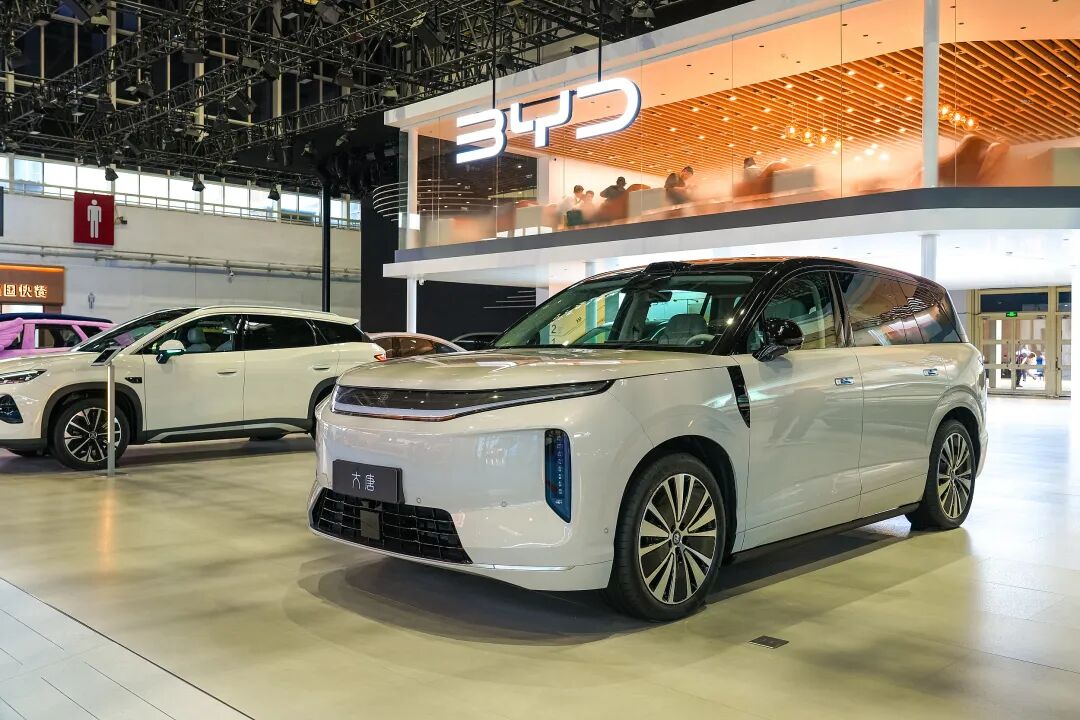
Not only BYD, but among the major passenger - car listed companies in the A - share market, most of them saw a significant decline in net profit in 2025. Great Wall Motor's operating income increased by 10.2% year - on - year to 222.82 billion yuan, and its net profit attributable to the parent company decreased by 22.1% year - on - year; Changan Automobile's operating income increased by 2.7% year - on - year, and its net profit attributable to the parent company decreased by more than 44%; GAC Group's operating income decreased by more than 10% year - on - year, and its net profit attributable to the parent company turned from profit to loss; Seres' operating income increased by nearly 14% year - on - year, and its net profit attributable to the parent company only increased slightly by less than 0.2%. If even the leading enterprises in the industry are in such a situation, the survival pressure of mid - tier automakers will only be more severe.
In 2026, the automotive industry is facing a more brutal market. Data from the China Passenger Car Association shows that in the first quarter of 2026, the cumulative retail sales of the national passenger - car market were 4.226 million vehicles, a year - on - year decrease of 17.4%. Among them, the domestic retail sales of new energy vehicles were 1.908 million vehicles, a year - on - year decrease of 21.1%.
Also from the data of the China Passenger Car Association, from January to March 2026, the total domestic automobile production was 7.15 million units, a year - on - year decrease of 6%; the automotive industry's income was 2.4128 trillion yuan, a year - on - year decrease of 0.2%; the cost was 2.1406 trillion yuan, a year - on - year increase of 0.7%; the profit was 78.4 billion yuan, a year - on - year decrease of 18%.
Now, automakers are faced with an almost impossible choice: if they bear the cost stubbornly, their profits will be severely eroded; if they follow the trend of price hikes, they are likely to lose sales volume. But in the long run, this is an inevitable pain for the healthy development of the Chinese automotive market. Perhaps this choice will become a crucial turning point for the reshuffle of the industry echelon.
(Gao Yue, Liu Yu, and Lu Liang in the article are all aliases)
This article is from the WeChat public account "Caixin Auto WEEKLY". Author: Dong Xue, Editor: Shi Ye. Republished by 36Kr with permission.