The electric vehicle's range evaporates by 200 kilometers overnight. Automobile companies' small calculations of battery locking are holding back the industry and should be completely curbed.
Recently, CCTV reported a chaos in the new energy vehicle industry: A car owner spent 200,000 yuan to buy a car, but was secretly subjected to silent OTA updates that reduced the vehicle's range, restricted its power, and slowed down fast charging, significantly degrading the driving experience.
According to the data from the national 12315 platform in March 2026, there were over 12,000 complaints related to battery locking in a single month, a year-on-year increase of 273%!
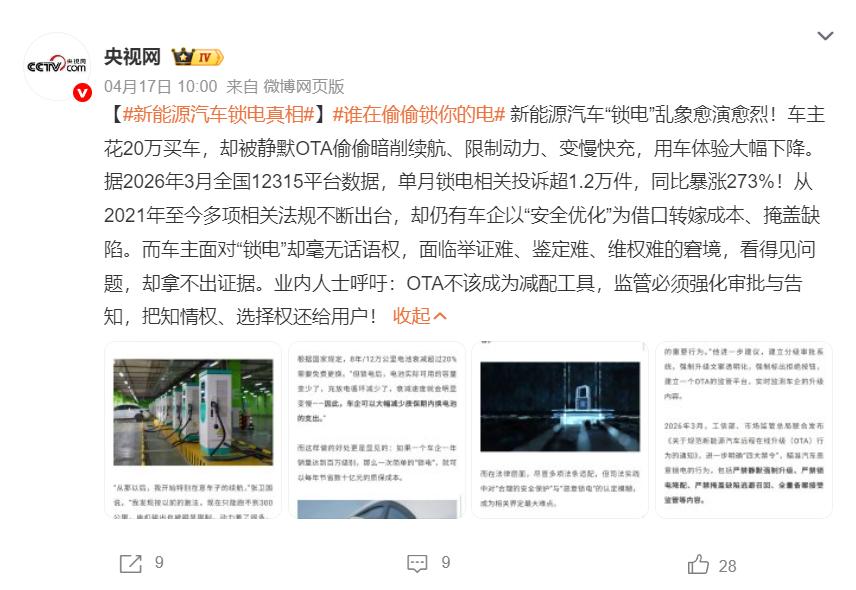
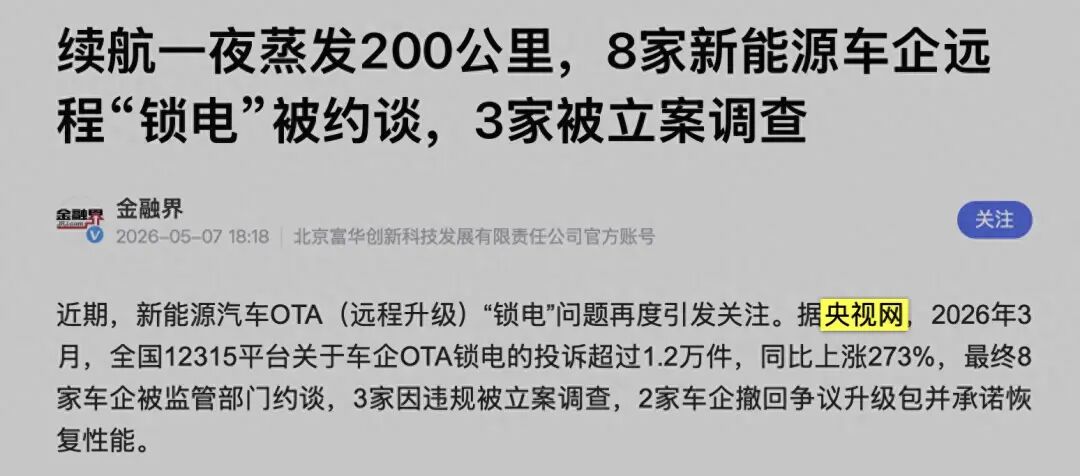
CCTV pointed out in the report that some car owners reported that when they bought a new car, it was advertised with a CLTC range of 510 kilometers and a fast charging time of 40 minutes from 20% to 80% battery. However, after a night-time OTA update, the car owners found that the range could not reach 300 kilometers, a loss of 200 kilometers overnight.
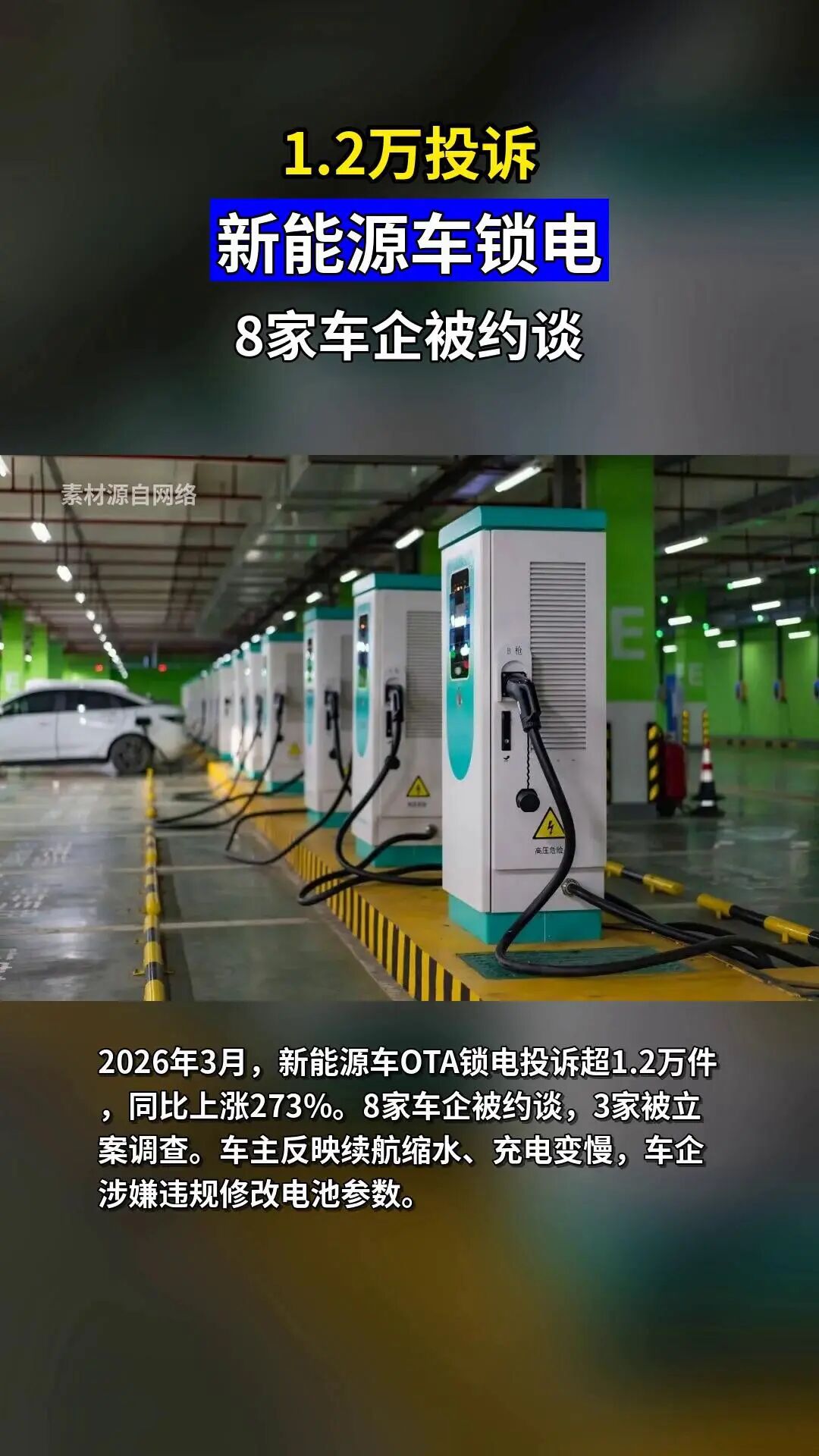
Currently, 8 car manufacturers have been summoned for talks, and 3 have been put under investigation. Among them, 2 manufacturers quickly withdrew the update packages overnight and promised to restore the vehicle's performance.
Today's smart electric vehicles are equipped with dozens or even hundreds of batteries. These batteries are composed of thousands of small cells, and the Battery Management System (BMS) acts as the "brain" of the battery pack, responsible for managing the flow of electricity.
The so - called "battery locking" means that some car manufacturers, without the consent of consumers, modify the parameters of the vehicle's battery management system through OTA remote updates or in - store software updates. They restrict the upper limit of battery charging, the depth of discharge, the charging and discharging power, etc. They secretly change the instructions of the car battery's "brain".
Originally, your battery could hold 100% of the charge, but they lock 20% of it. Originally, you could drive 500 kilometers, but now you can only drive 350 kilometers. Originally, it took you half an hour to charge, but now it takes an hour.
This means that the "100%" shown on your dashboard is false. You think it's fully charged, but in fact, it's a "false reading".
The most expensive component of a new energy vehicle is the battery. You pay two or three thousand yuan more for a car with a 500 - kilometer range than a 400 - kilometer one. Every kilowatt - hour of electricity is hardware you bought with real money.
Now, by simply clicking a few buttons in the background through OTA, car manufacturers reduce the battery's charging upper limit from 100% to 90% or increase the discharge reserve. Isn't this just cheating consumers out of their money?
Moreover, the charging speed has been extended from the original 40 minutes to one hour and ten minutes, and the vehicle's power has also decreased.
According to the report, when car owners contacted the 4S stores to inquire about the reason, the staff insisted that "the vehicle has no problem" and "it's affected by the low winter temperature". They also emphasized that "the power reduction is a normal adjustment to improve battery safety after system optimization".
In short, some car manufacturers flatly deny the problem. Now, after being exposed by the official media, some car manufacturers quickly withdrew the update packages overnight.
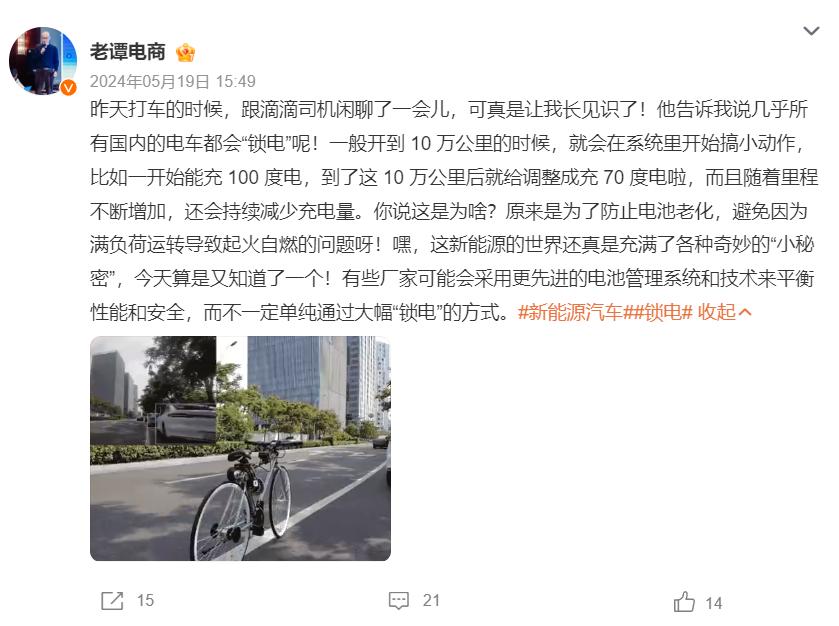
Some netizens said that when taking a taxi, some ride - hailing drivers revealed that many domestic electric vehicles "lock the battery"! Generally, when the vehicle has driven 100,000 kilometers, the system starts to play tricks. Initially, the battery can be charged with 100 kWh, but after driving 100,000 kilometers, it is adjusted to 70 kWh. And as the mileage increases, the charging capacity will continue to decrease.
This kind of battery locking is actually deceiving customers. It's like you bought a big three - bedroom apartment with your money, but the property management secretly built two walls with cement at night, sealing off your living room and second bedroom.
Then they tell you: "Sir, this is for the structural safety of your house."
Behind the battery locking, car manufacturers are playing a shrewd game
When electric vehicles are sold, pushing the battery to its maximum range will definitely damage the battery. After the vehicles are sold, they adjust the battery performance to a second - or third - rate level through battery locking.
You may wonder, won't these car manufacturers ruin their reputation by doing this? Who will buy their cars in the future?
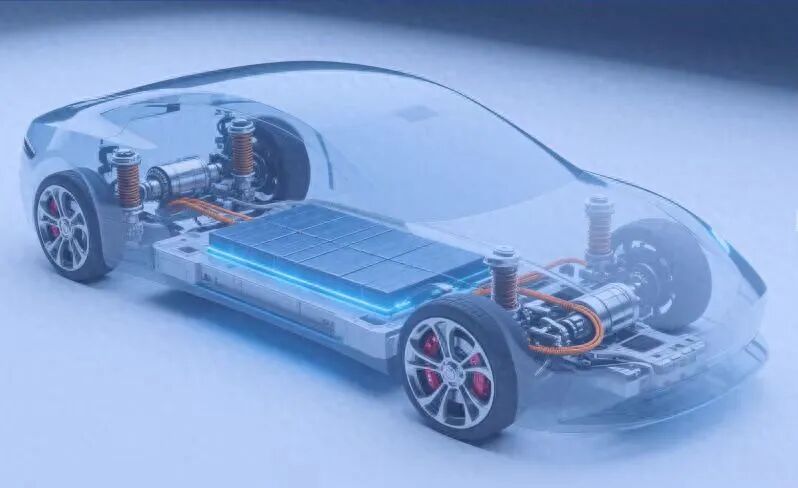
Car manufacturers are not stupid. They are very good at calculating. Everyone knows how competitive the car - making industry is now. In 2025, the gross profit margin of the automotive industry was only 4.4%, but the battery accounts for 30% to 40% of the total vehicle cost. What's worse, batteries can break down.
If there are design defects in a batch of batteries, such as sub - standard cell quality, they are prone to bulge or even catch fire after two years of use. According to regulations, car manufacturers have to recall the vehicles.
The cost of recalling a vehicle and replacing the battery is 30,000 to 50,000 yuan. If 100,000 problematic vehicles are sold, it will be a hole of three to five billion yuan.
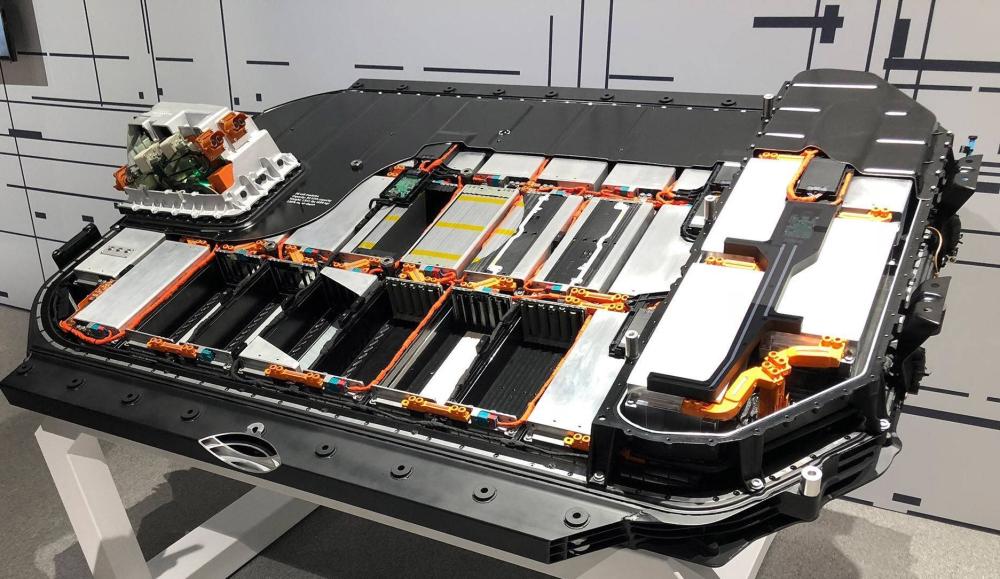
Many car manufacturers don't have that much profit in a year. This is where many car manufacturers' calculations lie. They don't want to recall the vehicles or replace the batteries. Is there a win - win solution?
That's battery locking - reducing the charging upper limit from 100% to 90% and lowering the discharge power. The battery, which was on the verge of overloading, instantly becomes more stable, and the risk of self - ignition is reduced.
After battery locking, the actual available capacity of the battery decreases. The number of charge - discharge cycles is reduced, and the decay rate becomes significantly slower. The probability of the car manufacturer replacing the battery for free within the warranty period is also lower.
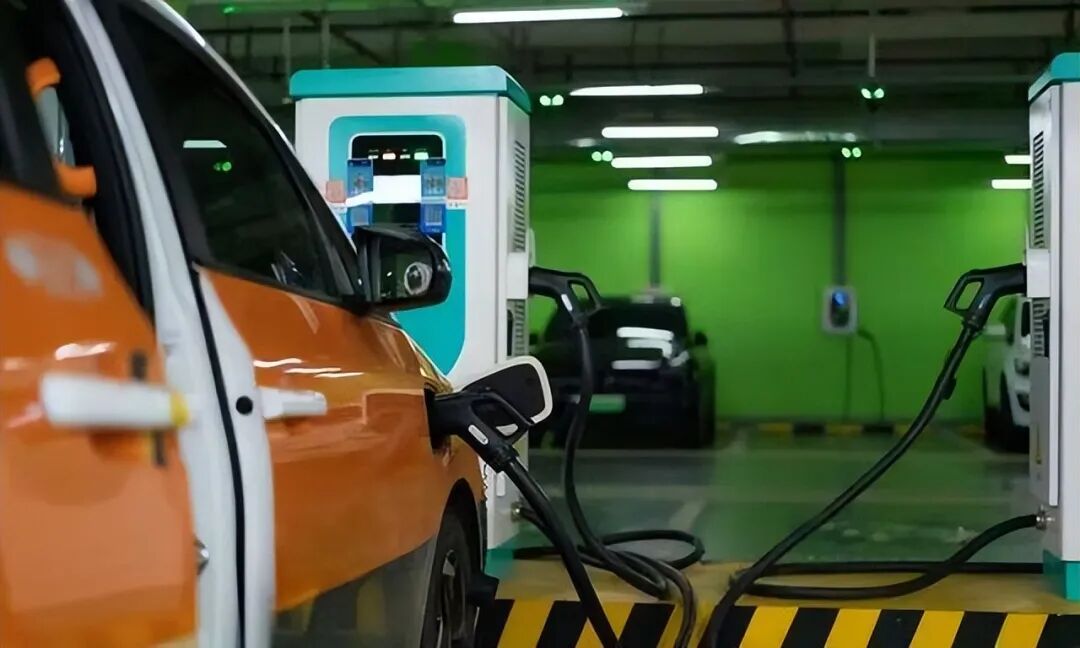
If a car manufacturer sells one million vehicles a year, a simple "battery locking" can save billions of yuan in warranty costs every year. They just need to type a few lines of code on the keyboard to modify the BMS (Battery Management System) parameters, and the material cost is almost zero.
In this way, the battery life is extended, and the car manufacturers can increase their revenue by selling battery - related services.
However, this behavior violates the provisions of the "Consumer Rights and Interests Protection Law of the People's Republic of China" regarding consumers' right to know and the right to independent choice.
Moreover, this behavior arouses deeper concerns among consumers.
In the past, when consumers bought fuel - powered cars, the vehicle's parameters, engine cylinder diameter, transmission gear ratio, suspension tuning, etc. were basically fixed at the factory. If you wanted to modify them, you had to spend money and go to a modification shop.
But now, it's different for new energy vehicles. The parameters can be modified through the background software. It seems that once you buy a car, it's not entirely yours. It's constantly monitored and controlled by the car manufacturer. The car has become a "mobile phone on wheels", and the car manufacturer always keeps a key in the background.
Last year in Shanghai, there was a case where two maintenance workers were convicted of damaging the computer system for privately unlocking the battery parameters locked by the car manufacturer.
This involves another deeper question: In extreme situations such as accidents, can the information in the electric vehicle be modified without the owner's knowledge?
Car manufacturers should keep in mind the red lines, stop dragging the industry down, and put an end to such behavior
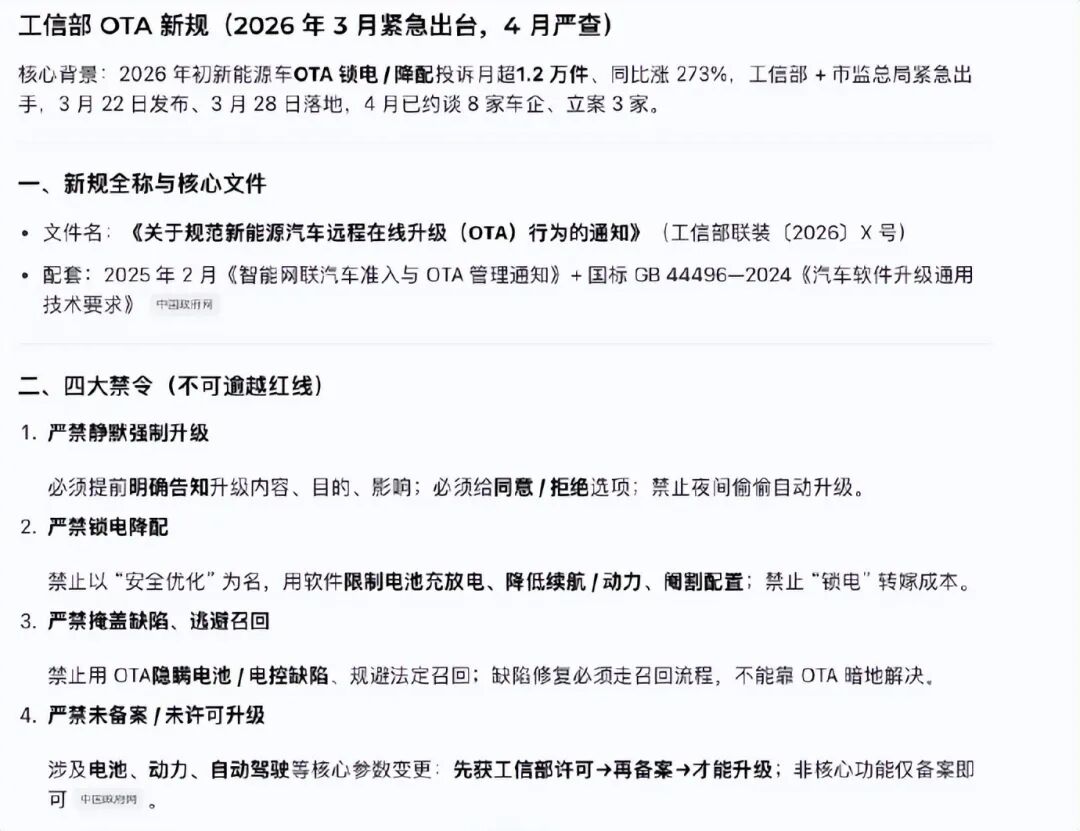
Therefore, since February last year, the Ministry of Industry and Information Technology's "new regulations" have drawn several "red lines" for car manufacturers:
First, they are not allowed to conduct silent upgrades without permission. If they want to modify the vehicle's parameters, they must inform consumers 7 days in advance and can only proceed after obtaining the consumers' consent to ensure consumers' right to know. Otherwise, it is illegal.
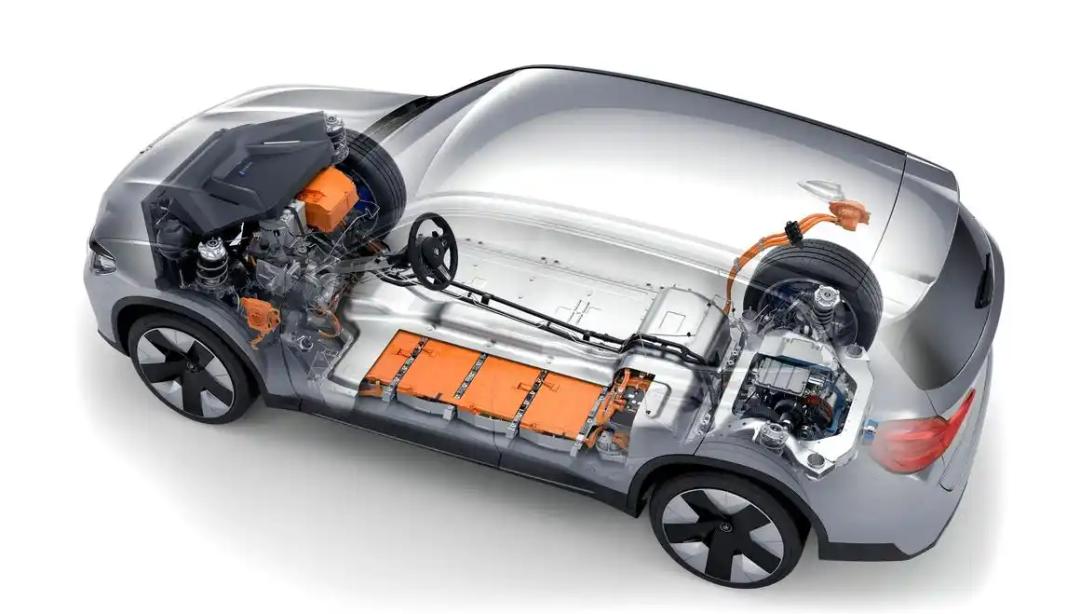
Second, range, power, and battery capacity are the core parameters that consumers pay for. Car manufacturers have no right to unilaterally take them away.
Third, they are not allowed to use OTA to cover up defects: If the battery is damaged, they must recall the vehicles honestly and not try to cover it up by "patching".
In short, car manufacturers should not only return the battery capacity to the car owners but also return the property rights that should belong to the car owners.
As People's Daily Online said, safety should never be a bargaining chip in the game between car manufacturers and consumers. It should be the bottom line that the entire industry adheres to.
The 12,000 complaints are just the tip of the iceberg. The 3 car manufacturers under investigation are just a microcosm of the industry chaos. If this problem is not solved, the concept of "private property" will be meaningless in the face of smart cars.
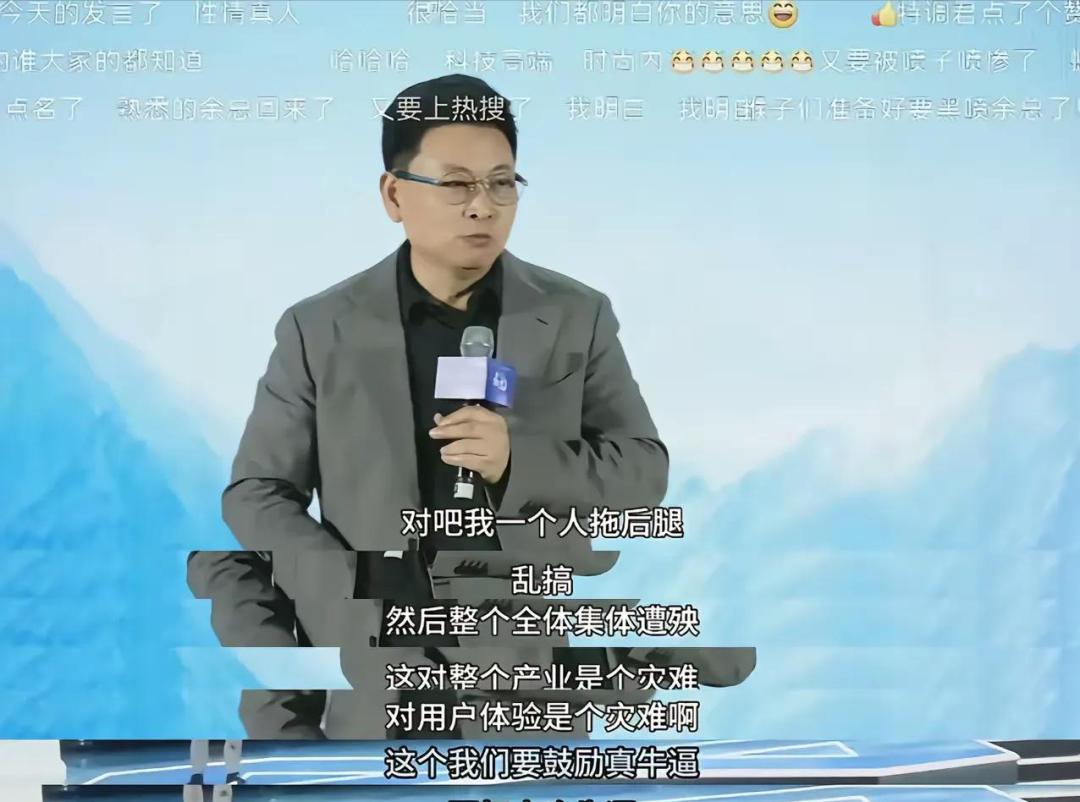
Yu Chengdong once said that in the automotive industry, if one person drags the industry down and acts recklessly, it will be a disaster for the entire industry and the user experience. The whole industry will suffer.
This statement is very appropriate in the case of battery locking. When car manufacturers play such tricks, they are actually dragging the entire industry down.
The new energy vehicle industry has entered a mature stage. In this stage, the reputation and product quality of car manufacturers are the keys to long - term survival. Once trust is broken, the cost of repairing it will increase exponentially.
Moreover, after the Ministry of Industry and Information Technology issued the new OTA regulations in February last year, it is now in the stage of strengthening implementation and centralized rectification.
If the industry's reputation is damaged and consumers lose confidence, it will have a negative impact on the reputation and credibility of the entire new energy vehicle industry. Car manufacturers should wake up to the importance of this. They should put an end to the secret OTA battery locking.
This article is from the WeChat official account “Hotspot Micro - Review” (ID: redianweiping), written by Wang Xinxi, and is published by 36Kr with permission.