36Kr Exclusive | Huaxi Aviation, Focusing on Hydrogen Turbo-Extended Range All-Tilting eVTOL, Completes Seed Round Financing of Tens of Millions of Yuan
36Kr learned that "Huaxi Aviation" has completed a seed - round financing of tens of millions of yuan. This round of financing was exclusively invested by Minyin International. The funds will be used for core technology R & D, team expansion, test flight of the verification aircraft and promotion of airworthiness, implementation of commercial scenarios, and market expansion.
Huaxi Aviation is a technology company engaged in the R & D, design, production, and manufacturing of general aviation aircraft, core components, and related products, as well as the operation of aviation aircraft and VTOL supporting facilities. As the world's first R & D enterprise for hydrogen - turbine hybrid eVTOL, Huaxi Aviation is composed of talents from aerospace institutions such as Tsinghua University, Beihang University, Nanhang University, Harbin Institute of Technology, and Northwestern Polytechnical University, in combination with senior experts from national - level teams such as China Aerospace Science and Technology Corporation, China Aerospace Science and Industry Corporation, and Aviation Industry Corporation of China.
The founder, Zhang Xin, graduated from the Helicopter Department of Nanjing University of Aeronautics and Astronautics, which is the only helicopter major in the country with a complete teaching and training qualification for bachelor's, master's, and doctoral degrees. His area of study is flight dynamics and control. After graduation, he joined a research institute of the Third Academy of China Aerospace Science and Industry Corporation and worked there for seven years. At the age of 29, he was promoted to a senior engineer by special approval, and he was the only one in the institute that year.
During 17 years of study and work, Zhang Xin has been deeply involved in the field of aircraft design. The projects he participated in range from 400 - kilogram autogyros to 11 - ton helicopters, from solar - powered manned aircraft to hypersonic planes, covering almost the entire spectrum of aircraft.
In 2022, Zhang Xin left the aerospace system and joined the Spray Combustion and Propulsion Laboratory of Tsinghua University for three years. It was this experience that made him re - engage with vertical take - off and landing aircraft and also made Zhang Xin feel the call of entrepreneurship.
"I studied helicopters for seven years and then worked on fixed - wing aircraft for ten years. Electric vertical take - off and landing aircraft are exactly a combination of the two." At the end of 2024, Zhang Xin wrote a long research report, which strengthened his entrepreneurial direction: not to focus on short - range pure - electric aircraft, but on long - endurance hydrogen - hybrid eVTOL. In March 2025, Huaxi Aviation was officially established.
From the national top - level design to local implementation policies, from intensive capital investment to the layout of technology giants, eVTOL has become another trillion - level track with certainty after new - energy vehicles.
Morgan Stanley predicts that the global eVTOL market will reach $45 billion in 2030, with the Chinese market accounting for about $20 billion; the global scale will exceed $225 billion in 2035. Multiple reports and consultations suggest that China will become one of the fastest - growing and largest single markets for the global eVTOL industry. It is estimated that the Chinese eVTOL market is expected to exceed 600 billion yuan by 2035.
However, beneath the booming surface, there is a fatal problem in the industry: the vast majority of pure - electric eVTOLs have short flight ranges, high operating costs, and low profitability.
Hydrogen energy may be the ultimate energy source
In the early stage of entrepreneurship, Huaxi Aviation also experienced intense struggles in choosing a development path.
"At first, we considered whether to optimize and iterate based on the configurations of overseas star enterprises." Zhang Xin recalled. The team spent 3 - 4 months conducting intensive demonstrations, reviewing from all dimensions including technology, patents, industrial chain, and cost. Finally, they reached the conclusion: there is no need and no way to imitate.
"China has its own industrial - chain advantages. Our team has more than a decade of engineering experience, and is supported by the Tsinghua laboratory. We are fully capable of creating original configurations. This can not only avoid patent risks, but also optimize performance and build our own brand."
This decision to abandon imitation directly established Huaxi Aviation's core differentiation today: not to focus on pure - electric aircraft, but on hydrogen - turbine hybrid; not to use conventional multi - rotors, but to adopt full - tilt vector propulsion; not to pursue short - range test flights, but to aim for 1000 - kilometer long - endurance commercialization.
Therefore, Huaxi Aviation finally chose the hydrogen - turbine full - tilt rotor configuration. The target product is an eVTOL aircraft with a take - off weight of 2.5 tons, a range of over 1000 kilometers, a cruising speed of 324 - 350 kilometers per hour (equivalent to the maximum speed of high - speed trains), and a payload of about 500 kilograms.
Compared with the mainstream eVTOLs on the market, which generally have a range of 200 - 250 kilometers, Huaxi Aviation's product directly expands the operating radius by more than four times. Long - endurance is their most core advantage.
Why hydrogen energy?
Zhang Xin gave a very "engineer - like" answer: energy density determines everything.
"One kilogram of hydrogen can generate 32 - 33 kWh of electricity, while one kilogram of lithium - ion battery can only generate 0.25 - 0.3 kWh. The difference between the two is 100 times. This cannot be compensated by engineering optimization; it is determined by physical properties." He said. Higher energy density means longer flight ranges, fewer refueling times, and higher aircraft utilization rates.
Zhang Xin calculated an account: A typical pure - electric eVTOL is designed to have a range of 250 kilometers. However, considering the safety redundancy requirements for emergency landings and route changes in civil aviation, as well as the insufficient power output after the battery voltage drops, the actual available power is only 50% - 60%, and the actual usable range is only 150 - 160 kilometers. For Huaxi's thousand - kilometer - level range, even after deducting the redundancy, the operating radius can still exceed 800 kilometers.
In terms of unit cost, Huaxi Aviation's product can achieve a per - seat per - kilometer cost that is half or even lower than that of short - endurance eVTOLs, comparable to that of ride - hailing business cars or even express cars.
Of course, hydrogen energy also brings additional engineering challenges, such as high - pressure hydrogen storage and thermal management. Huaxi Aviation's solution is to develop a complete hydrogen - turbine power - generation system independently and use the waste heat generated by the turbine power generation to heat and gasify the hydrogen fuel, forming a complete energy - efficiency closed - loop.
Zhang Xin believes that with the promotion of national policies and the maturity of the industrial chain, the cost of industrial by - product hydrogen has dropped to about 10 yuan per kilogram, comparable to that of fossil fuels. In the next two or three years, the cost of green hydrogen is also expected to reach the same level. "Hydrogen energy should ultimately be the ultimate energy source for aircraft."
From scaled - down verification aircraft to commercialization
Huaxi Aviation's R & D path is a typical aviation engineering route that starts small and gradually expands, releasing risks step by step and progressing in an orderly manner.
They have planned a series of scaled - down verification aircraft with ratios of 1:8, 1:4, 1:2, and finally 1:1 full - scale. Among them, the 1:8 verification aircraft has completed thousands of test flights, focusing on verifying the flight control algorithm and fault - reconstruction ability, that is, the aircraft can still take off and land safely even when one or two power units among the six rotors fail.
Zhang Xin revealed that during the test flights, they also encountered "various small problems" such as resonance caused by the coincidence of the blade rotation frequency and the body vibration point, and the self - rotation of a power unit due to abnormal ground power supply. However, these problems were solved one by one through methods such as optimizing flight control filtering and improving control logic.
The 1:4 verification aircraft takes it a step further. It has been developed into a single - person ultra - light sports aircraft, the WorthyAero R1. Since its size and weight meet regulatory requirements, this product does not need to go through the complex airworthiness certification process in China, the United States, and Europe and can be directly commercialized.
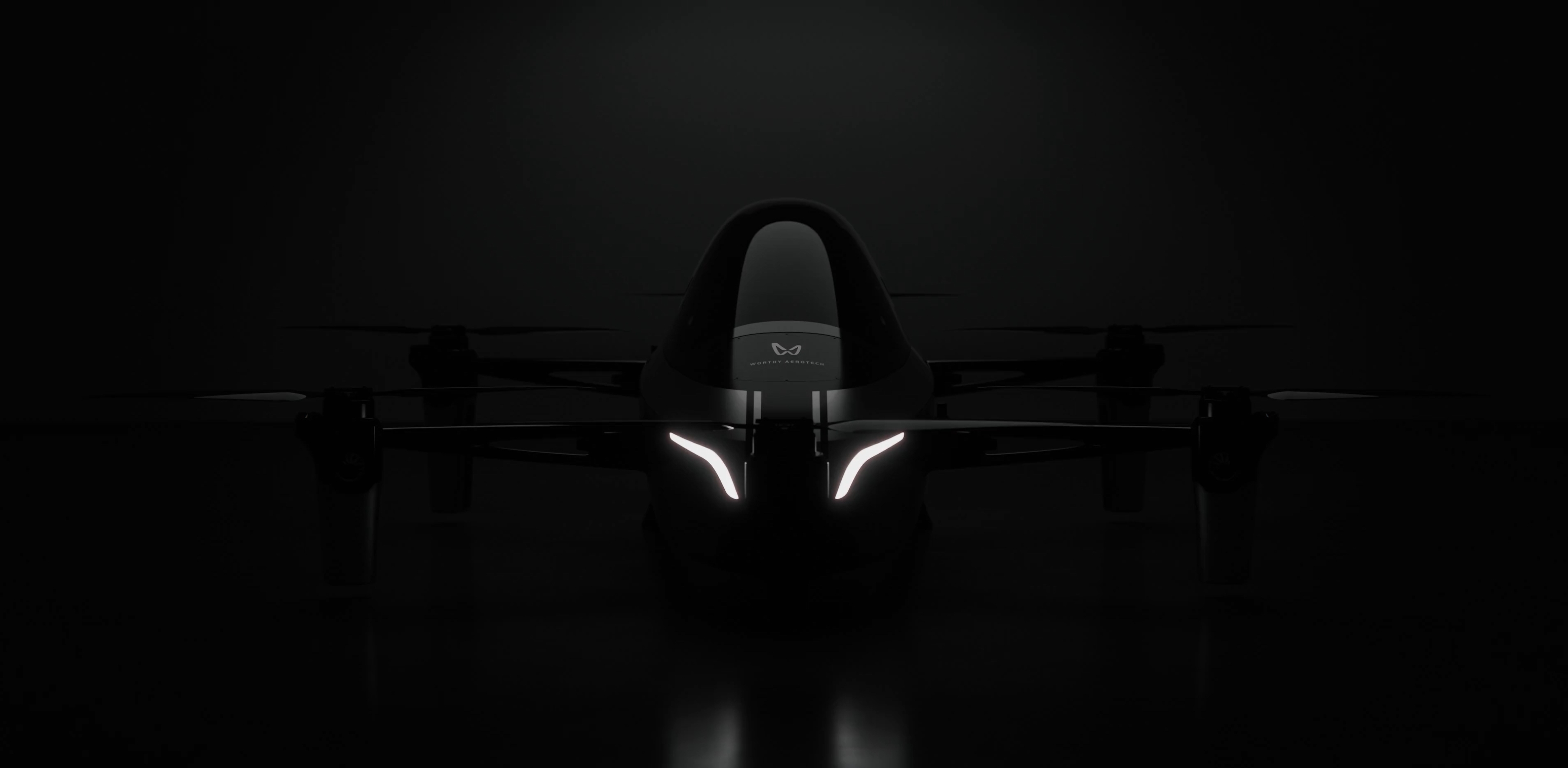
Front view of the upcoming product WorthyAero R1
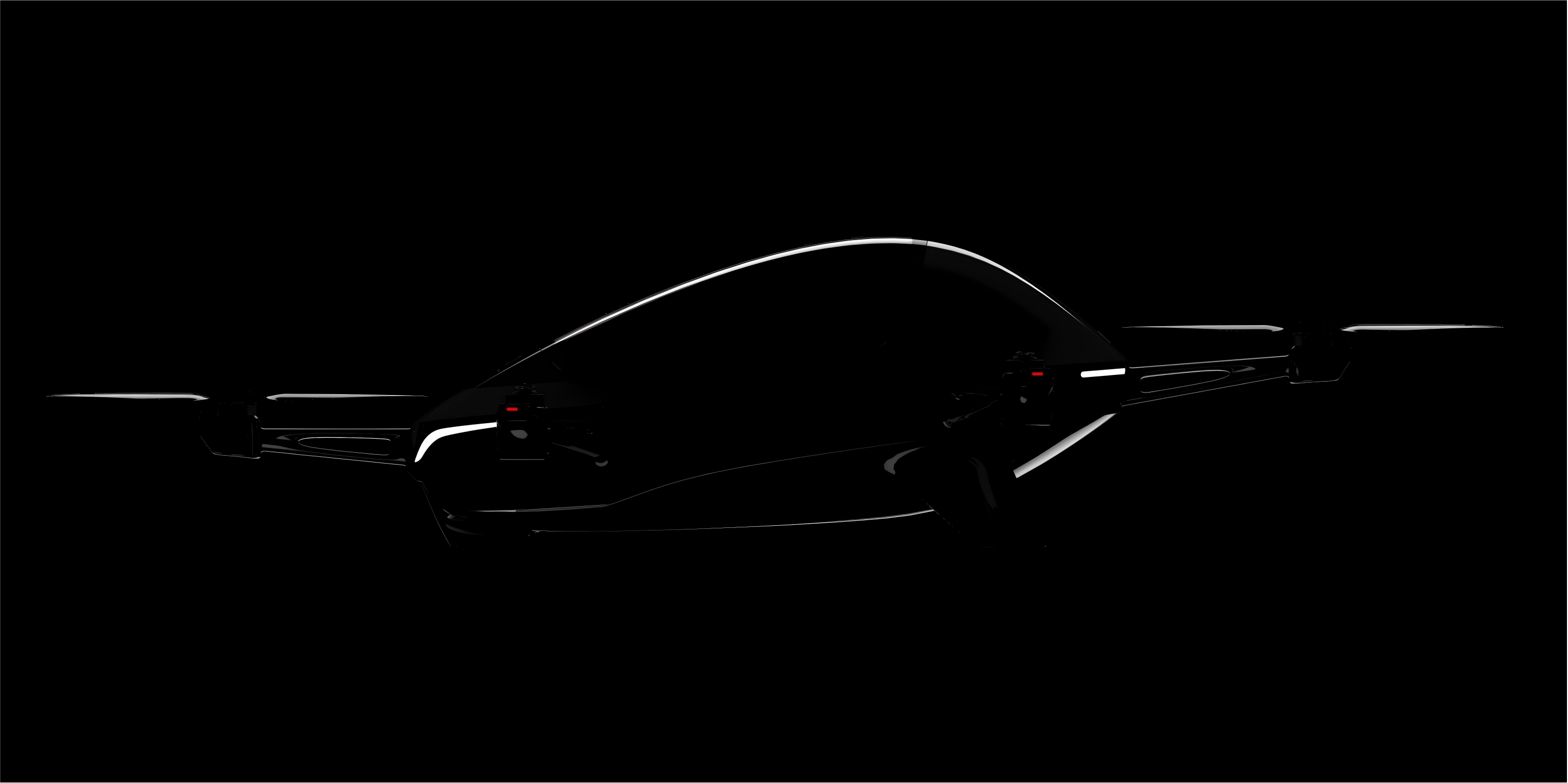
Side view of the upcoming product WorthyAero R1
It is this small aircraft that has brought the earliest revenue to Huaxi Aviation. It is reported that the company has received dozens of letters of intent for orders. The customers include cultural and tourism companies and high - net - worth individuals in Hainan, China, Canada, Russia, etc., and customers from several other countries are also in the process of active negotiation. It is expected that this product line alone will generate tens of millions of yuan in sales revenue in 2026.
"Technical feasibility does not mean passing airworthiness certification, and passing airworthiness certification does not mean achieving a commercial closed - loop. In the end, the low - altitude economy is not about who takes off first, but about who can form a real economic closed - loop." Zhang Xin emphasized.
Different from most eVTOL companies that focus on "air taxis", Huaxi Aviation's 2.5 - ton target product is more aimed at inter - city air transportation, that is, areas not covered by high - speed trains and civil aviation, where traveling by car takes too long.
"We will first conduct demonstration applications in the freight field, such as remote areas without runways, energy mining areas, and offshore operation platforms." Zhang Xin said. The common characteristics of these scenarios are long distances, inconvenient transportation, and high time - sensitivity. In terms of passenger transportation, Huaxi Aviation will also gradually enter scenarios such as emergency medical services and high - end cultural and tourism, and finally achieve inter - city passenger transportation.
Currently, the ultra - light single - person aircraft WorthyAero R1 has been commercially launched, and it is expected to generate tens of millions of yuan in sales revenue in 2026; the 1:2 scaled - down verification aircraft is expected to complete the prototype in 2026 and obtain the airworthiness certificate in 2027; the 2.5 - ton freight airworthiness certification aircraft is planned to be launched between 2027 and 2028.