Using a car without a steering wheel, Caocao Chuxing provides answers from technology to business for Robotaxi.
Text by | Wang Yi
In 2026, Robotaxi once again became the focus of the global automotive and technology industries.
On the one hand, many enterprises announced that they had achieved financial break - even in a single quarter or a single region. The daily net income of some Robotaxis even exceeded the average level of local human - driven ride - hailing services. On the other hand, the giant Tesla is fully promoting the mass production of its driverless model, CyberCab, and is expected to launch commercial operations within the year. The industry focus has begun to shift from technology verification to large - scale expansion.
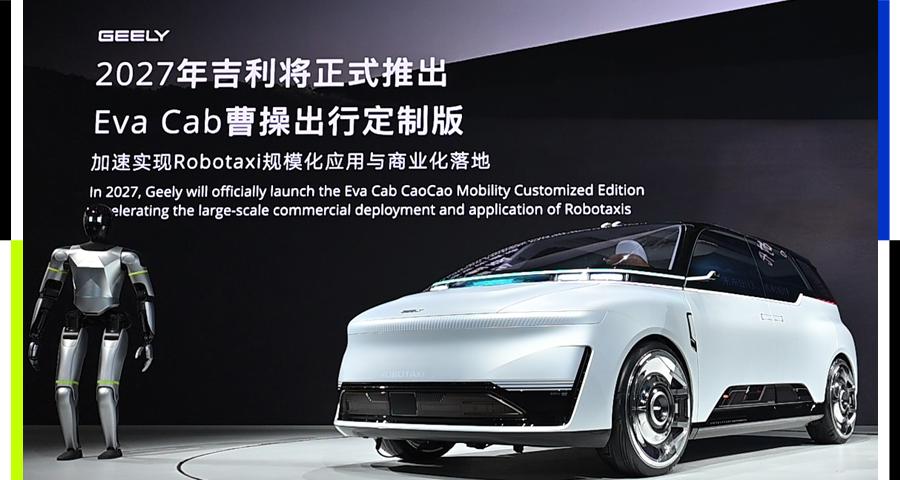
At this critical moment, at the 2026 Beijing Auto Show, the release of China's first native - developed Robotaxi, Eva Cab, made Caocao Chuxing the focus of the industry. This is not only a new product debut but also a leap in industry perception, marking that the competition in the Robotaxi field is no longer just a game of technical codes but has entered the stage of large - scale competition where platforms define the experience and efficiency determines victory or defeat.
Without a steering wheel and a front - passenger seat, this vehicle reconstructs the entire vehicle from the principle of passenger - first. This "native - developed Robotaxi" sends a clear signal to the industry: the competition in the Robotaxi field is shifting from breakthroughs in single - point technologies to the competition of a closed - loop ecosystem of all elements.

Robotaxi Moves towards Large - scale Development
Vehicles Must Be Developed in a Forward - looking Manner
A basic fact is that in order to meet the personalized needs of drivers and passengers, traditional passenger cars often include a large number of configurations related to experience and aesthetics in their design, such as a variety of car paints, comfortable driver and front - passenger seats, and large front - row entertainment screens.
Most of the current Robotaxis on the market still follow two paths: either retrofit a large number of sensors on the roof of traditional cars or cooperate with traditional automakers to retrofit models with pre - installed sensors in order to quickly conduct road tests and technology verification. In essence, they still cannot break away from the vehicle logic of "designed for human - driven cars".
When Robotaxis move towards real driverless operation, insufficient redundant design, limited system reliability, and difficult - to - optimize cost structure will all become hidden bottlenecks for large - scale development.
The answer given by Caocao Chuxing is "native customization for Robotaxi".
The deeply customized native Robotaxi released this time deeply integrates Geely's R & D and manufacturing foundation in the field of electric intelligent vehicles, the Qianli Haohan G - ASD L4 version intelligent driving solution, and Caocao Chuxing's decade - long insights into shared mobility operations and services. It is developed forward - lookingly based on L4 - level operation scenarios.
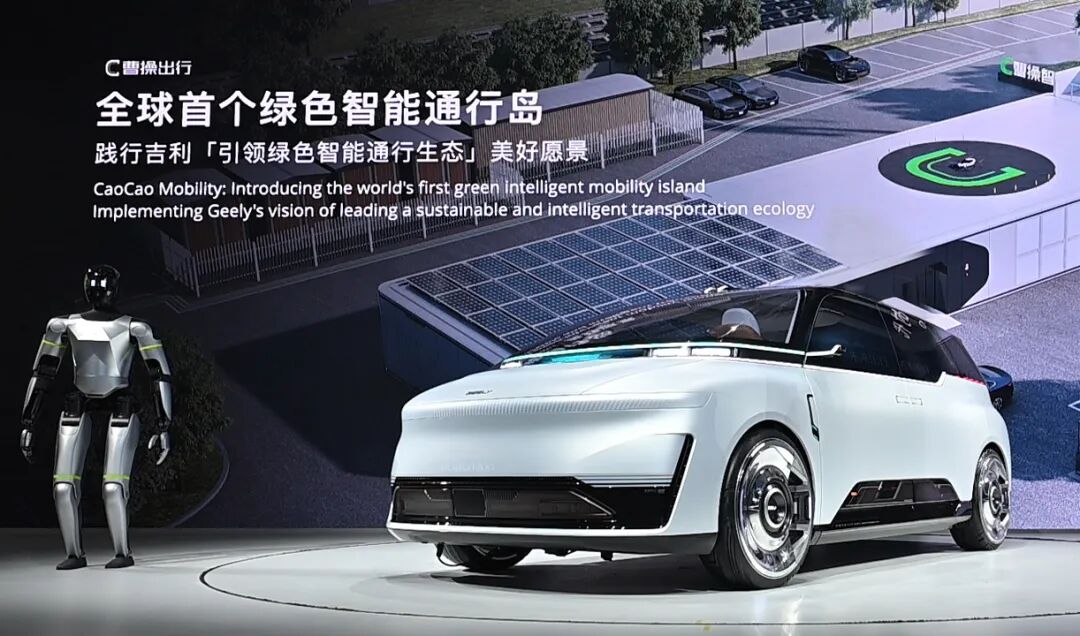
In terms of user experience, Caocao Chuxing's deeply customized native Robotaxi adheres to the design concept of "technological mobility, better life", realizing the transformation of the cockpit layout from "driver - centered" to "passenger - space - centered". Through the large - door double - sliding electric doors and the opposite - style cockpit layout, it perfectly combines high - end aesthetics with ultimate space. At the same time, the vehicle is equipped with China's first cabin - driving integrated super intelligent agent, Super Eva. With the support of end - to - end voice and VLM visual models, it has strong perception and understanding abilities, deeply integrates the in - vehicle and out - vehicle ecosystems, and can disassemble complex tasks and execute them in a multi - domain collaborative manner.
In the design of overall safety, since there is no driver as the final physical intervention and responsible entity in Robotaxis, regulatory requirements for the vehicle's own safety design and protection capabilities are more stringent.
As the culmination of Geely's global AI 2.0 technology system, Caocao Chuxing's deeply customized native Robotaxi will be equipped with the world's first "quantum - level AI electronic and electrical architecture". Through quantum encryption technology, it can achieve full - link, quantum - level security protection at both the vehicle and cloud ends, covering multiple high - frequency scenarios such as Bluetooth keys, remote vehicle control, OTA upgrades, and data privacy. It also features the industry's first SOVD vehicle - cloud integrated diagnostic technology, building an active protection system covering the entire life cycle for users.
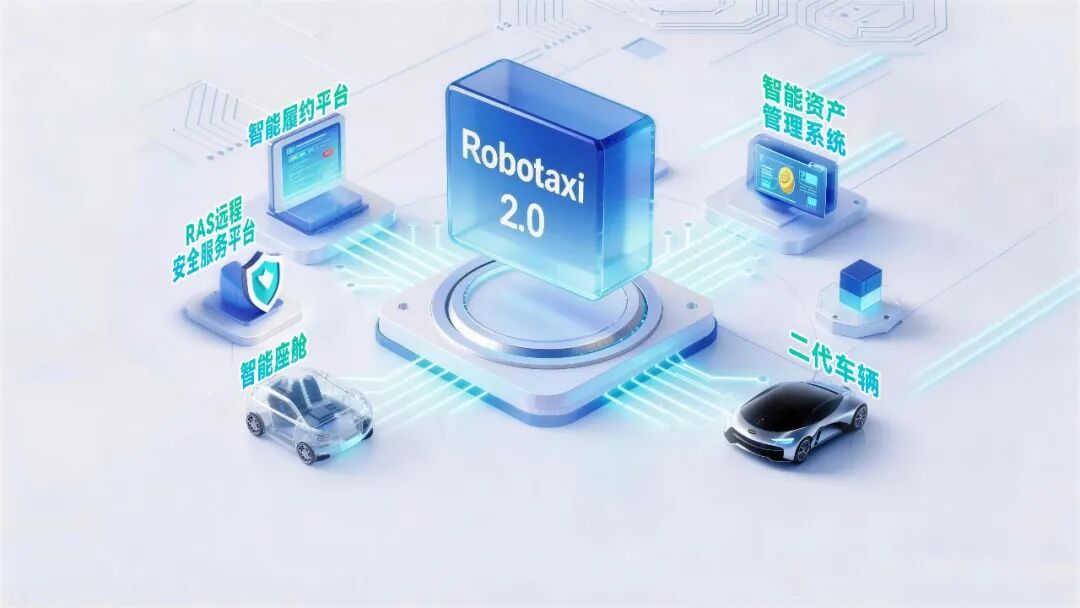
Caocao Chuxing's Robotaxi 2.0 Solution
From the very beginning of the design, this vehicle introduces multiple redundancies in steering, braking, power supply, and computing platforms, and is equipped with systems such as sensor self - cleaning and dual - redundant by - wire control, eliminating potential hidden faults in retrofit solutions at the physical level and laying a solid safety foundation for fully driverless operation.
In terms of vehicle operation, Caocao Chuxing fully draws on the successful experience of its existing customized models in significantly reducing the vehicle's TCO (Total Cost of Ownership) and conducts full - cycle optimization. The design life of the deeply customized native Robotaxi can reach 2 - 3 times that of ordinary passenger cars, and the service life of key components also far exceeds that of ordinary passenger cars, with the maintenance cycle significantly extended. The vehicle is also equipped with a sensor self - cleaning and automatic vehicle washing system, which can reduce manual operation and maintenance costs and support all - weather operation.
From parts selection to vehicle definition, Caocao Chuxing has achieved a very low TCO, which not only helps the enterprise quickly expand the Robotaxi fleet size and seize the market but also lays a solid foundation for long - term profitability. This is exactly the great advantage brought by "native design", which is difficult to achieve with retrofit or modification solutions.
To create such a "deeply customized native Robotaxi" requires not only the enterprise's keen insight into the mobility market and rich operational experience but also strong vehicle R & D and large - scale manufacturing capabilities. Looking at the industry, few enterprises can possess these two core capabilities simultaneously.
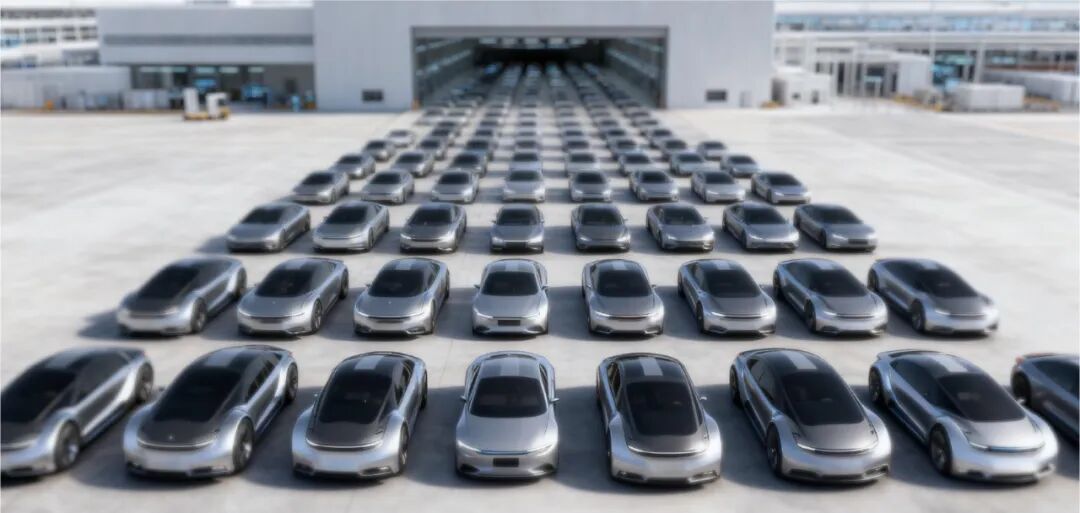
Rendering of Caocao Chuxing's Robotaxi Fleet

The "Native Vehicle" is the First Half
Systematic Capability is the Barrier
Looking back at the evolution path of the Robotaxi industry, it has generally gone through three stages: initially, the focus was on conquering L4 - level technologies, and enterprises competed for algorithms and talents; then, ride - hailing platforms entered the market, believing that user scale was the core barrier; now, some automakers have also been involved, regarding mobility services as a more potential growth path than selling cars.
However, all three types of players have some deficiencies: Robotaxi technology enterprises rarely engage in vehicle development and lack experience in large - scale operation and fleet asset management; traditional ride - hailing platforms often lack underlying technology and product definition capabilities; and automakers face challenges in platform operation and scheduling when trying to enter the Robotaxi industry.
Now, the industry has gradually realized that the commercial essence of Robotaxi ultimately lies in how to attract more users and make them use this service more frequently. This requires enterprises to simultaneously possess three core capabilities: vehicle R & D and definition, intelligent driving technology, and large - scale commercial operation, none of which can be missing.
Globally, Caocao Chuxing is one of the few enterprises that have truly integrated these three aspects systematically and provided a clear implementation path.
On the vehicle side, Caocao Chuxing currently has more than 38,000 customized vehicles, forming a customized fleet among the top in the same scale in China, and has verified its low - TCO ability in actual operation. Caocao Chuxing deeply integrates this experience into the native design of the deeply customized native Robotaxi, achieving ultimate energy consumption and automatic operation and maintenance, resulting in extremely low TCO. This is not only a technological advantage but also a key strategic fulcrum for Caocao Chuxing's business model to be established.
In terms of intelligent driving technology, Caocao Chuxing has rich mobility scenarios and a large amount of mobility data. Relying on Geely Holding Group's advantages in passenger cars, it can quickly promote the iteration, large - scale application, and commercial implementation of intelligent driving technology.
The deeply customized native Robotaxi is matched with the specially customized Qianli Haohan G - ASD L4 intelligent driving system, which can achieve driverless shuttle on public roads and meet the needs of scenarios such as hotel pick - up and drop - off, airport pick - up and drop - off, and business travel.
On the operation side, Caocao Chuxing has been deeply involved in the shared mobility field for ten years, with its business covering 195 cities across the country and having completed more than 1.9 billion orders in total. Currently, its average monthly active user scale reaches 41.3 million, and the number of active drivers exceeds 630,000. It has accumulated rich experience in capacity scheduling, resource management, and compliant operation.
Caocao Chuxing's mature mobility operation ability is quickly transforming into the driving force for the large - scale implementation of its Robotaxi.
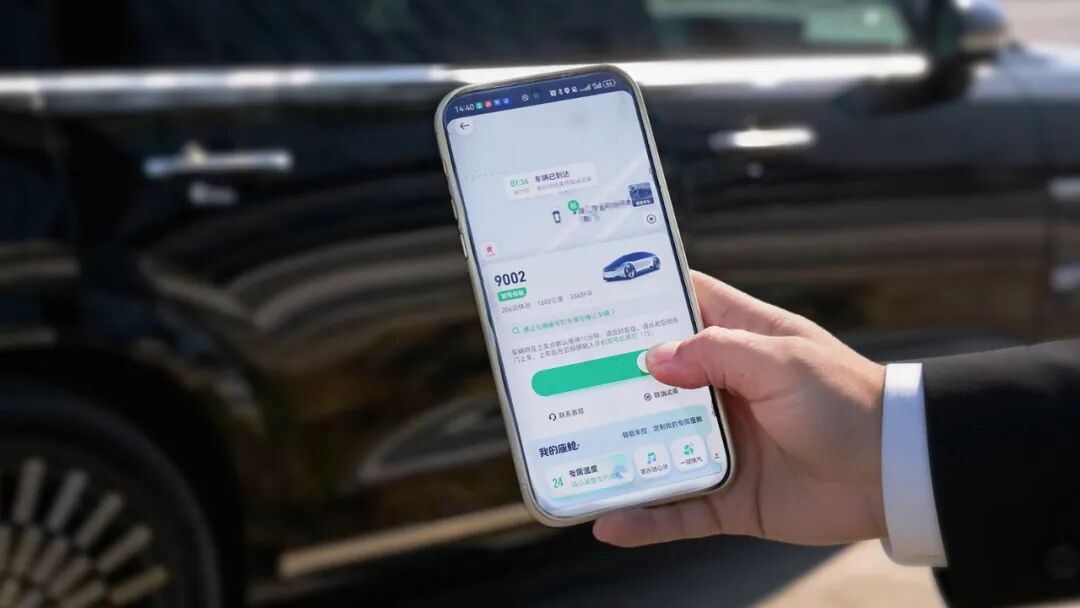
Caocao Chuxing's Robotaxi Booking Interface
Currently, the scale of Caocao Chuxing's Robotaxis put into operation in Hangzhou has reached 100, and more than 3,600 virtual pick - up and drop - off points for Robotaxis have been activated, basically covering the core roads, office buildings, and entrances and exits of residential and commercial areas in the region. In April this year, Caocao Chuxing also took the lead in obtaining the permit for driverless road tests of Robotaxis in Hangzhou, further consolidating its first - mover advantage in the field of driverless mobility.
While promoting the large - scale implementation of Robotaxis, Caocao Chuxing also continuously improves the back - end support system required for driverless mobility.
By connecting to the Yiyihulian battery - swapping network under the Geely ecosystem, the energy - replenishment network of Caocao Chuxing's customized vehicles covers 448 battery - swapping stations, and the single battery - swapping time is only 60 seconds, providing infrastructure support for the efficient energy replenishment of vehicles.
Through the collaboration with the world's first "Green Mobility Smart Island", the customized vehicles can achieve unmanned operation and maintenance functions such as automatic battery swapping, vehicle cleaning, interior tidying, and intelligent scheduling, realizing efficient and standardized support for the fleet. At the same time, the Green Smart Mobility Island also reserves take - off and landing pads and charging interfaces for eVTOLs, laying the foundation for the future "ground + low - altitude" integrated mobility network.
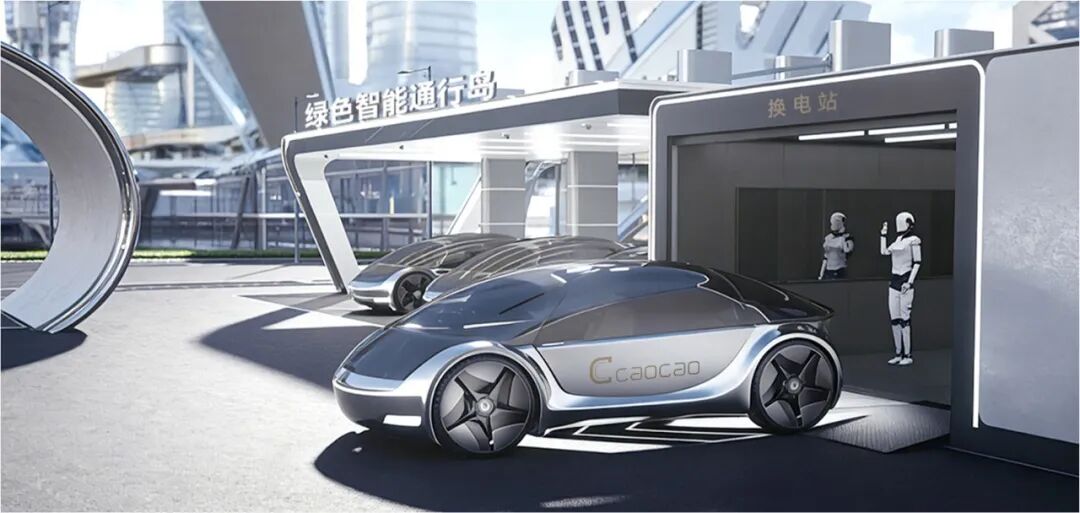
Rendering of Caocao Chuxing's Robotaxi Full - process Automation
As the most important commercial carrier of Geely Holding Group's Robotaxi, Caocao Chuxing has now formed a closed - loop ecosystem of all elements for Robotaxi, integrating "intelligent customized vehicles + intelligent driving technology + intelligent operation". With the system's capabilities, it has formed a "scalable and replicable" single - vehicle operation model.

The Next Step for Caocao Chuxing's Robotaxi
Massive Growth
As the technology and model are gradually proven, the Robotaxi industry is about to enter the explosive stage of large - scale replication.
Caocao Chuxing's development path is in line with this trend: from early technology verification and small - scale trial operation, it is shifting towards promoting the transition from "driver - assisted operation" to "fully driverless operation" and continuously exploring the operation path of mixed scheduling of human - driven and driverless vehicles to maximize efficiency.
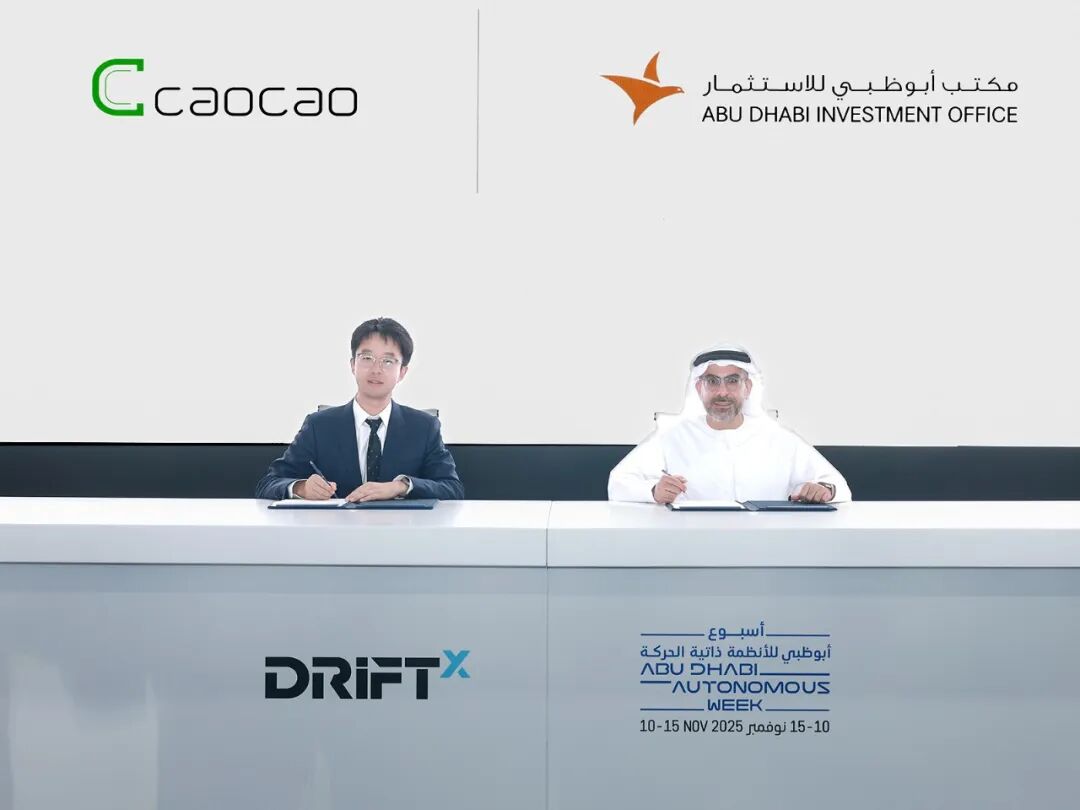
At the same time, the company is also accelerating its global layout. In 2025, Caocao Chuxing reached a cooperation agreement with the Abu Dhabi Investment Office to jointly promote the implementation of Robotaxi and the green mobility system in the UAE. At the same time, the company is also actively exploring markets such as Hong Kong, China, and has established a special team to accelerate the overseas business layout.