Even as powerful as DeepSeek, it still bowed to capital.
DeepSeek, you've changed.
This perhaps most unique AI company in China is like the "sweeping monk" in martial - arts novels:
The suddenly released DeepSeek R1 large - model overnight changed the entire ecosystem of the Chinese AI track. With extremely low costs and excellent performance, it taught a lesson to AI companies around the world.
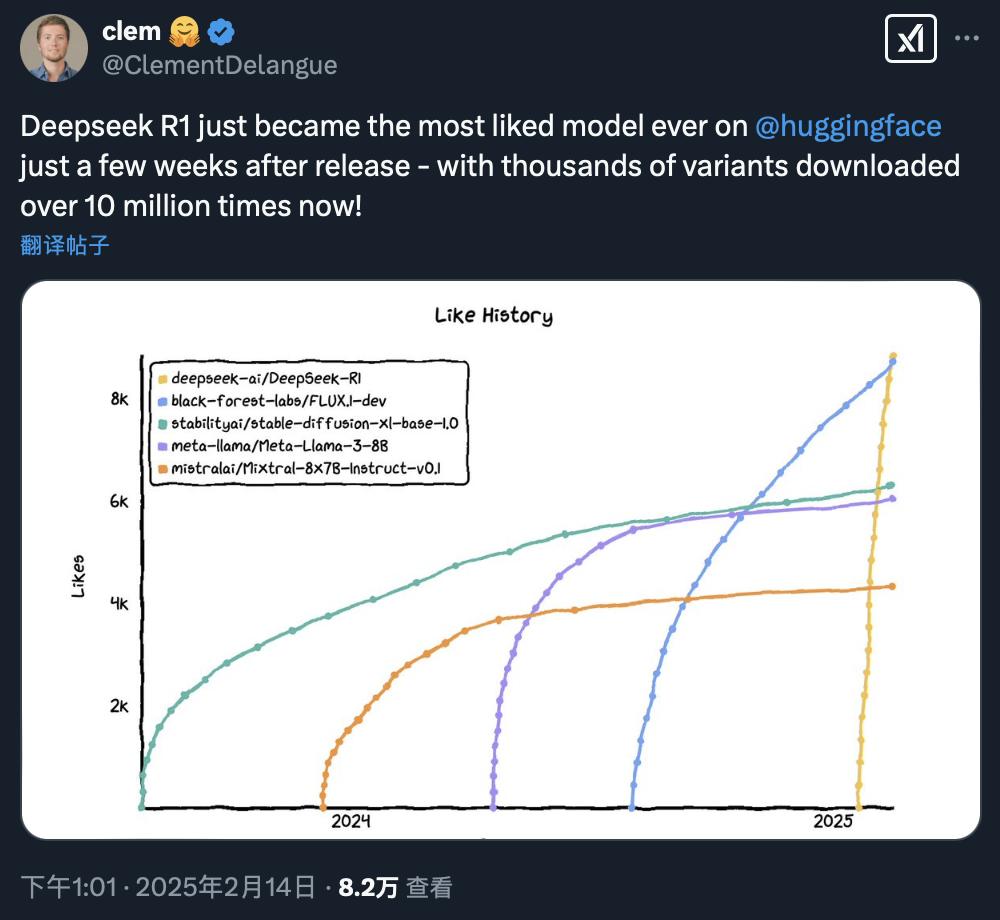
However, DeepSeek also has another distinct side.
While peers are seizing the feverish wave of the AI track and scrambling to "make money" from the market, DeepSeek stands out as an outlier. It has long been a rare "reject - financing faction".
This company, once at the peak of the Chinese AI track, has mainly been supported by founder Liang Wenfeng and the quantitative fund Magic Square Quant behind it. Earlier, news broke that DeepSeek had rejected investment invitations from top Chinese venture capital firms and tech giants.
No wonder Reuters reported that Liang Wenfeng believed that "money has never been a problem" for DeepSeek.
But all this is quietly changing from now on.
When financing comes knocking
As early as February 19th, overseas media The Information revealed that DeepSeek, which had always insisted on maintaining independence and rejecting external financing, was "considering external financing" for the first time in its history.
The report said that after DeepSeek expressed its intention, it quickly caught the attention of companies including Alibaba and Chinese state - owned funds. However, Alibaba executives later publicly denied it, saying the relevant news was false. Thus, the news of this financing came to nothing.
What really reignited the topic of "DeepSeek seeking financing" was the report on April 17th.
The Information struck again. This report was obviously more detailed than the previous one: DeepSeek is in talks for financing, planning to raise at least $300 million to value the company at $10 billion.
This report caused quite a stir online. With clear figures and no denials from relevant parties, it was widely reposted by domestic tech and financial media.
Subsequently, the report on April 22nd seemed to make the matter of "DeepSeek seeking financing" more than just a "wolf - coming" story.
Still according to The Information, two of the current top three Chinese tech giants, Tencent and Alibaba, have both contacted DeepSeek to discuss investment matters;
Moreover, the scale of this round of investment is obviously larger than the previously reported one. "DeepSeek is seeking to raise funds at a valuation of over $20 billion", doubling the previous target of $10 billion.
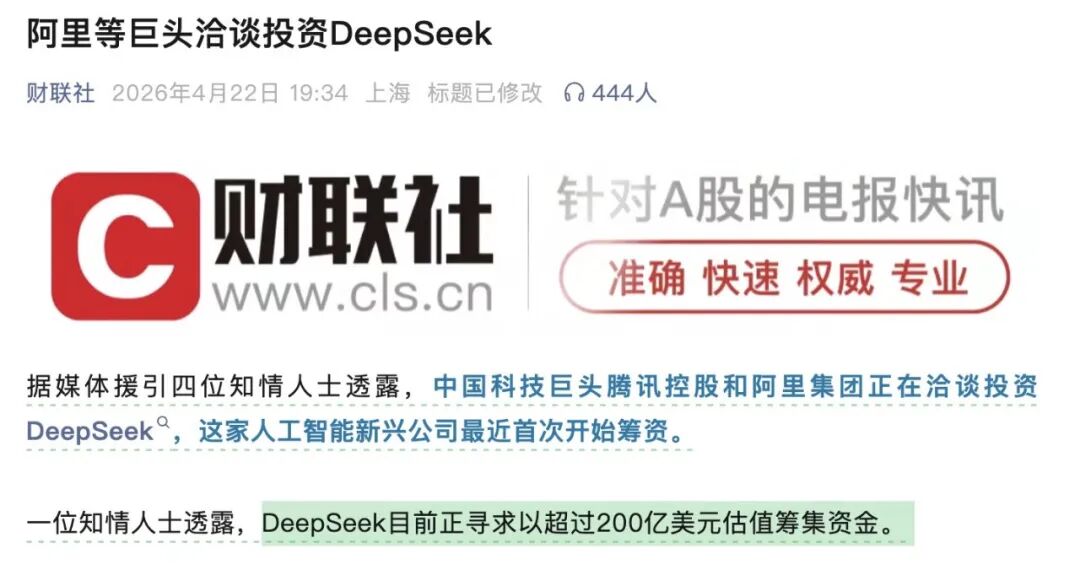
Other media such as The Wall Street Journal also reported that Shunwei Capital behind Lei Jun is also involved in investment - related discussions. The market's preliminary valuation of DeepSeek ranges roughly from $10 billion to $30 billion.
Since the negotiations are still ongoing, the financing scale and valuation may still change. But at least it shows that the news of DeepSeek's first external financing is much more credible than before.
However, even according to the most mainstream market view of a $20 - billion valuation, DeepSeek, once a prominent leader in the Chinese AI track a year ago, is still undervalued.
In contrast, a year ago, Zhipu was still an unknown in the industry; Minimax was "unknown" among users; and even Kimi was labeled as an "old - era company defeated by DeepSeek".
But now, Kimi's valuation has reached around $18 billion, on the same level as DeepSeek. Zhipu and MiniMax have already been listed on the Hong Kong Stock Exchange earlier. According to the latest stock prices, Zhipu's current market value is about $57 billion, and MiniMax's is about $33.5 billion, far exceeding DeepSeek's valuation.
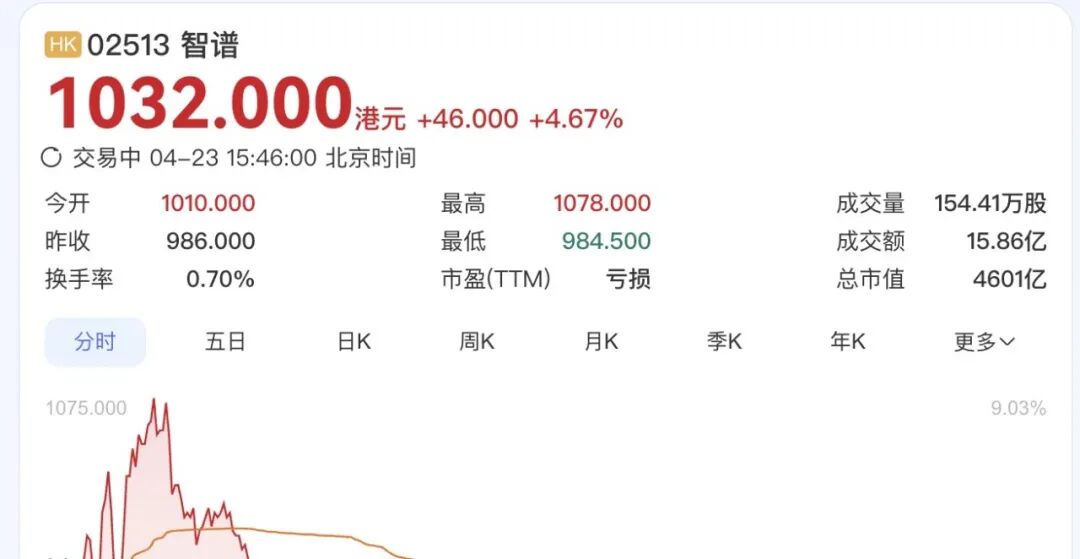
Who can't sigh at the rapid changes in the AI track? In just one year, everything has changed.
Moreover, from insisting on not needing external capital in the past to now seemingly softening its stance and seeking external financing for the first time, is DeepSeek really short of money?
If it really secures the financing, what will it do with the money?
Money has become a problem
Actually, many people think that when Liang Wenfeng said "money is not a problem" for DeepSeek, he wasn't boasting.
After all, media reports show that DeepSeek's parent company, Magic Square Quant, had a return rate of about 56.6% in 2025, and its annual income could reach the level of "5 billion RMB / $700 million", which is obviously much higher than the $300 million that DeepSeek was first reported to be seeking in financing.
However, the fact that Magic Square Quant can make a lot of money doesn't directly mean that DeepSeek doesn't lack money.
Magic Square Quant won't give all its money to DeepSeek without reservation. After all, it's just a parent company. And the large - model industry itself is a track where no amount of money is enough.
Even global leading companies like OpenAI and Anthropic are still continuously raising funds and increasing their investment in computing power:
OpenAI is expected to spend up to $600 billion on computing power by 2030; Anthropic is reported to be reaching an agreement with Amazon to spend over $100 billion on cloud infrastructure in the next 10 years.
So, even with Magic Square Quant behind it, DeepSeek can't always easily withstand the entire arms race. It's reasonable that it might be short of money at this stage.
The question of "how to spend the money" is actually not hard to guess based on the conventions of the AI industry.
Data from research institution Epoch AI shows that in the breakdown of the training costs of cutting - edge models, hardware costs account for 47% - 67%, R & D personnel costs account for 29% - 49%, and energy costs account for 2% - 6%.
Other media and institutions have reached similar conclusions. Expenditures related to computing power/hardware and R & D talent costs are the "two big mountains" that current AI companies have to face.
That is to say, if an AI company is going to burn money, it basically has two main directions: either investing in hardware or spending money to attract talent.
Is it possible that DeepSeek is going to buy chips as the media generally speculates?
First, the conclusion: It's possible, but it may not be the core answer.
At least from the currently available public information, DeepSeek doesn't seem to be a hardware buyer that is "suddenly out of chips and in a hurry to replenish".
Although DeepSeek was highly dependent on NVIDIA's computing chips in the early stage, Reuters reported on February 24th, citing a US official, that a new model of DeepSeek used NVIDIA's most advanced Blackwell chips during training, which were supposed to be banned from sale in China.
But almost at the same time, DeepSeek is fully embracing domestic computing power.
Just one day later, on February 25th, Reuters reported that DeepSeek didn't give its upcoming flagship model to US chip manufacturers like NVIDIA and AMD for performance optimization in advance as is the industry norm. Instead, it gave the advance window to domestic suppliers including Huawei.
On April 3rd, Reuters relayed a report from The Information, saying that DeepSeek - V4 will be fully compatible with Huawei's Ascend 950PR chips. For this purpose, DeepSeek has been rewriting some underlying codes with Huawei and Cambricon in the past few months for compatibility and testing. It is also promoting two V4 variants specifically for domestic chips.
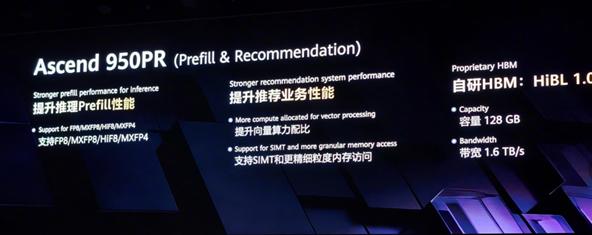
Moreover, compared with the previous generation, an important change in the 950PR is its better compatibility with NVIDIA's CUDA ecosystem. This makes it easier for Chinese tech companies to migrate models originally running on the NVIDIA system, saving a lot of migration costs.
It is obvious that DeepSeek may not simply be short of chips, and there is no reason for it to specifically raise funds to buy chips now.
So, another more realistic possibility for DeepSeek's first large - scale external financing is talent.
DeepSeek can't stand it anymore
After all, in today's AI industry, hardware is valuable, but talent is even more precious.
Looking at the global AI track, the talent war among leading AI companies has reached an absurd level:
Top researchers at OpenAI often have an annual salary package exceeding $10 million. To retain talent, OpenAI offers some researchers a $2 - million retention bonus and additional equity worth over $20 million; Google DeepMind offers top researchers an annual salary package of $20 million.
In February 2026, Reuters relayed a report from The Information, saying that OpenAI poached Ruoming Pang (Pang Ruoming), a former executive from Apple who had moved to Meta. Pang's compensation package when he went to Meta was reported to be worth over $200 million.
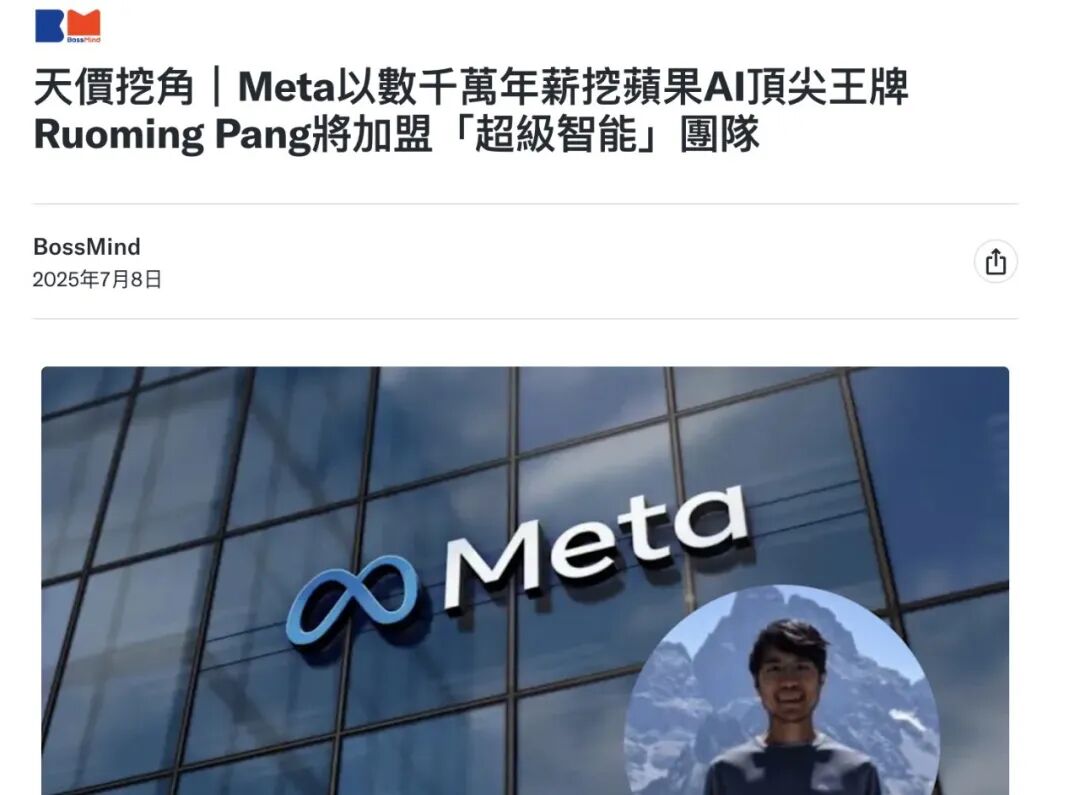
Obviously, there is real "gold" in AI talent.
However, from DeepSeek's current situation, "generous spending" doesn't seem to be its label.
Even in limited media reports, for example, Reuters interviewed two former employees on February 25th and mentioned the characteristics of working at DeepSeek. It usually has an eight - hour workday, with a collaborative and flat atmosphere. Liang Wenfeng will work with young researchers on technical details.
Such a working environment is indeed the dream workplace for many workers, but it may not be what current AI practitioners want.
These practitioners are geniuses from all walks of life. Most likely, they have had great ambitions since childhood and want to be like Elon Musk, who can change the world.
Moreover, they are now in the hottest track and have the greatest chance of earning the highest - level salary for workers. If they can achieve financial freedom that ordinary people can only dream of in a lifetime by taking a risk, the "9 - to - 6" comfort is obviously not very attractive.
So, if DeepSeek really raises funds now, it makes logical sense to use the money for a talent - protection war. Not to mention that the fact is that DeepSeek is indeed losing talent.
On March 19th, multiple media reported that Xiaomi will invest at least 60 billion RMB in AI in the next three years.
And Luo Fuli, the team leader of its newly released large - model MiMo - V2 - Pro, is a former DeepSeek researcher. It is rumored that Xiaomi poached her with an annual salary in the tens of millions.
Also in March this year, Guo Daya, a former core researcher at DeepSeek, joined ByteDance's Seed team, focusing on Agent.
Regarding this "talent flow", the market once spread that her compensation package was close to 100 million RMB.
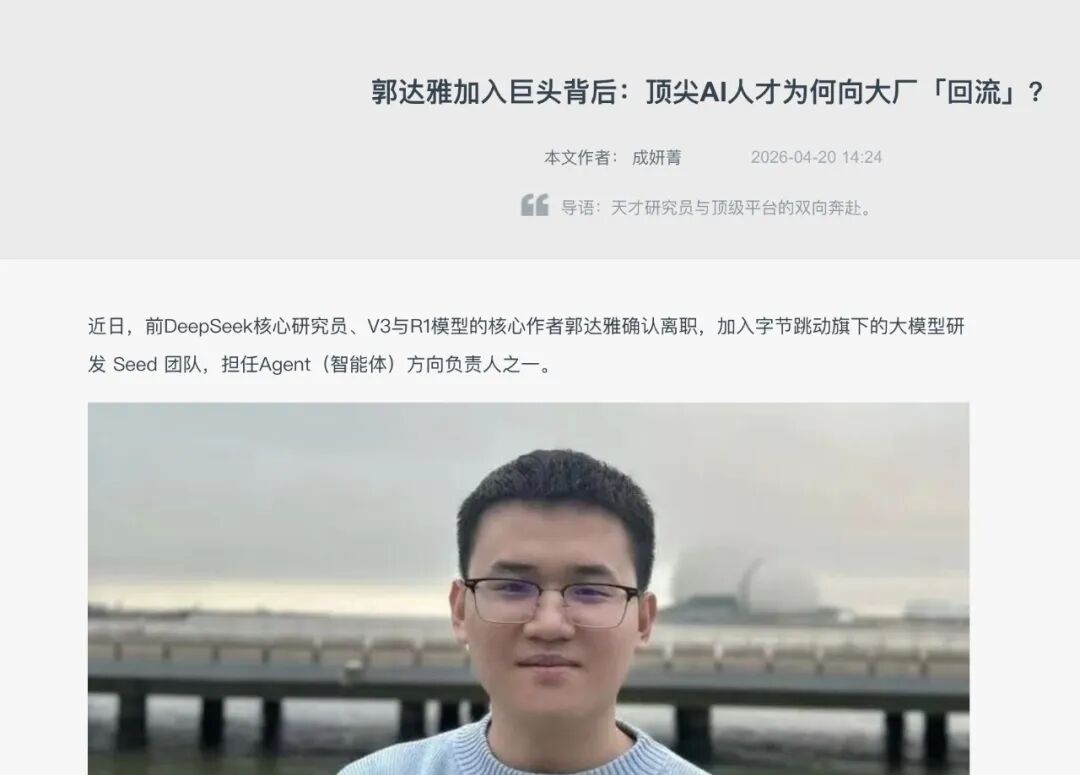
So, if DeepSeek gets the money from the financing, it can do a lot in terms of "protecting talent".
For example, "retaining talent". Facing top researchers whose value has been clearly priced in the market, DeepSeek was at a natural disadvantage in the past when "the company was strong, but the equity was not priced and no external capital had entered". Now it can use the financing money to offer these top researchers a big package.
For example, "rewarding". The company has gone from obscurity to fame. The old - timers really deserve a good reward.
And "recruiting". The next - generation models, Agents, multi - modality, and domestic chip adaptation cannot be accomplished by one or two geniuses alone. Once the cash flow is more abundant, DeepSeek won't have to watch others poach its talent and can also go all over the world to recruit.
Of course, we can only guess the real use of the financing. Even whether this financing exists or not is only clear to the relevant people in the meeting room.
But it's undeniable that computing power requires money, and talent requires money, and they require more money than ever for technology companies. This is an absolute reality.
Even a powerful company like DeepSeek can't always be the "sweeping monk" and stay aloof from the world.
This article is from the WeChat official account "Blue Word Plan", author: Hayward, published by 36Kr with authorization.