AI hardware, stop extending the senses like the "next-generation mobile phone".
For a long time, the history of technology has been more like "the evolutionary history of human prosthetics."
From newspapers, railways, telephones, radios, and televisions to computers and mobile phones, all technological logics have been doing the same thing: "extending outward." Extending vision, extending hearing, extending the reach radius, extending connection capabilities, and extending the way people interact with the world.
This is also the reason why McLuhan's theory of "the medium is an extension of man" has endured. It is simple enough and has sufficient explanatory power. Almost every wave of media technology can find its place in this language system.
However, in the current wave of AI hardware, this statement seems a bit inadequate for the first time.
In the past two years, some wearable devices such as "screened" smart glasses or "screenless" Pins have almost been caught up in a grand slogan: they will become the "next-generation mobile phones," take over from mobile phones, and even revolutionize mobile phones.
The problem is that when the industry is keen on describing AI hardware as the "next-generation mobile phone," many products have not really reduced the distance between people and information or between people and services. Instead, they have just split a single operation that was originally completed on the mobile phone into a longer chain. The devices may look lighter, but the interaction may not be easier; the devices may seem more free, but they often rely more on the mobile phone.
Therefore, the most worthy question to discuss about AI hardware today may not be "who can replace the mobile phone," but another more fundamental question: Is it extending the mobile phone or re-understanding humans?
If the former question still belongs to terminal competition, entrance contention, and platform imagination, then the latter question truly touches the underlying philosophy of this round of technology. Technology is no longer just "extending people outward," but instead starts to turn inward, get closer to the body, and try to place intelligence back into the body itself.
In this sense, what is more worthy of attention than the "next-generation mobile phone" may be new terms such as "companion intelligence" and "portable intelligence" that have not been fully clarified by the industry.
What they represent is not just a new product category, but more likely a new human-machine relationship.
It's Not That Easy for AI Hardware to Become the Next-Generation Mobile Phone
First, let's admit one thing: The mobile phone is indeed the most successful "extension of man" in the past few decades.
It has almost folded communication, photography, social networking, navigation, payment, recording, entertainment, and office work into a pocket-sized device. It is light enough, close enough, and used frequently enough to be almost constantly attached to the body. In a sense, the success of the mobile phone is not only because of its power but also because it has made the "extension" almost imperceptible: you don't always realize that you are "using a medium." You just naturally see, hear, speak, record, pay, arrive, and communicate through it. It not only extends people but also integrates into people to some extent.
This is why almost all AI hardware today instinctively looks up to the mobile phone. Everyone wants to become the next central terminal and take over the proven super-entrance narrative. As a result, smart glasses are repeatedly described as the "next-generation mobile phone," AI earphones are imagined as new voice entrances, and AI pendants, recording pods, brooches, and pendants are packaged as "screenless" portable assistants.
However, the reality is that many products have not really become substitutes for mobile phones but have first become extensions of mobile phones and even peripherals of mobile phones.
A very typical example is Humane's AI Pin. It was once packaged as a representative product of the "post-mobile phone era," trying to reconstruct the personal computing entrance with a screenless design, voice, projection, and AI agents. However, this narrative quickly hit a wall in reality: less than a year after the product was launched, Humane announced the sale of its core assets to HP, and the cloud services related to the AI Pin were terminated in February 2025.
Humane's failure precisely exposes the most embarrassing point of this kind of AI hardware: when a device cannot independently complete tasks and cannot complete tasks faster, more smoothly, and at a lower cost than a mobile phone, it is difficult to become a real next-generation terminal. It seems to be revolutionizing the mobile phone, but in fact, it just adds an intermediate layer that requires learning, maintenance, and tolerance for instability outside the mobile phone.
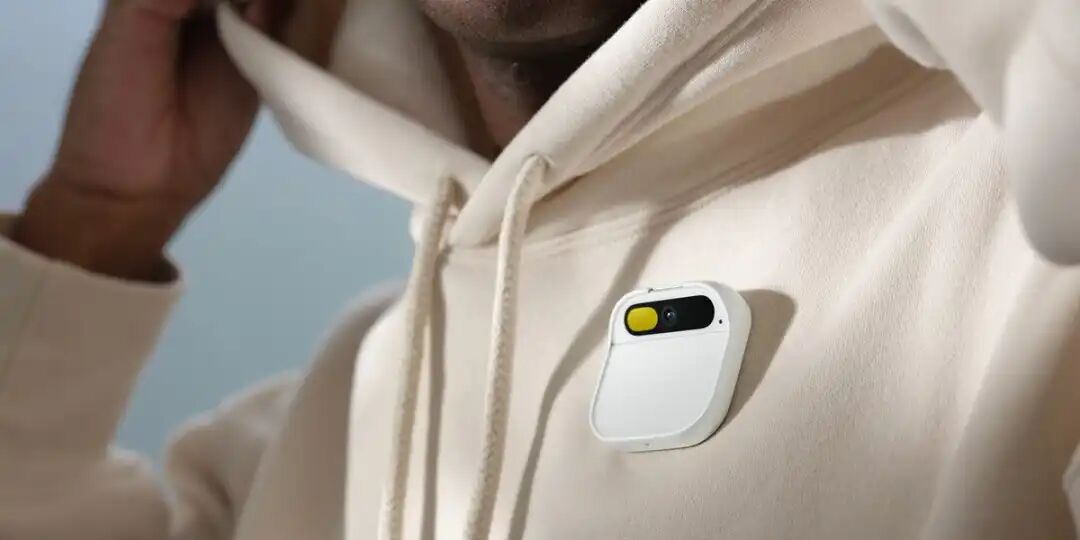
Image source: Humane
This is why many AI hardware products today give people the feeling of being "more circuitous" rather than "more liberating."
This does not mean that such products have no value. On the contrary, they are likely to become important secondary entrances in the future. However, an entrance does not equal an end, and a peripheral does not equal a next-generation platform. The most common mistake in the industry is to equate the "novel" with the "superior" too early.
The biggest problem with many AI hardware products today is not that the technology is not advanced enough, but that the narrative is too hasty. They have not solved the most basic problems such as "shorter links, easier use, and more stable tasks" but are eager to take on the mission of the "next-generation mobile phone." The reason why the mobile phone has become what it is today is that in addition to integrating various functions, it also hides the complexity. Conversely, any AI hardware that adds the cost of use back to the user will find it difficult to truly take over from the mobile phone.
This is exactly what AI hardware really needs to be vigilant about. Be vigilant that it may become a burden on people instead of an extension of people.
Old Media Extend People, While New Hardware Reads People
However, the deeper issue is not just that "they have failed to replace the mobile phone." What's important is that the hardware in the AI era may not be simply understood as "an extension of man."
The reason why old media are suitable to be described as "extensions" is that they do amplify certain human abilities outward. They are all doing the same thing: sending human abilities out to allow people to reach the world farther.
However, many AI hardware products today are not entirely doing this.
At present, there are still some products in the industry that continue the technological philosophy paradigm of "extension of man." For example, many smart glasses still emphasize "ask whatever you see" and "what you see is what you get in response"; many AI earphones and voice devices still emphasize "one command to dispatch the functions of your mobile phone, car, home appliances, or a physical device." This logic has not disappeared, and it is still a prominent product route.
At the same time, more and more new hardware is quietly changing direction: they no longer just extend human senses outward but start to obtain data from the body itself.
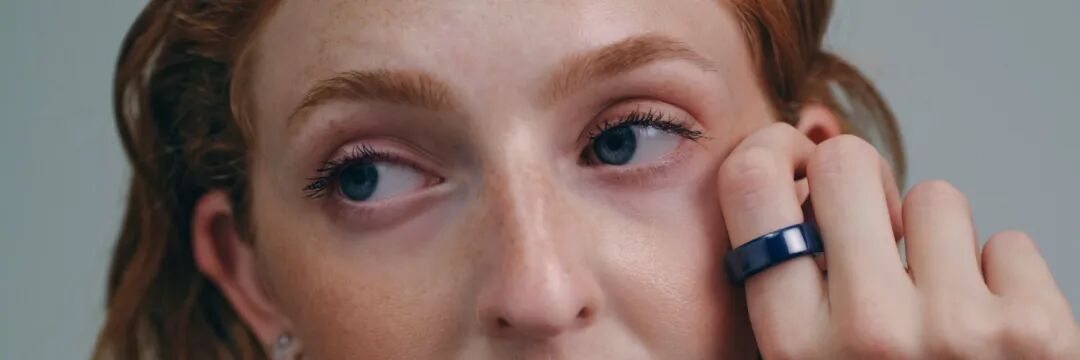
Image source: Oura
For example, the core ability of a smart ring like the Oura Ring is not "seeing more for you" but collecting physiological data such as heart rate, body temperature trends, blood oxygen, activity, and sleep through sensors 24 hours a day, and then converting these continuous data into recovery, stress, sleep, and health suggestions. Oura officially describes this ability as an individualized understanding based on continuous data.
The characteristic of this kind of product is that they are no longer "letting people see" or "letting people hear" but understanding people in a long-term, close, and continuous way. Understanding your rhythm, your state, what you are doing, saying, and the situation you are in at the moment, and even understanding your physiological changes and behavior trajectories over a period of time. They do not simply extend a sense organ outward but build a long-term online perception and computing system at the edge of the body.
Therefore, if we still use the term "extension of man" to explain them, it is not entirely wrong, but it is no longer sufficient.
Because the term "extension" implies that the device is grafted outside the body and is an external medium. However, more and more AI hardware today is no longer satisfied with being an external medium. They start to try to become an infrastructure at the edge of the body. This is why in the AI era, the "extension" framework in the technological philosophy seems less reliable for the first time. It is not enough to explain: Why do today's hardware products rely more on continuous reading of people rather than connection to the outside world?
In this sense, the real technological philosophy basis worthy of discussion for AI hardware today is not whether it can be included in the concept of "extension of man" but whether it is turning "people" back into its own data source, understanding object, and interaction endpoint.
One of the Futures of AI Hardware: Seeking Within the Body
If the "next-generation mobile phone" is still an inertial narrative from the previous era of consumer electronics, then "companion intelligence" and "portable intelligence" are more like new terms emerging in the AI era.
For the new generation of AI hardware, they are no longer just an "intermediary" but start to become a "subject" - it is where the interaction occurs, it is the end of task completion, and it is the front line where the model understands you, responds to you, accompanies you, and shapes your behavior.
"Companion intelligence" is not just an alias for a wearable device but is closer to a new type of intelligent relationship: "It takes people's real data as input for a long time, can continuously understand, actively respond, and continuously evolve, and tries to be embedded in daily life in a low-disturbance and low-profile way." This is the definition given by Jasper, who left to start his own business at Xianzhi Technology and developed the Wilo smart ring after failing to offer advice to the Oura Ring team. In his opinion, this kind of hardware that is always online, continuously collects unique context data of each person, and forms the basis of human-machine interaction based on these data is what he wants to create.
Another similar term, "portable intelligence," follows a similar logic. Whether it is an AI pendant hanging around the neck or other devices that may be smaller and more invisible in the future, their common direction is to be more like a layer of intelligence running close to the body. They value more the acquisition and feedback of information about your body and the surrounding environment.
Therefore, the real question we need to ask is in what way the next-generation human-machine relationship should be embedded in the body.
From an industrial perspective, this may be the real dividing line for the direction of AI hardware.
One type of product will continue to be obsessed with the narrative of "revolutionizing the mobile phone," trying to compete for the entrance, replace the screen, take over the App system, and strive to become the next central terminal. There will surely be people taking this path, and there will definitely be some phased achievements. However, the difficulty is also very obvious: manufacturers not only have to create new forms but also regain the user's usage habits that have almost become instinctive.
The other type of product will more pragmatically turn to the body, context, and continuous data. They may not shout about subversion from the start, but they are more likely to take root in some real scenarios: health management, meeting recording, cognitive assistance, context reminder, personal knowledge archiving, emotion and stress recognition, long-term habit companionship, and even further development of body intelligence.
This path may not seem as glamorous as the "next-generation mobile phone," but it is more like the direction where AI truly excels. Because the greatest advantage of AI should not be to replace all the functions of a mature terminal but to transform a large amount of continuous, fragmented, and implicit personal data into long-term, dynamic, and individualized understanding abilities.
In this sense, the future of AI hardware lies in how well it understands a person. It does not necessarily need to amplify human abilities to the outside world but is more likely to reorganize a person's body, behavior, and state into a data mine; it does not necessarily continue to undertake the traditional media's responsibility of "spreading outward" but increasingly undertakes the function of "explaining inward." The medium not only allows people to see the world but also allows the intelligent system to see people themselves.
Therefore, the next-generation AI hardware may be something that people will gradually forget its device identity. It quietly stays at the edge of the body, inside life, in a place where you hardly notice it, but continuously understands you, responds to you, and shapes you.
At this time, AI hardware is no longer just a new footnote to the theory of "the medium is an extension of man." It is more like putting forward a new proposition: Technology not only extends people outward but also starts to place intelligence back into people.
And this may be closer to the real future of AI hardware than the "next-generation mobile phone."
Finally, we need to be vigilant. Will this kind of AI hardware that seeks inward, closes off its own senses, and lacks interaction with the outside world really fall into the warning from Luo Zhenyu in the video: Is AI undermining human collaboration? Perhaps the best AI hardware in the future will, on the one hand, continue to retain the ability to extend the body to fully interact with the world, and on the other hand, turn back to itself and seek within.
This article is from the WeChat official account "AI Wuzao". Author: Peng Kunfang, Editor: Lü Xinyi. Republished by 36Kr with permission.