Lingguang turns hand rubbing apps into a "WeChat Moments" style platform, marking the arrival of the era of individual apps.
Recently, has your WeChat Moments been flooded with the SBTI test?
One late night, WeChat was suddenly filled with mysterious codes. "The Pretend - Dead", "The Money - Giver", "The Doppelgänger", "The Low - Level Worker", everyone started showing off their strange personalities they got from the test, and the WeChat Moments were flooded with screenshots of "SEXY Beauties".
The truth is, this suddenly popular little test is not a pre - planned marketing campaign by a big company. It's just a small application hand - crafted by a girl born in 2003 in four or five days. The creator, @Q Meat Skewer (Bilibili ID), majors in finance and has nothing to do with programming. Her original intention of creating this small application was to persuade her alcohol - addicted friend to quit drinking through a set of fun personality tests.
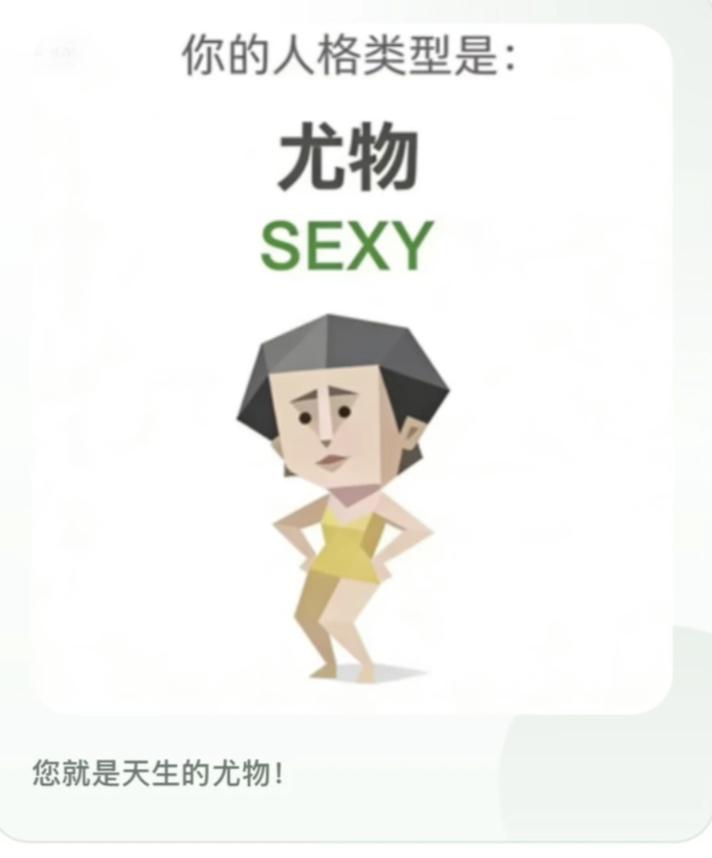
The times have changed, and the medium for young people to be abstract is evolving. In the past, it was crazy literature, emojis, or short videos. Now, in an era where AI has flattened the technical threshold and one can create applications without any coding foundation, "hand - crafted applications" have become the latest social language for young people. When you have the desire to express yourself, besides pictures, texts, and videos, there is now a more playable medium - hand - craft an interactive application to let everyone know your ideas.
Following this trend, Ant Lingguang is one of the earlier products exploring this. When it was launched in November 2025, what it did was quite simple - allowing people who don't know programming to turn their ideas in their minds into a running flash application with just one sentence. On April 20th, it launched the "Lingguang Circle". Besides creating applications by yourself, you can also share the created flash applications, and others can even modify them together. It's a bit like WeChat Moments, except that each post is a flash application that can be directly opened and played, and you can like, collect, and comment on them.
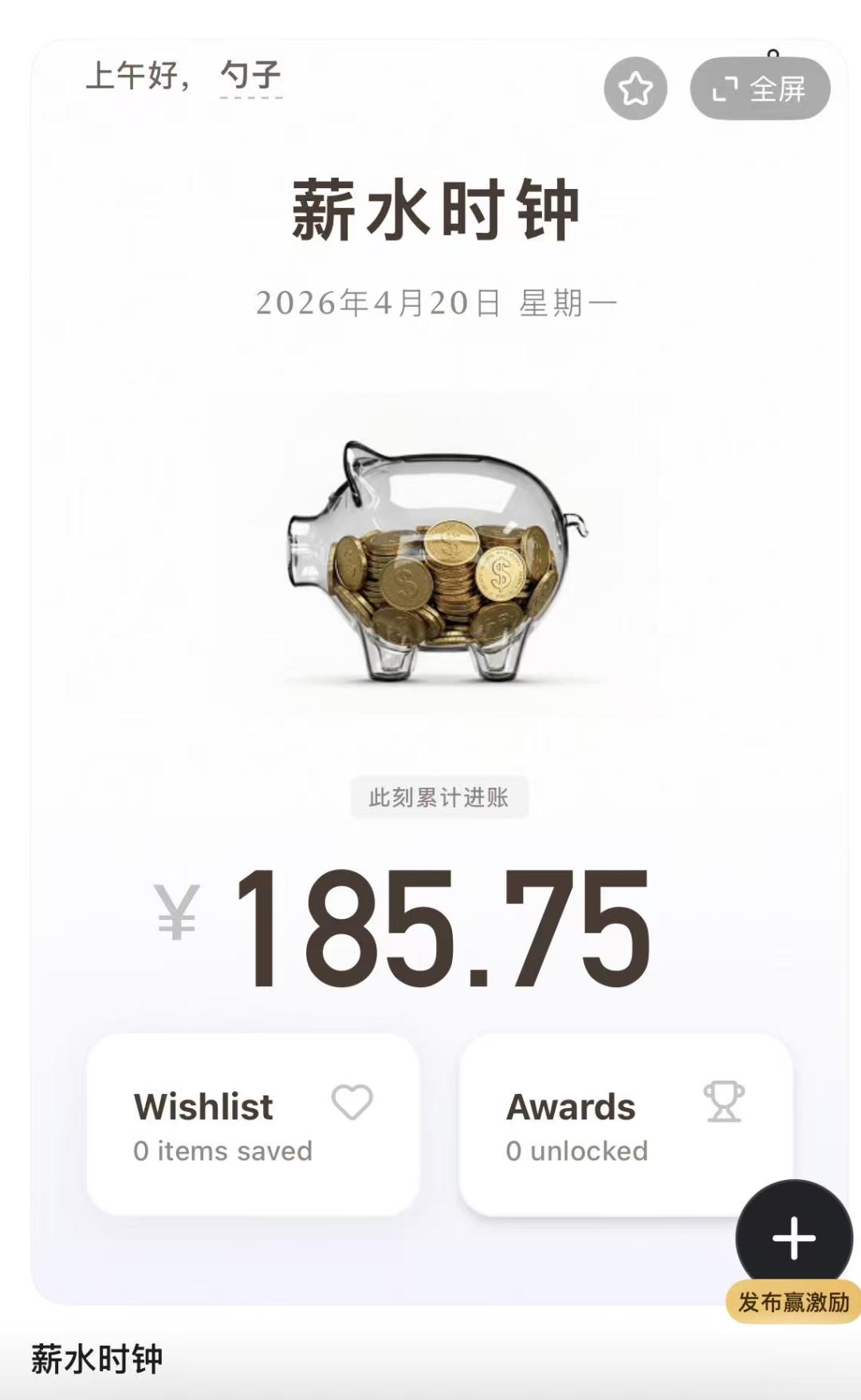
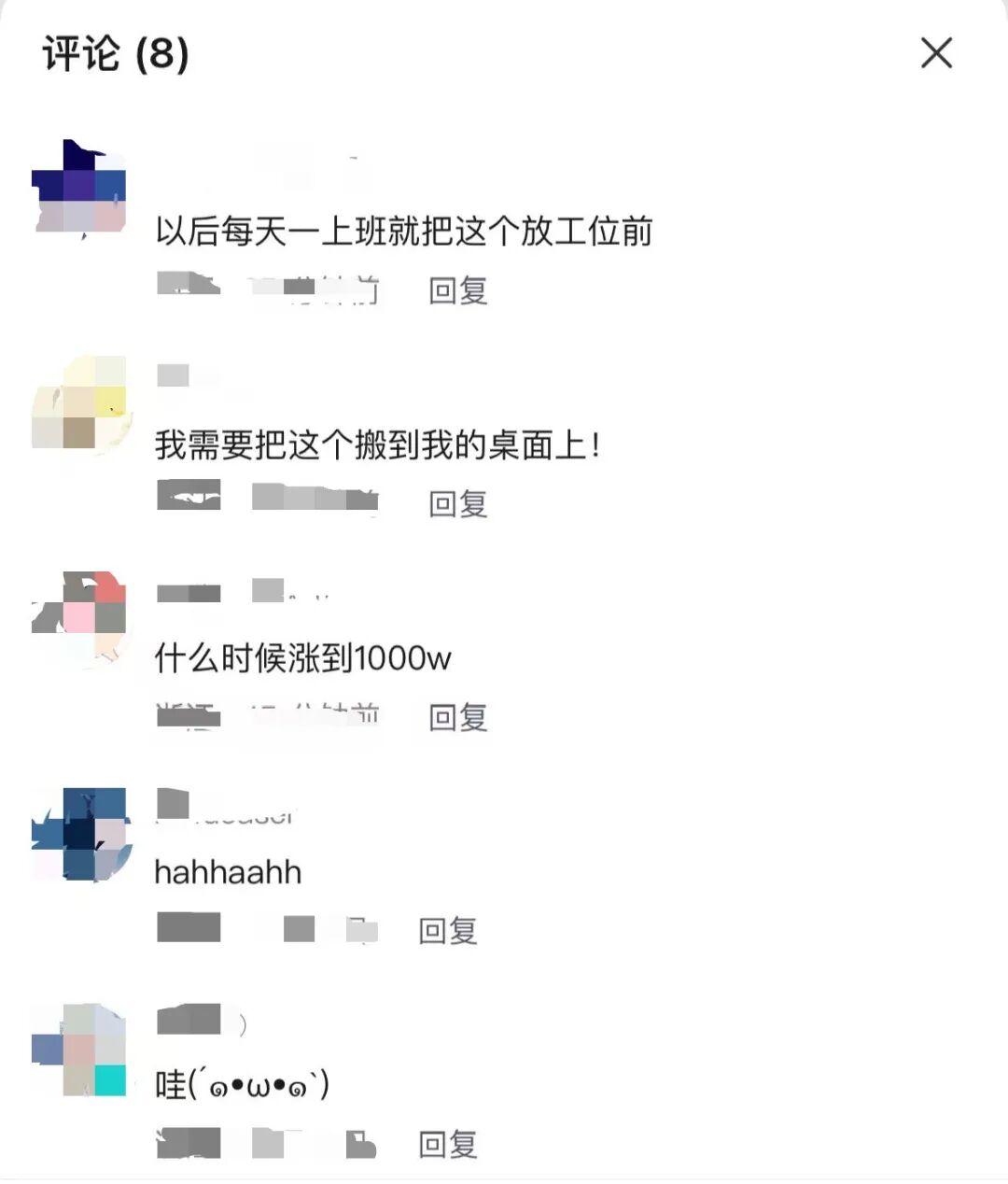
Examples of applications and comment sections on the Lingguang Circle
The "hand - crafted application - style" social interaction has finally found its own platform. When creating small applications becomes as easy as posting on WeChat Moments, how are the young people playing?
01. The "hand - crafted application - style" social interaction is in full swing
Most young people start creating applications from small things happening around them or get inspiration from their life experiences to have some fun.
There is a postgraduate student who created an "Academic Curse Generator". Although it's called a curse, when you enter the name of your supervisor or thesis, blessings like "Successfully Accepted" and "Top Journal Hit" will pop up on the interface, which reversely comforts students who are anxious about publishing papers.
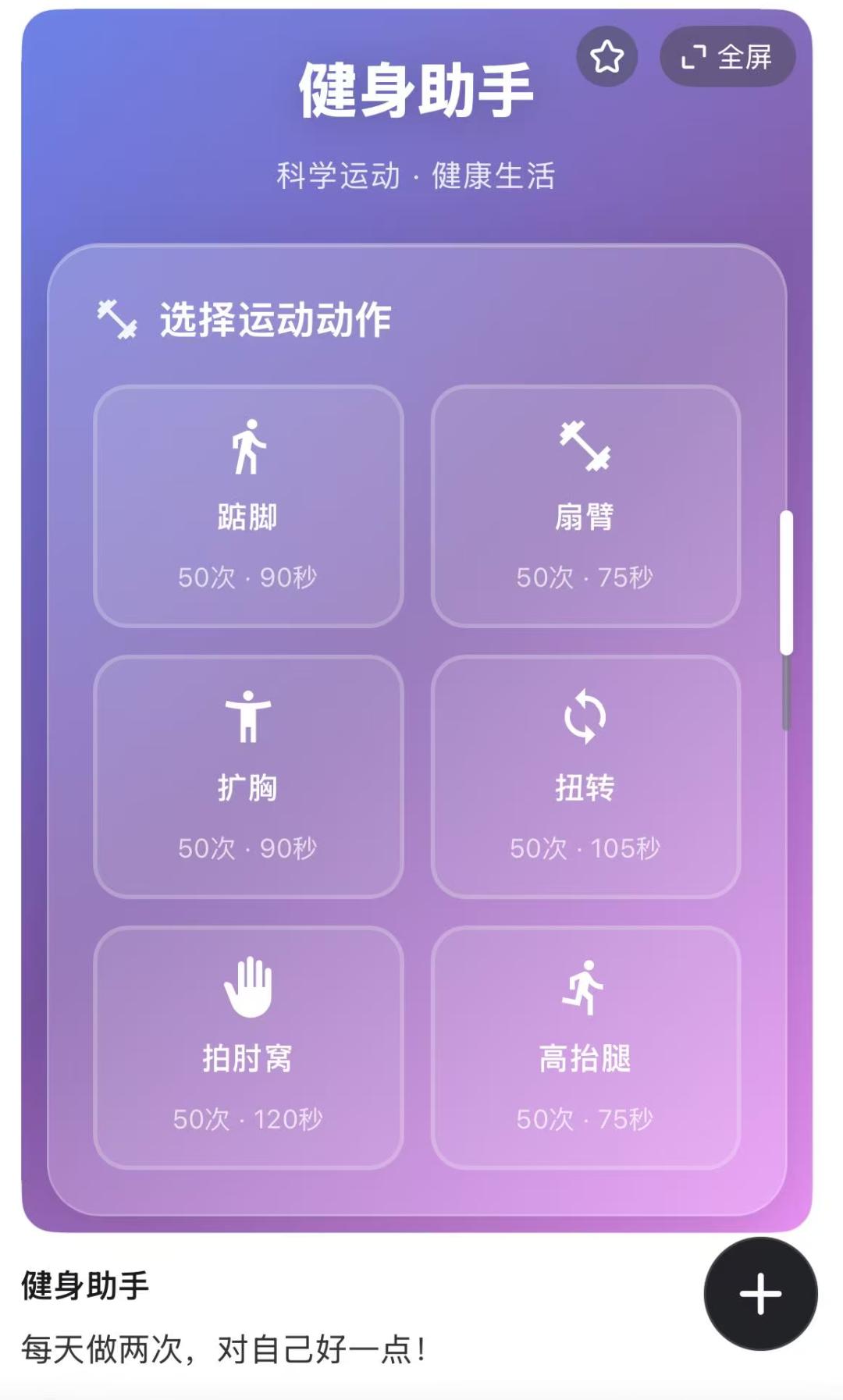
There is an office worker who sits at the desk all day. To remind himself to get up and move around from time to time, he created a "Fitness Assistant" to urge everyone to complete 6 basic and simple exercises every day.
On a Monday when you don't want to go to work, someone created a fishing game called "Slacking Off at Work". After being PUAed by the boss, someone created a "Boss Quote Generator". In this application, you can choose from pressuring - type, pie - in - the - sky - type, and blame - shifting - type bosses to customize your own boss and scold you online in real - time. As the saying goes, when you share your pain with others, you seem to feel less pain. Young people really understand this truth well.
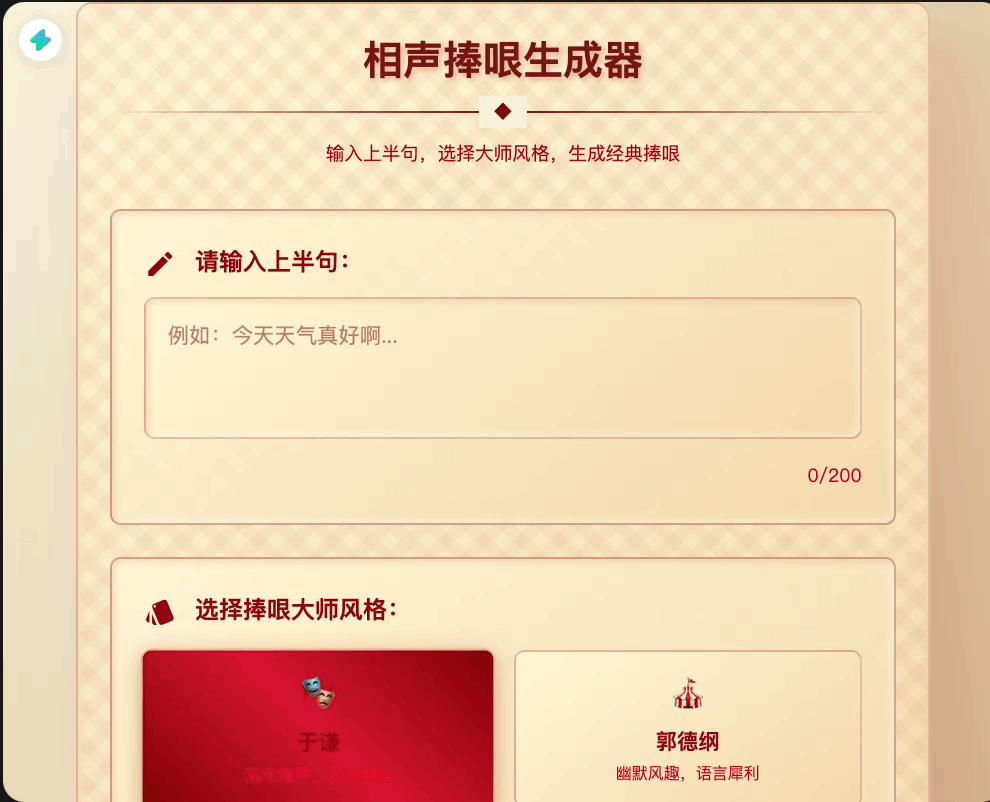
A small application of a cross - talk straight - man generator
The essence of this "hand - crafted application - style" social interaction lies in capturing resonance and timeliness to make people have fun.
It may be to catch a hot topic. During the Spring Festival, many people created some lively small applications, such as lantern riddle guessing and gold coin fishing. The day after the Spring Festival Gala ended, when everyone was studying the magic reveals, someone created a small application imitating the Spring Festival Gala magic, allowing off - site audiences to experience how the magic is performed online.
It may also be to address a pain point. Someone created a weekend time planner specifically for extreme J - type people. You can use it to plan the time allocation ratio of five major items: work, study, leisure, exercise, and family, just like the screen time usage statistics. Those J - type people have to follow it, right?
Whether they are functional tools or just for pure fun, these Lingguang flash applications have strong interactive attributes and are naturally prone to social fission.
For example, in a small application called "Anonymous Venting Tree - Hole", the interface is full of venting notes in the form of sticky notes: "Worked overtime until 10 pm and still got PUAed by the boss", "Is it necessary to urge me to get married at 25?" Each note also shows the percentage of people who have similar feelings, and this percentage changes in real - time as people like. If you also resonate, just give it a like and push this vent to the front.
Of course, you can also edit and post your own feelings and get likes from strangers. When you want to kill time or have emotions that you can't hold back, you can always go back to this small application to find like - minded people more quickly.
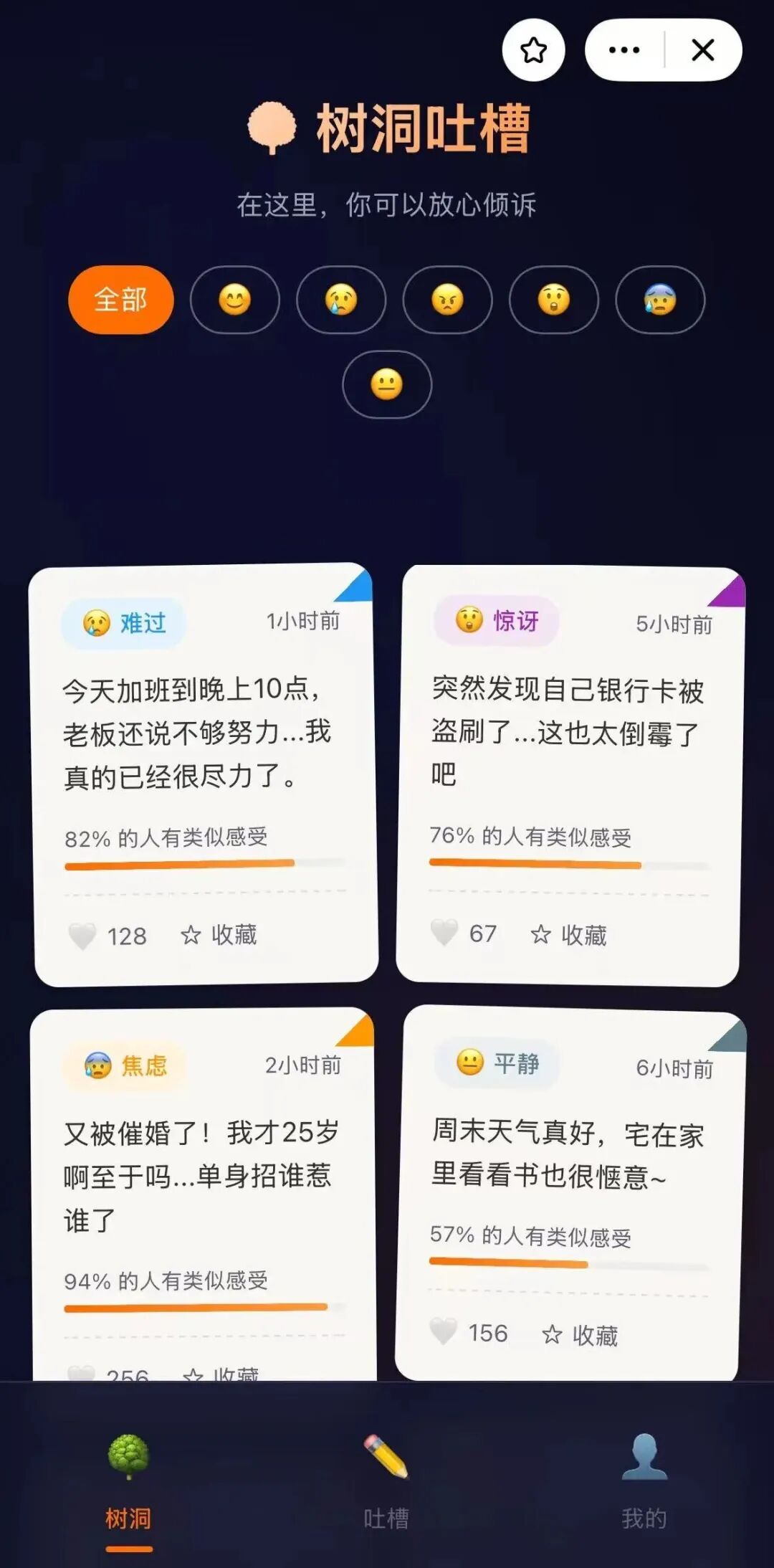
Such small applications are no longer just simple demos for a moment of fun. They are real cyber tools that can make users immerse themselves and look back repeatedly. Application tools are becoming a new form of social currency, recording the creator's momentary thoughts and inspirations. When flash applications become the carrier of young people's mild creative desires, their sharing desires are also overflowing.
On social media, you can see many young people showing off the small applications they created by themselves, hoping that everyone will come and play. They also call on the platform to add functions like rankings, collections, and likes, so that they don't have to "promote" their applications everywhere. This spontaneous demand just matches the value of platforms like Lingguang Circle - the interesting applications created by ordinary people by hand have a chance to be seen by more people without them having to shout around.
02. Is the era of "everyone creating applications by hand" coming to meet the mild creative desires?
Actually, the young people's continuous desire for social interaction has never disappeared. They just haven't found a large - scale outlet to release it.
Early internet - popular tests were the first to start this viral spread. The content was not complicated, but overnight, the WeChat Moments would be filled with colorful result cards, and everyone was happy to forward them. Later, mini - games on WeChat took over. Games like "Hopscotch", "Screw - Tightening", and "Sheep a Sheep" were addictive. People not only couldn't stop playing by themselves but also showed off their scores and invited friends to join. There might be someone in the WeChat group inviting you to have a competition every now and then.
Similar web - based interactive programs also occasionally appear to gain some attention. For example, the Electronic Wooden Fish website. It's hard to say if it's a game. Its function is very simple - just click once, make a sound, and your merit increases by 1. Another example is the Rebirth Simulator, which is a lightweight interactive text - based game. Many people like to open it during work breaks to restart their lives and see if they can change their fates, and then show off their survival certificates.
In essence, they are all the same thing: low - threshold social interaction carriers.
The rapid development of AI has also lowered the creative threshold to the ground. This common and mild creative desire now has a new place to be fulfilled. Now, it's not just waiting passively for a technical person to create a popular product. Ordinary people who don't know programming at all can also turn their ideas into small applications and let them circulate among people. In the past, to turn an idea into a running product, you needed technology, a team, investment, and had to go through a long development cycle. Now, the era of "one - person applications" has begun.
Actually, when Lingguang was launched at the end of last year, its download volume exceeded 2 million in 6 days, and as of now, over 30 million applications have been created. This data clearly shows that there is indeed a strong potential demand from the public in the field of "one - person application" platforms.
So what did young people create with it at the first time?
Besides interactive small toys like "Slacking Off at Work" that carry emotions and creativity, they are actually creating many practical small tools that can really solve small and specific pain points in life.
The forms of Lingguang flash applications are not complicated. Menstrual cycle recorders, weight - loss assistants, study task supervisors... They can really help people solve some small problems. These segmented needs have always existed, but such small things are usually not covered by big - company products. Some applications made by small teams in the market often fail halfway due to lack of funds and poor operation. For the first time, these very vertical and personalized needs can be filled by ordinary people themselves.
Now, these 30 million flash applications cover a wide range from stress - relief to to - do lists. Some users even sell the tools they created by hand on social platforms and have received nearly a thousand orders.
This upgrade of the Lingguang Circle is like building a better field for spreading flash applications. Strangers can connect and play together more quickly. Besides sharing, liking, and commenting, it also allows for secondary creation and multi - person collaborative modification, turning single - point development into a collaborative network.
This is indeed a pain point for ordinary people to start. Even when using natural - language programming, it's inevitable to encounter unclear expressions in prompts. Now, there are already people reselling Lingguang's generation instructions on second - hand platforms. Now that the Lingguang Circle has opened the collaborative function, it's like an online collaborative office document. When others think your flash application has a poor experience or there are some areas that can be improved, they can help you modify it and make it more useful.
03. The mobile - native Agent makes "creating applications by hand" possible anytime and anywhere
Another special thing about Lingguang is that it is a mobile - native Agent, so it is naturally well - adapted to mobile devices.
This update also takes the flash application a step further. System capabilities such as the built - in camera, photo album, gyroscope, LBS positioning, and vibration of the mobile phone can all be called, and it is also connected to a series of interactive capabilities such as sound - effect synthesis, large - language models, text - to - speech, and persistent storage.
Previously, you could often see people on social media worrying that if they wanted to create a small application for 365 - day check - ins, the data might be lost halfway. That's not the case. After the persistent storage update, you can really customize a functional tool for long - term use.
In this way, the imagination space is even larger. In the past, people's mobile phones were often filled with all kinds of APPs: accounting apps, anti - procrastination apps, travel - planning apps, menu - planning apps... Now, your mobile phone can have less burden. You can use Lingguang to create a small application that perfectly meets your needs. Moreover, the mobile - version Lingguang allows you to create applications anytime and anywhere, quickly turning your ideas into reality and solving those trivial problems in life.
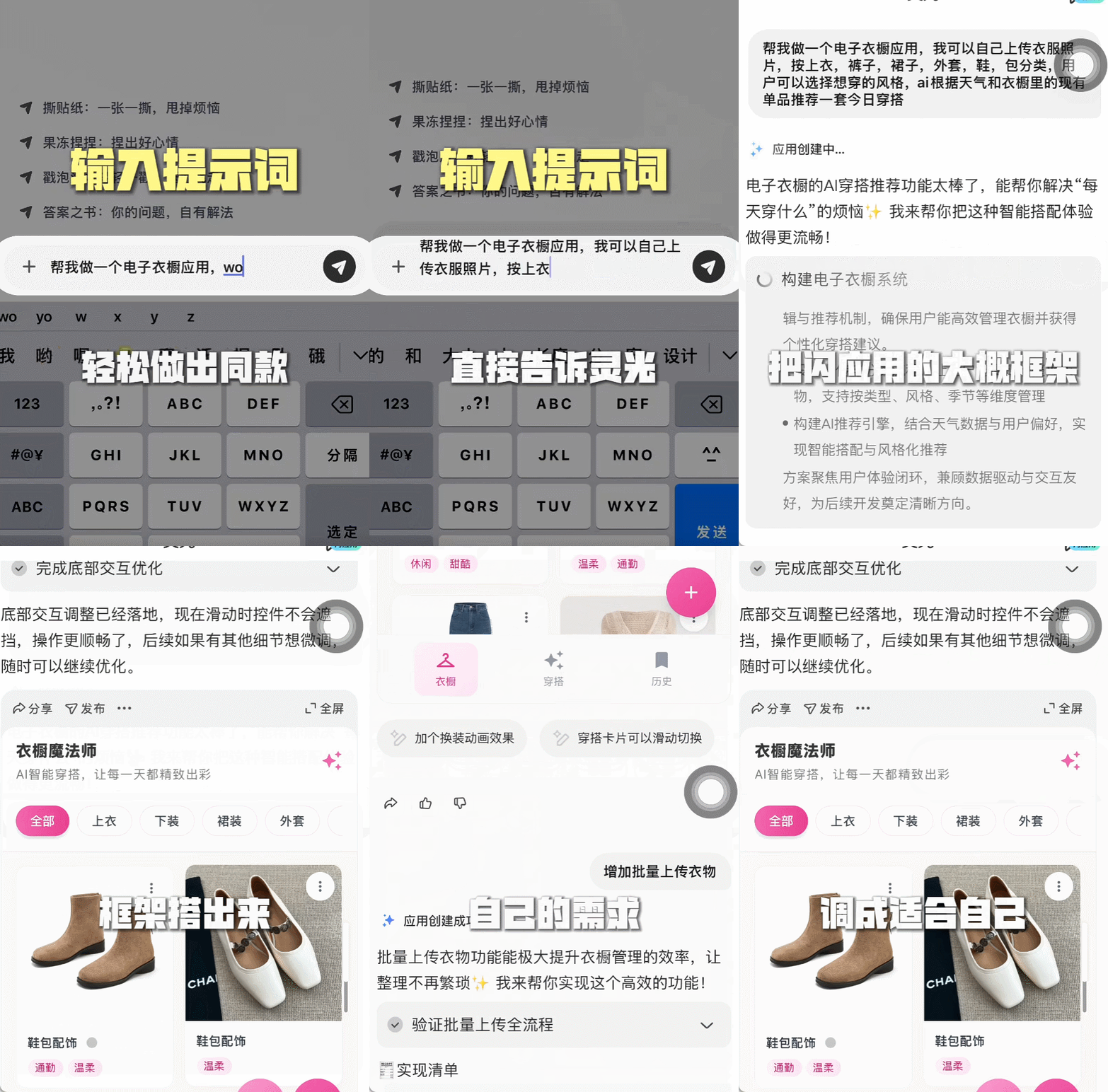
For example, someone thinks their wardrobe is in a mess and wastes time choosing clothes for commuting every morning. So they want to create an electronic wardrobe, input all their clothes into the system, and let AI help with the matching. This requires opening the photo - album permission. You can take pictures with your mobile phone to create an electronic archive of the clothes in your wardrobe, and the application will directly give you matching suggestions. The data transfer of the photo album on the mobile phone is very convenient.
Someone created a simple but very practical small tool - the "Egg God Egg - Boiler". Since they always have trouble controlling the heat when boiling or frying eggs and often burn the eggs, they spent 1 minute creating the "Egg God Egg - Boiler" to solve the problem.
Someone has been using an accounting APP, but it suddenly started charging. So they turned to Lingguang to create a "No - Sense APP", imitating the accounting function. It will divide the expensive electronic products, clothes, and bags you bought into twelve months to calculate, so that you can directly feel how deep you are in the consumerism trap.
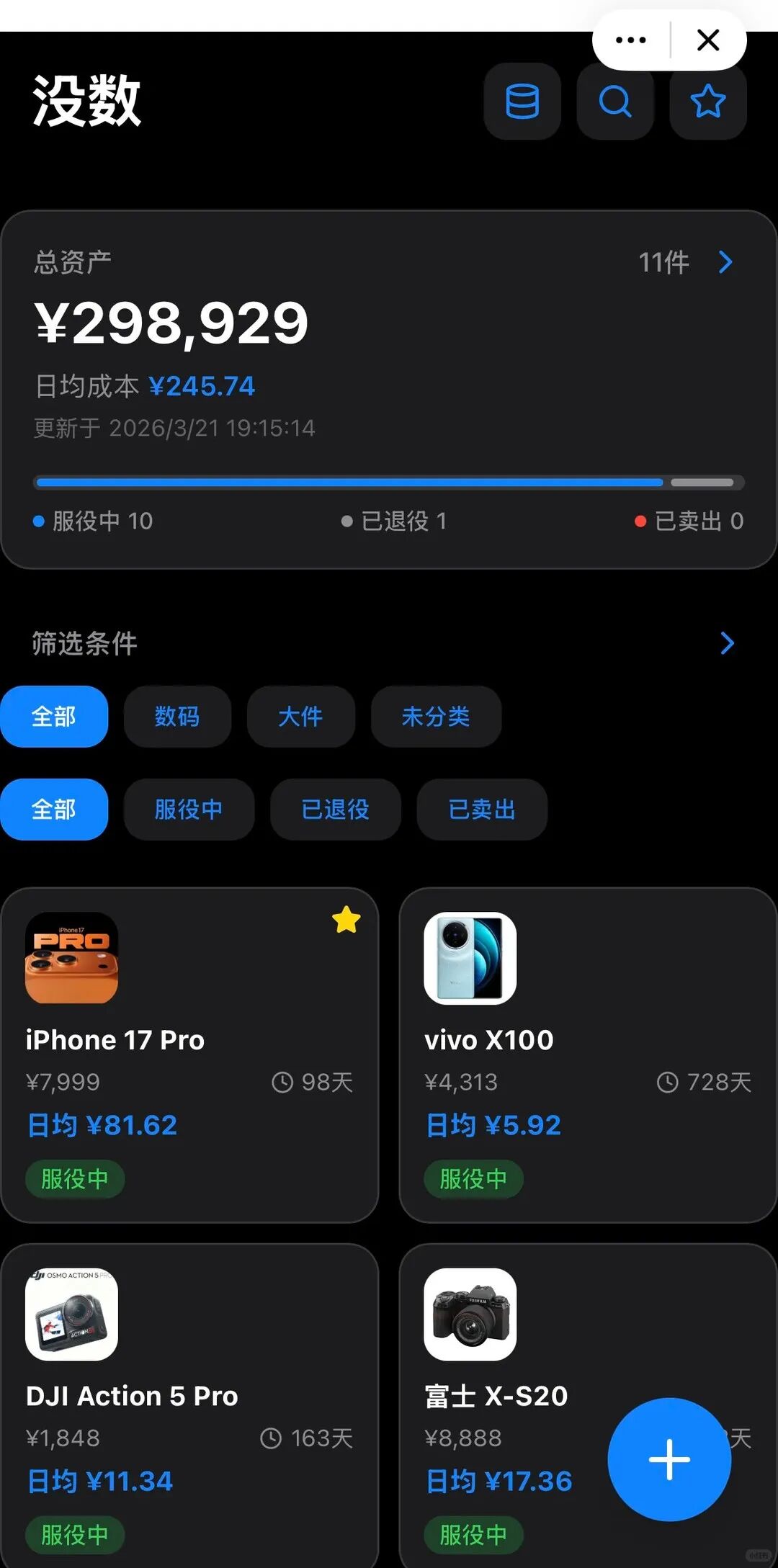
Image source: Xiaohongshu user @Yuanlai is Niu
These small applications can be used by everyone after being posted on the Lingguang Circle. If you are too lazy to create one by yourself or find a more appealing accounting flash application on the Lingguang Circle, it's also convenient. You can directly collect others' applications and use them. In the past, developing programs had a high technical threshold, but Lingguang has re - defined a term, Wish Coding - programming based on intention. Users only need to describe their needs clearly, and the flash application can be generated without any complex deployment