"Nissin" Adopts High Turnover Strategy, Qian Dama Reinforces Its Moat in the Fresh Produce Market
The trend in the retail industry is shifting from a headlong rush into the online realm to in - depth development offline.
From Walmart's trial of community stores and Dongfang Zhenxuan's announcement to open physical stores, to Hema, Qixian, and Xiaoxiang continuously increasing their investment in offline stores, and then to the offline retail sales growth rate surpassing the online one during the Spring Festival, the value of physical stores is being comprehensively re - evaluated.
Behind this is the return of the underlying business logic. On the one hand, the improvement of logistics infrastructure has gradually narrowed the price gap between online and offline. On the other hand, while pursuing cost - performance, today's consumers are paying more and more attention to experiential consumption.
In the fresh food industry, this transformation is particularly significant. Many pure online fresh food e - commerce platforms, once regarded as disruptors, are now mired in the quagmire of high fulfillment costs and difficult profitability after a period of rapid expansion. In contrast, offline fresh food stores rooted in communities are regaining favor with their irreplaceable on - site experience and healthy profit models.
On this path of value return, Qian Dama, which has been deeply involved in the community for many years, is undoubtedly at the forefront.
In the fresh food track with extremely high loss rates and extremely strict requirements for the supply chain, Qian Dama has created the "discount daily clearance" model, providing an excellent sample for the capital market with a revenue of tens of billions and a profit of hundreds of millions.

Community fresh food: a niche and long - term business
In the total social retail sales of up to 50 trillion, fresh food retail is undoubtedly a highly challenging track. The core difficulty stems from the fundamental contradiction between supply and demand: on the consumption side, the requirements of "high - frequency, essential, and fresh" naturally limit the price - increase space of products; on the supply side, there are inherent problems of "easily perishable and non - standardized", resulting in high operating costs. The shackles of "low gross profit" and "high loss" have long suppressed the overall profit margin of the industry at a very low level.
In the past, when the supply chain capacity was limited, traditional vegetable markets that could quickly aggregate surrounding farmers and focus on non - standardized products became the locally optimal solution in the market environment at that time. However, with the improvement of residents' living standards and the improvement of logistics infrastructure, consumers' demands for fresh food have been upgraded from simply meeting basic needs to the triple pursuit of "quality, convenience, and cost - performance". The traditional vegetable market model can no longer fully meet the complex needs of modern consumers.
Community fresh food formats such as front - end warehouses, community group - buying, and community chain fresh food stores have emerged as the times require. According to the forecast of CIC, the scale of the Chinese community fresh food market was about 1.7 trillion in 2024 and is expected to increase to 2.9 trillion in 2029, with a compound annual growth rate of 11%. In contrast, the compound growth rate of vegetable markets has dropped to 0.2%.
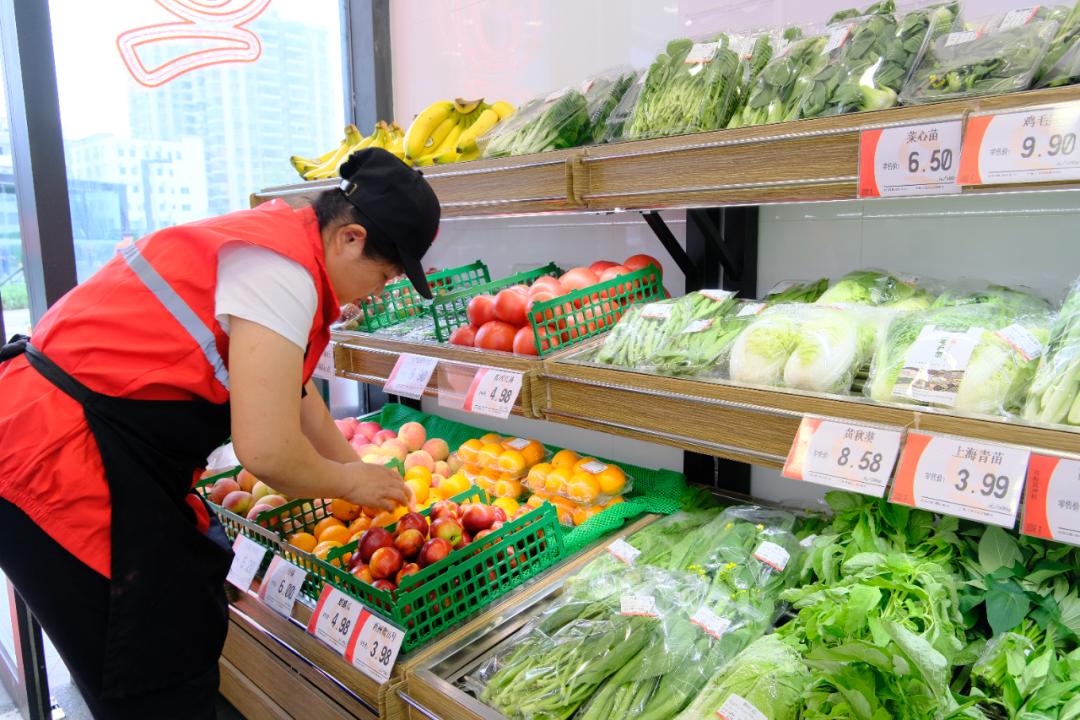
The demand for three meals a day of residents exists eternally, and community stores occupy a unique ecological niche under high population density. This determines that community fresh food is a "long - slope" track. However, the supply chain, single - store profit model, and regional adaptability barriers restrict the rapid improvement of the industry's chain - store level. At present, the competition among multiple formats in the community fresh food track is essentially a trade - off and game around the three core value dimensions of "trust, convenience, and price" for consumers:
Community fresh food stores and mom - and - pop stores occupy the high ground of trust with the intuitive experience of on - site selection.
Community group - buying sacrifices some timeliness through the next - day delivery model in exchange for the core advantage of low price.
Instant retail (front - end warehouse) meets consumers' demand for convenience with hourly delivery door - to - door service.
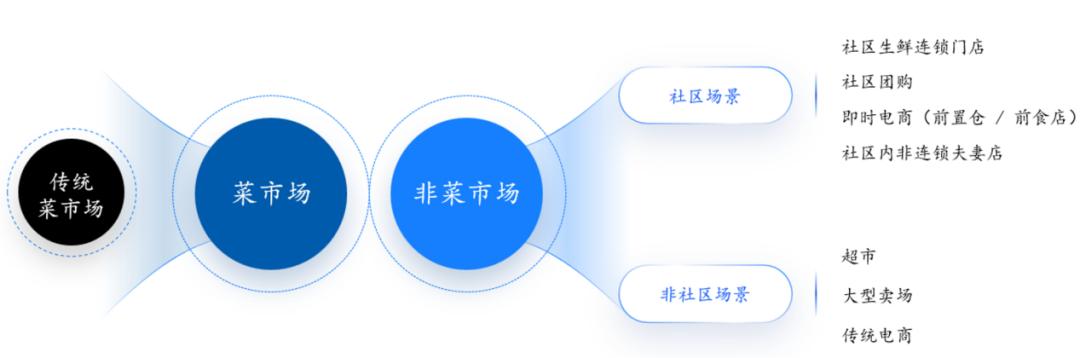
Figure: Classification details of the Chinese fresh food retail market by channels and scenarios. Source: Northeast Securities, 36Kr compilation
In the early stage of market development, any format could gain a foothold in the fresh food industry as long as it could establish an advantage in one of the above dimensions. However, as competition deepens, the boundaries between different formats are rapidly blurring. For example, front - end warehouses reshape consumers' trust by developing their own brands; while offline physical stores fully connect to the instant delivery network to make up for the shortcoming of convenience. A long board in a single dimension is no longer sufficient to build a solid moat.
Therefore, regardless of how the front - end formats evolve, the competition focus that determines the ultimate success or failure of participants has been highly unified to a deeper - level core ability: that is, to build a supply chain, run through the single - store profit model, and break through regional barriers. Based on a strong supply chain ability, achieve the best cost - performance through extreme fulfillment efficiency and cost control, and finally create a differentiated advantage with unique product strength to win the long - term trust of consumers.

Qian Dama: a sample of building a deep moat
In the highly competitive niche format of community chain fresh food, Qian Dama is an inescapable benchmark. According to CIC data, it ranked first in the industry with a market share of 2.2% in 2024.
The fresh food retail market is highly fragmented and extremely regional, so the value of this market share figure far exceeds its appearance. The perishable nature of fresh food products determines their extremely short physical transportation radius and sales cycle, which means that market share is not simply a pile - up of the number of stores, but the ultimate quantitative manifestation of a company's supply chain depth and breadth.
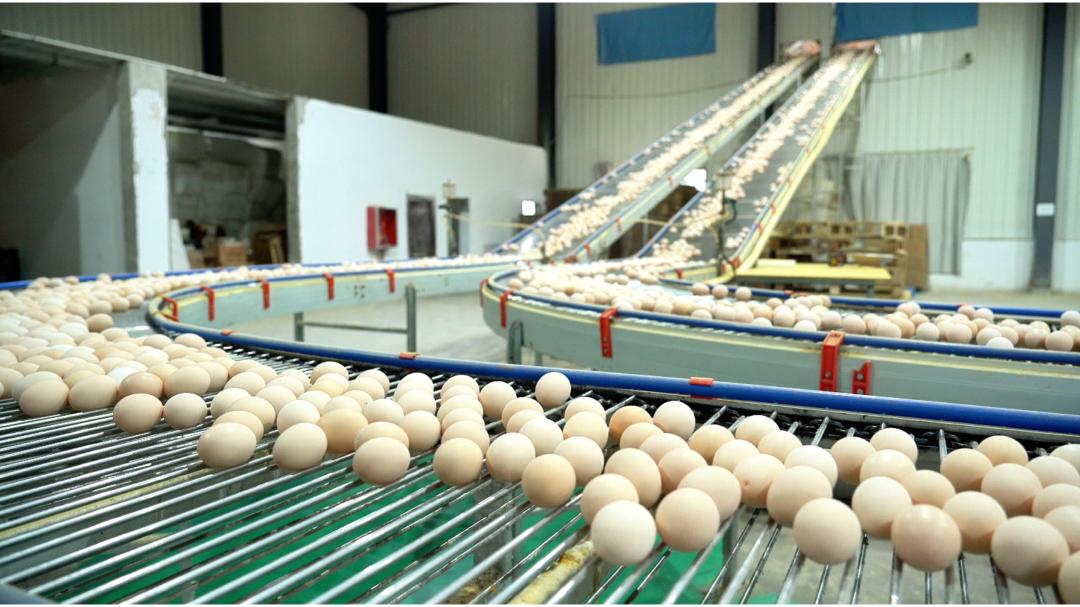
Qian Dama's ability to stand out lies in its construction of a closely - linked and self - reinforcing business system. The core of this system is its pioneering "discount daily clearance" mechanism.
First of all, the "discount daily clearance" model is not only a promotional means but also an effective way to fundamentally solve the high loss problem in fresh food retail. The effects are reflected in two aspects:
One is extreme inventory turnover. Through step - by - step discounts to ensure daily clearance, Qian Dama has achieved an inventory turnover period of only about 1 day, far better than the industry average of 2 - 4 days, greatly improving the efficiency of capital utilization.
The other is a strong brand image. The slogan of "no overnight meat" has evolved into a synonym for "freshness" in consumers' minds through daily clearance actions. This definite commitment to freshness builds strong brand trust, which in turn supports its full - price sales during non - discount periods, effectively offsetting the erosion of the overall gross profit margin by clearance discounts and forming a virtuous cycle.
Secondly, the "daily clearance" model has almost strict requirements for the supply chain, and Qian Dama has built a fast - reacting and extremely efficient supply chain:
The most prominent feature is the combination of "cold - chain standards" and "hot - fresh timeliness". On the basis of ensuring the bottom line of food safety of "full - process cold chain", the company has extremely compressed the time from slaughter to store shelving for core categories such as pork. This model creates an extremely fresh experience and forms a strong product differentiation.

Behind the efficient logistics is the dual - wheel drive of digitalization and direct sourcing from the origin. According to Northeast Securities, on the procurement side, Qian Dama has a professional team of more than 200 people, which dynamically optimizes costs and quality through a combination of "direct sourcing from bases, procurement from suppliers, and order - based planting". On the technology side, the company has built its own IT team of more than 200 people for system R & D. From 2023 to the first nine months of 2025, the cumulative R & D investment exceeded 44 million yuan, building a digital platform covering SRM (Supplier Relationship Management), WMS (Warehouse Management), TMS (Transportation Management), and ERP, realizing end - to - end collaboration and real - time monitoring from procurement to sales.
Overall, Qian Dama's leading advantage does not come from any single - point breakthrough, but from the deep coupling of its "discount daily clearance" model, extreme supply chain ability, and a powerful digital system.
This system is in perfect strategic fit with its franchise model. First of all, the "discount daily clearance" mechanism fundamentally solves the biggest pain point of franchisees - inventory loss and capital occupation, enabling them to "travel light" and focus on store operation and rapid expansion. Secondly, the success of the franchise system in turn allows Qian Dama's headquarters to focus its resources and energy on the continuous in - depth development of the supply chain.
Finally, this efficient collaborative body supported by Qian Dama's supply chain and executed by franchisees jointly creates a stable value of "convenience, freshness, and high cost - performance" for consumers and builds an irreplaceable moat for Qian Dama.

Performance verification of profitability
Whether Qian Dama's business model has achieved a relative advantage in the industry can be directly verified by its financial performance in addition to market share.
Data shows that Qian Dama's comprehensive gross profit margin in 2024 was 10.2%. Although the adjusted net profit margin was only 1.6%, with the high - turnover of inventory once a day, the company achieved a revenue scale of over 10 billion yuan and a net profit of nearly 200 million yuan.
At the same time, Qian Dama's profitability is still continuously improving. In the first three quarters of 2025, Qian Dama's gross profit margin further increased to 11.3%, and the adjusted net profit margin increased to 2.6% synchronously, driving Qian Dama's adjusted net profit to increase by 48% year - on - year to 215 million yuan, exceeding the whole year of 2024.
This also further explains the source of Qian Dama's moat from a financial perspective. Under the combination of "low gross profit margin + low net profit margin", the room for error of participants in the industry is limited, and they need to quickly build high - level supply chain management and operation capabilities. On the other hand, to achieve a high - profit scale in low - profit fresh food retail, extremely high turnover is required, and the "discount daily clearance" model has a unique advantage in turnover.
In the future, Qian Dama's potential is mainly reflected in two aspects:
One is the combination of online and offline sales. Just as participants such as Walmart, Hema, and Xiaoxiang are all making every effort to create an online - offline integration. Qian Dama is not a traditional fresh food store. Relying on its huge offline physical store network and strong cold - chain supply chain ability, the company has the confidence and ability to expand online sales. Today's offline stores are not only retail terminals but also natural "front - end warehouses". At present, Qian Dama has connected the fulfillment system and can achieve "hourly delivery" and "next - day delivery". This effectively breaks the limitation of the physical distance of physical stores, which can not only further increase the revenue of single stores but also effectively resist the competition from other participants in the industry.
The other is the outward replication and expansion of the model. Although the differences in local consumption habits and fresh food supply have built "regional barriers", the underlying logic of supply chain management and demand insight is the same, which gives Qian Dama the confidence to break through regional barriers. In addition, the fresh concept of "no overnight meat" has wide market resonance across the country. Relying on this, Qian Dama can cut into similar potential markets and adopt the strategy of "selecting a city and gradually increasing the number of stores" to steadily promote national - scale expansion.
Throughout the entire fresh food industry, the characteristics of low concentration and heavy reliance on refined operation determine that the expansion of enterprises is a "protracted war" rather than a "blitzkrieg". With a mature supply chain system, keen user insight, and abundant cash flow from its stronghold in South China, Qian Dama has already prepared sufficient ammunition for this long - distance race. On the "niche and long - term" track of community fresh food, Qian Dama is expected to maintain its leading position.