Kekr | Xiangke Intelligence: Instead of Chasing Humanoid Robots, Deeply Plunge into the Catering Scenario as a Pragmatic Implementer of Embodied Intelligence
36Kr recently had an in - depth communication with Chen Zhen, the founder of Xiangke Intelligence. At a time when most embodied intelligence companies are still focusing on polishing general technologies in laboratories and flocking to the humanoid robot track, Xiangke Intelligence, which was founded only three years ago, has embarked on a differentiated development path. Centering on scenario implementation, it promotes the commercialization of embodied intelligence technology.
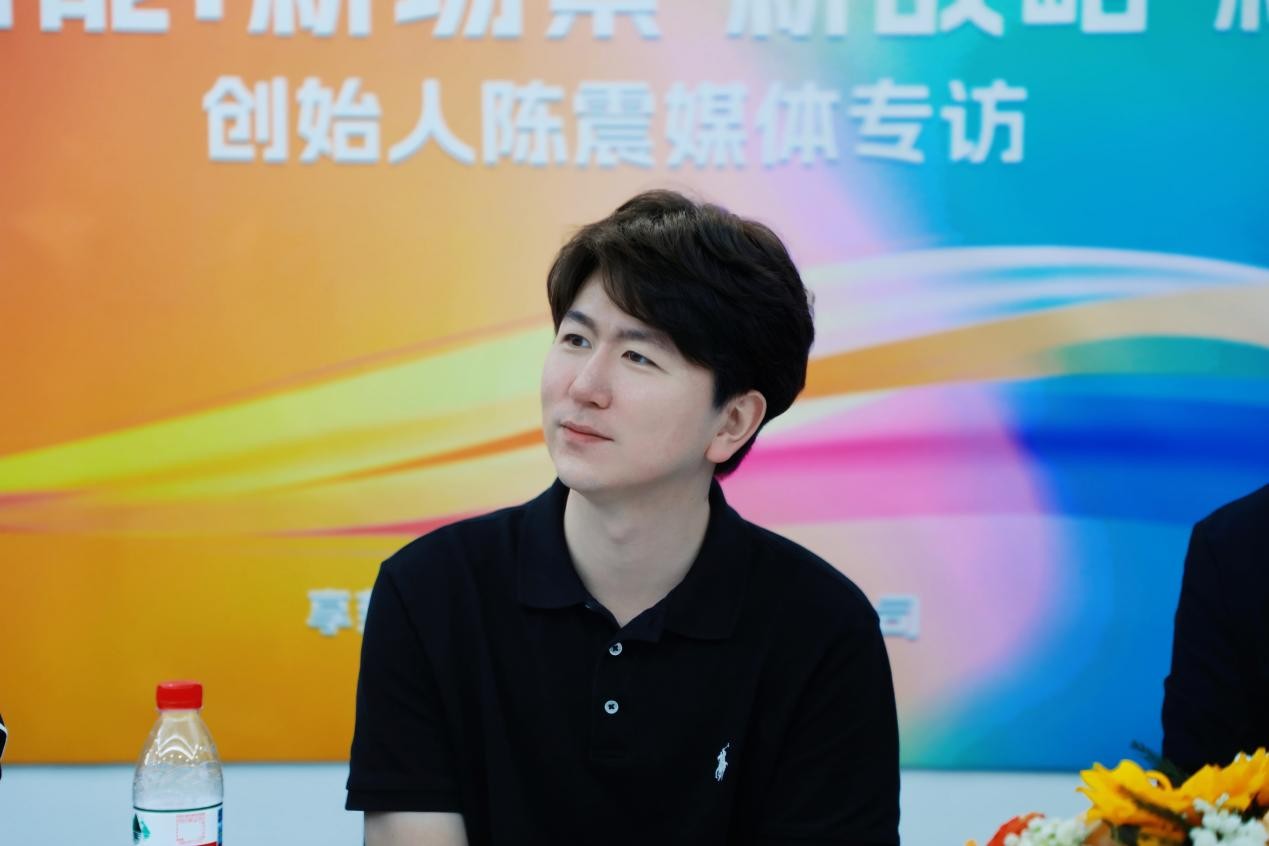
Chen Zhen, the founder of Xiangke Intelligence
On April 14, 2026, Xiangke Intelligence Technology (Beijing) Co., Ltd. officially announced the completion of a 150 - million - yuan Series A financing. This round of financing was led by Ninebot in a strategic investment, with several industrial institutions such as Changsha Orient Private Equity Fund and Jiangsu Guosheng Capital participating as follow - on investors. As of now, the company's cumulative financing scale has exceeded 250 million yuan. With the capital and industrial resource support obtained from this financing, this embodied intelligence company focusing on the catering and hotel scenarios is accelerating its strategic upgrade, extending from "kitchen innovation" to "full - scenario intelligence" to seize development opportunities in the trillion - level new technology consumption track.
Different from most robot companies that prioritize technology, Xiangke Intelligence's core development logic is "scenario - driven". That is, starting from the real needs of the catering kitchen, it uses standardized products to solve the core pain points of the industry, rather than pursuing "showy" technological breakthroughs. At the media group interview held on April 14, Chen Zhen, the founder of Xiangke Intelligence, clearly stated: "High - quality robot products should not be limited to a fixed form. They should be closely tailored to the actual needs of the scenario for targeted development and optimization."
This development idea is fully reflected in Xiangke Intelligence's core product layout. Currently, the LAVA lightweight robotic arm robot launched by the company has first focused on the standardized kitchen scenario of high - temperature frying, achieving full - process unmanned operation for fried products such as chicken nuggets and fries. It has also started delivering products in batches of hundreds in the South Korean market, becoming the first core breakthrough in its overseas layout.
Regarding the business logic of choosing the high - temperature frying scenario as the entry point, Chen Zhen provided a detailed explanation: There is a rigid labor shortage in the overseas catering market, and fried products have a high - frequency consumption attribute in the Western diet structure, which gives this scenario a natural advantage for commercialization. Combining industry public data and the joint survey report of the Ministry of Agriculture, Food and Rural Affairs of South Korea and the Korea Food Promotion Institute, South Korean fried chicken stores still maintain a large scale after market reshuffle. Fried products account for a prominent proportion in the daily food production methods overseas, and Korean fried chicken has become the most popular Korean food category among foreigners, which also provides a clear market basis for Xiangke Intelligence to focus on this scenario.
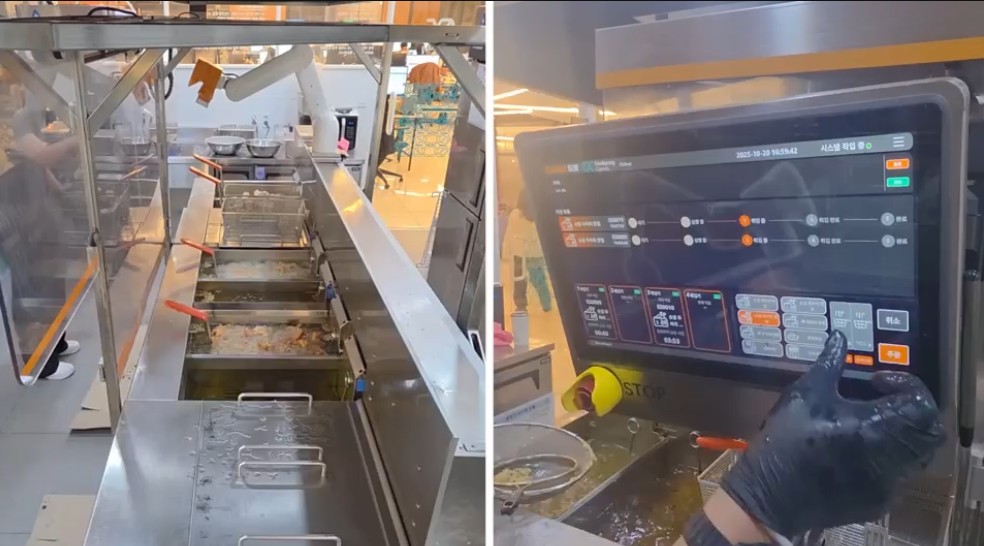
Kitchen robot
More importantly, against the backdrop of the continuous rise in overseas labor costs, the return on investment (ROI) of robot - replacing - human labor has entered the critical range. According to data from the U.S. Department of Labor, the hourly wage of the North American catering industry has continued to rise after the pandemic. In June, the average hourly wage in the catering industry reached $18.23, a significant increase compared to before the pandemic. The pressure of labor costs has prompted catering enterprises to accelerate the search for automated replacement solutions, which also provides a practical basis for Elon Musk's idea of "using humanoid robots to solve the labor shortage" to be implemented first in the catering scenario. Xiangke Intelligence's overseas layout does not follow the traditional "product - going - overseas" model. Instead, it proposes a three - step strategy of "ideas going overseas first": First, root in the core needs of overseas customers for customized product design; second, promote product localization adaptation to meet the scenario needs and compliance requirements of different regions; finally, build a local sales network for sustainable operation. According to Chen Zhen's disclosure in the media group interview, the company's overseas revenue currently accounts for 30%, and it plans to increase this proportion to over 50% in the next 2 - 3 years, focusing on the South Korean, North American, and Southeast Asian markets. The strategic support of Ninebot, the leading investor in this round of financing, provides important support for Xiangke Intelligence's overseas layout. As a leading enterprise in the global innovative short - distance transportation and robot fields, Ninebot not only has a mature global channel layout - according to its public channel information, 30% of its overseas customers for service robots are chain catering and take - out platforms. It can also provide core technical support such as mobile chassis and supply - chain manufacturing for Xiangke Intelligence. According to Chen Zhen, the two sides will jointly launch a cross - scenario service robot to achieve the synergy of "operation + movement" capabilities, connect the service loop from the kitchen to the front hall, and improve the efficiency of scenario services. At the technical level, Xiangke Intelligence has built four core technical capabilities, and all technologies are polished and optimized around scenario needs. According to the company's public patent information, the self - developed robotic arm has obtained more than 60 core patents in total. The core components are self - developed. The 0.9 - meter arm span and 5 - kilogram load are precisely matched to the size of the standardized fryer, which can be adapted to various kitchen operation scenarios. It has jointly built a R & D platform with Tsinghua University. The developed bionic dexterous hand can accurately sense the hardness and slipperiness of ingredients and complete delicate grasping operations. The end - side embodied VLA large model with 1 billion parameters can achieve more than 100,000 task responses and scheduling per day. Combined with the all - terrain mobility empowered by Ninebot, it forms a complete collaborative control loop of "brain decision - making + body execution". It is worth noting that Xiangke Intelligence's technology R & D always takes into account large - scale deployment and actual application needs. The LAVA robot adopts a round and seamless design, which can achieve standardized operations of daily cleaning, weekly maintenance, and monthly maintenance. It has also passed overseas authoritative certifications such as CE and KC (certification information can be verified through relevant authoritative institutions). The service life of the joints is 20,000 hours, between the normal service life of industrial robots (50,000 hours) and that of household robots (10,000 - 15,000 hours), which can perfectly meet the 2 - 3 - year service life requirements of commercial kitchens. In terms of food safety, Xiangke Intelligence has carried out targeted design: The parts of the robot that come into contact with food are made of food - grade stainless steel and edible silicone materials, and are equipped with full - process camera monitoring to clearly divide the responsibilities of human - robot collaborative operations. The fryer is equipped with an oil quality sensor, which can monitor the oleic acid content in real - time. In the South Korean market, it has achieved standardized management and control of "prompting to change oil after 7 times of frying and stopping operation after 14 times of frying", effectively solving the health hazards in the traditional frying scenario. In response to the industry's doubt that "robots lack the 'flavor of the wok' when cooking", Chen Zhen clearly responded: "The core of the 'flavor of the wok' is the Maillard reaction produced in a high - temperature environment. The company can raise the frying temperature to over 220 degrees through a 380 - volt high - power power supply. Combined with standardized frying actions, it can fully restore the 'flavor of the wok' of dishes, and the taste stability is better than manual operation." He emphasized that the core value of the robot lies in achieving the standardization of dish taste, which is exactly the core need of chain catering enterprises - one of the core competitiveness of chain brands is to ensure that consumers can get a consistent taste experience in any store. In terms of commercialization, Xiangke Intelligence has formed a clear development path: In the domestic market, relying on the resource advantages of Ninebot, according to Chen Zhen's disclosure, it currently covers 7,000 hotels and 2,000 catering stores, and plans to start pilot deployments with two leading Western fast - food brands in the second half of this year. In the overseas market, it adopts the strategy of "prioritizing in - depth development and gradually penetrating". Centering on the South Korean market, it gradually expands to Southeast Asia and North America. Currently, it has built a distributor system covering countries such as South Korea, Japan, and Thailand, and promotes commercialization through the "direct supply + agency" model. Regarding the "relationship between general embodied capabilities and scenario specialization" that the industry is concerned about, Chen Zhen said that the current embodied intelligence technology does not yet have cross - scenario general capabilities. The key to short - term commercialization lies in "extending from a single scenario and precipitating general underlying capabilities". The four core skills that Xiangke Intelligence is currently polishing - full - chain food processing, full - environment movement, dexterous operation, and spatial intelligent agent interaction - are all transferable capabilities precipitated from the catering scenario, which can be extended to more intelligent space service scenarios such as hotels and healthcare in the future. When talking about the competitive barriers against traditional kitchen appliance enterprises, Chen Zhen admitted that a simple technological advantage cannot constitute a long - term competitive barrier. The real core competitiveness lies in the ability of rapid scenario implementation and product iteration. According to industry public research data, the iteration cycle of a product of traditional home appliance enterprises is as long as 8 months to 1 year, while Xiangke Intelligence can efficiently complete code optimization and demand iteration with the help of AI tools. Currently, it has completed 20% - 30% of code correction work through Claude Code, and the iteration efficiency is significantly better than that of traditional enterprises. In the future, Xiangke Intelligence's development layout will be divided into three levels: In the short term, it focuses on the core scenarios of catering and hotels, and completes product upgrades from single - arm to double - arm and single - station to three - station. In the medium term, relying on the joint laboratories jointly built with Tsinghua University and Beihang University, it continues to deeply engage in the R & D of embodied intelligence technology. In the long term, after the technology matures, it will extend to the household scenario. The realization of this goal requires the hardware cost to drop to the thousand - yuan level and the embodied large model to be implemented in the open - type household scenario. In the first year of the commercialization of embodied intelligence, Xiangke Intelligence's development path provides a practical and feasible reference paradigm for the industry: Do not blindly chase industry trends or indulge in technological show - off. Instead, root in real scenarios and use standardized products to solve the actual pain points of the industry to build a solid development foundation in the trillion - level new technology consumption market. As Chen Zhen said: "The company's original intention is to let robots generate real and usable value in specific scenarios, which is also the core difference between us and other enterprises."